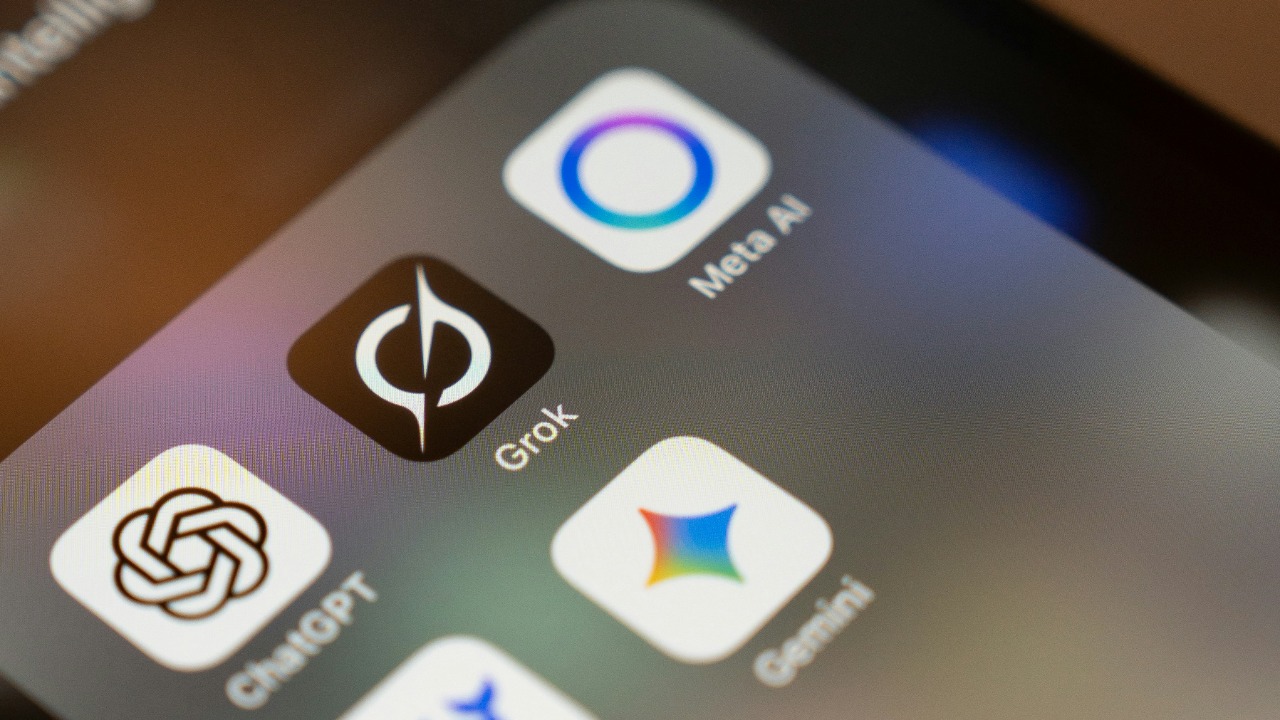

Hints from early testers, developer chatter, and xAI’s own roadmap suggest that the next Grok iteration will not just be a bigger model, but a more usable one. Grok 4.2 trials are already pointing toward a sharper interface, cleaner code generation, and even lightweight playable games that live inside the chat window. Taken together, these changes signal a push to turn Grok from a raw power demo into a polished daily tool for builders, traders, and casual users alike.
Grok 4.2 as a stealth upgrade, not a splashy launch
The most striking thing about Grok 4.2 so far is how quietly it has arrived. Instead of a single flagship announcement, the label “4.2” has emerged through internal references, developer discussions, and user reports of behavior shifts inside the broader Grok 4 family. One detailed breakdown notes that the term “Grok 4.2” is associated with a cluster of observed changes in the Grok 4.x line, framed as practical improvements aimed at late 2025 and 2026 usage rather than a brand new product, with analyst Graziano Stefanelli describing how these updates sit within Grok 4.x.
From what I can see, this incremental framing matters because it sets expectations: Grok 4.2 is less about a headline-grabbing leap and more about tightening the screws on reliability, speed, and ergonomics. Another slice of the same analysis stresses that, instead of a formal product page, the term “Grok 4.2” surfaces through internal documentation and repeated user feedback, with the author explicitly noting that “Instead, the term ‘Grok 4.2’ surfaces through” these channels as people notice how the system behaves differently in practice, which is why the piece focuses on how these changes can be observed rather than on a marketing rollout.
Sharper UI hints: from chat box to interactive canvas
On the surface, Grok still looks like a chat interface, but the 4.2 trials suggest that the UI is being treated more like a canvas than a text box. Testers describe smoother transitions between natural language prompts, code views, and visual outputs, which lines up with xAI’s broader push to make Grok a hub for workflows rather than a single-purpose chatbot. In practical terms, that means a user can move from asking for a trading strategy to inspecting generated code or a chart without feeling like they are switching tools, a direction that fits with the way the Grok 4.x line is positioned for late 2025 and 2026 in the Grok 4.x analysis.
From a user experience standpoint, I read these UI tweaks as a deliberate attempt to close the gap with developer environments and creative suites. Instead of forcing people to copy and paste between Grok and tools like Visual Studio Code or Figma, the emerging pattern is to keep more of the interaction inside Grok itself, with the model surfacing structured panels, code blocks, and interactive elements as needed. That direction is consistent with xAI’s roadmap for Grok 4.20, which highlights a focus on reliability and new modes that make the system feel less like a static chat log and more like a flexible workspace, a shift that is spelled out in the Grok 4.20 Preview of upcoming features.
Cleaner code generation and the Sonic connection
For developers, the most tangible promise of Grok 4.2 is cleaner, more production-ready code. Earlier in the Grok 4 cycle, a stealth coding model called Sonic appeared in the market, pitched as a way to “build apps in minutes” and widely suspected to be tied to Grok’s backend. In one walkthrough, the presenter describes Sonic as a “new stealth coding model” that can scaffold full applications with minimal prompting, a capability that many viewers linked to Grok’s evolution, especially as they watched the NEW Grok 4 Coder (Sonic) handle multi-file projects and UI components.
When I compare those Sonic demos with reports from Grok 4.2 testers, the throughline is a shift from verbose, sometimes brittle code toward more idiomatic patterns that resemble what a mid-level engineer would write. That includes better separation of concerns, clearer function naming, and fewer hard coded values, which makes the output easier to drop into existing repositories. The Grok 4.x status analysis by Graziano Stefanelli reinforces this impression by framing 4.2 as a set of practical updates that improve how the model handles structured tasks like coding, rather than a purely academic bump in benchmark scores, a distinction that becomes clear when he situates Grok 4.2 within the broader Grok 4.2 term that users have adopted.
Playable games and the Sonoma Sky Alpha experiment
Perhaps the most surprising thread in the Grok 4.2 story is the emergence of playable games inside the model’s interface. A separate stealth model, Sonoma Sky Alpha, appeared on Open Router and quickly drew attention for its ability to generate and run simple games directly in the chat environment. In one breakdown, the host explains that “there’s a new stealth model that appeared on Open Router” called Sonoma Sky Alpha, then walks through how it can spin up interactive experiences that feel more like mini web apps than static code snippets, a capability showcased in the Sonoma Sky Alpha video.
I see Sonoma Sky Alpha as an experimental proving ground for features that could surface in Grok 4.2, especially around interactive content. If a model can generate a playable puzzle game or a simple platformer that runs in the browser pane next to the chat, it can just as easily generate interactive dashboards, onboarding flows, or educational simulations. That is where the “playable games” idea becomes more than a novelty: it hints at a future where Grok is not only describing tools but instantiating them on the fly, a direction that fits with xAI’s ambition for Grok 4 and beyond to support complex workflows and even new technologies, a goal that Elon Musk has linked to the Grok 4 line in his Grok 4 introduction.
Trading performance: Grok 4.20 and the 47% signal
Under the hood, Grok 4.2 appears to inherit and refine capabilities that were already visible in Grok 4.20’s performance on financial tasks. In one high profile benchmark, xAI Grok 4.20 reportedly created a 47% return in the Nasdaq and outperformed all others in the Alpha Arena competition, with the report specifying that the system ran 32 instances to achieve that result, a level of detail that underscores how seriously the authors treat the 47% return as a data point rather than a marketing slogan.
For traders and quant developers, I interpret Grok 4.2 as an attempt to make that kind of performance more accessible and controllable. Cleaner code generation means the model can not only suggest a strategy but also produce backtest scripts, risk dashboards, and execution bots that plug into existing stacks. Combined with a sharper UI, a user could imagine running a live paper trading session inside Grok, inspecting how a strategy that once powered a 47% gain in the Nasdaq and Alpha Arena context behaves on current data. The key question is not whether every user will replicate those numbers, but whether Grok 4.2 can consistently translate high level ideas into robust, auditable trading tools that stand up to scrutiny.
Roadmap context: from Grok 4.20 to Grok 5
To understand where Grok 4.2 fits, it helps to zoom out to the official roadmap. xAI has already sketched a path from Grok 4.20 to Grok 5, with the latter confirmed for the first quarter of 2026 and described as a major step up in multimodal reasoning, data analysis, and automated media workflows. One forward looking analysis notes that xAI has confirmed that Grok 5 will arrive in that window and frames it as the next big milestone in “The Grok 5 Timeline and Technical Specifications,” highlighting how the company expects Grok to handle more complex analysis and automated media workflows.
In that light, I see Grok 4.2 as a bridge release that lets xAI test ideas in the wild before they are locked into Grok 5. The 4.20 roadmap already points to new modes and reliability improvements, and Elon Musk has publicly tied Grok 4 to a vision where the system starts inventing new technologies by 2026, a claim that sets a high bar for the underlying architecture and tooling, as described in the Grok 4 introduction. If Grok 5 is the fully fledged platform that aims at that horizon, Grok 4.2 is where the team can refine the UI, code quality, and interactive features that will make such ambitions usable for ordinary people.
Hype, hints, and Elon’s 4.2 teases
Grok 4.2 has also been shaped by a drumbeat of hints from Elon Musk and the broader xAI ecosystem. In one widely shared video, the host notes that “for quite some time now Elon has been hinting at the launch of Grock’s new major model release the Gro 4.2,” framing the update as a significant step in the Grok line rather than a minor patch. The same walkthrough positions Grok 4.2 as a “powerful and fast coding model,” underscoring how central developer workflows are to the way enthusiasts talk about the Grok 4.2 coding model.
From my perspective, these teases serve a dual purpose. They keep Grok in the conversation alongside rivals while also setting expectations that 4.2 will materially improve coding, trading, and interactive experiences. At the same time, the more sober analyses by Graziano Stefanelli and others remind users that “Grok 4.2” is still a label inferred from behavior and internal references rather than a fully branded product line. That tension between hype and observed reality is typical of frontier AI releases, but in this case it is sharpened by the fact that Grok 4.2 sits in the shadow of a confirmed Grok 5 launch and a public promise from Elon Musk that Grok will start inventing new technologies by 2026, a pledge that raises the stakes for every intermediate Grok 4 upgrade.
User expectations, New Year offers, and real value
As Grok 4.2 trials roll out, user expectations are being shaped not only by technical demos but also by pricing and promotion chatter. Around the New Year period, demand for special deals on AI tools tends to spike, and Grok is no exception. One analysis of Grok’s 2026 New Year offer landscape notes “High demand for New Year deals,” but stresses that all official Grok offers follow a transparent announcement pattern and that the real value for Grok users lies less in flash discounts and more in access to new capabilities and features as they become available, a point made explicitly in the discussion of where real Grok promos appear.
I read that as a subtle warning against over indexing on marketing cycles when evaluating Grok 4.2. For developers deciding whether to build on Grok, the more important question is how quickly xAI ships improvements like the sharper UI, cleaner code, and interactive content, and how reliably those features are exposed through APIs and tools. If Grok 4.2 can deliver on the coding and trading performance hinted at by Sonic and Grok 4.20, and if the interface really does make playable games and other interactive artifacts feel native, then the subscription price will be judged less by seasonal discounts and more by the day to day value it adds to workflows in finance, software, and media.
How 4.2 positions Grok in the 2026 AI race
Looking across the reporting and demos, I see Grok 4.2 as a strategic attempt to differentiate on usability rather than raw scale. The combination of a sharper UI, cleaner code generation, and embedded interactive experiences positions Grok as a tool that can live at the center of a user’s workflow, not just at the edges. That is particularly important as xAI prepares for Grok 5, which is expected to push deeper into multimodal analysis and automated media, according to the Grok 5 timeline.
In the broader 2026 AI race, where rivals are also touting coding copilots, trading agents, and creative studios, Grok 4.2’s trials hint at a model that tries to be all three at once without forcing users to juggle separate products. If xAI can turn the stealth advances seen in Sonic, Sonoma Sky Alpha, and Grok 4.20’s 47% Nasdaq performance into a cohesive, reliable experience, then Grok will have a credible claim to being not just another large language model, but a practical platform for building, testing, and even playing with the tools that define modern digital work.
More from MorningOverview