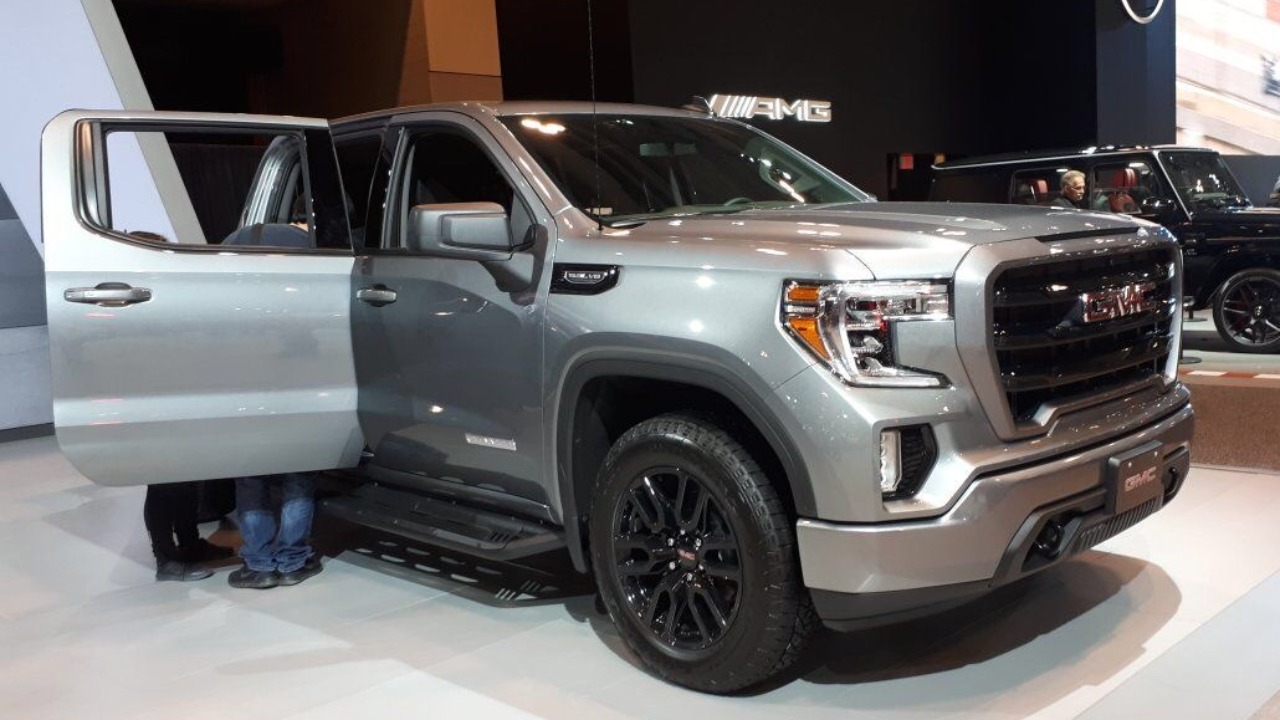

General Motors ended 2025 with a clear sales win, even as the broader U.S. auto market lost some steam in the final stretch of the year. The company grew volume, leaned on its most profitable trucks and SUVs, and pushed aggressively into electric vehicles, yet still ran into a sharper-than-expected slowdown in the fourth quarter that hints at tougher conditions ahead.
The story of GM’s year is one of strength meeting friction: strong demand through most of 2025, record EV momentum, and a commanding lead over key rivals, followed by cooling showroom traffic and rising economic and policy headwinds. I see that combination as a stress test of GM’s strategy, and the results suggest the automaker has more room to maneuver than many of its competitors, but less margin for error than its headline numbers might imply.
GM’s headline numbers: growth on top of a cooling market
By the end of 2025, General Motors had done what every legacy automaker has been trying to do in a choppy recovery: grow faster than the market without sacrificing its long-term transition plans. The company sold more than 2.8 m vehicles in the United States, an increase of 5.5 percent over the prior year, a performance that outpaced overall industry growth and cemented GM’s position at the top of the U.S. sales charts. That kind of expansion, on a base already measured in the millions, is not a simple rebound from pandemic-era lows; it reflects a deliberate push to keep assembly plants humming and dealer lots stocked even as some rivals pulled back.
The context makes those numbers more striking. Industrywide, new-vehicle sales were expected to reach about 16.3 million in 2025, up nearly 2 percent from 2024, according to forecasts that framed GM as Poised to Lead the market. That gap between a roughly 2 percent industry gain and GM’s 5.5 percent climb is the real story: it shows the automaker not just riding a rising tide but taking share, even as the final months of the year brought a noticeable Slowdown in showroom traffic.
A late-year chill after nine hot months
The slowdown that capped GM’s year did not come out of nowhere. Through the first three quarters of 2025, U.S. auto sales surprised on the upside, with robust consumer demand and improving inventories supporting what one forecast described as nine “surprisingly strong” months. By December, however, the seasonally adjusted annual rate, or SAAR, had eased back, signaling that the pace of buying was cooling even as full-year totals still looked healthy. For GM, that meant a strong year on paper, but a more cautious tone in dealer showrooms as the holidays approached.
Analysts tied that late-year chill to a mix of factors: higher borrowing costs that made monthly payments harder to swallow, lingering affordability concerns after several years of price inflation, and a sense among some buyers that they could wait for better deals. According to Cox Automotive, the December SAAR reflected that shift, with the market still on track for its best result since 2019 but clearly losing some of the momentum that had defined most of the year. GM’s own fourth-quarter performance mirrored that pattern, with growth slowing sharply compared with the earlier quarters even as the company still finished 2025 ahead of its 2024 tally.
How GM pulled ahead of Toyota and the rest
GM’s ability to grow faster than the market in 2025 is easier to understand when you look at its closest rivals. Toyota, the No. 2 top-selling automaker in the United States, reported sales of 2.5 m vehicles in 2025, leaving a sizable gap between the Japanese brand and its Crosstown rival in Detroit. That spread underscores how GM’s mix of full-size pickups, large SUVs, and a growing EV portfolio gave it more levers to pull than competitors that lean more heavily on compact cars and hybrids.
GM also benefited from a broader market dynamic that favored the largest players. Forecasts from Cox Automotive suggested that the top automakers would widen their lead over smaller brands as the industry adjusted to higher costs, stricter emissions rules, and the capital demands of electrification. In that environment, GM’s scale, its deep dealer network, and its ability to spread investments in new technology across millions of vehicles became competitive advantages that helped it capture incremental share even as the overall market’s growth rate moderated.
Trucks and SUVs did the heavy lifting
Underneath the headline numbers, GM’s 2025 performance was powered by the same vehicles that have long underwritten its profits: full-size pickups and SUVs. Reporting on the company’s results highlighted that GM’s sales gain was “powered by trucks, SUVs,” a shorthand that points directly to nameplates like the Chevrolet Silverado, GMC Sierra, Chevrolet Tahoe, GMC Yukon, and Cadillac Escalade. These models carry higher margins than compact cars or small crossovers, so growing their volume does more than pad the unit count, it fattens the bottom line and funds future investments.
That truck and SUV strength also helped GM absorb some of the pressures that hit the industry in 2025. According to one analysis, The Detroit Three absorbed billions in tariff charges in 2025, a short-term strategy that kept sticker prices from rising even faster but squeezed margins. For General Mot and its peers, having a lineup anchored in high-profit trucks and SUVs made that trade-off more manageable, allowing them to protect share and keep factories running despite those added costs and broader supply constraints.
Record EV momentum, then a sharp Q4 brake tap
If trucks and SUVs were the financial engine, electric vehicles were GM’s growth story. The company set a full-year EV sales record in 2025, with Record EV volume that “absolutely crushed” its prior performance and pushed it into the top tier of U.S. electric sellers. That surge reflected the ramp-up of Ultium-based models like the Chevrolet Blazer EV, Chevrolet Equinox EV, Cadillac Lyriq, and GMC Hummer EV, as well as continued demand for the outgoing Chevrolet Bolt as GM wound down its first-generation mass-market EV.
The twist is that this record year for EVs ended with a pronounced deceleration. Reporting on GM’s performance noted that the company’s electric sales gave way to a sharper-than-expected slowdown in the fourth quarter, even as they had been a bright spot through most of the year. That pattern suggests that early adopters and fleet buyers carried much of the 2025 growth, while mainstream consumers grew more cautious amid questions about charging infrastructure, resale values, and evolving federal incentives. For General Motors, the Q4 brake tap on EVs is a reminder that even strong product momentum can be blunted by macro forces and policy uncertainty.
GM’s EV ranking: No. 2 with room to grow
Despite that late-year cooling, GM ended 2025 in a position that would have seemed ambitious just a few years ago: it Closes the year as the No. 2 U.S. Electric Vehicle Seller, with EV Sales Up 48% compared with 2024. That 48 percent growth rate is far higher than the company’s overall 5.5 percent volume gain, which means EVs are not just a side story, they are the fastest-growing part of GM’s U.S. business. It also signals that the company’s bet on a dedicated Ultium platform and a broad EV lineup is starting to pay off in real market share, not just press releases.
Being the second-largest EV seller in the country carries strategic weight. It gives GM scale in battery procurement and software development, and it strengthens its hand in negotiations with charging partners and policymakers. At the same time, the Q4 slowdown shows that even a 48 percent annual increase does not guarantee a smooth trajectory. GM will need to balance production plans, pricing, and incentives carefully in 2026 to avoid building more EVs than the market is ready to absorb, especially as new competitors and refreshed models from established rivals crowd into the same segments.
The broader market: strong year, softer finish
GM’s 2025 story cannot be separated from the broader U.S. auto market, which delivered its best full-year performance since 2019 but clearly lost some energy as the year wound down. Industry forecasts framed the year as a success “Despite Q4 Slowdown,” with new-vehicle sales expected to hit 16.3 million, up nearly 2 percent from 2024. That outcome reflects a market that finally worked through many of the inventory shortages and production disruptions that had plagued it since the pandemic, even as higher interest rates and economic uncertainty kept some buyers on the sidelines.
Within that context, GM’s outperformance looks less like a fluke and more like the result of deliberate positioning. Forecasts that described GM as Poised to Lead 2025 captured the idea that the company entered the year with relatively strong inventory, a refreshed lineup in key segments, and a willingness to use incentives selectively to keep metal moving. At the same time, the December data, which showed a lower SAAR than earlier in the year according to Cox Automotive, underscored that even the strongest players were not immune to the late-year chill. For GM, that meant finishing ahead of rivals but also facing into 2026 with a more cautious read on consumer demand.
Tariffs, costs, and the Detroit Three’s balancing act
Behind the sales charts, 2025 was also a year of rising costs and strategic trade-offs for GM and its peers. The report that The Detroit Three absorbed billions in tariff charges in 2025 is a stark reminder that policy decisions in Washington and abroad can reshape automakers’ economics almost overnight. By choosing to eat those costs rather than pass them fully on to consumers, GM and its rivals effectively bought themselves time to adjust supply chains and pricing strategies, but they also compressed margins in a year when they were investing heavily in EVs, software, and advanced driver-assistance systems.
For GM, that balancing act played out in several ways. The company leaned on its high-margin trucks and SUVs to offset tariff-related pressures and the added complexity of building more EVs, which often carry higher upfront costs. It also had to navigate broader supply constraints that affected everything from semiconductors to specialized materials used in batteries and advanced safety systems, a challenge highlighted in the same analysis that flagged tariffs as an indicator of broader supply issues. The fact that GM still managed a 5.5 percent sales increase in that environment suggests that its operational discipline and product mix gave it more resilience than some smaller competitors, but it also raises the stakes for 2026, when those temporary cost-absorption strategies may no longer be sustainable.
What the 2025 finish means for GM’s 2026 playbook
Looking ahead, GM’s 2025 performance sets a high bar and a clear set of challenges. The company enters 2026 as the U.S. volume leader, with more than 2.8 m vehicles sold last year, a 5.5 percent gain that outpaced the market, and EV Sales Up 48% that made it the No. 2 Electric Vehicle Seller. It also carries the momentum of a truck and SUV lineup that remains central to American buyers and a growing stable of EVs that, despite a Q4 slowdown, delivered a Record EV year for the company. Those are enviable starting conditions for any automaker.
Yet the late-year slowdown, the tariff overhang, and the signs of consumer fatigue in both the internal-combustion and EV markets mean GM cannot simply run the same playbook again. I expect the company to be more surgical with incentives, more cautious in its EV production ramp, and more aggressive in managing costs across its supply chain, especially if interest rates remain elevated and the broader economy softens. The 2025 results show that GM can grow even in a cooling market, but they also hint that the next phase of the transition, from early EV enthusiasm to true mass adoption, will require as much financial discipline as engineering prowess.
More from Morning Overview