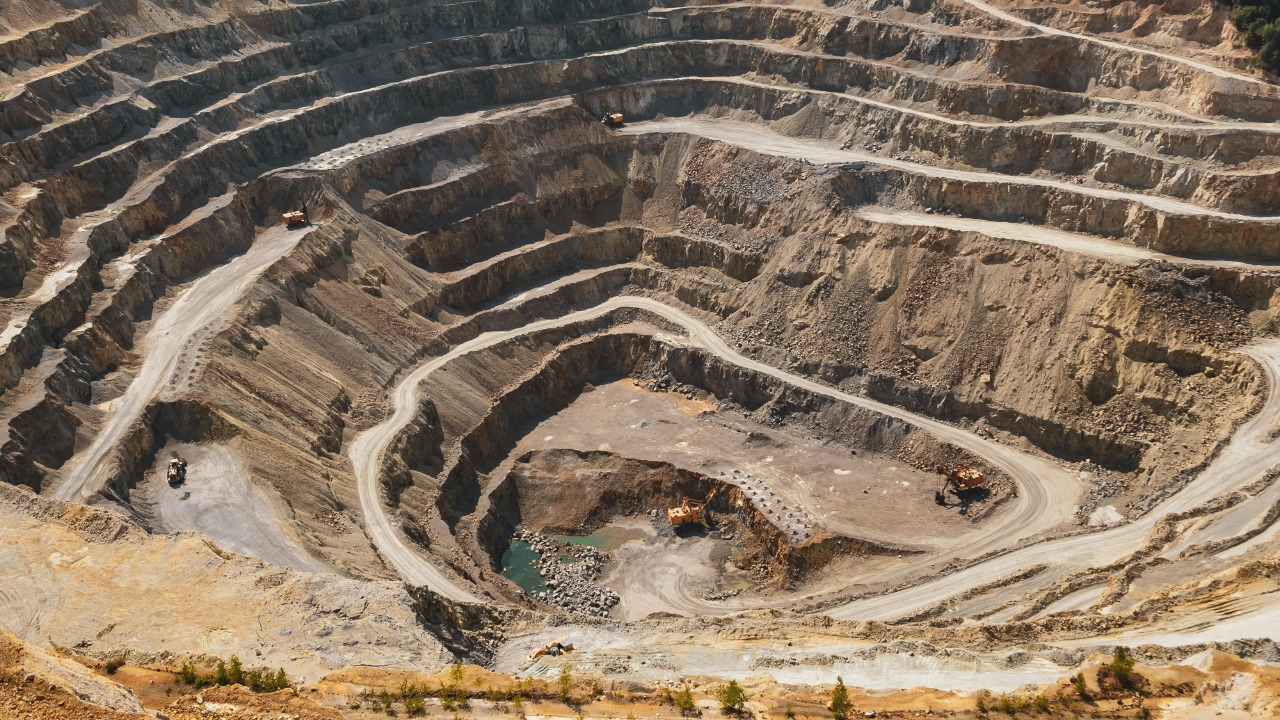

Germany has confirmed that an old natural gas field in the Altmark region holds an estimated 43 Million Tons of lithium, instantly propelling the country into the top tier of global reserves and reframing the geopolitics of battery minerals. The scale of the find, described as One of the World’s Largest Lithium Deposits in a Former Gas Field, could shift how Europe powers its electric vehicles and stores renewable energy for decades to come. For a nation that has long relied on imports for critical raw materials, the discovery marks a rare moment when geology and industrial strategy suddenly align.
What makes this story more than a headline is the convergence of timing, technology, and policy. As carmakers race to electrify their fleets and governments tighten climate targets, a 43 M trove of lithium carbonate equivalent beneath a mature gas basin offers both opportunity and risk. I see in Altmark not just a mining project, but a test case for whether advanced economies can build new resource industries without repeating the environmental and social mistakes of the fossil fuel era.
The Altmark basin’s hidden cache
The Altmark basin in northern Germany has been part of Europe’s energy backbone for generations, but until recently it was known for natural gas, not battery metals. Subsurface studies now indicate that the same porous rock formations that once stored hydrocarbons also host geothermal brines enriched with lithium, with estimates converging around 43 m of lithium carbonate equivalent locked in the system. That figure, cited as 43 million tons in multiple technical assessments, would place Altmark among the largest single accumulations of lithium identified anywhere in the world, rivaling some deposits in South America’s so‑called Lithium Triangle.
What stands out to me is how a mature gas province has effectively been reclassified as a strategic battery resource without drilling a single new wildcat well. Existing wells, pipelines, and processing sites built for gas can be repurposed to circulate hot brine, extract lithium, and reinject the fluid, turning a declining fossil asset into a low‑carbon materials hub. Early analyses describe the Altmark structure as One of the largest lithium deposits yet documented, and they stress that the 43 m figure refers to lithium carbonate equivalent, a standard metric used by the industry to compare resources across very different geological settings.
From forgotten gas field to strategic asset
The transformation of Altmark from a fading gas field into a strategic lithium reserve is as much a story of timing as of geology. For years, the basin sat in the background of Europe’s energy system, a workhorse that had already passed its production peak. Only when operators began reassessing geothermal potential and fluid chemistry did the scale of the lithium enrichment become clear, revealing that a Former Gas Field could underpin a new phase of industrial development. In effect, infrastructure that once served natural gas exports is now being reimagined as the backbone of a domestic battery materials supply chain.
In my view, this pivot underscores how legacy fossil assets can be retooled rather than simply abandoned. The same network of wells and surface facilities that once moved methane can now circulate brine in closed loops, reducing the need for new land disturbance. Reports on the discovery emphasize that Germany Confirms One of the World’s Largest Lithium Deposits in this setting, and that the existing grid connections and industrial workforce in Saxony‑Anhalt give the project a head start compared with greenfield sites in remote regions. The challenge will be to convert that head start into commercially viable production without cutting corners on environmental safeguards.
How big is 43 million tons in global context?
Numbers like 43 million tons can sound abstract, so it helps to translate them into the language of cars, batteries, and market share. Industry analysts typically estimate that a mid‑size electric vehicle, such as a Volkswagen ID.4 or a Tesla Model 3, contains on the order of tens of kilograms of lithium carbonate equivalent in its battery pack. On that basis, a resource of 43 m could theoretically support hundreds of millions of EVs over its lifetime, even after accounting for recovery losses and the fact that not all resources become reserves. One of the more striking comparisons in the technical commentary is that Altmark’s endowment is in the same league as some of the largest brine systems in South America, long considered the heartland of lithium supply.
Several assessments describe the Altmark find as One of the largest lithium deposits yet identified in Europe, and they stress that the 43 m figure is not a casual estimate but the product of detailed reservoir modeling and chemical sampling. When I weigh those numbers against current global production, which is measured in the low millions of tons per year of lithium carbonate equivalent, it is clear that even a fraction of Altmark’s resource brought to market could materially affect supply dynamics. That is why early coverage has framed the discovery as a potential new energy chapter for Germany and for the wider European Union, with the capacity to reshape expectations about where future battery metals will come from.
Neptune Energy and the industrial players behind the find
Behind the headlines about a giant deposit lies a specific corporate actor: Neptune Energy. The company, long active in European oil and gas, has been central to the subsurface work that identified the lithium‑rich brines in the Altmark basin. In technical briefings, Neptune Energy has been cited as the firm that quantified the 43 m of lithium carbonate equivalent and began mapping how existing wells could be integrated into a direct extraction scheme. I see this as part of a broader trend in which traditional hydrocarbon companies leverage their geological expertise and infrastructure to pivot into low‑carbon or critical mineral projects.
Reports summarizing the discovery list Neptune Energy among the Key Points of the Altmark story, noting that its long familiarity with Germany’s subsurface and its role in operating gas fields gave it a unique vantage point to spot the lithium opportunity. The company’s involvement also signals that this is not a speculative junior‑miner play but a project anchored in Europe’s established energy infrastructure. In my assessment, that matters for both financing and public acceptance, since a firm with a track record in Germany is more likely to be held to account on environmental performance than a newcomer with no local history.
Germany’s EV ambitions and the race for battery independence
The Altmark discovery lands at a moment when Germany’s automotive sector is under intense pressure to secure reliable, low‑carbon supplies of battery materials. Carmakers from BMW to Mercedes‑Benz and Volkswagen are ramping up production of models like the BMW i4, the Mercedes‑Benz EQE, and the Volkswagen ID.3, all of which depend on stable access to lithium for their high‑capacity packs. Until now, the country’s automotive industry has relied heavily on imported lithium, often processed in Asia, to meet its battery production requirements, a dependence that policymakers increasingly view as a strategic vulnerability.
Earlier policy moves show how seriously Berlin takes this issue. Over the summer, the government provided Vulcan Energy with 104 million euros to produce what officials described as clean lithium from geothermal brines in the Upper Rhine region, explicitly linking that support to the need to diversify sources for our domestic economies. That funding, detailed in a report on how Germany provides Vulcan Energy with 104 million Euros to produce clean lithium, set a precedent for public backing of innovative extraction technologies. In my reading, the Altmark find amplifies that strategy: instead of relying solely on smaller regional projects, Germany now has a single resource base that could, if developed responsibly, underpin a significant share of its long‑term EV and grid‑storage demand.
Altmark versus the Lithium Triangle and other global hubs
Any claim that a deposit ranks among the world’s largest invites comparison with established hubs like Chile’s Salar de Atacama or Argentina’s Hombre Muerto basin. The Lithium Triangle has long dominated discussions of brine‑hosted lithium, with its high‑altitude salars and evaporation ponds. What makes Altmark different is not just geography but process: instead of open‑air ponds, the vision in Germany centers on closed‑loop circulation of hot brine through wells, with lithium stripped out in surface plants and the fluid reinjected underground. Technical notes on the Altmark system explicitly compare its scale to the Lithium Triangle while emphasizing that the German project would isolate lithium from brine deposits using more compact, modular facilities.
From my perspective, this contrast highlights both opportunity and uncertainty. On one hand, a large European resource that avoids sprawling evaporation ponds could appeal to regulators and communities wary of the water and land impacts seen in parts of South America. On the other, direct lithium extraction at the scale implied by 43 m has not yet been proven in many markets, and the energy requirements of pumping and processing brine at depth are nontrivial. Analyses that describe Altmark as One of the largest lithium deposits in the state of Saxony‑Anhalt also stress that the project will need to integrate with Europe’s broader energy transition, potentially using renewable power to drive extraction so that the resulting lithium can credibly be marketed as a low‑carbon input to batteries.
Environmental stakes and the promise of “clean lithium”
One of the most contentious questions around any new lithium project is whether it can live up to the rhetoric of clean energy. In Altmark, proponents argue that using an existing gas field reduces surface disturbance and that closed‑loop brine handling can minimize contamination risks. The concept echoes other geothermal‑lithium hybrids in Europe, where operators aim to co‑produce heat, power, and battery metals from the same wells. I find this model compelling in theory, because it treats the subsurface as a multi‑resource system rather than a single‑commodity target, but it will only win public trust if monitoring data show that aquifers, seismicity, and local ecosystems remain within safe bounds.
Public messaging around the Altmark discovery has leaned heavily on the idea of clean lithium and on the potential to support BatteryTechnology, CleanEnergy, EnergySecurity, and FutureMobility in one integrated package. A widely shared video framed the story with the headline GERMANY UNCOVERS A 43-MILLION-TON LITHIUM DEPOSIT VALUED AT OVER $1 TRILLION, underscoring both the scale of the resource and the financial stakes. In my assessment, that kind of framing cuts both ways: it can galvanize investment and political support, but it can also raise expectations that may be hard to meet if environmental reviews, community consultations, or technical hurdles slow the rollout of commercial production.
Economic impact: from regional jobs to national strategy
For the state of Saxony‑Anhalt and the communities around the Altmark basin, the lithium discovery promises a new industrial chapter just as legacy gas operations wind down. Converting a mature gas field into a lithium hub could preserve skilled jobs in drilling, reservoir engineering, and plant operations, while also creating new roles in chemical processing and battery‑grade refining. I see a clear opportunity for local technical universities and vocational schools to pivot their curricula toward geothermal systems, electrochemistry, and critical minerals, aligning workforce development with the needs of a 43 m‑scale project.
At the national level, the economic implications extend far beyond direct employment. Analysts have suggested that a resource of this magnitude could be valued at over $1 trillion at prevailing lithium prices, a figure echoed in the GERMANY UNCOVERS 43-MILLION-TON LITHIUM DEPOSIT narrative that has circulated widely. Even if market prices fall as new supply comes online globally, the strategic value of having a domestic source of a key battery metal is difficult to overstate. It strengthens Germany’s hand in trade negotiations, reduces exposure to supply disruptions, and supports the country’s ambition to be a leading hub for EV and battery manufacturing within Europe.
What it means for Europe’s energy security
Zooming out from Germany, the Altmark discovery has clear implications for European energy security. The European Union has spent years warning about overreliance on imported critical raw materials, particularly from a small number of supplier countries. Lithium has been central to those concerns, given its role in both electric vehicles and stationary storage that can balance intermittent wind and solar. By confirming One of the World’s Largest Lithium Deposits within its borders, Europe gains a potential anchor for a more self‑reliant battery ecosystem, even if it will still need to import other materials like nickel, cobalt, and graphite.
Analytical pieces on Germany Discovers Major Lithium Reserves, What It Means have stressed that much of the current processing of lithium is predominantly carried out in China, even when the raw material is mined elsewhere. In my view, that is the next frontier for European strategy: not just extracting lithium in places like Altmark, but building the refining, cathode, and cell manufacturing capacity to keep more of the value chain onshore. If policymakers can align permitting, infrastructure, and industrial policy around that goal, the 43 m resource in a former gas field could become a cornerstone of a more resilient, lower‑carbon European energy system rather than just another raw material export story.
The road from discovery to production
For all the excitement around Altmark, it is important to remember that a confirmed resource is only the first step on a long road to full‑scale production. Operators will need to pilot direct lithium extraction technologies in the specific geochemical conditions of the basin, secure environmental approvals, and negotiate benefit‑sharing arrangements with local communities. I expect that early demonstration plants will focus on proving that lithium can be recovered at commercial concentrations while maintaining stable reservoir pressures and avoiding induced seismicity, issues that have dogged some geothermal projects in the past.
Coverage of the discovery has framed it as a potential turning point that could reshape the EV future, with Story by Georgina Jedikovsk and others highlighting both the technical promise and the policy stakes. One report on 43 million tons: One of world’s largest lithium deposits found, could reshape EV future, for example, situates Altmark within a broader wave of investments in European battery supply chains. As I see it, the next few years will determine whether the 43 m figure becomes a symbol of what is possible when old energy infrastructure is repurposed for a low‑carbon era, or a cautionary tale about the gap between resource estimates and real‑world projects. The decisions taken now by companies, regulators, and communities in Saxony‑Anhalt will ripple far beyond the boundaries of a single German gas field.
Global competition and the shifting lithium map
The confirmation of Altmark’s scale arrives amid an intensifying global race to secure lithium, with new projects announced from Nevada’s Clayton Valley to hard‑rock mines in Western Australia. In that context, Germany’s 43 m resource is not just a domestic story but a signal that the geographic map of lithium is becoming more diversified. Regions that were once peripheral to battery supply chains are now emerging as serious players, and that shift could alter pricing power, investment flows, and even diplomatic relationships as countries vie to lock in long‑term offtake agreements.
Analysts who first flagged 43 million tons: One of world’s largest lithium deposits found have argued that such large new resources could, over time, ease some of the supply bottlenecks that have driven up battery costs and slowed EV adoption. A follow‑up piece framed the discovery as A new energy chapter for Germany and for Europe, suggesting that the continent might move from being primarily a consumer of imported battery metals to a more balanced participant in the global market. From my vantage point, the Altmark find does not eliminate the need for international cooperation on critical minerals, but it does give Europe more agency in shaping the rules of that emerging system, from environmental standards to labor practices and recycling mandates.
Public perception and political stakes
Finally, the way the Altmark discovery is perceived by the German public will shape its trajectory as much as any engineering milestone. Early coverage has ranged from technical briefings to more exuberant social media posts, with some framing the find as a once‑in‑a‑generation windfall that could power millions of electric cars. One widely cited report on the World’s largest lithium deposit discovered in Altmark emphasized that Germany just put a large number of future EVs within reach, tapping into a narrative of national pride in technological leadership. At the same time, environmental groups and local residents are already asking hard questions about water use, seismic risk, and the cumulative impact of industrial activity in the region.
In my assessment, political leaders will need to balance the desire to move quickly with the imperative to maintain trust. That means transparent disclosure of project data, meaningful consultation with affected communities, and clear alignment with Germany’s broader climate and industrial policies. A separate analysis on 43 Million Tons: Germany Confirms One of the World’s Largest Lithium Deposits in Former Gas Field noted that the country had, until recently, remained a spectator in the global scramble for lithium. With Altmark, Germany steps onto the field as a major player. Whether it can play that role in a way that is both economically and environmentally credible will be one of the defining tests of its energy transition in the years ahead.
More from Morning Overview