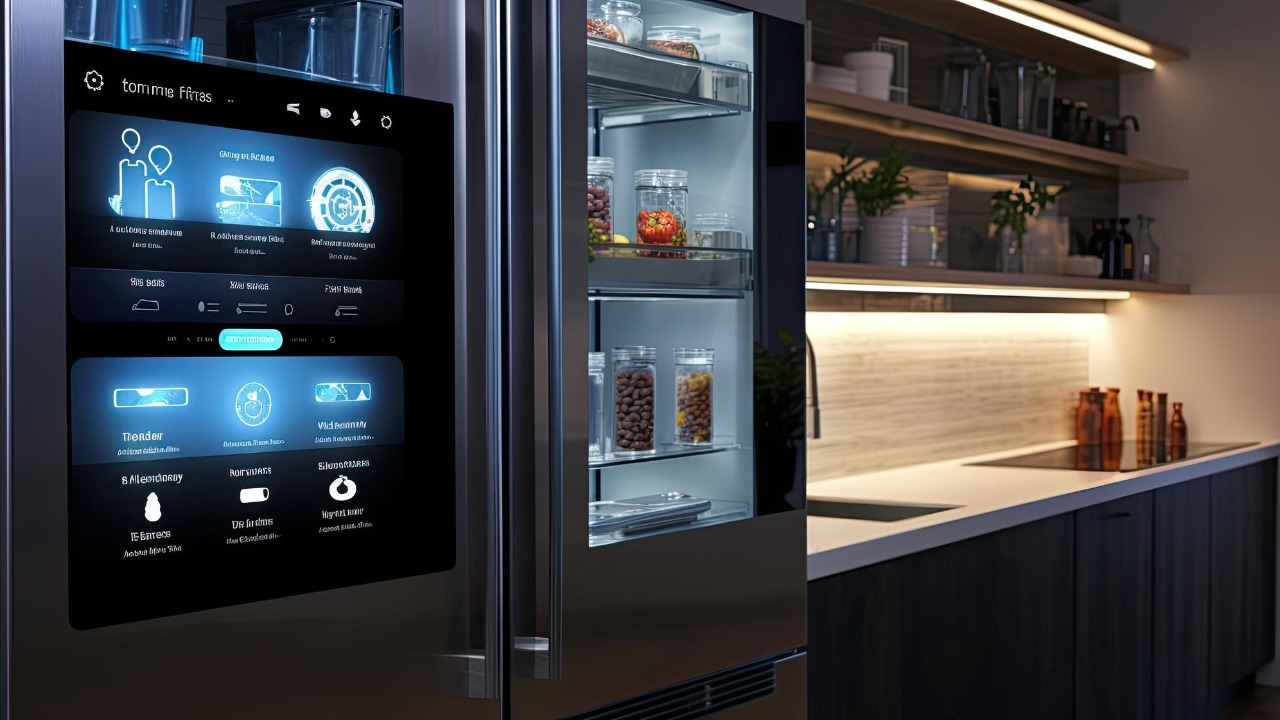

GE is turning the refrigerator into a full-fledged shopping assistant, unveiling a smart model that scans barcodes, tracks what is inside, and automatically orders groceries through Instacart. Instead of scribbling lists on a notepad or tapping through an app, owners can let the appliance monitor staples and replenish them in the background. The launch signals how quickly the kitchen is becoming a connected hub where software, cameras, and retail partnerships quietly reshape everyday routines.
GE’s bold play to automate the grocery run
GE is positioning its latest appliance as more than a high-end fridge, framing it as a way to offload one of the most repetitive household chores: keeping the kitchen stocked. The company has introduced the GE Profile Smart Refrigerator with Kitchen Assistant, a model that uses built-in scanning and connectivity to keep tabs on food and then trigger Instacart orders when items run low. In practical terms, that means the fridge is designed to notice when the last yogurt or carton of milk leaves the shelf and to move those products into a digital cart without the owner needing to open a separate app.
The strategy fits a broader push by GE Profile to blend hardware with services, using features like a large touchscreen, internal cameras, and voice controls to make the refrigerator feel more like a kitchen computer than a cold box. Reporting on the launch describes how the appliance integrates a first-of-its-kind Scan-to-List barcode system that feeds into the SmartHQ app, turning every scanned product into structured data the software can act on, including Instacart ordering rules that the user sets in advance. The company’s own positioning of The GE Profile Smart Refrigerator Scan List feature underscores how central automation is to this release, not just convenience add-ons.
Inside the Scan-to-List brain: how the tech actually works
At the heart of the new model is that Scan-to-List system, which turns the refrigerator door into a kind of checkout lane. Instead of relying only on cameras and guesswork, GE has embedded a dedicated barcode scanner so owners can swipe packaged goods as they go into the fridge or pantry. Each scan adds the item to a digital inventory, which the Kitchen Assistant software then uses to maintain a running list of what is on hand, what is running low, and what should be reordered through Instacart when thresholds are met.
The company describes this as a “first-of-its-kind, built-in Scan-to-List barcode scanner” that is fully integrated with the SmartHQ app, so the same list appears on the fridge’s touchscreen and on a phone. That integration is what allows the appliance to move from passive tracking to active shopping, since the app can translate the scanned products into Instacart-ready items and apply user preferences like favorite brands or package sizes. The Scan-to-List branding is central in GE’s own materials, which highlight Scan List as the connective tissue between the physical fridge and the digital cart.
FridgeFocus, cameras, and the end of duplicate lettuce
Barcode scanning is only one layer of the system. GE has also built in cameras and a feature called FridgeFocus, which is meant to keep owners from buying the same perishables twice. The idea is straightforward: by combining visual data from inside the fridge with the Scan-to-List inventory, the software can flag when there are already two bags of salad mix or a full carton of eggs, nudging the user to skip that item in the next order. In theory, that reduces food waste and saves money by cutting down on impulse duplicates.
Coverage of the launch notes that this FridgeFocus capability is designed specifically to prevent overbuying produce that is already sitting in a drawer, a common pain point for busy households that shop on autopilot. The same reporting points out that smart fridges have been around for years, but most have struggled to move beyond novelty features like displaying photos or mirroring a TV feed. By contrast, GE is pitching FridgeFocus and the barcode scanner as practical tools that directly affect the grocery bill, with one analysis describing how smart fridges are a dime a dozen and arguing that this model stands out by actually automating a task people care about.
From scanned item to Instacart doorstep
The most attention-grabbing promise is the direct pipeline from fridge to Instacart. Once items are scanned into the system, owners can set rules that tell the Kitchen Assistant when to reorder, whether that is when a product count hits zero or when a certain number of days have passed. When the trigger conditions are met, the fridge sends the list to Instacart, where it becomes a shoppable cart that can be delivered from local grocery partners. For people who already rely on Instacart, the fridge effectively becomes a front end for the service, removing the step of manually building each order.
Reports on the product emphasize that this is not just a one-off integration but a core part of how GE is marketing the appliance, with the Instacart connection framed as a way to “auto-order” groceries rather than simply suggest them. That framing is echoed in detailed breakdowns of the feature set, which describe how the Kitchen Assistant uses the Scan-to-List data to populate a shopping list that can be pushed to Instacart with a few taps on the touchscreen or in the app. One deep dive into Debuts Smart Refrigerator That Auto Orders Groceries notes that the same interface also supports voice controls, so owners can add items verbally alongside the automated scans.
Touchscreen, voice, and the Kitchen Assistant personality
GE is not just selling automation, it is also trying to make the fridge feel like a responsive kitchen companion. The front of the appliance features a sizable touchscreen that surfaces the grocery list, recipe suggestions, and status alerts about what is running low. Paired with microphones and voice recognition, the Kitchen Assistant can respond to spoken commands to add items, check what is in stock, or adjust settings without the user needing to touch the screen with messy hands in the middle of cooking.
That combination of display, cameras, and voice is central to how GE describes the product, with official materials highlighting a large touchscreen, internal cameras, and voice controls as part of the same package that powers the Instacart integration. One report on the launch of Ola Hassan Bolaji Published coverage notes that the interface is designed to make the Scan-to-List and FridgeFocus features feel approachable, not buried in a settings menu. In practice, that means the fridge can surface prompts like “You are low on eggs” or “You already have strawberries” in plain language, nudging owners to either approve an Instacart order or skip it.
Availability, pricing, and where this fridge fits in the market
GE is clearly targeting the premium end of the appliance market with this release. The GE Profile Smart Refrigerator with Kitchen Assistant is set to arrive in the first half of the year, with different reports pointing to early spring availability. One detailed preview notes that the model will be available to purchase from March for an MSRP of $4,899, a price that puts it firmly in the luxury tier of French-door refrigerators and signals that GE expects early adopters to pay a significant premium for automation and Instacart integration.
Other coverage of the rollout describes a similar timeline, with GE planning to release the smart refrigerator in April and positioning it as part of its premium appliance category. That slight discrepancy in timing likely reflects regional or channel differences, but the throughline is that this is not a budget product. Analyses of $4,899 pricing point out that the cost aligns with other high-end four-door models that offer advanced cooling zones and custom finishes, but here the extra money is also buying a tightly integrated software stack. A separate breakdown of Availability and notes that GE is explicitly labeling the fridge as a premium appliance, which sets expectations for both build quality and long-term software support.
How it compares to earlier smart fridges
Smart fridges are not new, but most previous attempts have struggled to justify their extra cost. Earlier models from various brands have offered features like streaming music, displaying calendars, or showing what is inside via a camera feed, yet many owners still defaulted to paper lists or separate grocery apps. GE’s new approach is different in that it focuses on a specific, high-value workflow: tracking groceries and automating reorders through a mainstream delivery service. By tying the fridge directly to Instacart and grounding the experience in barcode scans, GE is betting that this generation of smart fridge will feel less like a gadget and more like a practical tool.
Analysts who have seen the product up close note that the combination of Scan-to-List, FridgeFocus, and Instacart integration sets it apart from competitors that rely solely on image recognition or manual list-building. One detailed look at The GE Profile Smart Refrigerator with Kitchen Assistant points out that the barcode scanner is a key differentiator, since it gives the system precise product data instead of guessing from a blurry shelf photo. Another analysis of The GE Profile Smart Door French Door Refrigerator Kitchen Assistant argues that this level of specificity is what allows the fridge to build accurate Instacart carts, something earlier smart fridges could not do reliably.
Design, layout, and everyday usability
Beyond the software, GE is still selling a physical appliance that has to function as a family workhorse. The new model follows a four-door French-door layout, with flexible temperature zones and a dedicated drawer that can shift between fridge and freezer settings depending on what is stored. LED lighting and clear bins are meant to make it easier to see what is inside, which in turn supports the digital tracking features by reducing the odds that food gets lost in the back and quietly expires. The design choices suggest GE is trying to align the physical layout with the digital inventory, so what the app shows matches what the owner sees when the doors open.
Hands-on previews highlight touches like a temperature-controlled drawer and bright interior lighting that make the fridge feel premium even before the smart features come into play. One overview of the launch, framed around how the appliance simplifies list-making, notes that the physical organization of shelves and drawers is tuned to common grocery categories, which helps the cameras and FridgeFocus system interpret what they see. That same report on how the fridge Ahead of CES Profile David launched points to the combination of a flexible temperature drawer and LED lighting as evidence that GE is not treating the smart features as a bolt-on, but as part of a holistic redesign of the interior.
Privacy, data, and who benefits from a scanning fridge
Any appliance that tracks what people eat and when they buy it raises questions about data and privacy, even if the manufacturer focuses on convenience. A fridge that scans barcodes, logs consumption patterns, and sends orders to Instacart is, by design, collecting a detailed record of household habits. That information can be valuable for tailoring recommendations or improving the software, but it also has potential value to retailers and brands that want to understand how often certain products are purchased and in what combinations.
GE’s public materials around the launch focus on features rather than data policies, so the long-term implications for privacy remain unverified based on available sources. What is clear is that the system relies on cloud connectivity through the SmartHQ app and on integration with Instacart’s own platform, which means multiple companies are involved in handling the data generated by the fridge. For consumers weighing whether to spend nearly five thousand dollars on a connected appliance, the trade-off between automation and data sharing will likely be as important as the hardware specs. Some early product listings, such as those surfaced in product search, emphasize the convenience angle, but the real test will come as buyers live with the device and see how transparent the data practices feel.
Who this fridge is really for
With its price, feature set, and reliance on Instacart, the GE Profile Smart Refrigerator with Kitchen Assistant is clearly aimed at a specific slice of the market. The ideal buyer is someone who already uses grocery delivery, is comfortable with connected devices, and sees value in shaving minutes off repetitive tasks. For that audience, the combination of Scan-to-List, FridgeFocus, and automated Instacart carts could feel like a natural extension of habits they already have, especially in busy households where forgotten items or duplicate purchases are a weekly frustration.
For others, the calculus may be different. People who prefer in-store shopping, live in areas with limited Instacart coverage, or are wary of sharing detailed consumption data may see less value in paying a premium for these features. Early product listings and previews, including those surfaced through another product search entry, suggest that GE is betting there are enough tech-forward, delivery-friendly households to justify the investment. Whether that bet pays off will depend on how seamlessly the fridge performs in real kitchens and how much friction it can truly remove from the weekly grocery grind.
More from MorningOverview