
Ford’s decision to unwind its all-electric pickup experiment is more than a product cancellation. By taking what it calls the largest EV write-down in its history and shutting down its flagship electric truck line, the company is effectively admitting that its boldest bet on battery-powered work vehicles misread the market and the economics. The move turns a once-celebrated symbol of Detroit’s electric future into a cautionary tale about cost, demand, and the limits of rapid disruption in America’s truck heartland.
Instead of doubling down on the F-series EV, Ford is pivoting toward hybrids, gas-assisted range extenders, and even power-hungry data centers, recasting itself as a supplier to artificial intelligence infrastructure rather than a pure-play EV champion. The fallout from this shift will ripple through factory towns, rival automakers, and policy debates over how quickly the United States can, or should, electrify its most profitable vehicles.
The $19.5 billion reckoning behind Ford’s EV retreat
At the center of Ford’s reversal is a staggering accounting hit that crystallizes how far its electric ambitions drifted from financial reality. The company has acknowledged a $19.5 Billion Charge tied to its battery-powered lineup, a figure that ranks as the largest EV write-down in Ford history and that directly precedes the shutdown of its flagship electric truck line. That sum reflects not just sunk development costs but also the expensive retooling of plants, supplier contracts, and the premium hardware needed to build large battery packs at scale. Ford had already signaled that its electric division was bleeding red ink when it projected Ford Projects $5.5B EV Losses in 2025, Delays Launches Amid Demand Slump, even as Ford Motor Co leaned on strong truck sales in its traditional lineup to prop up overall results. The new write-down multiplies that warning into a full-blown reset, forcing executives to concede that the economics of big-battery pickups, at current prices and demand levels, could not justify the capital they had poured into the program.
Killing the F-150 Lightning and an entire flagship line
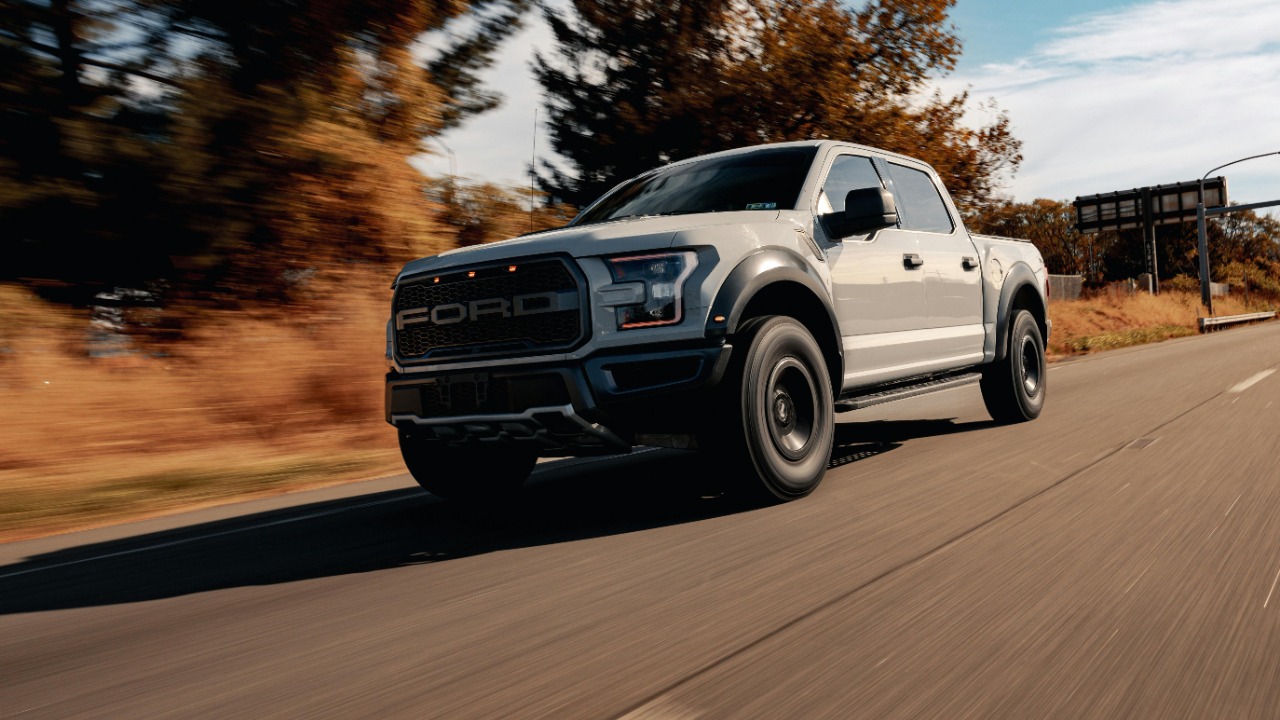
The most visible casualty of this reckoning is the all-electric F-series truck that was supposed to anchor Ford’s future. The company has stopped production of the all-electric F-150 Lightning, with Ford Motor Company confirming that the line has been discontinued after a short and heavily publicized run, a decision captured in coverage featuring Scott Olson photographs for Getty Images North America. What began as a showcase of Detroit’s ability to electrify its best-selling truck has ended as a symbol of how quickly a flagship can be pulled when the numbers stop adding up.
Ford has not just trimmed around the edges, it has effectively killed the entirety of its F-150 EV pickup effort, warning investors of a whopping $19.5 billion writedown as it shutters the electric truck line that had been built into the broader F-150 family. In doing so, Ford has turned what was marketed as a once-in-a-generation transformation of its core franchise into a short-lived experiment, leaving suppliers and workers tied to the Lightning program facing a future that now depends on whatever replaces it.
From pure EV to hybrid pickup replacement
Rather than abandoning the truck segment itself, Ford is retreating to a more incremental form of electrification that leans on internal combustion engines to solve the range and cost problems that plagued its battery-only pickup. The company plans to replace the fully electric F-150 Lightning with an extended-range version that uses a gas engine to recharge the battery, a strategy described in detail in a post noting that The company will replace the fully electric F-150 Lightning with a configuration that blends combustion and electric power. That pivot aligns Ford more closely with rivals that have long argued for hybrids as a bridge technology rather than betting everything on pure EVs.
Internally, the shift is being framed as a response to “real-world use cases” for truck buyers who tow, haul, and drive long distances, and who balked at the compromises required by a battery-only work truck. Reporting on how Ford and Ram pulled the plug on their electric pickups notes that the early lead Ford enjoyed with the Lightning did not insulate it from higher costs, uneven demand, and a truck buyer base that still preferred the broader F-150 family, a dynamic captured in analysis of how That early lead has not protected the truck from market realities. By promising a hybrid pickup replacement, Ford is betting that a familiar fuel source plus some electric assistance will be an easier sell than a radical break from the past.
What went wrong with Ford’s electric truck bet
Ford’s electric truck gamble collided with a set of structural problems that were easy to underestimate when the Lightning was unveiled amid fanfare and political backing. The cost of large battery packs, the need for heavy-duty charging infrastructure, and the complexity of building a work truck that could tow and haul without gutting range all combined to make the F-150 EV an expensive proposition. A widely shared discussion of the company’s financial hit describes how Ford still didn’t help itself by making a bare bones truck “damn near impossible” to get unless a buyer was a business, while well-equipped versions were hard to find for less than $80K, putting the vehicle out of reach for many traditional truck customers.
On top of pricing, Ford faced a demand curve that flattened faster than its early reservations suggested, particularly as interest rates rose and cheaper gasoline undercut the economic case for going electric. The company had already flagged that its EV operations would generate heavy losses, and the projected Losses and Delays Launches Amid Demand Slump signaled that the business case for new electric models was deteriorating. By the time the $19.5 billion write-down arrived, the Lightning had shifted from halo product to financial liability, and the company’s leadership had little choice but to cut its losses.
Inside the decision to shut down a flagship line
Ford’s internal calculus appears to have shifted from “how do we make this work” to “how do we stop the bleeding” once it became clear that the electric truck program could not reach scale without eroding the profitability of the broader F-series. Coverage of the restructuring describes how the Largest EV write-down in Ford history directly forced the company to shut down its entire flagship truck line in its current electric form, underscoring that this was not a marginal adjustment but a wholesale retreat. Executives are now repositioning the decision as a strategic pivot rather than a failure, arguing that the lessons learned will inform a more sustainable approach to electrification.
Public messaging has emphasized that “a lot of things were learned” from the Lightning experiment, a phrase that surfaced in a segment shared by KPIX as it reported on Ford killing the F-150 EV pickup and warning of the financial hit. In that same context, Ford acknowledged that the 150 series electric truck and some planned electric commercial vans would not proceed as originally envisioned, signaling that the company is willing to sacrifice even high-profile projects if they threaten the health of its core business.
Ram, GM and the broader electric truck fallout
Ford’s reversal does not exist in a vacuum, it is part of a broader reassessment of electric pickups across Detroit. Ram has also pulled back on its own electric truck plans, and analysts are openly asking whether General Motors should follow suit and ditch its electric truck strategy rather than chase a shrinking niche. A detailed look at the segment notes that Ram, which arrived later to the electric truck party, has already scaled back its ambitions, while GM faces the same headwinds of higher costs and uneven demand that tripped up Ford.
For the industry, the collapse of Ford’s flagship EV truck line is a warning that even the most iconic nameplates cannot defy basic economics. The early lead Ford enjoyed with the Lightning did not translate into durable market dominance, and its rivals are now weighing whether to double down on their own electric pickups or pivot toward hybrids and smaller EVs that are cheaper to build. The fact that Ford and Ram have already pulled the plug will inevitably shape GM’s calculus, as investors and dealers question whether chasing a segment that has burned through $19.5 billion in write-downs for Ford is worth the risk.
From trucks to AI: Ford’s new power play
As it winds down its electric truck line, Ford is not simply retreating from electrification, it is redirecting its energy ambitions toward a very different kind of customer. The company is positioning itself as a supplier of power infrastructure for artificial intelligence, aiming to serve data center operators and technology giants that are racing to build out capacity for AI workloads. Reporting on the shift notes that Ford kills its electric truck and pivots to powering AI, with ENERGYWIRE describing how the automaker is targeting customers such as Open AI, Google and Facebook as it retools its energy strategy.
This pivot reflects a hard-nosed assessment of where demand for high-capacity electrical systems is most reliable in the near term. While retail truck buyers hesitated to pay premium prices for an F-150 EV, hyperscale data center operators are hungry for megawatts of dependable power and are willing to sign long-term contracts. By chasing AI infrastructure instead of doubling down on a struggling electric truck, Ford is betting that the same expertise it developed in batteries, power electronics, and grid connections can be monetized more effectively in the industrial and digital sectors than in consumer pickups.
Jobs, factories and the human cost of a write-down
Behind the balance sheet damage and strategic pivots are workers and communities that had been told the Lightning and its siblings would anchor a new generation of manufacturing jobs. The decision to halt production of the all-electric F-150 Lightning and shut down the flagship EV truck line raises immediate questions about what happens to the plants and employees that were dedicated to the program. Coverage of the restructuring notes that the shift comes with a massive $19.5 billion write-down, with About $8.5 billion tied to capacity that will now be repurposed or wound down, including operations that had been slated to build electric trucks and other EVs from Ford’s Louisville plant by 2027.
Ford has indicated that some of this capacity will be redirected toward hybrid pickups and other vehicles, but the transition will not be seamless for workers who trained specifically on EV platforms. The company’s earlier warning that it would incur $5.5 billion in EV losses and delay launches amid a demand slump already hinted that some planned hiring and expansion would be scaled back. Now, with the flagship electric truck line gone, the question is not just how many jobs can be saved, but what kind of work those jobs will involve in a future that looks more hybrid and AI-centric than the pure EV vision that was sold a few years ago.
What Ford’s reversal means for the EV transition
Ford’s decision to unwind its biggest electric truck bet will reverberate far beyond its own product lineup, reshaping expectations for how quickly heavy vehicles can go fully electric in the United States. Policymakers who pointed to the Lightning as proof that Detroit could electrify its most profitable trucks must now grapple with the reality that even a company as large as Ford can be forced into a U-turn when costs and demand diverge. The fact that the largest EV write-down in Ford history is tied directly to a flagship truck line underscores how fragile the economics of large EVs remain.
At the same time, Ford’s pivot toward hybrids and AI power infrastructure does not signal an abandonment of electrification so much as a recalibration of where and how it will proceed. The company is still investing in electric components and platforms, but it is now channeling those capabilities into extended-range trucks and industrial customers rather than betting everything on a single, high-profile EV pickup. For consumers, the message is that the road to an electric future will likely be more gradual and uneven than early Lightning ads suggested, with hybrids, plug-in range extenders, and behind-the-scenes power projects playing a larger role than headline-grabbing battery-only trucks.
More from Morning Overview