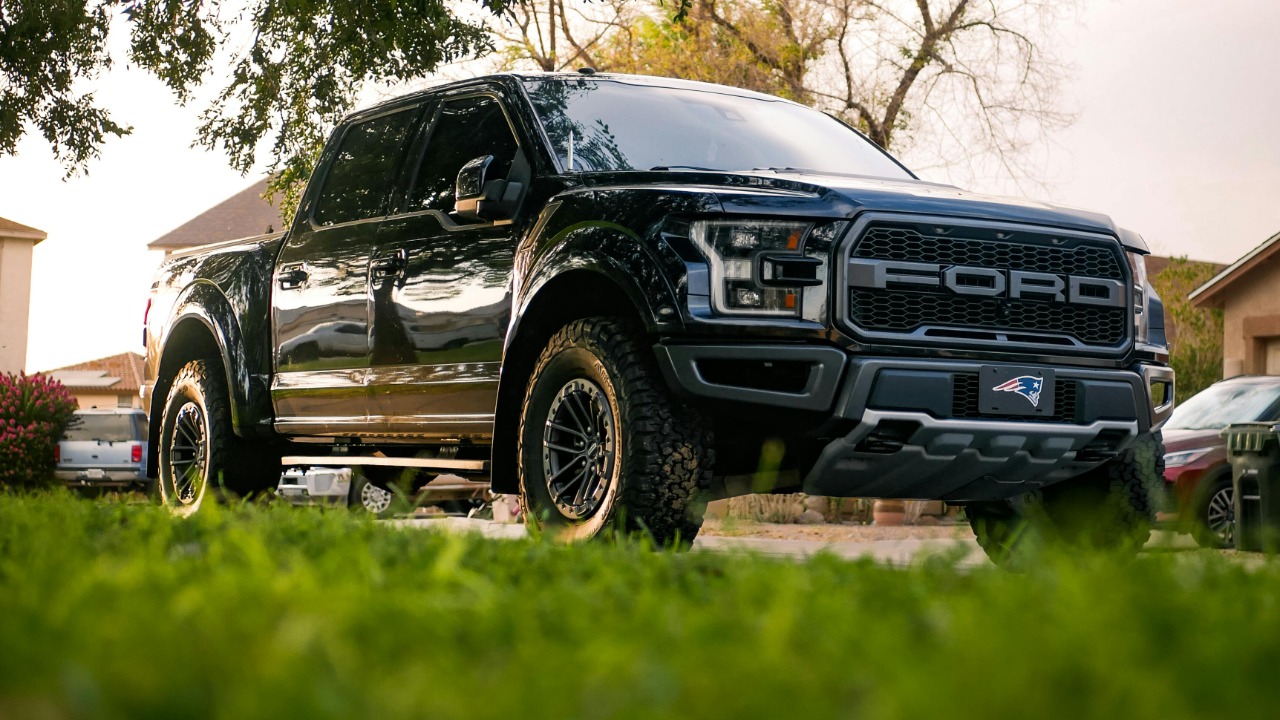

Ford is betting that the next big leap in electric vehicles will not just be about batteries or range, but about letting drivers safely take their eyes off the road. The company is building a new $30,000 EV truck platform that is designed from the ground up to support Level 3 “eyes-off” automation by 2028, pairing affordability with a feature set that has so far lived mostly in luxury sedans and pilot programs. If Ford can hit that target, it will reset expectations for what a mainstream pickup can do and force rivals to rethink how they price and package advanced driver assistance.
At the heart of this strategy is a push to bring more of the technology stack in-house, from high performance computing hardware to AI assistants, so Ford can cut costs and control the roadmap. The company is telling investors and customers that vertical integration, smarter software and a new EV architecture will make eyes-off driving a mass-market feature rather than a six-figure experiment.
The $30,000 EV truck as Ford’s autonomy beachhead
Ford has already sketched out the contours of its new midsize electric truck, positioning it as the first “breakthrough product” on an affordable EV platform that targets a starting price around $30,000. The company describes this platform as a $5 billion bet on America, combining a new assembly process with a flexible architecture that can support a frunk, a usable bed and the packaging demands of a dense electronics stack, all while keeping the entry price in that $30,000 range for the initial truck. In corporate materials, Ford’s $5B Bet on America: Innovation Meets Efficiency in New EV Platform spells out that the first vehicle on this platform will be a midsize electric truck with a frunk and a bed, built to be both practical and cost efficient.
That truck is also the launchpad for Ford’s first eyes-off driver assistance system, which the company plans to introduce in 2028 as a Level 3 feature on this new EV platform. Executives have said the goal is to deliver a fully electric pickup with eyes-off capability at roughly $30,000, a price point that would undercut many current EVs that offer only partial automation. Reporting on the company’s CES announcements notes that Ford’s eyes-off driving system is expected to debut on an all-electric vehicle expected to cost around $30,000, tying the autonomy roadmap directly to this new truck program.
From BlueCruise to Level 3: what “eyes-off” really means
Ford is not starting from scratch on automated driving, but the step from today’s hands-free systems to true eyes-off capability is significant. The company’s current BlueCruise technology allows hands-free driving on mapped highways, but it still requires the driver to watch the road and be ready to take over, which keeps it in the Level 2 category. At CES, Ford executives said they plan to evolve BlueCruise into a Level 3 system by 2028, enabling drivers in specific conditions to look away from the road and let the vehicle handle the dynamic driving task, with reporting noting that Ford goes all in on an L3 eyes-off system for a $30,000 EV pickup while keeping performance competitive with models like the Mustang EcoBoost.
To understand the leap, it helps to look at how SAE International defines the levels of automation. Level 2 systems, which are common today, can control steering and speed but require constant human supervision, while Level 3 allows the car to manage those tasks in certain conditions without the driver watching the road, although the human must still be able to resume control when requested. Ford has explicitly tied its 2028 target to this Level 3 definition, with coverage of its CES remarks noting that SAE International, formerly known as the Society of Automotive Engineers, has characterized automated driving for vehicles in six levels, and that Ford’s planned system fits into the Level 3 category where the car or truck can hold the driving task in defined scenarios.
Vertical integration: Ford’s in-house “vehicle brain”
Making eyes-off driving work at scale will require far more computing power than today’s driver assistance systems, and Ford is responding by building its own centralized “vehicle brain.” The company has introduced what it calls the High Performance Compute Center, a compact module that consolidates processing for driver assistance, infotainment and other functions into a single in-house designed unit, freeing up vital space within the vehicle and reducing complexity. In a technical overview, Ford describes how Introducing High Performance Compute Center is central to its plan to make smarter, cheaper vehicle technology by shrinking hardware and centralizing compute.
Ford argues that bringing this hardware and software stack in-house can cut costs by roughly 30 percent compared with relying on external suppliers, a margin that is crucial if a $30,000 truck is going to carry an expensive sensor suite and Level 3 software. Company leaders have framed this as a shift from buying black-box systems to owning the full technology pipeline, from chips to code, which also gives Ford more control over updates and feature rollouts. Coverage of the CES strategy notes that Ford is revamping its electronics to be in-house, smarter and cheaper, aligning the High Performance Compute Center with the broader autonomy and affordability goals.
AI assistants, smarter software and the user experience
Eyes-off driving is not just a hardware problem, it is also a user experience challenge, and Ford is leaning on AI to bridge that gap. The company has outlined a vision for The Ford AI Assistant, describing it as “Intelligence that Works for You” and emphasizing that the system should feel like a helpful co-pilot rather than a gimmick. According to Ford, the assistant will analyze driver requests within seconds, prioritize safety and context, and integrate with navigation, media and vehicle settings so that automation feels seamless rather than disjointed, a vision captured in its description that Within seconds, the assistant analyzes what you ask, drawing on intelligence that works for you, not just sheer processing power.
For Level 3 driving, that kind of intelligence will be critical in managing handoffs between human and machine, explaining when the system is available and what it can do, and keeping drivers engaged enough to retake control when needed without forcing them to stare at the road the entire time. Ford’s broader technology strategy frames this as a way to democratize advanced features, not just by lowering hardware costs but by making the software approachable for drivers who may be new to EVs and automation. The company’s messaging around The Ford AI Assistant: Intelligence that Works for You underscores that the assistant is meant to be a core part of how customers experience both electric powertrains and eyes-off driving.
Competitive stakes, investor pressure and the 2028 clock
Ford’s 2028 target does not exist in a vacuum, it is a response to a competitive field that includes Rivian and other EV players racing to bring more capable automation to market. The company has publicly acknowledged that it is throwing its hat into the ring alongside these rivals, with executives in LAS VEGAS outlining plans to offer its first eyes-off driver-assistance system in 2028 and positioning the new EV platform as the foundation for that move. Reporting from that event notes that Ford to offer its first eyes-off driver-assistance system in 2028, with By Nora Eckert and Abhirup Roy highlighting how the company is trying to reset expectations after earlier retrenchments in self-driving.
Investors are watching closely, and early reactions suggest that the market sees both risk and opportunity in this pivot. Shares of Ford Motor Co have rallied on the autonomy news, with one analysis noting that Shares of Ford Motor Co traded 5% higher on Thursday after Piper Sandler upgraded the stock to Overweight, citing plans to launch autonomous driving on a $30,000 all-electric vehicle in 2028. That upgrade reflects a belief that if Ford can execute on its cost-cutting and technology integration promises, the combination of a mass-market price and Level 3 capability could drive both volume and margins.
A reset after Argo and a new self-driving narrative
The 2028 eyes-off pledge also marks a reset after Ford’s earlier decision to wind down its investment in Argo AI, a move that raised questions about its long-term self-driving ambitions. Company leaders now say they are “revving up” those ambitions again, but with a different approach that focuses on in-house development and practical, revenue-generating features rather than open-ended robotaxi bets. Coverage of the new strategy notes that Ford is revving up its self-driving ambitions and making key tech in-house, with the eyes-off system framed as a concrete product tied to a specific vehicle and price point rather than a distant moonshot.
That shift is part of a broader product roadmap shakeup that tilts away from some earlier EV plans and toward a more focused set of programs built around profitability and differentiated technology. In outlining that roadmap, Ford has explicitly said it will deliver “eyes-off” self-driving in 2028, tying the promise to the new EV platform and describing the capability as a form of Level 3 self-driving that will debut on its upcoming truck. One analysis of the strategy notes that Ford Claims It Will Deliver ‘Eyes-Off’ Self-Driving in 2028 and that Ford says this eyes-free capability will launch on its upcoming EV truck as a form of Level 3 self-driving, underscoring how central the feature has become to the company’s narrative.
Regulation, safety and the road to 2028
Even if the technology is ready, Ford’s 2028 goal will depend heavily on regulators and safety validation, especially in the United States where rules for Level 3 systems are still evolving. The company has acknowledged that its eyes-off system will initially be limited to specific conditions, such as certain highways and speeds, and that it will need to work closely with authorities to prove that the system can safely handle those scenarios without constant human oversight. Reporting on Ford’s timeline notes that Ford announces Level 3 autonomous driving coming to EVs in 2028, with Nora Eckert and Abhirup Roy of Reuters highlighting that the company is trying to “get it all at the beginning” by designing the platform, sensors and compute together.Ford’s own messaging stresses that the new EV platform is being engineered with these requirements in mind from day one, rather than retrofitting autonomy onto an existing chassis. Internal communications describe how the Detroit automaker plans to introduce Level 3 eyes-off systems to vehicles being built on the new EV platform, and how lessons from its earlier self-driving program are shaping a more disciplined rollout. One analysis of the plan notes that On Wednesday evening, the Detroit automaker said it plans to bring Level 3 eyes-off systems to its new EV platform by 2028 after previously ending a self-driving program due to high costs, underscoring how cost discipline and regulatory pragmatism now sit alongside technological ambition.
More from Morning Overview