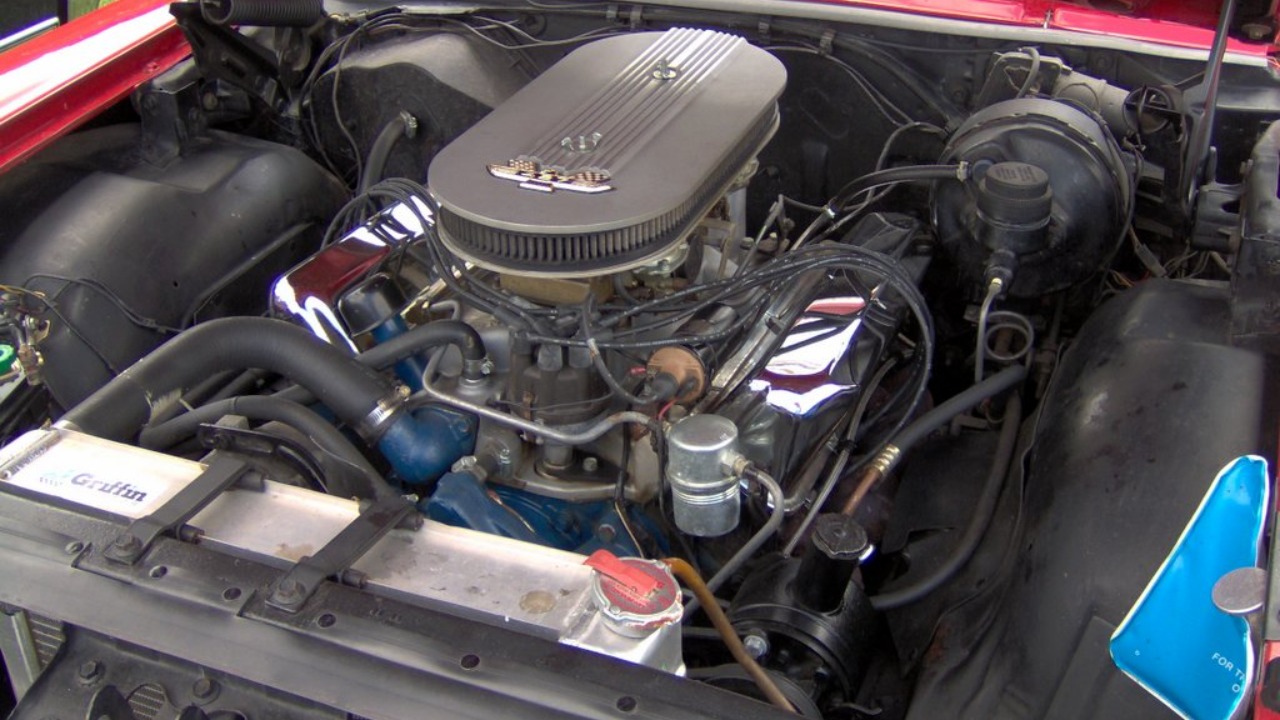

Ford’s 427 and 428 FE V8s sit at the heart of some of the most mythologized American performance cars, yet even seasoned enthusiasts often blur the line between them. I want to unpack where these two big-blocks genuinely diverge, from their racing roots to their street manners, so the badge on a fender tells you something concrete instead of just sounding cool. Under the shared FE umbrella, the 427 and 428 were built for very different jobs, and those choices still shape how they are valued, swapped, and argued about today.
How the FE family set the stage
To understand why the 427 and 428 feel so different, I start with the FE family itself. Ford created this big-block line to cover everything from full-size sedans to all-out competition cars, so the architecture had to be flexible enough to support mild grocery-getter tunes and brutal race builds. Within that framework, the company spun off multiple displacements and configurations, which is how two engines that look similar at a glance ended up with very different personalities and reputations.
Reporting on the FE program notes that the family included many displacements and configurations, and that some versions were engineered specifically to displace 427 cubic inches either for racing homologation or high performance street use, while others were aimed at broader production needs like the 428. That same coverage points to the 1964 Ford Fairlane Thunderbolt 427ci V-8 as a showcase for how far Ford was willing to push the FE architecture when the goal was domination rather than daily drivability, which is the context in which the 427 was born and the 428 was not. I see that split as the root of nearly every difference that follows, from block design to how each engine behaves at redline.
Shared FE DNA and basic dimensions
Despite their divergent missions, the 427 FE and 428 FE V8s are not strangers to each other. Both sit on the same FE foundation, which means they share core geometry like bore center spacing and overall external dimensions that let them bolt into the same engine bays. That common DNA is why a casual glance under the hood of a big-block Galaxie or Mustang will not always tell you which engine you are looking at, and why parts interchange is possible in some areas even when the internals are very different.
Technical reporting makes it clear that the 427 and 428 are part of the same line of engines and share a 4.63-inch bore center spacing, which is a defining FE trait. At least at the block layout level, that shared 4.63-inch dimension means the two engines occupy the same physical footprint and can use similar external accessories, which helps explain why enthusiasts sometimes treat them as interchangeable “big FE” options. I see that as the main reason confusion persists: the architecture looks the same from the outside, even though the internal hardware and intended use cases diverge sharply.
Displacement, bore, and stroke: where the numbers really split
Once I move past the shared FE skeleton, the first meaningful fork in the road is displacement and how Ford chose to achieve it. The 427 was conceived as a high-winding performance engine, so its displacement was achieved with a relatively large bore and a shorter stroke that favored high rpm breathing. The 428, by contrast, was designed as a torque-rich street and highway motor, so it leaned more on stroke than bore to reach its cubic inches, trading some rev potential for low-end pull and smoother manners.
Coverage of the FE lineup explains that the family included many displacements, and that some engines were engineered specifically to displace 427 cubic inches either for racing or high performance street use, while others, like the 428, were tailored to different priorities. Another technical breakdown notes that the 427 and 428 arrive at their respective 427 and 428 cubic inches through different bore and stroke combinations, even though they share that 4.63-inch bore center spacing. In practical terms, I read that as Ford using the same basic block real estate to serve two very different customers: one who wanted an engine that loved to spin, and another who wanted effortless torque without living at the top of the tach.
Block construction and durability
The block itself is where the 427’s racing brief becomes impossible to miss. To survive sustained high rpm use and the brutal loads of competition, the 427 FE typically used heavier duty castings, reinforced main webs, and in many cases cross-bolted main caps that clamped the crankshaft more securely. Those choices added cost and complexity, but they gave the 427 the stiffness and durability it needed to live in environments that would quickly expose any weakness, from NASCAR ovals to drag strips.
By comparison, the 428’s block was optimized for mass production and street duty rather than all-out racing. It still benefited from the inherent strength of the FE architecture, but it did not need the same level of reinforcement because its expected life was in full-size cars, personal luxury coupes, and later muscle cars that spent most of their time below redline. Engine builders who work with these motors point out that FE engines were integral to many motorsport successes, particularly drag racing where the 427 side-oiler variants became legendary for their strength in high horsepower builds both on and off the track. I see that as the clearest structural dividing line: the 427 block was overbuilt for racing, while the 428 block was built just right for the street.
Induction, compression, and power delivery
Even before I get into specific factory ratings, the way these engines breathe and compress air tells me a lot about how they behave. The 427 was typically paired with more aggressive cylinder heads, higher compression ratios, and hotter camshaft profiles, all aimed at making power high in the rev range. Multi-carb setups and free-flowing intake manifolds were common on performance versions, which helped the engine take full advantage of its big bore and racing-oriented internals.
The 428, in its standard street forms, leaned toward milder cam timing, more conservative compression, and induction setups that prioritized drivability over peak horsepower. That did not mean the 428 was a slouch, especially once performance variants appeared, but its baseline tune was friendlier in traffic and less demanding of premium fuel and meticulous maintenance. Technical comparisons of the two engines emphasize that while both share FE architecture and the same 4.63-inch bore center spacing, the 427 was consistently configured as a high performance package, whereas the 428’s mainstream versions were calibrated for smooth torque and everyday use. In my view, that tuning philosophy is why a stock 427 feels edgy and eager, while a typical 428 feels relaxed until you ask it to work.
Racing pedigree versus street muscle
The 427’s identity is inseparable from competition. It was developed to win, and its most famous applications were factory-backed race cars and homologation specials that existed so Ford could dominate organized motorsport. From road racing to drag strips, the 427 FE became a shorthand for serious intent, and its presence under a hood signaled that the car was built to do more than cruise. That heritage still shapes how collectors and builders talk about the engine, often elevating it above other FE variants regardless of the actual performance of a given build.
Engine history accounts highlight that FE engines were integral to many motorsport successes, particularly in drag racing where the 427 side-oiler configuration dominated competitions and became a go-to choice for high horsepower builds both on and off the track. On the street side, coverage of Ford’s performance evolution notes that the 428 found its stride in muscle cars, especially once the 428 Cobra Jet sprang to life as a way to bring big torque and strong quarter-mile performance to showroom buyers. I see that split as the cultural difference: the 427 is the purebred racer that trickled down to the street, while the 428 is the street engine that was hot-rodded into a muscle car weapon.
Model applications: Thunderbolt, Cobra Jet, and beyond
Looking at where each engine actually landed from the factory helps clarify their roles. The 427 showed up in limited-production, high-intensity packages that were often built in small numbers and aimed squarely at competition. One of the most famous examples is the Ford Fairlane Thunderbolt, a stripped and focused drag car that used a 427 FE to turn a mid-size body into a quarter-mile terror. That kind of application underscores how the 427 was reserved for special projects rather than mass-market duty.
By contrast, the 428 appeared in a wider range of vehicles, from big Galaxies to personal luxury models and, crucially, later Mustangs and other muscle cars once performance versions were introduced. Reporting on the FE family points to the 1964 Ford Fairlane Thunderbolt 427ci V-8 as a showcase for the racing side of the program, while separate coverage explains that the 428 made its mark when the 428 Cobra Jet sprang to life for performance street cars. When I line those examples up, the pattern is clear: the 427 anchored halo projects like the Thunderbolt, while the 428, especially in Cobra Jet form, became the accessible performance option that ordinary buyers could actually order.
Evolution of the 428 and the rise of Cobra Jet
The 428’s story is not static, and that evolution is part of why it is unfair to dismiss it as merely a “big cruiser” engine. Initially, the 428 was aimed at providing smooth, abundant torque in heavier cars, which it did very well. Over time, though, Ford recognized that the same displacement and stroke that made the 428 so relaxed at low rpm could also deliver serious thrust when paired with better breathing and more aggressive tuning, especially in lighter bodies.
Technical histories of the FE line note that the 428’s performance reputation changed dramatically once the 428 Cobra Jet sprang to life, bringing revised induction and tuning that transformed the engine into a formidable muscle car powerplant. Another analysis of the 427 and 428 relationship explains that both engines share the same 4.63-inch bore center spacing and sit within the same FE family, but that the 428’s later performance variants were designed to give street buyers a taste of the 427’s punch without the same cost or racing pedigree. I see the Cobra Jet era as the moment when the 428 stepped out of the 427’s shadow and became a performance icon in its own right, especially in cars like the Mustang and Torino.
Driving character, collectability, and choosing between them
On the road, the differences in design and intent translate into distinct personalities. A well-tuned 427 feels sharp and urgent, happiest when it is allowed to rev and kept on the cam, which reflects its racing roots and high performance hardware. The 428, particularly in non-Cobra Jet form, delivers a broader, more relaxed torque curve that suits highway cruising and effortless acceleration without needing to chase redline, although performance builds can make it every bit as exciting in the right chassis.
Those traits feed directly into how each engine is valued and chosen today. Collectors often prize the 427 for its scarcity and direct connection to motorsport, especially side-oiler variants that trace their lineage to the same hardware that powered factory drag cars and other competition programs. At the same time, builders who want strong, streetable power frequently gravitate toward the 428, including Cobra Jet configurations, because they offer big torque and proven durability within the same FE footprint and 4.63-inch bore center spacing. When I weigh the two, I see the 427 as the purist’s choice for period-correct race builds and the 428 as the pragmatic pick for real-world muscle, with both engines drawing on the same FE heritage but expressing it in very different ways.
More from MorningOverview