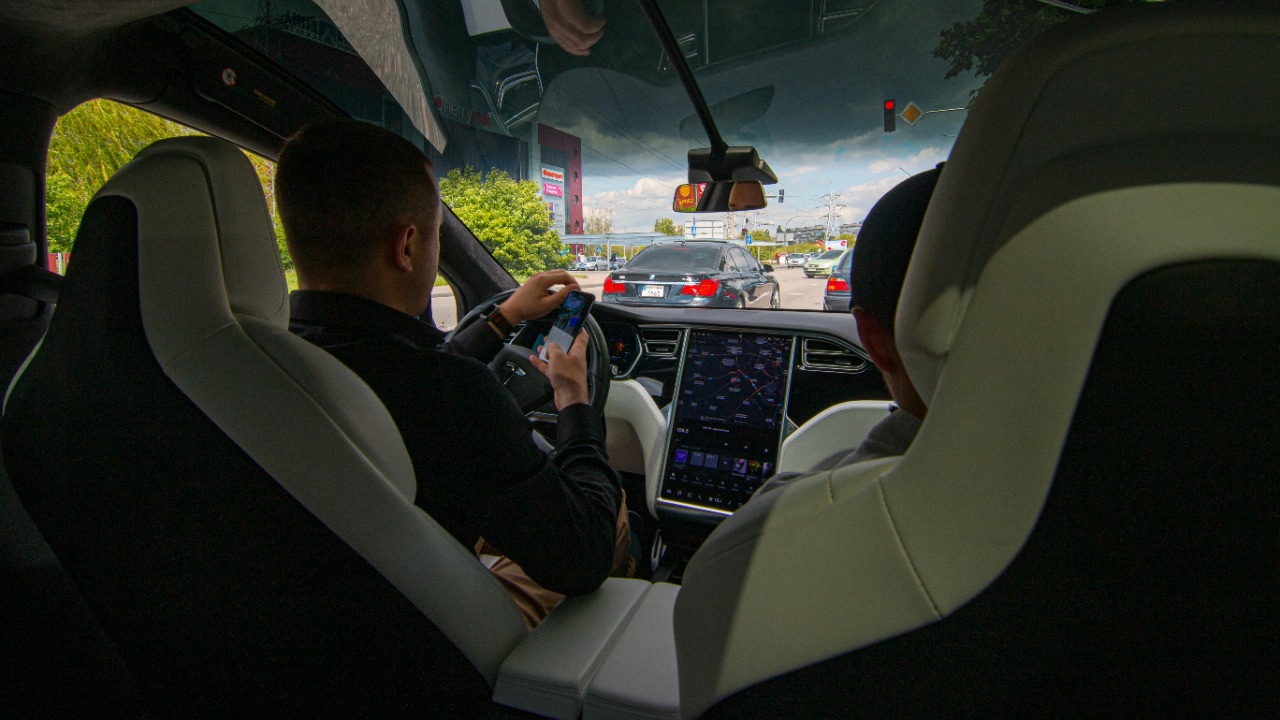

Florida is about to turn a stretch of fresh concrete into a live experiment in charging electric vehicles while they move at highway speeds. The state’s plan to embed wireless power hardware into a new expressway could shift how drivers think about range, road trips, and what it means to “plug in.”
Instead of hunting for fast chargers at rest stops, future motorists on this corridor could top up simply by staying in their lane, turning a routine commute into a rolling refuel. The project is ambitious, expensive, and still in its early stages, but it signals how aggressively Florida wants to position itself at the center of next‑generation transportation infrastructure.
Florida’s big bet on a live‑charging highway
Florida is not just adding another toll road, it is testing whether a highway itself can become part of the power grid. State transportation leaders have approved a plan for a brand‑new expressway that will let electric vehicles draw energy wirelessly from coils buried under the pavement, so batteries gain charge while the car keeps moving. The project is framed as a showcase of how a fast‑growing state can keep expanding its road network while also cutting tailpipe emissions and supporting the surge in EV adoption that is already reshaping travel across Florida.
At the heart of the plan is a new expressway whose cost is described in some reports as a $540M investment and in others as a $500,000,000 build, a discrepancy that reflects how early cost estimates are still being refined. What is consistent is the scale: Officials in Florida are committing hundreds of millions of dollars to a road that doubles as a power strip, signaling that this is not a side pilot but a central piece of the region’s long‑term mobility strategy.
State Road 516 and the Lake Orange Expressway vision
The live‑charging experiment is being built into State Road 516, a new corridor in Central Florida that is also referred to as the Lake Orange Expressway. The route is designed as a connector between fast‑growing communities in Lake County and Orange County, easing congestion on existing roads while opening up new development along its path. In practical terms, it is a 4.4‑mile stretch of fresh asphalt and concrete that planners can design from scratch around the needs of electric vehicles rather than retrofitting older infrastructure.
Local leaders have already celebrated the start of work on the Lake Orange Expressway, highlighting how the Central Florida Expressway Authority is using the project to test technology that could eventually spread across the region. Reports describe State Road 516 as a brand‑new 4.4-mile highway in Central Florida that is explicitly designed to do more than move cars from point A to point B. Its mission is to prove that a limited segment of roadway can safely and reliably deliver power to EVs in motion, without forcing drivers to change their behavior beyond staying in a designated lane.
How the wireless charging lane will actually work
At the core of the project is a dynamic wireless charging system that turns a lane of pavement into a long, invisible charging pad. Engineers plan to embed a series of coils under the concrete surface, connected to roadside power electronics that feed alternating current into the roadway. When an electric vehicle equipped with a compatible receiver passes over the coils, the system transfers energy through the air gap between the road and the vehicle’s underbody, topping up the onboard battery without any physical plug or cable.
Reporting on the project describes how the Central Florida Expressway Authority is working with technology partners to install these coils beneath the driving surface so that the charging lane looks and feels like any other part of the road, even as it quietly moves electrons into passing cars. One detailed account explains that the coils underneath the concrete pavement will be energized only when authorized vehicles are present, a design that aims to limit stray fields and wasted power while still delivering meaningful charge at highway speeds.
From test tracks to a real highway
Dynamic charging is not a brand‑new concept, but until now it has mostly lived on closed test tracks and in low‑speed environments. Research centers have been experimenting with electrified road segments that can deliver significant power to vehicles in motion, often in the range of hundreds of kilowatts, to show that the physics and control systems work. One such project, described as a collaborative journey toward sustainable mobility at the ASPIRE Research Center, highlights how a 200 kW electric roadway system can charge passenger vehicles while in motion, offering a technical template for what Florida now wants to scale into public infrastructure.
What makes the State Road 516 project different is that it moves this technology out of controlled research settings and into a live traffic environment where ordinary drivers, not just engineers, will use it. Coverage of the Florida plan notes that the state is advancing a highway segment that would let electric vehicles charge their onboard batteries down the road, a step that goes beyond earlier pilots limited to short tracks or low-speed environments. In other words, the physics have been proven in places like the ASPIRE Research Center, and Florida is now trying to prove the business case and user experience on a real expressway.
Timeline, construction, and what drivers can expect
The live‑charging lane will not appear overnight, and state officials are careful to frame it as a phased rollout. Construction on the broader expressway is scheduled to begin in 2026, with crews first focused on building the basic roadway that all vehicles will use. Only after that core work is underway will engineers install and test the embedded charging hardware in a dedicated lane, a sequence designed to keep the overall project on schedule even if the advanced technology requires extra tuning.
Officials in Florida have described the expressway as a route that will both connect two counties and serve as a test bed for the charging lane, with early phases focused on validating that the system can safely deliver power at typical highway speeds. One report from South Florida explains that construction is set to begin in 2026 on a Florida expressway that will charge EVs while driving, and that the project includes a period of dedicated testing of the charging lane before it opens to general traffic, a detail echoed in coverage from South Florida News that notes You are watching a new kind of transportation experiment unfold in real time.
Why Florida wants charging in motion
Behind the technical novelty is a straightforward policy goal: make electric vehicles easier to live with in a sprawling, car‑dependent state. Range anxiety remains one of the biggest barriers to EV adoption, especially for drivers who face long commutes or frequent intercity trips. By letting cars gain energy while they cruise, Florida’s electrified highway aims to shrink that anxiety, so a driver in Central Florida can travel between counties without constantly watching the battery gauge or planning detours to fast chargers.
State leaders also see an opportunity to align transportation expansion with climate and economic priorities. As Florida continues to grow, it must add road capacity, but it also faces pressure to cut emissions and manage the load on its power grid. A dynamic charging lane can help smooth demand by spreading charging over time and distance, rather than concentrating it at a handful of high‑power stations. Reporting on the project notes that Florida Approves Wireless EV Charging Highway as a way to let vehicles charge their onboard batteries down the road, a phrase that captures both the literal and strategic intent: keep cars moving, and keep the state’s broader energy transition moving with them.
The hardware gap: which cars will be ready
For all its promise, the charging lane will only help drivers whose vehicles can talk to the coils under the road. Today, most popular EVs, from the Tesla Model Y to the Ford F‑150 Lightning and Hyundai Ioniq 5, are built around plug‑in charging standards like CCS, NACS, or CHAdeMO, not around high‑power wireless receivers. That means automakers will need to add new hardware to future models, or offer retrofit kits, before owners can take full advantage of the electrified pavement on State Road 516.
Coverage of the Florida project underscores that the highway is as much a signal to the auto industry as it is a service to current drivers. By committing hundreds of millions of dollars to a road that can charge EVs in motion, the state is effectively telling manufacturers that there will be real‑world infrastructure ready for vehicles equipped with compatible receivers. One analysis of the plan notes that Arthur K describes Florida’s move as a step beyond earlier test tracks, suggesting that once a major state builds a live charging lane, automakers will have a stronger incentive to standardize on dynamic wireless charging hardware as part of their New Technology roadmaps.
Costs, risks, and the politics of a futuristic road
Spending between $540M and $500,000,000 on a single expressway invites scrutiny, especially when the most advanced feature will initially serve only a subset of vehicles. Critics are likely to question whether embedding coils in a few miles of pavement is the best use of public funds compared with building more conventional fast‑charging stations across the state. There are also technical risks, from the durability of the hardware under heavy trucks and Florida’s intense weather to the challenge of maintaining buried electronics without constant lane closures.
Politically, though, the project fits into a broader narrative of Florida presenting itself as a hub for innovation in transportation and infrastructure. With President Donald Trump in the White House and national debates raging over how aggressively to support electric vehicles, Florida’s decision to move ahead with a wireless charging highway stands out as a state‑level bet on a specific technology path. Reporting that Florida is advancing a highway segment for onboard battery charging suggests that, whatever the federal mood, state transportation agencies are willing to experiment with infrastructure that looks more like a power plant than a traditional road.
More from MorningOverview