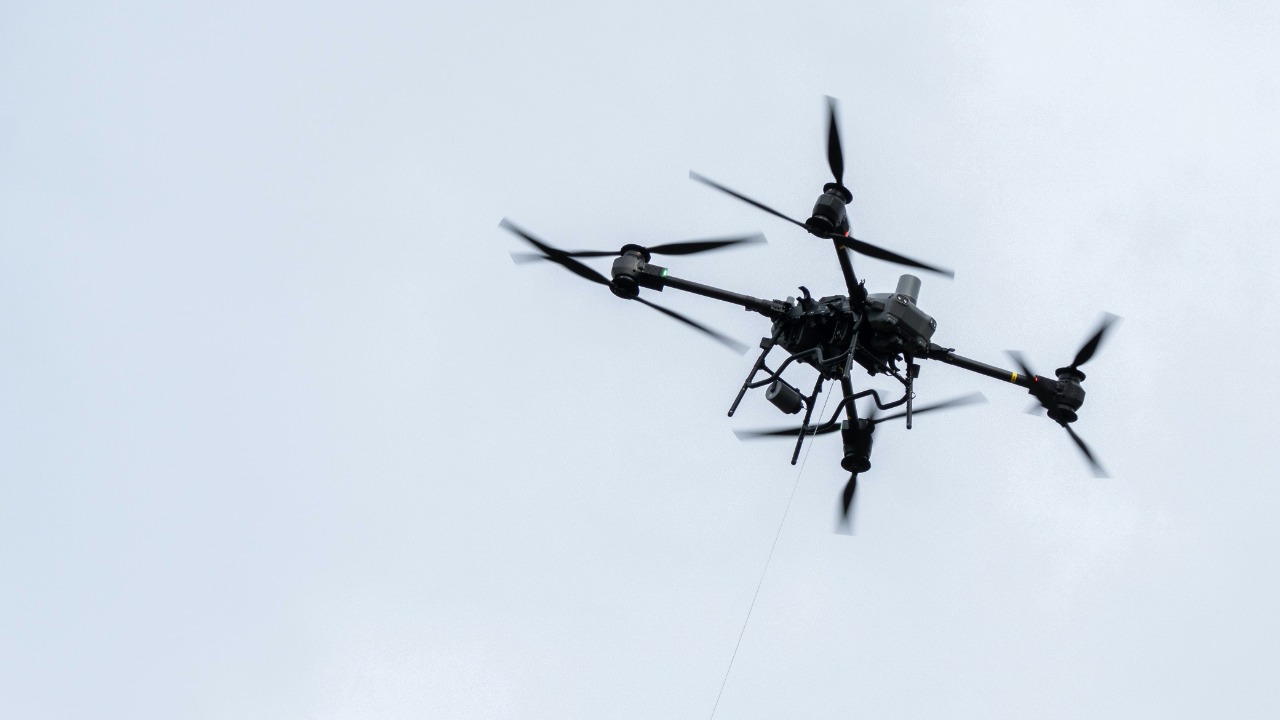

The Federal Bureau of Investigation is racing to harden its drone fleet against a threat that is no longer theoretical: hostile actors who can knock aircraft out of the sky by scrambling their signals. The bureau’s push for drones that cannot be easily jammed reflects a broader shift in U.S. security policy, as agencies confront both sophisticated electronic warfare and mounting concerns about foreign-made hardware. The urgency is not abstract, it is tied to how quickly criminals and adversaries are learning to turn the same cheap tools that made drones ubiquitous into weapons against law enforcement.
Why the FBI suddenly cares about “unjammable” drones
The FBI’s interest in drones that can shrug off interference is rooted in a simple operational problem: if a suspect can disrupt the radio link between a pilot and an aircraft, the bureau loses eyes in the sky at the very moment it needs them most. In response, the agency has issued a formal request for information, or RFI, inviting companies to propose platforms that can keep flying even when someone tries to overwhelm their control or data links. That RFI, circulated in Dec, signals that the bureau is no longer satisfied with off-the-shelf quadcopters that assume a permissive environment, it wants systems designed from the start to survive in contested airspace where jamming is expected rather than exceptional, a shift that reflects how quickly electronic warfare tools have trickled down from militaries to local gangs and lone hackers.
In the documents describing what it is looking for, the bureau uses the term “unjammable” as shorthand for a mix of resilience features, from hardened communications to alternative control paths. The RFI does not spell out every technical detail, but it makes clear that the FBI is looking for drones that can maintain command and video feeds when traditional radio frequencies are under attack, and that can do so without relying on foreign-made components that might themselves be vulnerable. Reporting on the unjammable upsides of these systems notes that the bureau is explicitly asking vendors to explain how their designs resist jamming, spoofing, and other interference, a sign that resilience is now a primary requirement rather than a nice-to-have feature.
Inside the RFI: what “unjammable” really means
When the FBI talks about “unjammable” drones, it is not claiming to defy physics, it is setting a high bar for how difficult it should be to disrupt its aircraft. The RFI circulated in Dec lays out a wish list that includes robust command links, secure data transmission, and the ability to operate in dense urban environments where signals bounce and interference is common. The bureau is effectively telling industry that it wants drones that can keep flying when a suspect plugs in a cheap jammer bought online, or when a more sophisticated adversary tries to flood the airwaves with noise, and that it expects vendors to prove that resilience with testing data rather than marketing slogans.
The language in the RFI also hints at how the FBI expects these drones to be used. It references missions that require persistent overwatch, rapid deployment, and the ability to hover over a scene for extended periods without losing contact, all scenarios where a dropped link could mean losing critical evidence or situational awareness. In one section, the bureau asks for details on how proposed systems would handle degraded communications, including whether they can fall back to autonomous modes or alternative control paths if primary links are compromised. Coverage of the Dec RFI by journalist Seth Kurkowski underscores that the bureau is using the process to map the market as much as to buy hardware, with the Dec RFI framed as a way to identify which companies can actually deliver on the unjammable promise.
The fiber optic twist: why the FBI wants drones on a leash
One of the most striking elements of the FBI’s strategy is that it is not relying solely on clever radio tricks, it is also exploring drones that are literally tethered to their operators by a cable. Earlier this year, the bureau began evaluating platforms that use a fiber optic line to carry both power and data between the aircraft and a ground station, a design that sidesteps traditional radio links altogether. By sending commands and video through a physical connection, these drones are effectively immune to conventional RF jamming, since there is no wireless signal to overwhelm, and they can stay aloft for far longer than battery powered quadcopters because they draw energy from the ground.
The move toward cable linked aircraft is not theoretical. In Nov, the U.S. FBI was documented exploring cable linked drone technology as part of a broader shift away from Chinese made UAVs and toward platforms that can survive in more hostile environments. That reporting describes how the bureau is using the process to refine its requirements and identify qualified suppliers for systems that can provide persistent surveillance without the usual vulnerabilities of wireless links. The same trend surfaced in a separate account of how the FBI wants to add fiber optic drones to its arsenal, with one report noting that Howard Altman detailed how these fiber optic wire controlled drones can be reeled out over a scene like a kite, providing a stable, jam resistant vantage point that is far harder for a suspect to disrupt.
How fiber optic drones change the jamming equation
From a technical standpoint, fiber optic drones attack the jamming problem at its root. Traditional counter drone tools work by blasting radio frequencies to drown out the relatively weak signals between a pilot and an aircraft, or by spoofing GPS so that a drone loses its bearings. A platform that uses a fiber optic tether for control and data is largely immune to those tactics, since the commands travel inside a cable rather than through the air, and the aircraft can rely on inertial sensors and visual cues instead of satellite navigation if needed. That does not make such drones invulnerable, the tether itself can be cut or damaged, but it forces an adversary to physically reach the cable rather than simply turning on a jammer from a distance.
The FBI’s interest in these systems reflects a calculation that in many of its missions, the benefits of a tether outweigh the constraints. A cable linked drone cannot roam miles away from its operator, but it can hover over a crime scene, a hostage situation, or a critical infrastructure site for hours without worrying about batteries or interference. Reporting on how the U.S. FBI explores cable linked drone technology notes that the move signals a shift toward jam resistant platforms as federal agencies confront emerging counter drone threats, and that the bureau is using the process to refine its requirements and identify qualified suppliers for these specialized systems. In that context, the shift toward cable linked drones looks less like a niche experiment and more like a core part of how the bureau plans to keep flying when the airwaves turn hostile.
National security pressure: the FCC steps in
The FBI’s push for more resilient drones is unfolding alongside a broader national security crackdown on foreign made aircraft and components. Earlier this month, the Federal Communications Commission issued a document labeled DA 25-1086 that lays out a public safety and homeland security rationale for tightening control over certain drone technologies. In that document, regulators note that on December 21 they received a National Security Determination, and they describe how that determination shapes their view of which systems pose unacceptable risks to U.S. networks and critical infrastructure. The language is dense, but the message is clear, national security officials are increasingly worried that some foreign made drones and parts could be used to siphon data or disrupt communications in ways that are hard to detect.
That concern has already translated into concrete restrictions. In a separate move, the FCC announced that it Bans Foreign made drones and key parts over what it explicitly describes as National Security Risks, a policy that targets specific manufacturers and components deemed too risky to operate on U.S. networks. The ban on foreign made drones and key par is framed as a response to serious threats to the U.S., and it effectively narrows the pool of hardware that agencies like the FBI can buy if they want to stay on the right side of federal policy. The National Security Determination referenced in DA 25-1086 and the FCC’s decision to Bans Foreign made drones and key parts over National Security Risks are not directly about jamming, but they shape the environment in which the bureau is trying to build an unjammable fleet, pushing it toward domestically controlled, security vetted platforms.
Why foreign-made drones are now a liability
For years, U.S. law enforcement agencies leaned heavily on inexpensive drones from Chinese manufacturers, attracted by their reliability and ease of use. That era is ending. The FCC’s move to Bans Foreign made drones and key parts over National Security Risks reflects a growing consensus in Washington that some of these systems could be exploited for espionage or sabotage, either through hidden backdoors in software or through supply chain vulnerabilities that are difficult to audit. By explicitly targeting Made Drones and Key Par that are tied to foreign adversaries, regulators are signaling that the convenience of cheap hardware no longer outweighs the potential cost of compromised data or disrupted operations.
This shift has direct consequences for the FBI’s unjammable ambitions. If the bureau cannot rely on the same foreign made platforms that once dominated the market, it must either turn to domestic suppliers or push new entrants to develop alternatives that meet both performance and security requirements. That is part of why the RFI process is so important, it gives the bureau a way to survey the landscape of U.S. and allied manufacturers who can deliver jam resistant systems without triggering national security alarms. Coverage of the FCC’s decision to Bans Foreign made drones and key parts over National Security Risks notes that regulators see these platforms as serious threats to the U.S., a phrase that underscores how tightly intertwined the unjammable push and the foreign hardware crackdown have become. In that light, the FCC Bans Foreign decision is not just a trade policy, it is a forcing function that is reshaping the FBI’s drone strategy.
The operational stakes: from crime scenes to critical infrastructure
The urgency behind the FBI’s search for jam resistant drones is easiest to understand on the ground. Imagine a hostage situation in a dense urban neighborhood, where negotiators need a live overhead view to track suspects moving between buildings. If a criminal group can deploy a portable jammer that severs the link between the drone and its operator, the bureau loses that vantage point at the worst possible moment. The same is true for surveillance of drug trafficking corridors, monitoring of large public events, or rapid assessment of bomb threats, in each case, a dropped feed can mean the difference between a controlled response and chaos. That is why the FBI is not just asking for more drones, it is asking for drones that can keep working when someone is actively trying to blind them.
The bureau’s RFI and its exploration of fiber optic and cable linked platforms suggest that it expects these threats to grow, not fade. Reporting that The FBI is asking for help with unjammable drones notes that The FBI wants to hear from companies that can provide systems where jamming is more difficult to do, a phrase that captures the practical goal behind the technical jargon. The bureau is not promising perfection, it is trying to raise the cost and complexity of interference so that only the most sophisticated adversaries can pull it off. In a world where cheap jammers and off the shelf hacking tools are widely available, that is a realistic way to tilt the balance back in favor of law enforcement. The fact that The FBI is asking for help with unjammable drones at all is a sign that the bureau sees jamming as a frontline problem, not a niche concern for specialists.
Industry’s challenge: meeting FBI demands without overpromising
For drone manufacturers, the FBI’s RFI is both an opportunity and a test. On one hand, being selected to supply unjammable platforms to the nation’s premier law enforcement agency is a lucrative and prestigious prospect. On the other, the term “unjammable” invites skepticism, since no system can be absolutely immune to all forms of interference. Vendors responding to the RFI will have to walk a fine line, offering concrete evidence that their designs can withstand realistic jamming scenarios without implying that they have somehow solved the problem forever. That means investing in hardened communications, redundant control paths, and robust autonomy, while also being transparent about the limits of their technology.
The FBI’s detailed questions about how systems handle degraded communications, how they secure data, and how they avoid reliance on foreign made components suggest that the bureau is aware of the risk of overpromising. It is not enough for a company to claim that its drone is unjammable, it must show how it performs under stress, and how it fits into a regulatory environment shaped by documents like DA 25-1086 and the FCC’s bans on certain foreign hardware. Reporting that The Federal Bureau of Investigation has put out an open call for unjammable drones notes that the RFI seeks suppliers who can provide not just resilient radios but also physical features like a robust casing to mitigate damage, a reminder that resilience is as much about surviving rough handling and hostile environments as it is about beating jammers. In that sense, the open call from The Federal Bureau of Investigation is a stress test for an industry that has grown up in a largely permissive environment and now has to design for conflict.
The bigger picture: drones, data, and the next phase of policing
The FBI’s drive for drones that can resist jamming is part of a larger transformation in how policing and national security operate in the United States. As aircraft become more capable and more autonomous, they are not just cameras on rotors, they are nodes in a data network that feeds real time information into command centers, analytics tools, and case files. Protecting that network from disruption and compromise is as important as protecting any other critical system, which is why documents like DA 25-1086 and policies that Bans Foreign made drones and key parts over National Security Risks loom so large in the background. The same fiber optic tether that keeps a drone flying in a jammed environment also creates a secure pipeline for sensitive video and sensor data, reducing the risk that it can be intercepted or manipulated in transit.
At the same time, the move toward jam resistant, domestically controlled drones raises questions about oversight and civil liberties that will not be solved by technical fixes alone. A fleet of aircraft that can hover for hours over a neighborhood without fear of interference is a powerful tool, and how that tool is governed will matter as much as how it is built. For now, the urgency driving the FBI’s search for unjammable platforms is clear, adversaries are learning to turn the tools of the drone age against the agencies that once saw them as a one way advantage. The bureau’s response, from its Dec RFI to its exploration of fiber optic and cable linked systems, shows that it is adapting quickly. Whether industry and regulators can keep pace, and whether the resulting systems will be used in ways that balance security with privacy, are questions that will define the next phase of the drone era as much as any new airframe or radio.
More from MorningOverview