
Automakers occasionally build cars that look anonymous but hide serious performance, the kind of factory sleepers enthusiasts now obsess over. Some of those machines were so far out of step with buyer tastes that they flopped outright when new, only earning respect years later on used lots and auction blocks. I want to look at a handful of those legends, and how the gap between what they offered and what the market wanted turned them into commercial misfires.
What makes a factory sleeper flop?
At its core, a sleeper is about misdirection: a car that looks ordinary but accelerates like something far more exotic. The idea is not new, yet the definition still trips up casual buyers, which is one reason so many stealthy performance models struggled in showrooms. A clear description from enthusiast circles frames a sleeper as a vehicle that appears stock or even dull, but has been fitted with high performance parts or powertrains that deliver far more speed than its looks suggest, a concept that applies just as much to cars built that way from the factory as to modified street machines. When that formula is executed by a major brand, the result can be a car that is brilliant on paper and baffling to mainstream shoppers.
Part of the problem is that most people do not shop for surprises. They want their fast car to look fast, and their family car to look practical, which is why a model that hides its capability can be a tough sell even if it is objectively quick. A detailed buyer guide notes that, according to one popular definition, a sleeper car is a vehicle that looks unassuming but has secretly been fitted and modified with high performance parts, a description that captures how far these machines sit from the expectations of a typical showroom visitor who is comparing crossovers and compact sedans on styling and monthly payment alone. When the marketing, the badge, and the bodywork all underplay the performance, the car relies on a tiny slice of informed enthusiasts, and that is rarely enough volume to keep a niche model alive.
GMC Syclone: the muscle truck nobody understood
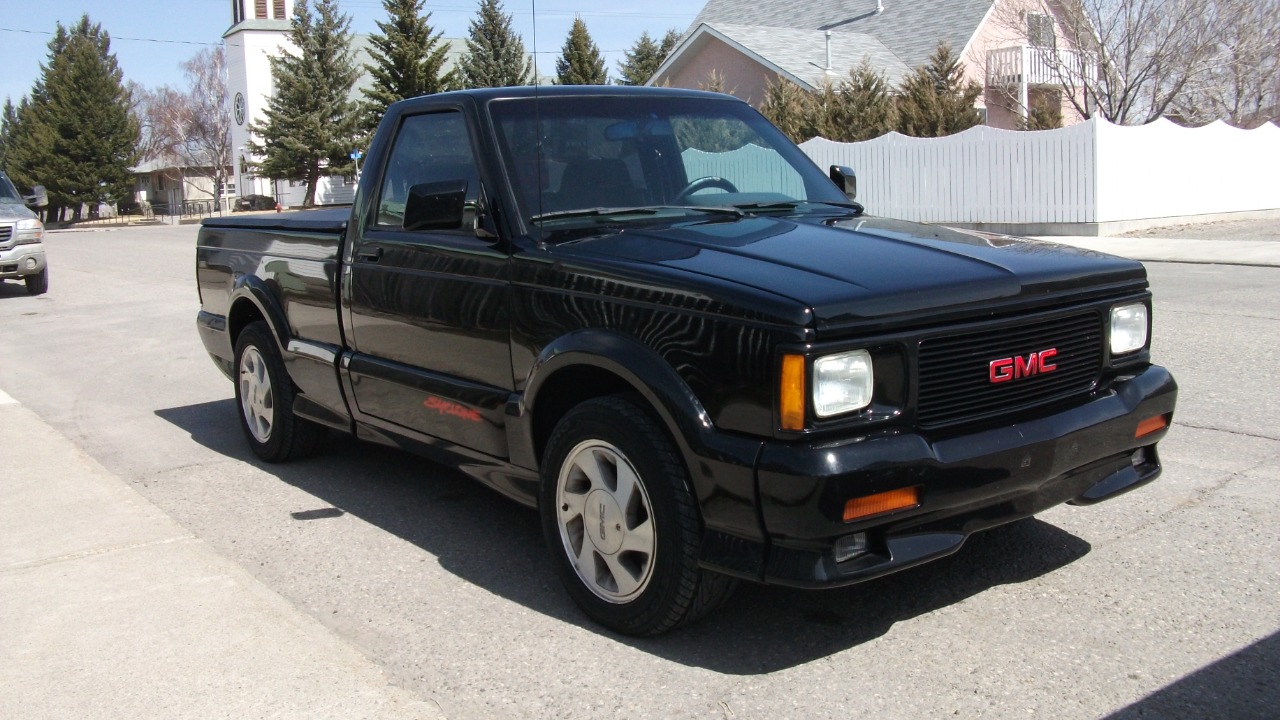
Few vehicles illustrate the sleeper paradox better than the early 1990s GMC Syclone, a compact pickup that looked like a work truck but could outrun contemporary sports cars. Under its squared off body sat a turbocharged V6, all wheel drive, and a chassis tuned for drag strip launches rather than hauling mulch, a combination that turned it into a genuine muscle truck. Period coverage and later retrospectives describe how the Syclone stunned audiences when it appeared on shows like Jay Leno’s Garage, yet the same reporting notes that, though the Syclone and its SUV sibling were engineering showcases, the Syclone was dropped from production after a short run because it never found a broad customer base willing to pay sports car money for a small pickup.
Price and positioning were central to that failure. The truck cost significantly more than a regular compact pickup, yet it could not tow or carry as much, and it lacked the visual drama of a traditional muscle car, which left it stranded between segments. One analysis of GMC’s performance experiment even calls the Syclone and its related SUV a lightning strike that tragically never hit twice, pointing out that while these were headline stealing models, it was quickly apparent that the market for a high performance truck that looked relatively plain was a good bit more limited than the brand had hoped. The result is a classic case of a factory sleeper that was too clever for its own good, revered now but ignored when new.
The GMC Syclone Has An Equally Insane Brother
The story of the Syclone is incomplete without its closely related SUV counterpart, often described in enthusiast writing under the phrase The GMC Syclone Has An Equally Insane Brother. That brother, built on the Jimmy platform, took the same turbocharged powertrain and all wheel drive hardware and wrapped it in a compact sport utility body that looked like a regular family hauler at a glance. In theory, that should have broadened the appeal by adding practicality, yet the core challenge remained: buyers who wanted a fast vehicle still gravitated toward coupes and sports sedans, while SUV shoppers prioritized space and comfort over quarter mile times.
Despite the tantalizing performance of both the pickup and the SUV, contemporary sales never matched the engineering ambition. Later assessments are blunt that, despite the impressive acceleration and handling, the Syclone was not popular when new, and that the SUV version only slightly improved the formula due to its increased practicality. In my view, the pair show how far ahead of the curve GMC was in imagining performance trucks and crossovers, but also how unforgiving the market can be when a vehicle’s appearance and badge do not clearly signal what it is meant to do.
Plymouth Prowler: hot rod looks, cold showroom
Not every underperforming performance car hid its intent; some shouted it visually but still missed the mark in other ways. The Plymouth Prowler is a prime example, a factory built homage to classic hot rods that arrived with open front wheels, a chopped roofline, and a stance that looked more custom shop than corporate design studio. Enthusiast retrospectives concede that, at first glance, it looks absolutely fabulous and that there is no denying the Plymouth Prowler is gorgeous, yet they also stress that the car became a case study in how style alone cannot carry a model if the underlying package does not meet expectations.
Under the dramatic bodywork, the Prowler relied on a V6 and an automatic transmission, a combination that left performance fans underwhelmed given the car’s wild appearance and price. Later lists of notable sports car misfires rank it among the greatest flops, noting that the Prowler is remembered for all the wrong reasons, from its limited practicality to the mismatch between its hot rod image and its relatively modest powertrain. I see it as the mirror image of a sleeper: a car that looked outrageous but did not have the performance depth to back up the promise, which ultimately hurt its reputation and sales.
Pontiac GTO (Holden Monaro): too subtle for its badge
In the early 2000s, Pontiac revived one of its most storied nameplates by importing a coupe based on the Australian Holden Monaro and rebadging it as the GTO. On paper, it was exactly what enthusiasts had been asking for, a rear wheel drive V8 two door with serious power and a chassis tuned for real performance rather than rental fleet duty. Yet the styling was conservative, with smooth lines and a profile that some critics compared to an ordinary commuter coupe, which created a disconnect between the legendary badge and the car people saw on the lot.
Retrospective coverage of factory sleepers that struggled in showrooms notes that, in the early 2000s, Pontiac brought back the GTO as a badge engineered Holden Monaro that had some awesome power but did not look particularly cool looking to many buyers. That assessment captures why the car has become a cult favorite rather than a mainstream success story: it delivered the goods dynamically, but the muted design and relatively high price meant that only informed shoppers recognized its value. I would argue that the GTO’s fate shows how even a famous name and strong performance cannot overcome a styling narrative that fails to excite the broader audience.
Chevy SS: the brilliant sedan that almost nobody bought
Few modern cars embody the sleeper ethos as completely as the Chevrolet SS, a four door sedan that hid a Corvette derived V8 under a body that could pass for a rental fleet special. The Chevrolet SS was a Sedan with room for 5 people, and under the skin it offered serious hardware, including the LS3 V8 and either a 6L80 automatic or TR 6060 manual, combinations that gave it the pace and character of a traditional muscle car with the practicality of a family saloon. Yet the sales figures tell a stark story: one detailed breakdown of the model’s performance in the United States notes that Chevrolet sold 46 SS in Q1 2018, a number that underlines just how invisible the car was to mainstream shoppers by the end of its run.
Enthusiast oriented histories of the car often frame its final model year as a Swan Song, describing how the 2017 Chevy SS received only minor updates, such as the color additions of Orange Blast and Nightfall Gray Metallic, before the line was discontinued. Those same accounts emphasize that, except for the limited cosmetic tweaks, the Chevy remained a deeply capable performance sedan that could run hard all week and twice on Sundays, yet it never shook the perception that it was an anonymous fleet car with an unfamiliar badge. In my view, the SS suffered from a lack of marketing and a name that meant little to casual buyers, which left one of the best modern sleepers to languish on dealer lots.
Why the Chevrolet SS is now a cult classic
Time has been kind to the SS in a way that the original sales charts never were. As the market has shifted toward crossovers and as V8 sedans have disappeared, enthusiasts have started to recognize what the car offered: a rare combination of understated looks, everyday usability, and serious performance. A comprehensive resource guide on the 2014 to 2017 model years even fields Frequently Asked Questions such as Is the Chevrolet SS reliable, and answers that the LS3 and its associated transmissions have excellent reputations when maintained properly, which has helped bolster the car’s appeal on the used market.
That same guide also digs into how many were sold in total, reinforcing just how limited the production run was and why the SS now feels like a hidden gem for those who appreciate its blend of attributes. I see a pattern here that echoes other sleepers: the very qualities that made the SS hard to sell new, such as its subtle styling and lack of brand recognition, now make it attractive to buyers who want to fly under the radar while still enjoying a serious performance drivetrain. In that sense, the car has finally found the niche audience it always deserved, even if it arrived too late to save the model line.
Old school sleeper DNA: B body barges and beyond
Long before modern brands experimented with stealth performance sedans and trucks, Detroit was quietly building platforms that would later become the backbone of the sleeper scene. Among the most famous are the 1977 to 1996 GM B bodies, a family of full size cars that included the Chevy Caprice and Buick Roadmaster, which combined spacious, conservative bodies with V8 engines and rear wheel drive. Enthusiast coverage of sleeper platforms points out that, among the sleeper platforms well supported by the aftermarket, these B bodies stand out because they can be built into surprisingly quick machines while still looking like retired police cars or grandparent cruisers.
Those same discussions often mention that the GM F body cars, such as the Camaro and Firebird from the 1980s and 1990s, also serve as foundations for stealth builds when de badged and de winged, but it is the big sedans that best capture the spirit of a factory sleeper that flopped in its own time. Many of these cars were sold as basic transportation, with little fanfare and modest performance in stock form, yet the underlying chassis and engine architecture made them ideal for later upgrades. I see them as a reminder that some of the most enduring sleepers are not limited run specials, but ordinary models that enthusiasts reinterpret long after the original marketing campaigns have faded.
How definitions and expectations doomed these cars
Looking across these examples, a common thread emerges: a mismatch between what the car actually did and what buyers expected from its badge, body style, or marketing. When a vehicle like the Syclone or the SS arrives with performance that rivals dedicated sports cars but wears the sheet metal of a work truck or a fleet sedan, it demands a level of product knowledge that most shoppers simply do not bring to the dealership. Consumer facing explainers on the term sleeper underline this gap, noting that, ever since enthusiasts began using the label, it has referred to cars that look ordinary but have secretly been fitted and modified with high performance parts, a concept that excites hobbyists but can confuse or even repel buyers who equate visible aggression with value.
According to one widely cited definition, and as Urban Dictionary style summaries put it, a sleeper car refers to a vehicle with an unsuspecting appearance that hides serious performance, which is almost the opposite of how mainstream marketing presents performance models. I would argue that this tension is why so many factory sleepers flopped when new: they were engineered for people who read spec sheets and dyno charts, but they were sold in showrooms dominated by customers who shop on styling, brand image, and monthly payment. The result is a class of cars and trucks that only reveal their brilliance in hindsight, once the market has moved on and enthusiasts have the time and perspective to appreciate what they offered.
More from Morning Overview