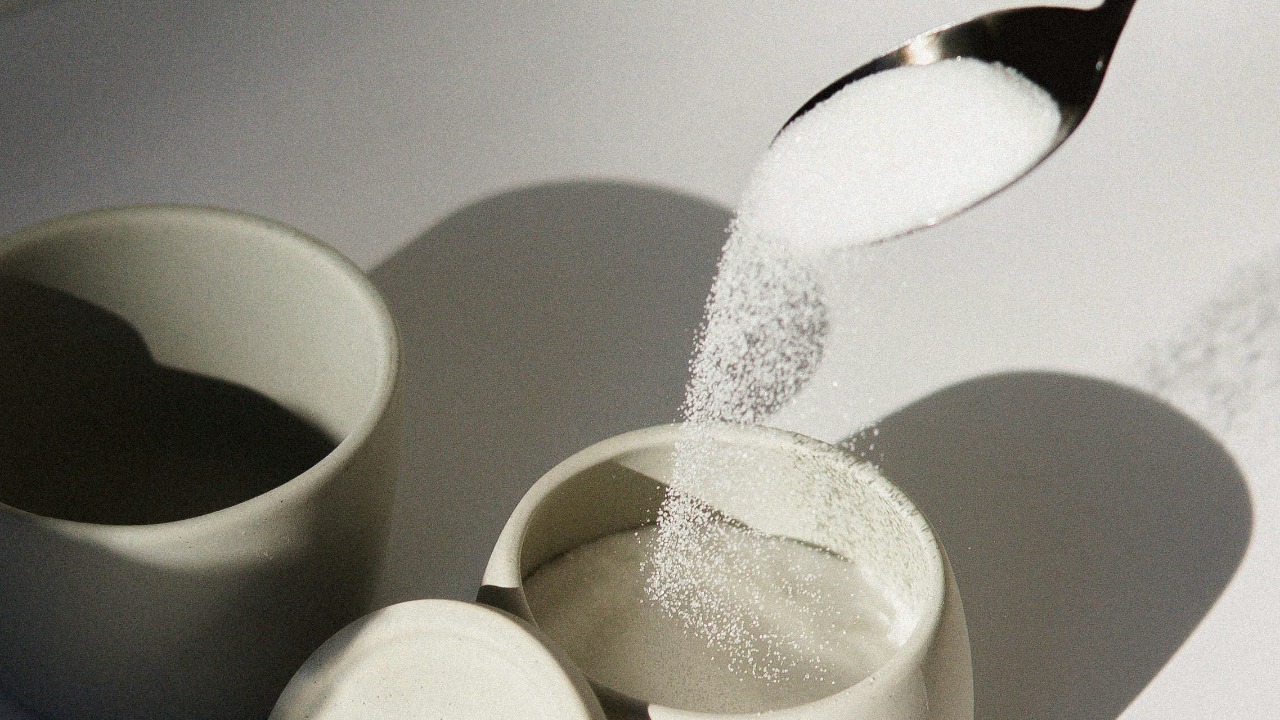

For decades, aspartame has been marketed as a harmless shortcut to sweetness, a way to cut calories without consequences. Now a growing body of research is challenging that comfort, suggesting that even relatively small, everyday doses might carry risks that regulators and consumers have underestimated. The debate is no longer just about extreme overconsumption, but about what repeated low-level exposure could mean over a lifetime.
Health agencies still insist that aspartame is safe within current limits, yet cancer specialists, neuroscientists and consumer advocates are pointing to signals that deserve closer scrutiny. I see a widening gap between official assurances and emerging data, and it is in that gap that questions about “tiny doses” are becoming urgent rather than theoretical.
Why aspartame is under fresh scrutiny
Aspartame has been in the food supply since the 1980s, woven into diet sodas, sugar-free gums, flavored yogurts and thousands of “light” products. It is one of six artificial sweeteners that global health authorities track closely, precisely because it shows up so often in daily diets. When a substance is that ubiquitous, even modest individual doses can add up to a large population-level exposure, which is why new hazard assessments have put it back in the spotlight.
Earlier assessments by the International Agency for Research on Cancer and the Joint FAO/WHO Expert Committee on Food Additives were designed as systematic assessments of the health impacts of this non-sugar sweetener. Those reviews, carried out under the umbrella of the International Agency and the Department of Nutrition and Food Safety at WHO, did not conclude that aspartame is definitively causing disease in humans, but they did flag enough uncertainty to justify tighter scientific focus. That shift, from assuming safety to actively probing potential harm, is what now frames the debate over low-dose exposure.
What global health bodies actually say
When I look past the headlines, the message from global health agencies is more nuanced than either “safe” or “dangerous.” WHO’s expert committee kept the existing acceptable daily intake for aspartame, but the parallel cancer-focused arm, the International Agency for Research on Cancer, placed it in a category that signals possible concern. That combination, a maintained intake limit alongside a hazard label, is exactly what fuels questions about whether current thresholds are conservative enough.
In its technical communication, WHO describes how assessments of the evidence were coordinated between the International Agency and the Department of Nutrition and Food Safety, WHO, to separate hazard identification from risk assessment. That structure matters, because it explains how the same data can support a cautious cancer classification while still leading regulators to say that, at current intake levels, the risk for most consumers remains low. The tension between those two messages is where concerns about even small, repeated doses take root.
Regulators insist current limits are safe
Regulatory agencies have long argued that aspartame is among the most studied food additives and that existing limits already build in wide safety margins. In the United States, aspartame is treated as a general-purpose sweetener, and the Food and Drug Administration points to decades of toxicology and human data to justify its approvals. From that vantage point, the idea that tiny doses are dangerous looks, at first glance, out of step with the official record.
The FDA’s own overview of aspartame and other sweeteners explains that these ingredients are used as general-purpose sweeteners in foods and that The FDA has evaluated many GRAS notices for the use of high purity sweeteners. In a more detailed section, the agency’s FDA Response to External Safety reviews reiterate that They are considered safe at current permitted use levels. That position does not rule out subtle effects at low doses, but it sets a high bar for any new research that claims harm at intakes far below the acceptable daily intake.
New lab research hints at low-dose neurological effects
Some of the most unsettling findings about small amounts of aspartame are coming from neuroscience labs rather than cancer registries. In controlled animal experiments, researchers have reported that artificial sweeteners can alter learning and memory, even when the doses are calibrated to mirror what a human might consume through a few diet drinks or sugar-free snacks. Those effects, if they translate to people, would challenge the assumption that only very high exposures are worrisome.
Work from Bhide Lab, highlighted by Florida State University, reports that Artificial sweeteners are associated with learning and memory deficits that can be passed on to the next generation in animal models. The doses in those experiments were chosen to reflect human-relevant intakes rather than extreme poisoning scenarios, which is why the findings resonate so strongly in the current debate. While animal data are not destiny for humans, they are often the first signal that a compound may have subtle neurological effects long before overt toxicity appears.
Cancer risk: “possibly carcinogenic” does not mean harmless
The cancer question is where the phrase “even tiny doses” gets its sharpest edge. When a substance is labeled “possibly carcinogenic,” it means that there is limited evidence it may cause cancer in humans, not that it is definitively safe until a certain threshold is crossed. For a sweetener used by millions, that nuance matters, because even a small increase in risk at low doses could translate into a meaningful number of additional cases across a population.
The International Agency for Research on Cancer, described as The International Agency for Research on Cancer (IARC), a body of the World Health Organization, WHO, has ruled that this faux sugar may cause liver Cancer in humans. The World Cancer Research Fund explains that the artificial sweetener aspartame has been classified as a substance that is possibly carcinogenic, which means it may cause cancer, while also noting that typical intakes are often below the acceptable daily intake. The American Cancer Society similarly frames the issue as one where concerns about aspartame causing a number of health problems, including cancer, need to be clarified by more and better studies, even after completing a dietary exposure assessment. None of these assessments prove that a single can of diet soda will trigger disease, but they do undercut the idea that low-dose exposure is automatically benign.
How much is “too much” in real-world terms?
One of the most common pushbacks I hear is that you would need to drink an absurd number of diet sodas to hit any dangerous level of aspartame. There is some truth in that, at least when you look strictly at the acceptable daily intake figures set by WHO and regulators. Translating those numbers into everyday consumption, however, shows how regular users can creep closer to the line than they might assume, especially when aspartame is hiding in multiple products across a day.
Guidance summarized by the Louisiana Cancer Research Center notes that, following WHO’s guidelines, a person would need to consume more than 14 cans of a diet drink or 80 packs of tabletop sweetener to reach the potentially harmful dosage of aspartame. That figure is often cited to reassure consumers, but it also assumes a single source of exposure and a body weight that may not match smaller adults or children. When aspartame appears in breakfast yogurt, mid-morning gum, an afternoon soda and an evening “sugar-free” dessert, the cumulative dose can climb, especially for people who use these products daily rather than occasionally.
Why experts disagree on the same evidence
Part of the confusion around low-dose harm comes from the way different expert bodies interpret the same studies. Toxicologists, epidemiologists and cancer specialists do not always weigh uncertainties in the same way, and that divergence can leave consumers stuck between competing narratives. When one group highlights hazard and another emphasizes typical exposure, it can sound as if they are looking at different data, even when they are not.
A detailed legal and scientific analysis titled The Curious Case of Aspartame explains How the Same Evidence Can Yield Seemingly Different Conclusions. In classifying aspartame as a possible carcinogen, The Aspartame Controve illustrates how one body can focus on hazard at any dose while another emphasizes that the evidence is less clear at doses which are commonly used. That split is not a sign that someone is hiding the truth so much as a reminder that scientific judgment calls are baked into every risk assessment, especially when the signal at low doses is subtle rather than overwhelming.
Public backlash and political pressure are rising
Scientific nuance has not stopped aspartame from becoming a political flashpoint. In Europe, consumer groups have seized on the “possibly carcinogenic” label to argue that precaution should trump regulatory patience. Their argument is straightforward: if a sweetener might cause cancer and is not nutritionally necessary, why keep it on the market while waiting for perfect proof, especially when low-dose exposure is so widespread?
A petition organized by Foodwatch reports that over 350,000 citizens have called on the European Union to ban aspartame, pointing to the fact that Aspartame labelled “possibly carcinogenic” by the International Agency for Research on Cancer has also been linked in emerging work to effects on the gut microbiome. The petition notes that since it was launched, the International Agency for Research has maintained its classification, which activists interpret as a sign that regulators are moving too slowly. Whether or not lawmakers act, the scale of the backlash shows how quickly public trust can erode once low-dose risks are framed as a political choice rather than a technical judgment.
Industry history and lobbying cloud the picture
Any discussion of aspartame’s safety is complicated by its contentious history. From its discovery in the 1960s to its eventual approval, the sweetener has been dogged by accusations that commercial interests shaped the science and the regulatory process. That legacy matters today, because it colors how people interpret new reassurances about safety, especially when those reassurances come from institutions that once signed off on earlier, more optimistic assessments.
An investigation by Yuka traces how Aspartame was discovered in 1965 and describes a highly controversial market launch that critics argue was influenced by aggressive lobbying. The report details how Sep 15, 2025 is used as a reference point for renewed scrutiny of that history, suggesting that early decisions about study design and regulatory thresholds may have been shaped as much by commercial strategy as by public health caution. When I weigh current claims that low doses are harmless, that backdrop of contested science and lobbying makes it harder to take any single assurance at face value.
How health professionals are advising patients now
On the clinical front, many health professionals are trying to thread a needle between alarm and complacency. Pharmacists and dietitians know that people reach for diet products to manage weight, diabetes and metabolic risk, and they are wary of pushing patients back toward high-sugar drinks and snacks. At the same time, they are increasingly candid that “sugar-free” does not automatically mean risk-free, particularly when it comes to long-term, low-dose exposure.
In a professional blog, pharmacist Clarissa Chan asks Does aspartame cause cancer and notes that In July, Americ health organizations had to clarify how dosage levels of Aspartame in common products compare with the acceptable daily intake. Her advice, which mirrors what I hear from many clinicians, is to read labels carefully, understand how much of a sweetener you are actually consuming and avoid assuming that low-dose exposure is irrelevant. That kind of pragmatic guidance reflects a growing recognition that the safest path may be to reduce reliance on both added sugars and artificial sweeteners rather than simply swapping one for the other.
Context from cancer and prevention specialists
Cancer prevention experts are trying to put the aspartame debate in perspective without dismissing legitimate concerns. They emphasize that lifestyle factors like smoking, alcohol and obesity remain far more powerful drivers of cancer risk than any single food additive. Yet they also acknowledge that when a compound is classified as possibly carcinogenic, it deserves a place in broader risk reduction conversations, especially for people who consume it daily.
Guidance from the World Cancer Research Fund on aspartame and cancer explains how concerned people should be by balancing the “possibly carcinogenic” label against typical intake levels that are often below the acceptable daily intake. The American Cancer Society’s overview, framed around the question Does aspartame cause cancer, similarly stresses that concerns about aspartame causing a number of health problems, including cancer, should be addressed by more and better studies. I read those positions as cautious but not dismissive, a signal that low-dose risks are on the radar even if they are not yet quantified with precision.
Safer sweetening strategies for everyday life
For people who want to reduce potential low-dose risks without giving up sweetness entirely, nutrition experts are increasingly steering them toward alternatives and, where possible, toward retraining the palate to prefer less intense sweetness overall. That shift is less about demonizing a single molecule and more about recognizing that a diet built on hyper-sweet flavors, whether from sugar or substitutes, can have knock-on effects on appetite, metabolism and long-term health.
Registered dietitians interviewed by HUM Nutrition suggest that the occasional use of stevia and monk fruit are good options and that the worst sweeteners include artificial sweeteners that have raised more safety questions, advising some people to avoid these sweeteners, if possible. That does not mean everyone must purge their pantry overnight, but it does support a gradual move away from daily dependence on aspartame-sweetened products, especially when the science around low-dose effects remains unsettled.
What I watch for next in the aspartame debate
Looking ahead, the most important developments will come from large, well-designed human studies that can detect subtle effects at real-world intake levels. I am watching for research that tracks long-term consumption patterns, not just snapshots, and that looks beyond cancer to neurological, metabolic and microbiome outcomes. Those are the domains where early lab and animal work has raised flags, and where low-dose exposure is most likely to show up as small but meaningful shifts rather than dramatic disease spikes.
At the same time, I pay close attention to how institutions communicate new findings. When WHO’s cancer arm and its food safety committee coordinate WHO committee messages that aspartame is one of six artificial sweeteners under review, or when national regulators like The FDA update their FDA Response to External Safety reviews, those signals help me gauge whether the consensus is shifting. Until then, the most prudent stance for consumers may be to treat aspartame as a tool to be used sparingly, not a free pass to unlimited sweetness, especially when even tiny, repeated doses are now under such intense scientific and public scrutiny.
More from MorningOverview