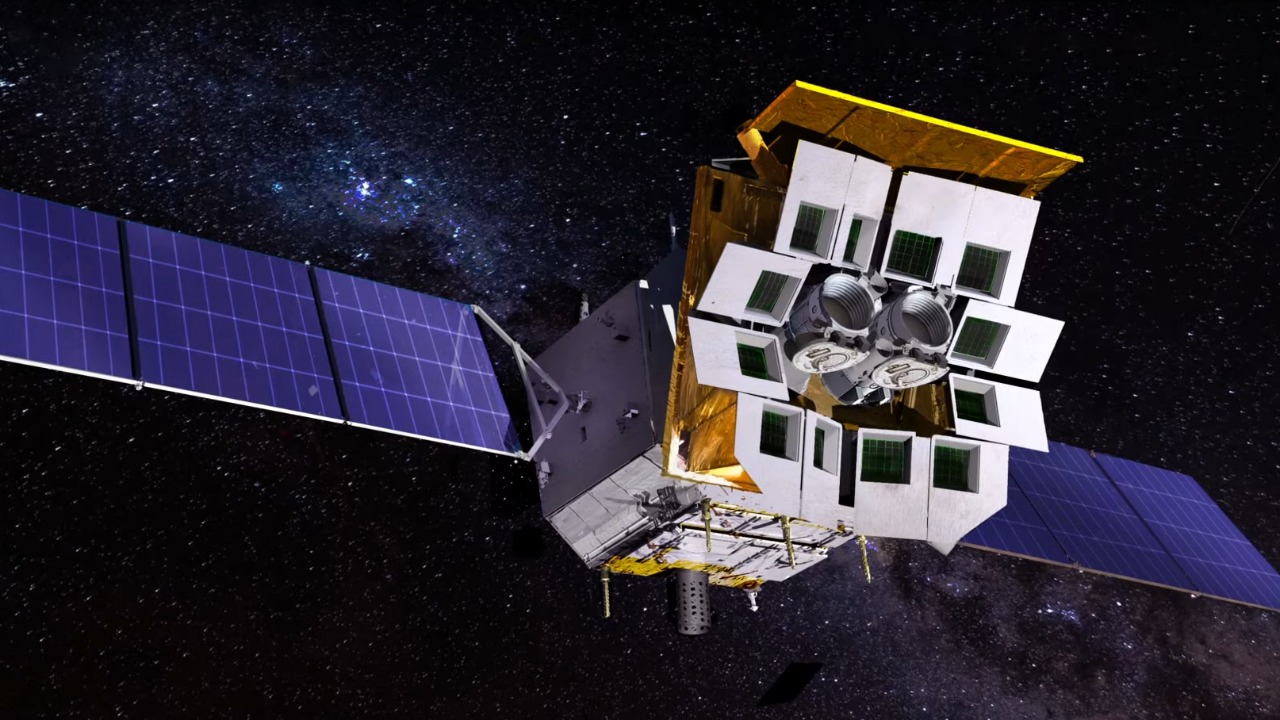

The Einstein Probe space telescope has captured a powerful X-ray outburst from a nearby K-type star, offering a rare, high-resolution look at how stellar magnetic fields unleash sudden bursts of energy. The flare, detected from the star PM J23221-0301, turned a relatively quiet neighbor into a brief cosmic beacon and gave astronomers a detailed timeline of how such eruptions ignite and fade. I see this event as a pivotal early result for the mission, showing how its wide-field “lobster eye” design can catch short-lived phenomena that older observatories often missed.
By tracking the flare from its rapid rise to its gradual decline, researchers were able to measure its intensity, duration, and spectral evolution with unusual precision. Those measurements, combined with the star’s classification as a K-type object, are sharpening models of how stellar flares form and how they might affect any surrounding planets. The observation also serves as a proof of concept for the Einstein Probe’s strategy of scanning large swaths of the sky for transient X-ray events rather than staring at a single target.
Einstein Probe’s early catch: a flare tagged EP240408a
The Einstein Probe was still in its commissioning phase when it picked up a transient event labeled EP240408a, an X-ray signal that quickly stood out from the background. The spacecraft’s instruments recorded a sudden spike in high-energy photons that matched the profile of a stellar flare, prompting follow-up analysis to pinpoint the source and characterize the outburst. I see that early detection as a sign that the mission’s hardware and alert pipeline are already working as designed, even before full science operations ramp up.
According to mission reports, The Einstein Probe detected EP240408a as a transient X-ray flare and tracked it long enough to capture its full evolution. That single event, recorded while the spacecraft was still being tested, demonstrated the value of its wide-field monitoring approach and set the stage for more systematic searches for similar flares across the sky.
A nearby K-type star steps into the spotlight
Follow-up analysis linked EP240408a to PM J23221-0301, a K-type star relatively close to the Sun in galactic terms. K-type stars are cooler and smaller than the Sun, but they are often magnetically active, with surfaces that can unleash powerful flares when twisted magnetic field lines reconnect. By tying the flare to this specific object, researchers could combine the X-ray data with what is already known about K-type stellar atmospheres and magnetic behavior.
The detailed study of this event, described in an Einstein Probe flare analysis, identifies PM J23221-0301 as the host star and classifies it as a K-type object. That classification matters because it allows the team to compare the flare’s properties with other K-type flare stars and to test whether existing models of magnetic reconnection and coronal heating can reproduce the observed X-ray output.
What makes stellar flares so intense
Stellar flares are among the most dramatic expressions of magnetic activity on a star, releasing energy that can dwarf the star’s normal output over short timescales. In physical terms, they occur when stressed magnetic field lines in the stellar corona suddenly snap and reconnect, converting stored magnetic energy into heat, particle acceleration, and radiation. I view them as natural laboratories for plasma physics, since they play out on scales and energies that cannot be reproduced on Earth.
Researchers working with the Einstein Probe data emphasize that stellar flares are an intense manifestation of stellar magnetic activity, with the radiative energy of the star during such events primarily concentrated in the optical and X-ray bands. That concentration of energy in high-energy photons is what makes instruments like the Einstein Probe so valuable, since they can capture the X-ray component that carries direct information about the hottest plasma and the most energetic particles involved in the flare.
Timing the outburst: a flare lasting about 7.1 kiloseconds
One of the most important numbers to come out of the observation of PM J23221-0301 is the flare’s duration. The Einstein Probe tracked the event from its onset through its decay, allowing astronomers to measure how long the star remained in its heightened X-ray state. That timing, combined with the flare’s brightness, helps constrain the size of the emitting region and the efficiency of the underlying magnetic reconnection process.
The analysis reports that the flare had a duration of about 7.1 kiloseconds, or a little under two hours, with the X-ray emission rising and falling over that interval. In the detailed write-up, the team notes a duration of ∼ 7.1 ks, and a companion summary describes a duration of about 7.1 ks, underscoring how carefully the team quantified the timescale of the event. That level of precision is crucial for comparing this flare with others observed on different stars and for testing whether theoretical models can reproduce both the light curve shape and the total energy released.
Energy in X-rays and optical light
Beyond timing, the Einstein Probe flare from PM J23221-0301 offers a clear view of how energy is distributed across different parts of the spectrum during a major outburst. In a typical stellar flare, the star brightens in visible light while simultaneously emitting a surge of X-rays from its superheated corona. By measuring the X-ray flux and combining it with estimates of the optical output, astronomers can infer how efficiently magnetic energy is being converted into radiation at different wavelengths.
The team studying this event notes that, during such flares, the radiative energy of the star is primarily concentrated in the optical and X-ray bands, with the Einstein Probe providing the high-energy side of that picture. Their detailed modeling of the PM J23221-0301 flare, presented in an Einstein Probe discovery report, shows how the X-ray luminosity evolved over the roughly 7.1 kiloseconds of activity and how that compares with expectations for a K-type flare star. I see that comparison as a key step toward building a statistical picture of flare energetics across different stellar types.
Why a K-type flare matters for exoplanet habitability
Flares like the one from PM J23221-0301 are not just curiosities; they have direct implications for any planets that might orbit such stars. K-type stars are often considered promising hosts for habitable worlds because they are stable for long periods and emit less harsh ultraviolet radiation than hotter stars. However, strong X-ray and optical flares can strip atmospheres, alter chemistry, and bombard planetary surfaces with energetic particles, especially for planets in close-in orbits.
By capturing a detailed X-ray flare from a K-type star, the Einstein Probe gives researchers a concrete data point for assessing those risks. The measured duration of about 7.1 kiloseconds and the concentration of radiative energy in the optical and X-ray bands, as documented in the flare characterization, can be fed into models of atmospheric erosion and surface radiation exposure for hypothetical planets around PM J23221-0301–like stars. I see that as a bridge between high-energy astrophysics and the emerging field of exoplanet climate and habitability studies.
Einstein Probe’s “lobster eye” design and the future of flare hunting
The successful detection of EP240408a highlights the advantages of the Einstein Probe’s unusual optics. Instead of using traditional narrow-field X-ray mirrors, the mission relies on a “lobster eye” design that mimics the wide-angle vision of a crustacean, allowing it to monitor a large portion of the sky at once. That wide field of view is ideal for catching short-lived events like stellar flares, which can erupt and fade before a conventional telescope has a chance to point in the right direction.
Mission documentation on the PM J23221-0301 flare, including the detailed arXiv analysis, underscores how the Einstein Probe’s scanning strategy and instrumentation made it possible to capture the full 7.1 kilosecond evolution of the event. As the mission continues, I expect that same design to yield a growing catalog of flares from different types of stars, enabling comparative studies of magnetic activity across the Milky Way and refining our understanding of how often such intense outbursts occur.
From a single flare to a new era of high-energy sky surveys
Viewed in isolation, the flare from PM J23221-0301 is a striking example of how a seemingly ordinary K-type star can briefly become a powerful X-ray source. In the broader context of high-energy astrophysics, it marks an early milestone in a mission that aims to transform how we monitor the dynamic sky. By combining wide-field coverage with sensitive detectors, the Einstein Probe is poised to catch not only stellar flares but also other transient events such as X-ray bursts, tidal disruption events, and perhaps phenomena that have yet to be classified.
The careful documentation of this flare, from its identification as EP240408a to its classification as an intense stellar flare with a duration of about 7.1 kiloseconds, shows how quickly a single detection can be turned into a rich scientific dataset. The published Einstein Probe flare study and its companion analyses provide a template for how future events will be analyzed and shared with the community. I see this as the beginning of a more continuous, survey-style approach to X-ray astronomy, where flares like the one from PM J23221-0301 become part of a much larger story about how the high-energy universe changes from moment to moment.
More from MorningOverview