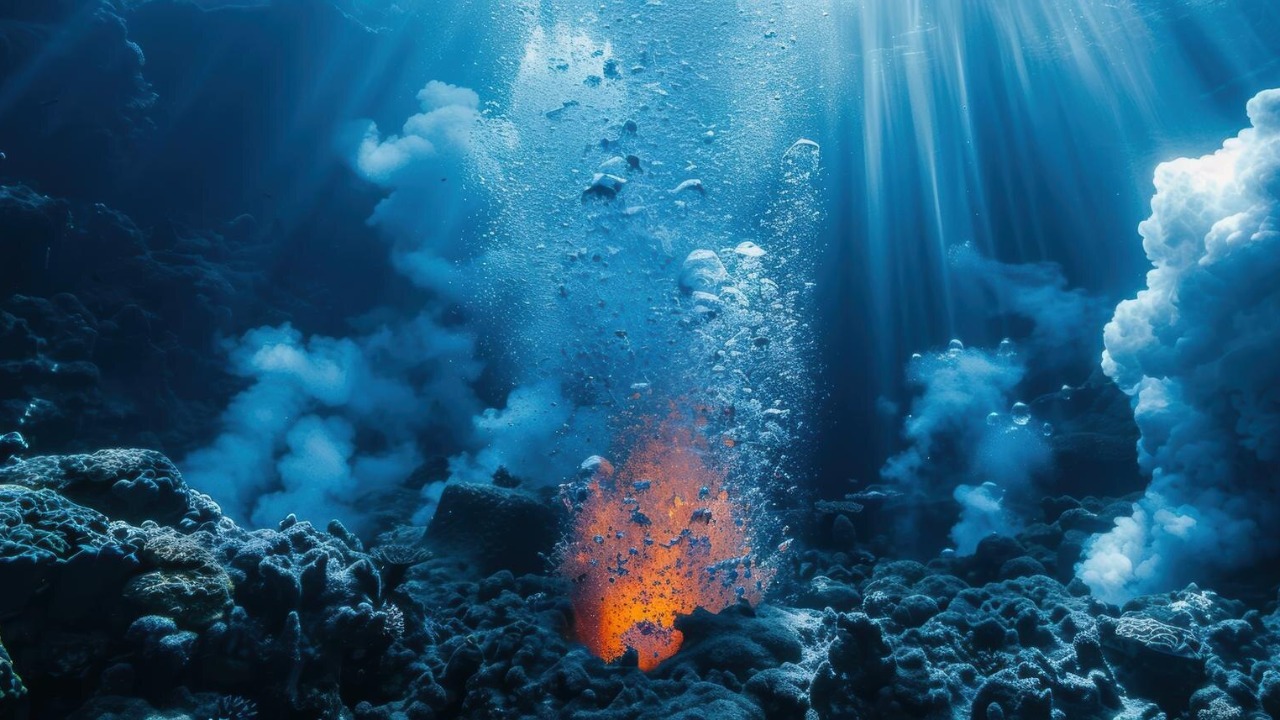

Nearly 3.7 kilometers beneath the Greenland Sea, scientists have stumbled on a hidden landscape of icy methane and dense animal life that should not, by conventional wisdom, be there. The deepest gas hydrate cold seep ever recorded is not a barren chemical oddity but a bustling ecosystem, forcing a rethink of how life and carbon move through the Arctic’s darkest waters.
The discovery of these gas hydrate mounds, packed with worms, clams, snails, and crustaceans, shows that even at crushing pressures and near-freezing temperatures, the seafloor can host thriving communities powered by methane rather than sunlight. It is a rare glimpse into a world that has remained invisible until new technology and a determined international team pushed into one of the most remote corners of the High North.
Finding a hidden world on the Molloy Ridge
The newly described cold seep lies on the Molloy Ridge in the Greenland Sea, a deep rift valley where the seafloor is pulled apart and fluids can escape from the subsurface. A multinational scientific team led by researchers at the Arctic University of Norway used advanced mapping and robotic tools to locate a cluster of gas hydrate mounds that mark the deepest known seep of this kind anywhere on the planet. According to the expedition report, the site sits along a tectonically active segment of the ridge, where faults and fractures help funnel methane-rich fluids upward from deeper sediments and rocks, concentrating them into solid hydrates that build up into mounds on the seabed.
The team’s description of the site emphasizes that these structures are not isolated oddities but part of a broader system of fluid flow and gas release along the ridge. The discovery is framed as a key finding on the Freya hydrate mounds, a name that has quickly become shorthand for this extreme environment in the Greenland Sea. By tying the seep to the regional geology, the researchers argue that similar, still-undetected systems may exist along other deep Arctic ridges, hinting that the Freya mounds could be the first glimpse of a much larger hidden network of methane-fed ecosystems.
How deep is “deepest” in the Arctic ocean?
What sets the Freya hydrate mounds apart is not just their location but their depth. The seep lies at 3,640 meters, a depth that translates to roughly 11,942 feet of water pressing down on the seafloor. At that pressure, every square centimeter of the seabed experiences hundreds of times the force felt at the surface, and temperatures hover just above freezing. These conditions make the stability of gas hydrates more likely, since methane and water can lock into solid form under high pressure and low temperature, but they also make exploration technically demanding and expensive.
Reporting on the find notes that the world’s deepest methane seeping hydrate mounds were identified at exactly 11,942 feet below the surface of the Greenland Sea, perched on the flank of the ridge where the seafloor drops into a deep basin. That figure is not just a record; it pushes the known limits of where gas hydrate cold seeps can exist, far beyond the depths of most previously studied Arctic sites. The fact that a rich ecosystem persists at this depth suggests that the constraints on life in the deep ocean are more flexible than many models have assumed, especially when chemical energy from methane is available.
From sonar blips to Freya hydrate mounds
The path from a blank patch of seafloor on a map to a named site like the Freya hydrate mounds began with systematic surveying. During the Ocean Census Arctic Deep – EXTREME24 expedition, scientists used high resolution sonar and water column imaging to search for signs of gas bubbles rising from the seabed. These acoustic “flares” are one of the few ways to spot potential seeps in deep water before sending down cameras or sampling gear. Once suspicious plumes were identified, the team deployed remotely operated vehicles and other instruments to confirm that the signals corresponded to gas hydrate mounds and active methane release, a process that turned abstract sonar patterns into a tangible landscape.
The researchers describe their work as a kind of census of deep sea habitats, a deliberate attempt to catalog the seafloor sources of methane rich waters in the High North. In their technical account of the Ocean Census Arctic Deep campaign, they emphasize that the Freya mounds emerged from this broader effort to map and classify deep sea gas hydrate mounds and the chemosynthetic fauna that live on them. By treating the region as a survey grid rather than chasing isolated curiosities, the team could place the new seep in context, comparing it to shallower sites and building a more complete picture of how methane escapes from the Arctic seafloor.
What gas hydrates are, and why they matter
Gas hydrates are crystalline solids in which gas molecules, often methane, are trapped inside cages of water ice. They form under specific combinations of low temperature and high pressure, conditions that are common in deep marine sediments and permafrost. At the Freya mounds, methane rising from below becomes locked into these icy structures near the seafloor, creating solid deposits that can grow into mounds several meters high. When parts of these deposits destabilize, methane can escape into the surrounding water, feeding microbial communities and, in some cases, bubbling all the way to the surface.
The scientific team behind the Freya discovery describes these structures as some of the deepest known hydrate deposits worldwide, a superlative that underscores their importance for both geology and climate science. In their detailed analysis of deep sea gas hydrate mounds, they argue that such deposits act as both a reservoir and a gatekeeper for methane, a potent greenhouse gas. If hydrates remain stable, they can lock away carbon for long periods. If they break down, whether through warming waters, shifting sediments, or tectonic activity, they can release methane into the ocean and potentially the atmosphere. Understanding how these mounds form, evolve, and sometimes collapse is therefore central to predicting the Arctic’s role in the global carbon cycle.
A census of life in the dark: chemosynthetic communities
What makes the Freya hydrate mounds remarkable is not only the chemistry but the density and diversity of life clinging to them. Instead of relying on sunlight, the animals at this depth depend on chemosynthesis, a process in which microbes use methane and other chemicals as an energy source. These microbes form the base of a food web that supports a surprising array of larger organisms, from worms and clams to snails and crustaceans. The researchers describe the site as a previously unknown deep sea ecosystem thriving on the Arctic seafloor, a phrase that captures both its novelty and its vitality.
In a broader overview of the expedition, scientists from the Arctic Universit of Norway highlight how the Freya mounds reveal a deep sea ecosystem that had gone unnoticed despite lying in a region that has been studied for decades. Their account of deep sea life emphasizes that the animals at the seep are tightly linked to the availability of methane and the activity of chemosynthetic microbes. Rather than being scattered randomly, the fauna cluster around active vents and hydrate outcrops, forming patches of high biomass in an otherwise sparse deep sea landscape. This pattern suggests that as more deep hydrate mounds are found, more such oases of life are likely to be revealed.
Snails, clams, and worms in a “bizarre” ecosystem
Close up images from the Freya mounds show a scene that looks almost alien. Small sea snails with their shells coated in orange material crawl over hydrate crusts, while amphipods, tube dwelling worms, and deep sea clams cluster in dense patches. These animals are adapted to low light, high pressure, and chemically rich waters, and many of them likely host symbiotic bacteria that help them tap into the methane driven energy supply. The visual impression is of a seafloor that is anything but empty, with animals packed into every available niche around the seep.
Accounts of the discovery describe this as a mysterious, life rich ecosystem nearly 12,000 feet beneath the Greenland Sea, highlighting how small sea snails and other invertebrates dominate the scene. Another report characterizes the site as a bizarre ecosystem discovered more than two miles beneath the Arctic, noting that the combination of gas hydrate mounds and dense chemosynthetic fauna is unlike most other deep sea habitats. The language used by the scientists themselves reinforces this sense of strangeness, as they describe deposits that are not static and communities that shift as the mounds grow, collapse, and reform over time.
Dynamic mounds that grow, collapse, and reform
The Freya hydrate mounds are not frozen monuments but active geological features that change shape and structure over time. As methane rich fluids continue to flow upward, new hydrate can form, adding material to the mounds and sometimes lifting overlying sediments. At the same time, parts of the deposits can destabilize, leading to partial collapses that expose fresh surfaces and alter the pattern of gas release. This constant reshaping creates a mosaic of microhabitats, with some areas newly active and others fading as the supply of methane shifts.
Researchers describe how, over time, the mounds collapse and reform, a dynamic process that offers insights into the Arctic’s various ecosystems and how they respond to changes in fluid flow. In their account of this dynamic behavior, they stress that these are not static deposits but living landscapes in a geological sense, with feedbacks between hydrate growth, sediment stability, and biological colonization. As mounds rise and fall, communities of worms, clams, and other animals must either adapt, move, or perish, linking the physical evolution of the seep directly to its ecological story.
Why this Arctic seep matters for the climate story
The discovery of the deepest gas hydrate cold seep in the Arctic carries obvious implications for climate research. Methane is a powerful greenhouse gas, and the stability of subsea hydrates has long been a concern in scenarios of rapid ocean warming. The Freya mounds show that large volumes of methane can be stored in solid form even at great depth, but they also demonstrate that some of this methane is actively escaping into the water column. The key question is how much of that gas is consumed by microbes and chemosynthetic communities before it can reach the surface and enter the atmosphere.
Scientists involved in the work caution that the Arctic carbon story is still incomplete, a point echoed in coverage of the Deepest Arctic methane seep. They argue that sites like Freya must be integrated into models of Arctic methane budgets, since they represent both a potential source of greenhouse gas and a sink where biological processes can transform or trap carbon. The balance between these roles will depend on how the mounds respond to future changes in ocean temperature, circulation, and tectonic activity, all of which could alter the rate at which methane is released and processed in the deep sea.
Technology, risk, and the race to understand the High North
Reaching a site nearly 12,000 feet down in the Greenland Sea requires sophisticated technology and careful planning. The expedition relied on remotely operated vehicles, high resolution cameras, and specialized sampling tools to work safely in the dark, high pressure environment. ROV footage of a partially collapsed gas hydrate mound, for example, provided direct visual confirmation of both the geological structure and the animals living on it, turning abstract chemical and acoustic data into a tangible scene. Without such tools, the Freya mounds would have remained invisible, hidden beneath kilometers of water and ice.
Reports on the discovery stress that scientists are racing to document these deep sea ecosystems before they are disturbed or lost for good, a concern that reflects both climate change and potential industrial interest in the Arctic. One account notes that Technology Dec advances have finally made it possible to explore such depths systematically, but also warns that increased access could bring new pressures. Another emphasizes that the discovery of the deepest gas hydrate cold seep ever in the Arctic, framed as a Deepest Arctic milestone, should inform decisions about sustainable development in the region, ensuring that unique ecosystems like Freya are considered in future planning.
Rewriting the map of Arctic deep sea life
For scientists who study the polar oceans, the Freya hydrate mounds are more than a curiosity; they are a sign that the Arctic deep sea is far more complex and biologically rich than previously recognized. An analysis of the expedition’s findings argues that the discovery of a previously unknown deep sea ecosystem thriving on the Arctic seafloor should prompt a reassessment of biodiversity patterns in the region. Instead of a simple gradient from productive surface waters to a sparse abyss, the presence of chemosynthetic oases at great depth suggests a patchwork of hotspots where life flourishes despite the absence of sunlight.
Commentary on the work by Christopher Plain highlights how researchers from the Arctic Universit and their international partners see the Freya mounds as part of a broader effort to understand and manage the High North. In a synthesis of the findings, they frame the site as evidence that the Arctic seafloor hosts ecosystems that are both scientifically valuable and potentially vulnerable, and they argue that documenting these systems is essential for the sustainable development of the region. Their discussion of this previously unknown deep sea ecosystem underscores that the deepest gas hydrate ever seen off Greenland is not just a record setting curiosity but a catalyst for rethinking how we map, value, and protect life in the Arctic Ocean.
From Freya to the global picture of gas hydrates
The Freya hydrate mounds now sit alongside a growing list of gas hydrate sites that scientists are using to piece together a global picture of methane in the oceans. Detailed work on deep sea gas hydrate mounds and chemosynthetic fauna shows that such systems occur in many regions, from continental margins to mid ocean ridges, but the Arctic examples are particularly important because of their sensitivity to climate change. The Freya site, as the deepest known gas hydrate cold seep in the Arctic, provides a critical data point for testing theories about how pressure, temperature, and fluid flow interact to control hydrate stability and methane release.
In their comprehensive study of deep sea gas hydrate systems, researchers argue that integrating observations from sites like Freya into global models will improve predictions of how much methane is likely to escape from the seafloor under different warming scenarios. They note that the combination of geological mapping, biological surveys, and chemical measurements used at the Freya mounds offers a template for future work in other deep basins. As more expeditions adopt similar approaches, the once hidden world of gas hydrates and their associated ecosystems will become a more visible and quantifiable part of the Earth’s climate and biodiversity story.
More from MorningOverview