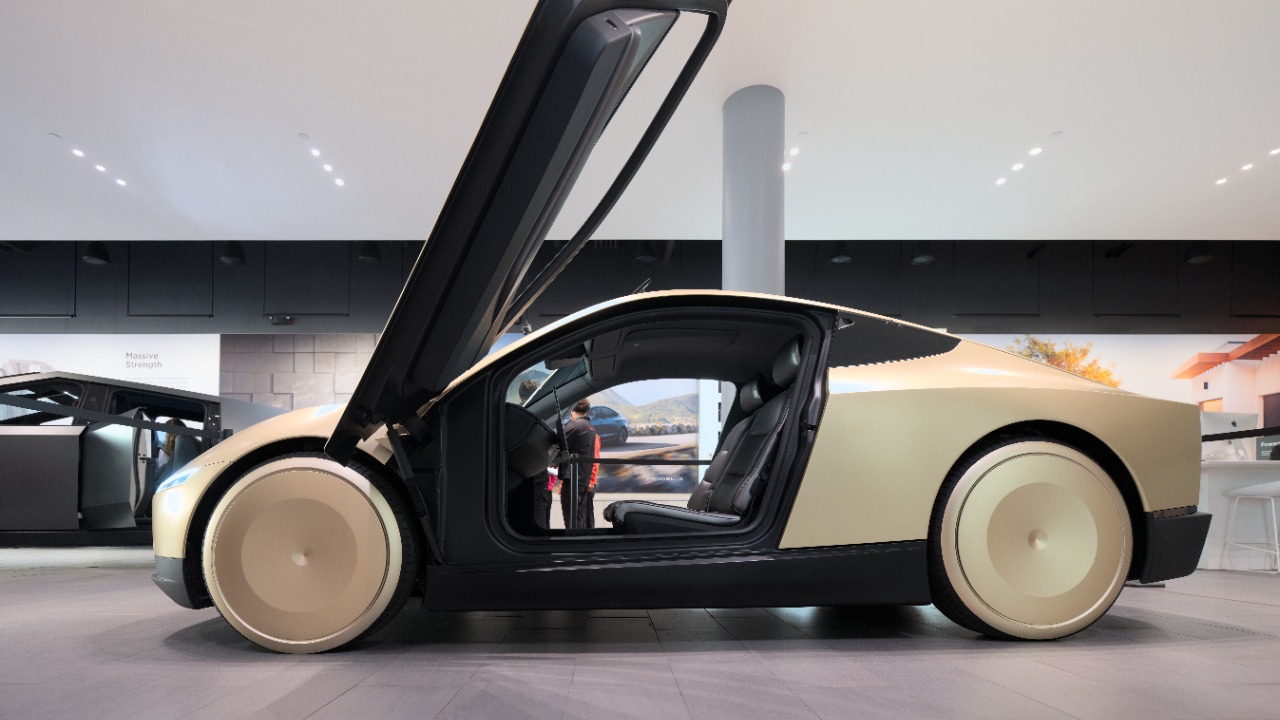

The CyberCab experiment was supposed to be Tesla’s clean break from the messy, human world of ride‑hailing, a sleek robotaxi that would glide through cities without a steering wheel or a driver. Instead, the first public outing in Austin turned into a case study in how quickly a hyped launch can unravel when software, safety and expectations collide. Within minutes, the CyberCab story shifted from futuristic promise to a live demonstration of just how fragile trust in autonomy still is.
What happened on those Austin streets was not a single catastrophic crash but a cascade of small failures that played out in full view of cameras, investors and regulators. The result was a launch that seemed to implode in roughly the time it takes to finish a coffee, raising hard questions about whether Tesla’s robotaxi ambitions are outpacing the technology, the safety culture and the public’s appetite for risk.
The five‑minute meltdown in Austin
The pivotal moment came when a small fleet of Cyber Cabs finally rolled out in Austin, Texas, after years of teasers and investor promises. Early riders expected a seamless, driverless glide through familiar streets, but within roughly five minutes the system’s limitations were on display, from awkward lane choices to hesitation that forced other drivers to react. Video from the launch captured how quickly the mood shifted from curiosity to concern as the vehicles struggled to project the effortless confidence that autonomy marketing has long promised, a dynamic that was dissected in detail in a breakdown of why the Tesla Cyber Cabs stumbled in Austin.
Those first rides were supposed to be a proof point that Tesla could move beyond supervised driver assistance into full robotaxi service. Instead, the Austin debut underscored how unforgiving real‑world streets can be when a system that is still learning is suddenly asked to perform without a human fallback. The fact that the Cyber Cabs were operating in Tesla’s home state, on roads the company has used repeatedly for testing, only sharpened the sense that the launch had been rushed into the spotlight before the technology was ready for prime time.
How the launch “crashed itself” in minutes
What made the CyberCab rollout so damaging was not just that things went wrong, but how quickly the narrative flipped from triumph to damage control. Tesla had framed the event as the moment its long‑awaited robotaxi would mark a new era of mobility, yet within a few minutes of the first rides, clips of erratic behavior were circulating with captions pointing out how the vehicle had effectively crashed its own launch in just minutes. The contrast between the promise of a flawless, fully autonomous ride and the reality of a system that still made basic judgment errors was stark.
In those early clips, the CyberCab did not need a dramatic collision to lose the room. It only had to look uncertain, to hesitate where a human driver would commit, or to make a move that forced surrounding traffic to compensate. That gap between the marketed image of a robotic chauffeur and the on‑the‑ground behavior was enough to turn a carefully staged debut into a viral cautionary tale, amplified by multiple angles of how the Tesla launch unraveled.
A robotaxi that was supposed to redefine the car
Part of the shock came from how radically Tesla had positioned the CyberCab compared with a conventional vehicle. The Tesla Cybercab is described as an upcoming two‑passenger battery‑electric self‑driving car under development by Tesla, planned to operate with no steering wheel or pedals at all. That design choice, which is detailed in reference material on the Tesla Cybercab concept, signaled that the company did not just want to automate driving, it wanted to erase the human driver from the cabin entirely.
Earlier promotional material went further, presenting the Tesla Cyber Cab as a fully autonomous, futuristic shuttle that would solve the awkwardness of small talk with drivers and the inefficiencies of privately owned cars. In one high‑profile presentation, Tesla claimed this all‑new Tesla Cyber Cab was due to launch in 2027 as a vision for the future of mobility, a timeline that was highlighted in a widely shared preview of the Tesla Cyber Cab. When a product is framed as the end of the steering wheel itself, any sign of uncertainty on the road becomes more than a bug, it becomes an existential question about whether the premise holds.
Specs on paper, reality on the street
On paper, the Cybercab looked like a logical next step in Tesla’s push to “continue the tradition of breaking technological barriers.” Company‑aligned descriptions of the Tesla Cybercab emphasized a compact, two‑seat layout, advanced battery‑electric drivetrain and a suite of autonomous features that would allow the car to operate as a robotaxi without human input. Those details were laid out in promotional overviews of the Cybercab specs and features, which framed the vehicle as a modern, software‑defined mobility pod.
Yet the Austin launch showed how little comfort spec sheets provide when a vehicle is operating inches from pedestrians and cyclists. The same autonomy stack that looked impressive in controlled demos struggled with messy edge cases, from complex intersections to unpredictable human behavior. The gap between the Cybercab’s advertised capabilities and its performance in those first rides did not just raise technical questions, it also undercut the narrative that Tesla’s software was uniquely positioned to leapfrog rivals in the robotaxi race.
Testing in Austin and the limits of “beta” on public roads
Long before the launch event, Tesla had been quietly running Cybercab prototypes on public streets, including in Austin. One widely circulated post showed the Cybercab in Austin being tested on local roads, shared by influencer Sawyer Merritt, who posted pictures on X that highlighted how the vehicle blended into everyday traffic. That sighting, described as Cybercab In Austin testing, was meant to signal progress and normalize the idea of a driverless Tesla gliding through the city.
Those tests, however, also underscored the tension in using public streets as a proving ground for software that is still evolving. When a system is framed as “beta” but is simultaneously marketed as ready to replace human drivers, every misstep becomes a referendum on whether the company is treating safety as a core constraint or as a variable to be tuned after launch. The Austin rollout suggested that Tesla was still leaning heavily on real‑world exposure to harden its algorithms, a strategy that can generate rapid data but also exposes ordinary road users to the consequences of unfinished code.
Early rides, honking horns and the robotaxi learning curve
The CyberCab’s struggles did not occur in a vacuum. Tesla’s first robotaxi rides had already been running into bumps, with footage showing a vehicle re‑entering the correct lane only after crossing a double‑yellow line as a honking horn sounded in protest. That sequence, captured in coverage of Tesla’s first robotaxi bumps, illustrated how the system could technically correct itself while still violating basic road rules that human drivers are expected to respect.
Those incidents, along with references to the technology’s involvement in multiple crashes, fed into a broader unease about whether Tesla’s approach to autonomy was mature enough for unsupervised service. When a robotaxi crosses a double‑yellow line it is not just making a minor mistake, it is breaking a bright‑line rule that regulators and the public use as a shorthand for safety. The Austin CyberCab launch, arriving against that backdrop, looked less like an isolated misfire and more like the latest symptom of a company pushing the envelope faster than its systems, and its safeguards, can comfortably support.
Style over substance at the big reveal
Even before the Austin road test went sideways, critics had flagged that Tesla’s Cybercab event was heavy on spectacle and light on hard information. One analysis described how, as expected and like prior Tesla product unveils, the Cybercab presentation was light on details, quoting a Barclays analyst who said the event fit a familiar pattern of hype outpacing specifics. That assessment, tied to a broader critique of Tesla’s Cybercab event, suggested that investors were being asked to buy into a vision without the usual grounding in timelines, safety metrics or regulatory pathways.
That lack of substance became more glaring once the first public rides exposed how far the system still had to go. When a company offers few technical details, real‑world performance becomes the de facto disclosure, and in Austin those disclosures were unforgiving. The CyberCab’s launch showed that sleek renderings and confident stagecraft cannot paper over the absence of concrete answers about redundancy, fail‑safes and how the system will handle the messy edge cases that define urban driving.
Designing a robotaxi to look less like a robot
Tesla has always leaned on design as a differentiator, and the Cybercab is no exception. Where a Waymo robotaxi is described as boxy with sensors bulging out on all sides, the Cybercab is framed as sleek and streamlined, with its sensing hardware tucked away to preserve a more conventional silhouette. That contrast, highlighted in a close reading of how Waymo and the Cybercab differ in sensors, reflects a deliberate choice to make the robotaxi look less like a science project and more like a familiar car.
That aesthetic decision, however, comes with trade‑offs. Bulky external sensors may be visually awkward, but they also signal redundancy and capability, especially to regulators and safety advocates who want to see multiple overlapping systems. By contrast, a minimalist exterior can raise questions about whether the vehicle has enough sensing coverage to handle complex scenarios, or whether the design is prioritizing style over the kind of belt‑and‑suspenders engineering that other robotaxi players have embraced. In Austin, the CyberCab’s struggles gave critics fresh ammunition to argue that the company’s obsession with a clean look might be at odds with the messy reality of urban autonomy.
Inside Tesla’s culture of constant escalation
The CyberCab saga also fits into a broader pattern inside Tesla, where ambitious timelines and bold promises often collide with the slower, more methodical pace of engineering reality. Internal commentary has described a culture in which leadership pushes for aggressive rollouts and dramatic unveilings, sometimes leaving teams scrambling to catch up on the details that make those visions safe and sustainable. One recent discussion of Tesla’s internal dynamics, framed as a “new uncomfortable Tesla truth,” surfaced in a segment from Electrified that opened with a shout‑out to patron Craig O and then dug into Tesla’s all‑hands messaging around its latest initiatives.
In that context, the CyberCab launch looks less like an anomaly and more like the logical outcome of a company that has normalized shipping first and fixing later. When leadership sets expectations that every new product will be a step change in capability, teams face intense pressure to deliver something that looks revolutionary, even if the underlying systems are still evolving. The Austin meltdown, compressed into those first few minutes of public exposure, was a reminder that there are limits to how far that culture can stretch when the product in question is not a phone app but a two‑ton vehicle sharing the road with unsuspecting bystanders.
Public perception, upside‑down Teslas and the optics of risk
Public trust in autonomy is fragile, and the CyberCab launch collided with a media environment primed to amplify every misstep. One widely shared clip showed a Tesla being driven upside‑down in a stunt context, a spectacle that was later described with the blunt assessment that “it got messy.” That episode, referenced in coverage of driving a Tesla upside‑down, fed into a broader narrative that the brand is as much about viral moments as it is about sober engineering.
When that kind of spectacle sits alongside footage of a robotaxi hesitating in traffic or edging over a double‑yellow line, it becomes harder for Tesla to argue that its approach to autonomy is uniquely disciplined. The CyberCab’s five‑minute unraveling did not just raise technical questions, it also reinforced a perception that the company is comfortable operating at the edge of acceptable risk, trusting that software updates and public fascination will smooth over the rough edges. For regulators and city officials weighing whether to allow fleets of such vehicles on their streets, those optics matter as much as any slide deck.
Cyber risks and the 2026 threat landscape
Beyond the driving behavior itself, the CyberCab launch landed at a moment when the broader cyber landscape is becoming more hostile. Analysts tracking expected developments in the cyber landscape during 2026 have warned that attackers will accelerate their investments in cookie theft, session hijacking and other techniques that target the connective tissue between users and cloud services. Those trends, outlined in a forward‑looking assessment of expected attacker behavior, have direct implications for any vehicle that relies on constant connectivity and over‑the‑air updates.
A fully autonomous robotaxi like the CyberCab is not just a car, it is a rolling node on a network, dependent on secure communication channels, remote software management and robust identity controls. If attackers are getting better at compromising those layers, the stakes of a security lapse go far beyond leaked data, they extend to the physical safety of passengers and everyone around them. The Austin launch, with its focus on driving performance, barely touched on these cyber risks, yet they may prove just as critical in determining whether the CyberCab vision can move from shaky debut to trusted infrastructure.
More from MorningOverview