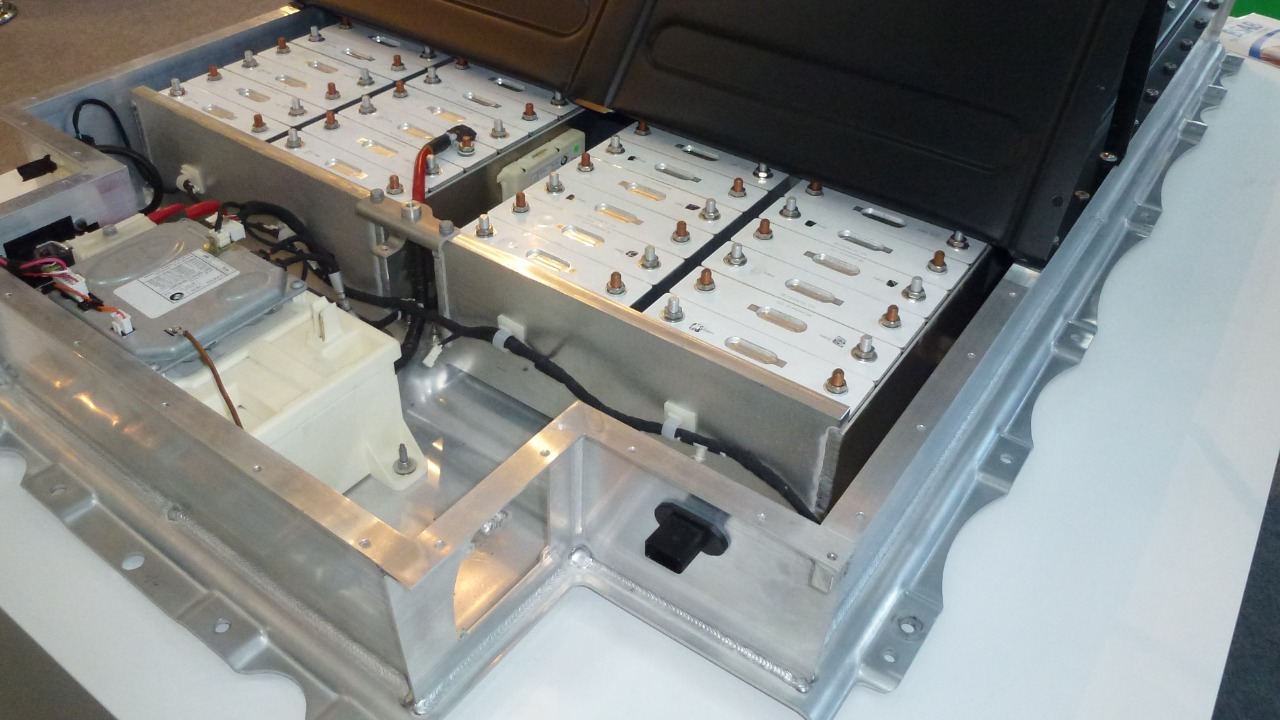

China is pushing lithium-sulfur batteries from lab curiosity toward real-world hardware, and the latest twist adds sunlight directly into the chemistry. By pairing ultra high energy density cells with light-assisted charging, Chinese developers are sketching a future where battery packs store far more energy than today’s lithium-ion units and can partially refuel themselves whenever the sun is out. If the technology scales, it could reshape everything from long-range electric trucks to remote microgrids that rarely see a diesel tanker.
The core idea is simple but disruptive: use sulfur to pack in more energy per kilogram, then let solar photons help drive the reactions that normally rely only on electrons from a charger. I see this as a two-front challenge to the status quo, one that attacks both the limits of lithium-ion chemistry and the dependence on separate, bulky solar hardware.
Why lithium-sulfur matters for the next battery leap
Before the solar twist, lithium-sulfur already stood out as one of the most promising successors to conventional lithium-ion. The chemistry replaces heavy metal oxide cathodes with sulfur, which is abundant and light, giving lithium-sulfur cells a theoretical specific energy several times higher than today’s mainstream batteries, as summarized in technical overviews of the lithium-sulfur system. In practical terms, that means the same battery pack mass could push an electric car much farther, or a drone could stay in the air for hours instead of minutes.
The catch has always been durability and safety. Lithium-sulfur cells suffer from the so-called polysulfide shuttle, where intermediate sulfur compounds dissolve into the electrolyte and migrate, causing rapid capacity fade and side reactions. Researchers have also flagged issues such as poor conductivity and unstable lithium metal anodes, which raise concerns about cycle life and thermal stability. Recent work on separator engineering, including BaSO4@Ketjen black double-layer coatings, shows that carefully designed interfaces can significantly improve electrochemical performance and safety by suppressing polysulfide migration and stabilizing the electrodes, as detailed in studies on Introduction The separator modifications. Those incremental advances laid the groundwork for the more dramatic leap now emerging from China.
GNE’s 700 Wh/kg pack and China’s industrial push
The most eye-catching benchmark so far comes from China’s General New Energy, or GNE, which has announced a lithium-sulfur battery with a gravimetric energy density of 700 Wh/kg. That figure is roughly double the specific energy of many commercial lithium-ion packs used in current electric vehicles, and it signals how aggressively China is moving to lock in an advantage in next-generation storage. According to detailed reports on China’s GNE, the company is positioning this chemistry as a platform for long-range transport and large-scale storage rather than a niche lab prototype.
GNE’s work is not happening in isolation. Broader coverage of China’s GNE highlights how the firm is tackling classic lithium-sulfur pain points such as low conductivity and accelerated capacity decay, problems that have historically kept the technology from commercial deployment. By combining advanced cathode structures with tailored electrolytes and protective layers, GNE is trying to deliver both high energy and acceptable cycle life, a combination that would make 700 Wh/kg packs viable for heavy-duty trucks, aviation prototypes, or grid-scale storage where weight and volume are at a premium.
Sunlight-assisted chemistry: from lab cell to solar hybrid
The other major front in China’s push is more experimental but arguably even more intriguing: lithium-sulfur cells that directly harness sunlight to assist charging. Researchers in China, led by Jan and colleagues, have demonstrated a sunlight-powered lithium-sulfur battery that integrates photoactive components into the cell so that incoming photons help drive the redox reactions inside the electrolyte. In their design, the device can operate as a conventional rechargeable battery when connected to a charger, but under illumination it gains an extra charging pathway that partially replenishes capacity using solar energy, as described in reports on Researchers in China.
This concept builds on a broader research trend toward “solar batteries,” where light-absorbing materials are integrated directly into electrochemical cells. In the light-assisted mode, the device can be charged with light while also being electrically charged, or it can simply act as a normal battery when no illumination is available, a dual behavior that has been explored in work on In the light-assisted battery mode. By embedding this capability into a lithium-sulfur platform, Jan’s team is effectively merging two of the most promising clean energy technologies into a single device, one that could be especially valuable for off-grid systems where every extra watt-hour harvested from the environment counts.
From off-grid systems to EVs: where solar-boosted Li-S could land first
When I look at the combination of 700 Wh/kg energy density and sunlight-assisted charging, the first obvious application is remote power. Off-grid telecom towers, island microgrids, and rural clinics already rely on solar panels plus battery banks, but they pay a penalty in hardware complexity and maintenance. A lithium-sulfur pack that can partially recharge itself under sunlight would reduce the need for oversized photovoltaic arrays and inverters, especially if the chemistry can tolerate wide temperature swings. Reports on Jan’s work explicitly flag off-grid energy systems as a prime target, with the sunlight-assisted lithium-sulfur design pitched as a way to stretch autonomy between generator runs or maintenance visits in China and beyond.
Electric vehicles are a more demanding environment, but the upside is enormous. A 700 Wh/kg pack could, on paper, double the range of a current mid-size EV without adding weight, or keep range constant while cutting pack mass and cost. If sunlight-assisted charging can be engineered into automotive-grade cells, parked cars could slowly top up their batteries without plugging in, complementing rooftop solar rather than replacing it. The industrial push by General New Energy in China suggests that at least part of the supply chain is already thinking about how to translate lab metrics into vehicle-ready modules, even if full automotive qualification remains several development cycles away.
Engineering hurdles and the race for energy autonomy
For all the promise, the technical hurdles are still significant. Lithium-sulfur cells must overcome polysulfide shuttling, limited cycle life, and safety concerns around lithium metal, challenges that researchers are addressing with separator coatings, cathode confinement strategies, and electrolyte optimization, as seen in the BaSO4@Ketjen black work on Li-S batteries. Adding photoactive components introduces new layers of complexity, from ensuring stable interfaces under repeated light exposure to managing heat and preventing unwanted side reactions triggered by photons. Any commercial product will have to prove that these hybrid cells can survive thousands of cycles, wide temperature ranges, and abuse conditions without catastrophic failure.
At the same time, the broader trend is unmistakable: energy storage is moving toward systems that harvest power from their environment to extend runtime or even approach autonomy. In other domains, engineers are already using piezoelectric harvesters to convert mechanical vibrations into electricity, a strategy that can significantly increase battery life and in some cases lead to near complete power autonomy, as described in work on There piezo-based energy harvesting. Solar-boosted lithium-sulfur fits squarely into that trajectory, promising packs that not only store more energy per kilogram but also sip power from ambient light whenever they can. If China’s GNE and research teams like Jan’s can translate their prototypes into robust products, the phrase “battery life” may start to feel outdated, replaced by a new metric: how effectively a device can live off the energy around it.
Supporting sources: Remarkably improved electrochemical.
More from Morning Overview