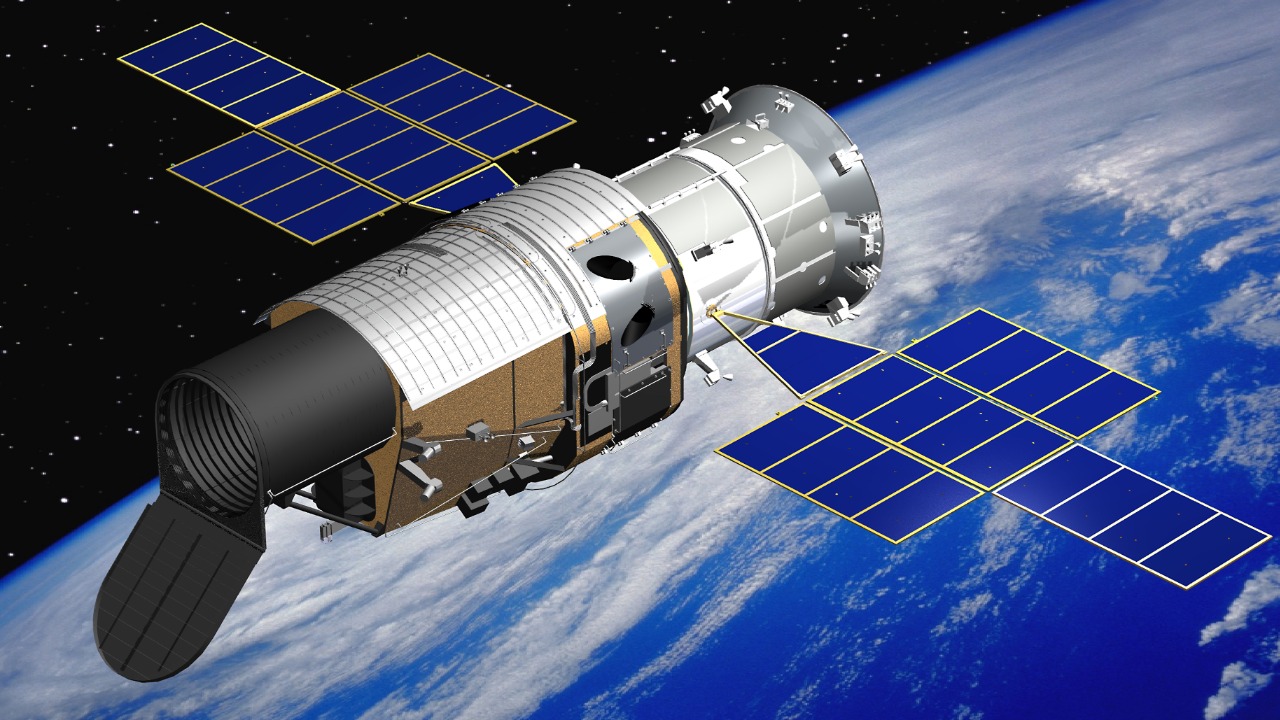

China is preparing to send a new kind of eye into orbit, a space observatory built to map the cosmos with a breadth and sharpness that rivals anything flying today. The Xuntian Space Telescope, also known as the Chinese Space Station Telescope, is scheduled to launch around 2026 and is designed to turn the country’s crewed station into a full‑scale astrophysics hub. If it performs as advertised, Xuntian will not just add another instrument to the global fleet, it will give astronomers a powerful new way to probe how the universe is built and how it is changing.
Rather than chasing a single spectacular image, the mission is structured to survey the sky systematically, collecting precise measurements of galaxies, dark matter and transient events over years. That combination of wide coverage, high resolution and long‑term stability is what gives Xuntian a real chance to “crack the universe open,” by tightening the numbers that underpin modern cosmology and exposing the gaps where current theories fall short.
China’s flagship space observatory takes shape
At the heart of the project is Xuntian, a dedicated astronomical observatory that will fly in orbit near China’s crewed station. The mission is described as an Astron‑class facility, built around a 2‑meter‑diameter telescope that puts it in the same size category as the Hubble Space Telescope while pairing that aperture with a much larger field of view. By design, the observatory is meant to operate as a national flagship for space astronomy, giving Chinese researchers a home‑grown platform to tackle questions in cosmology, galaxy evolution and the structure of the Milky Way.
Unlike earlier concepts that treated the telescope as a permanent module, the current plan keeps Xuntian free‑flying but in close coordination with the station. The observatory will co‑orbit with the complex and carry hardware that allows periodic docking for servicing, upgrades and refueling, a model that blends the flexibility of an independent satellite with the maintainability of a crew‑tended laboratory. That architecture turns the telescope into a long‑lived asset, one that can be tuned and repaired as scientific priorities shift over the coming decade.
Wide‑field power: how Xuntian will scan the sky
The scientific ambition behind Xuntian is rooted in coverage as much as clarity. Mission planners describe “precise cosmology” as the principal driver, with the telescope optimized to observe regions at medium and high Galactic and ecliptic latitudes where foreground contamination is lower and distant galaxies stand out more cleanly. To do that efficiently, the observatory relies on a sophisticated Multichannel imager, or MCI, which uses multiple filters to conduct large‑scale surveys while still capturing the color information needed to estimate distances and physical properties.
Chinese planners have been explicit that Xuntian is not just a camera but a survey machine. The Chinese Space Station Telescope, often shortened to CSST, is described as a facility that will carry out a systematic survey of the sky, cataloguing galaxies, mapping large‑scale structure and searching for unusual or “peculiar” celestial bodies that stand out from standard models. Official projections say the telescope will observe well over one billion galaxies and measure their positions, shapes and brightness, a scale of dataset that, if realized, would rival the most ambitious international sky surveys and provide a dense map of how matter is distributed across the observable universe.
From dark energy to galactic archaeology
With that volume of data, Xuntian is being pitched as a tool to attack some of the most stubborn problems in physics. Chinese researchers describe the mission as a Revolutionary Space Telescope to help Unveil Secrets of the Universe, with a particular focus on dark energy, dark matter and the physics driving cosmic acceleration. By tracking how galaxy clustering and weak gravitational lensing change with distance, the observatory can test whether the standard cosmological model still holds or whether new physics is needed to explain the data. Those same measurements will sharpen estimates of key parameters such as the Hubble constant and the matter density of the universe, numbers that currently show tensions between different experiments.
The mission’s remit extends well beyond cosmology. Official descriptions emphasize that Xuntian will support research in astrophysics, cosmology and beyond, including the structure of the Milky Way, the life cycles of stars and the demographics of exoplanet systems. Earlier planning documents describe the observation of well over one billion galaxies as only part of a broader program that also targets the distribution of matter in the universe and the detailed “archaeology” of our own Galaxy. In that sense, Xuntian is designed as a general‑purpose observatory, one that can pivot from mapping dark matter to catching supernovae or tracking variable stars without changing hardware.
Built around the Tiangong space station
Technically and politically, Xuntian is inseparable from China’s crewed station. The Xuntian Space Telescope is described as China’s first large space station telescope, a new element joining the existing trio of core modules to turn the complex into a combined human‑tended and robotic observatory. Statements from the Chinese Academy of Sciences, or CAS, present the telescope as a major component of the station, one that will share infrastructure and crew time while still operating as an independent spacecraft when it is not docked.
Orbital mechanics are central to that partnership. Planning documents describe how Xuntian is designed to co‑orbit with Tiangong, matching its path around Earth so that rendezvous and docking can be scheduled as needed for maintenance or upgrades. That co‑orbiting strategy is echoed in official descriptions that call the telescope a key component of China’s space station, expected to facilitate major discoveries in cosmology, the structure of the Milky Way and the evolution of galaxies. In practical terms, it means astronauts can swap out instruments or repair hardware in orbit, extending the mission’s life and keeping it scientifically competitive.
Delays, launch plans and the Long March 5B
Like many large space projects, Xuntian has already slipped from its original schedule. Early plans suggested operations could begin around 2024, but subsequent reporting indicates that China is likely to postpone the launch until late 2026, after earlier delays from an initial 2022–2023 window to mid‑2025. Officials have framed the slippage as the price of getting a complex observatory right, particularly one that must integrate tightly with a crewed station and operate for many years. The revised timeline also reflects the need to coordinate launch slots, station operations and the readiness of ground systems that will handle the torrent of data.
When it does fly, Xuntian is slated to ride a heavy‑lift Long March 5B rocket. Mission manifests describe a dedicated Xuntian Telescope Mission, with the payload identified as Xuntian, formerly known as the Chinese Space Station Telescope, or CSST, a Chinese space observatory designed for regular maintenance by astronauts. That choice of launcher reflects the telescope’s mass and volume, but it also signals how central the mission has become to the country’s broader human spaceflight program, which increasingly blends exploration, national prestige and basic science.
Data simulations and the race to be ready
Even before the telescope leaves the ground, Chinese teams are racing to make sure they can handle the data it will produce. Official statements in Jan describe progress in scientific data simulation for the Chinese Space Station Telescope, also known as the CSST, highlighting how teams are using large‑scale Simulation campaigns to test pipelines and algorithms. A key breakthrough in Data Simulation for China’s Xuntian Space Telescope, described by Editor CHEN Na, is framed as a milestone for evaluating the telescope’s overall performance, from image quality to the reliability of cosmological measurements extracted from synthetic skies.
External analyses echo that emphasis on preparation. Reports on how the Xuntian Telescope Will‑Orbit With Tiangong For Servicing The CSST describe the observatory as a flagship space astronomy facility and underline that the current wave of simulations is meant to keep mission planning current as the launch date approaches. In parallel, Chinese commentators have highlighted how the work fits into a broader narrative of national capability, with Jan updates stressing that the telescope is expected to facilitate major scientific discoveries across cosmology, the structure of the Milky Way and the evolution of galaxies as a central component of China’s space station.
More from Morning Overview