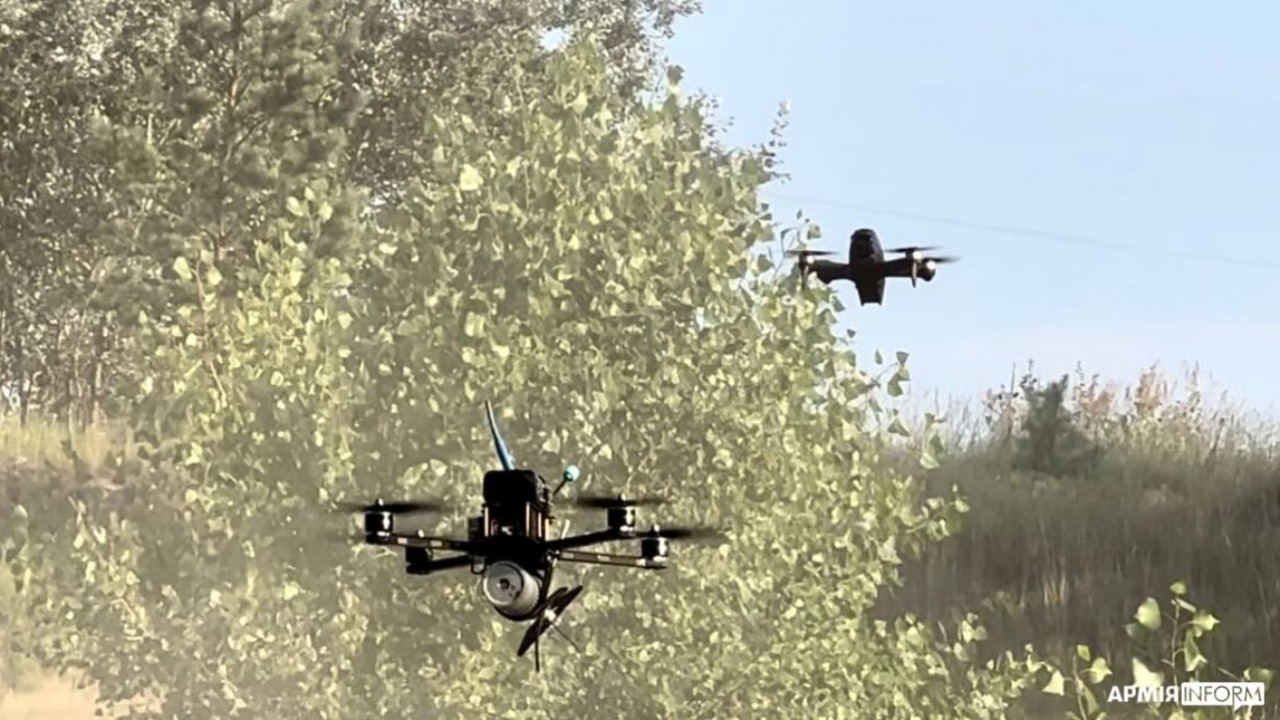

China is knitting together swarms of drones and ship‑fired missiles into a single battle network, rehearsing how to overwhelm enemy fleets with coordinated strikes at sea. The emerging concept blends cheap, expendable unmanned systems with high‑end munitions, turning every large vessel, and even some civilian hulls, into potential launchpads. I see these experiments as a sign that Beijing is betting its future naval power on mass, autonomy and deception rather than on ship‑to‑ship duels alone.
From missile salvos to coordinated “kill webs”
At the heart of China’s new war games is a simple idea: use drones to find, fix and confuse an adversary, then let precision missiles finish the job. Recent accounts describe exercises in which a tactical ballistic weapon like the Fire Dragon 480 is paired with unmanned aircraft to hit a simulated United States warship, with the drones scouting and feeding targeting data before the missile closes in. By combining a system such as the Fire Dragon 480 with a swarm of small sensors, Chinese planners are testing how to saturate defenses and ensure at least one weapon gets through to a high‑value ship.
Chinese analysts frame this as part of a broader shift toward distributed “kill webs” that link ships, aircraft, missiles and unmanned platforms into a single firing network. In one reported simulation, the focus was on how a surface combatant could survive a missile barrage while still coordinating long‑range strikes of its own, a scenario that mirrors the kind of missile‑drone duels expected in any clash with the United States or its allies. The point of that war game, according to one technical description, was to validate what the People’s Liberation Army calls a low‑cost, high‑efficiency approach that delivers an asymmetrical combat advantage over the enemy, a concept laid out in detail in an analysis of a combined strike and in a separate discussion of how a Type 055 cruiser might withstand a sustained missile barrage.
Drone swarms as the new main battery
What makes these drills different from older missile exercises is the scale and autonomy of the unmanned systems involved. Chinese strategists increasingly talk about drone swarms as a primary offensive arm, not just as spotters or decoys, arguing that hundreds of cheap aircraft can trade favorably against billion‑dollar ships and aircraft. One detailed assessment of how Chinese forces might fight the United States notes that every time a low‑cost plastic, battery‑powered drone destroys a sophisticated platform, it erases a vast amount of value, a logic that favors mass production and attrition tactics. That argument, laid out in a Jun analysis of how Chinese drones could defeat a technologically superior navy, helps explain why Beijing is pouring resources into unmanned systems.
China is not limiting itself to aerial swarms. Military commentators describe work on autonomous underwater and surface vehicles that can operate in packs, including reports that China is developing autonomous AI submarine swarms able to patrol, gather intelligence and, if needed, transform into an attack formation. These efforts sit alongside programs for aerial stealth drones, suicide drone swarms and atmosphere‑skimming hypersonic missiles, all designed to complicate an adversary’s defenses and stretch sensors across multiple domains. A detailed social media post from Oct describes how China is also these underwater and aerial swarms, underscoring how broad the country’s unmanned portfolio has become.
Ship‑launched swarms and hidden carriers
The most striking change is at sea, where China is turning both warships and civilian vessels into drone carriers. Analysts describe how Hidden aboard civilian ships, hundreds of containerized missiles or drones could be used in a surprise initial attack to cripple enemy bases or fleets, giving Beijing a way to mask military capability inside ordinary commercial traffic. This concept of “civilian” drone carriers, which would be hard to distinguish from normal merchant shipping until they open their containers, is laid out in detail in a Jan report on how Hidden drone carriers might be used to deter United States and allied intervention in a regional crisis.
Alongside this covert approach, China has also invested in overt, purpose‑built drone motherships. One widely discussed platform is a massive vessel that can launch, control and recover up to 100 drones simultaneously, effectively turning a single hull into a floating swarm arsenal. Commentators argue that such a ship could reshape not only regional balances but also global defense strategy by allowing China to project unmanned power far from its shores. A detailed Oct breakdown of this concept describes how China has unveiled such a mothership, while a separate video analysis of China’s giant drone carrier concept emphasizes how quietly these ships could approach a coastline before releasing their swarms.
Airborne motherships and amphibious launchpads
China is not stopping at sea‑based launch platforms. In the air, it has revealed heavyweight drones that can act as flying motherships, carrying and deploying smaller unmanned aircraft in mid‑flight. One such system, a jet‑powered drone called Jiu Tian, has been presented as a potential airborne hub for swarms, able to release multiple smaller drones that then fan out to conduct reconnaissance or kamikaze attacks. A Jun report notes that China unveiled Jiu Tian as part of a broader push to integrate swarm tactics into the People’s Liberation Army, while another Jun account highlights how China has unveiled a next‑generation aerial war platform capable of launching over 100 drones.
These airborne carriers complement new amphibious assault ships that are being wired to operate drones as part of their standard air wing. Commentators describe how China has successfully tested the world’s first ship‑launched stealth drone swarm from such an amphibious platform, integrating unmanned aircraft with helicopters, fighter jets and naval escorts in a single task force. That integration is presented as a way to extend the reach of amphibious groups, allowing them to scout ahead, suppress defenses and even strike inland targets before marines come ashore. A detailed Nov commentary from Fact Point, History and Facts, shared with a Public audience, explains how China has successfully integrated this ship‑launched stealth swarm into its amphibious assault ships, while another social media post notes that China is ready to deploy a giant drone mothership capable of launching over 100 drones, reinforcing how central swarms have become to its naval and air doctrine.
Defending against swarms and the regional ripple effect
China’s own exercises show how hard it is to stop the kind of attacks it is preparing to launch. In one set of air defense drills, the PLA found that the first round of anti‑aircraft artillery fired at a drone swarm achieved only 40 per cent damage, a sobering result for any commander relying on guns and missiles to keep unmanned threats at bay. That same report notes that the PLA has been experimenting with different combinations of sensors and weapons to improve its performance against swarms, but the initial 40 per cent figure underscores how easily a large group of small drones can slip through traditional defenses. The challenge is not unique to China, yet the fact that the PLA is documenting how the PLA found shooting at drone swarms challenging suggests that even well‑resourced militaries are struggling to adapt.
Other regional powers are watching closely and adjusting their own plans. Analysts in India, for example, warn that swarms of Chinese aircraft, missiles and autonomous vessels, guided without satellite links, could be used to mount coordinated, multi‑domain attacks that stress India’s layered air defense architecture. That architecture relies on a mix of guns, short‑range missiles and long‑range systems, but the prospect of hundreds of small, networked threats arriving at once is forcing planners in New Delhi to think about new sensors and electronic warfare tools. A detailed Dec commentary on swarms of Chinese systems highlights how vulnerable fixed sites and surface fleets could be if they face the kind of missile‑drone combinations China is now rehearsing.
Microwave counters and the race to harden fleets
As swarms proliferate, China is also investing in ways to destroy them, a reminder that every new offensive technology triggers a defensive response. One of the most eye‑catching developments is a new microwave weapon that Chinese sources say can destroy a drone swarm from 3 km away, bathing incoming aircraft in high‑power energy that fries their electronics. Such a system, if it works as advertised, would be especially effective against tightly packed formations of small drones, allowing a single shot to disable dozens of targets at once. A recent report by Maroosha Muzaffar notes that China touts this microwave system as a key answer to the swarm problem, even as its own forces continue to refine offensive tactics.
For navies facing China, the message is that traditional missile defenses and close‑in guns will not be enough. They will need their own mix of electronic warfare, directed energy and perhaps even counter‑swarm drones to survive in waters where every container ship might hide launchers and every horizon could conceal a mothership releasing 100 small attackers. That reality is driving a broader reassessment of naval strategy, from how fleets disperse to how they protect logistics and civilian shipping. It is also sharpening attention on China’s overall military trajectory, which blends industrial capacity, artificial intelligence and a willingness to experiment with new concepts, as seen in the country’s growing portfolio of China military systems and in social media posts that emphasize how China’s “Drone swarms could change battlefield dynamics.
More from Morning Overview