
China has spent years trying to turn its fighter programs into export winners, and the strategy is finally starting to pay off in a visible way. A string of deals and negotiations across Asia and the Middle East now suggests that Beijing is quietly building a customer base for its jets, even as Western suppliers struggle with cost, politics, and delivery delays.
At the center of this shift is the J-10 family and a broader menu of Chinese designs that appeal to countries seeking capable aircraft without the strings that often come with Western hardware. From Indonesia’s headline-grabbing order to more discreet interest in places like Iran and Iraq, I see a pattern emerging that could reshape how smaller and mid-sized powers think about airpower and alignment.
China’s fighter export playbook comes into focus
Beijing’s push to sell combat aircraft abroad is part of a wider effort to turn China into a full-spectrum security provider, not just a source of drones or basic kit. I see that strategy reflected in how Chinese officials now market a ladder of offerings, from light fighters to stealth designs, tailored to partners that want modern capability but lack the budget or political access for top-tier Western jets. That approach positions China as a long-term alternative supplier rather than a one-off vendor.
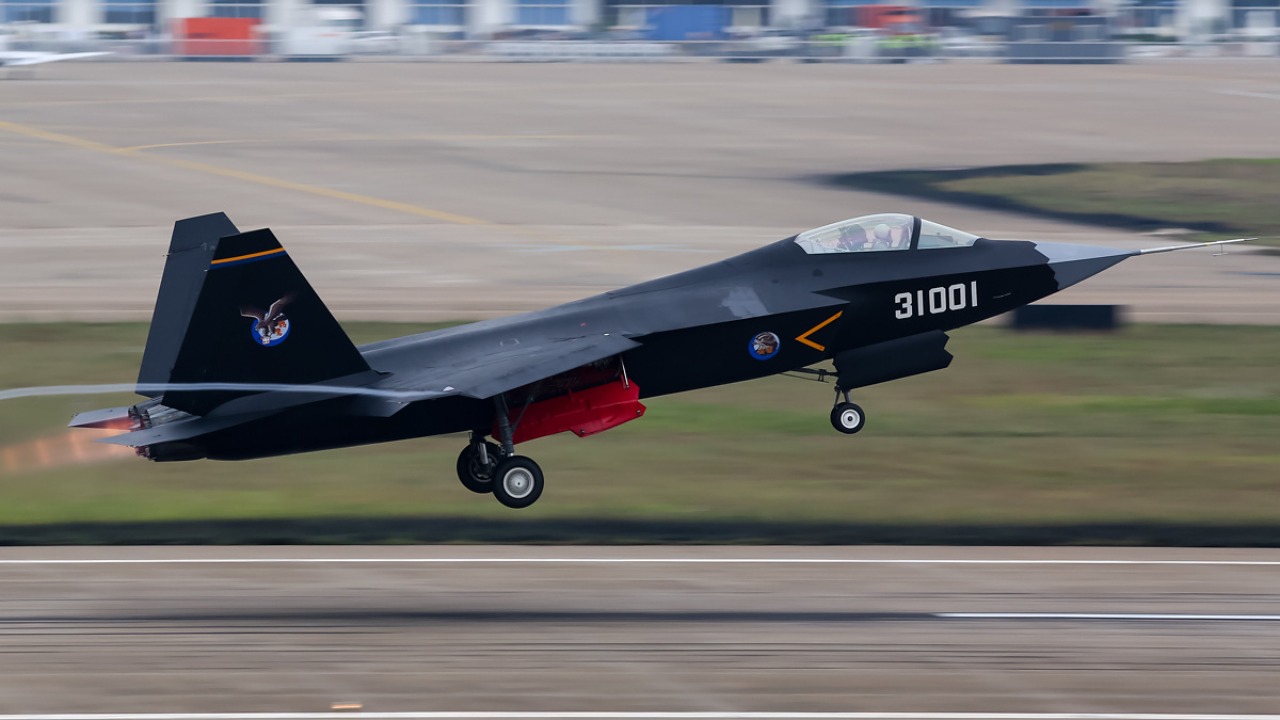
Reporting on Chinese defense exports notes that Beijing currently offers three fixed-wing combat aircraft for export, including the fifth-generation FC-31 stealth fighter, which is aimed at customers that cannot access U.S. or European stealth designs. I read that portfolio as a deliberate attempt to compress the technology gap between Western alliances and states that sit outside them, giving buyers a way to field advanced jets without joining Western security structures.
Indonesia’s 42-jet order signals a turning point
The clearest sign that Chinese fighters have broken through came when Indonesia’s defense minister said the country will purchase 42 Chengdu JC-10C fighter jets from China, a deal that was described as worth $9 billion. For Jakarta, which has long mixed Russian and Western equipment, I see this as a calculated bet that Chinese technology is now good enough to anchor a big slice of its future airpower, especially as it tries to modernize while keeping costs under control.
Separate reporting framed the same decision as Indonesia’s first non-Western aircraft purchase deal, noting that Jakarta will buy 42 fighter jets from China to strengthen its air defense capabilities. When I put those accounts together, the picture that emerges is of a Southeast Asian heavyweight deliberately diversifying away from traditional Western suppliers, while still keeping its separate Rafale order from France in place as a hedge.
Jakarta’s balancing act between China and the West
Indonesian officials have been careful to present the J-10 deal as consistent with a long-standing policy of nonalignment, rather than a pivot into Beijing’s orbit. The Ministry of Defense stressed that the procurement aligns with The Ministry of Defense policy of not tying Indonesia to any single bloc, even as uncertainty swirls around a potential U.S. F-15EX purchase. I read that as Jakarta trying to extract maximum leverage from both sides while avoiding the perception that it is choosing one camp.
Analysts have pointed out that Indonesia’s decision to buy 42 J-10s from China sits alongside its existing order for Rafale omnirole fighters from France, a combination that one assessment described as part of a broader trend in which Chinese jets edge out the West in some markets. When I look at that mix, I see Indonesia using Chinese aircraft to bulk up numbers and Western jets to retain high-end capability, a dual-track approach that could become a template for other mid-tier air forces.
Why Indonesia matters so much to Beijing’s ambitions
Indonesia is not just another customer, it is the world’s largest Muslim-majority country and a pivotal state in Southeast Asia, so its decision carries symbolic and practical weight for Chinese defense diplomacy. One report highlighted that the World’s Largest Muslim Country has agreed a fighter jet deal with China, a headline that underlines how Beijing can now point to a marquee buyer in the Islamic world when marketing its aircraft elsewhere.
At the same time, Indonesia’s broader profile as a G20 economy and a key player in ASEAN means its choices are closely watched by neighbors. The country’s trajectory, captured in profiles of Indonesia as a rising regional power, gives China a powerful reference case when courting other states that want to modernize without being seen as junior partners to Washington or Moscow. I see Beijing leveraging Jakarta’s decision as proof that its jets are no longer niche products but credible options for big, complex air forces.
Pakistan’s central role in China’s fighter ecosystem
If Indonesia is the newest high-profile buyer, Pakistan remains the cornerstone of China’s fighter export story. A detailed assessment of South Asian airpower noted that by positioning Pakistan as a launch customer for an export-oriented J-35 stealth fighter, China is effectively compressing the technological gap between Islamabad and its Western-armed rivals. I read that as a sign that Beijing sees Pakistan not only as a client but as a showcase for its most advanced designs.
Another report underlined that Beijing has made Pakistan the main recipient of its combat aircraft, with the JF-17 program already deeply embedded in the Pakistan Air Force. That same ecosystem is visible in public profiles of Pakistan, which show how central defense ties with China have become to Islamabad’s external relationships. In my view, this long-standing partnership gives Beijing a trusted partner to help validate and refine its export fighters in real-world service.
Hints of a “quiet” new customer through Pakistan
The most intriguing sign that China has lined up another buyer for its fighters came not from Beijing but from Islamabad. One report described how, In November, Pakistan announced that an unspecified friendly country had signed a memorandum of understanding to acquire a Chinese fighter jet that Pakistan already operates, following that country’s close observation of the aircraft in a recent conflict with India. The identity of the buyer was not disclosed, and I have to note that it remains unverified based on available sources beyond that single account.
What I can say with confidence is that the same set of reports and public data underline how deeply Pakistan is woven into China’s export strategy. Profiles of Pakistan’s defense posture, combined with analysis of the J-35 offer, show that Islamabad often acts as both a testbed and a marketing partner for Chinese designs. If a new customer is indeed coming on board through a Pakistan-brokered MOU, that would fit a pattern in which existing operators help Beijing quietly expand its fighter footprint.
Iran’s interest and the J-10’s growing reputation
Beyond Southeast Asia and South Asia, I see signs that Chinese fighters are gaining traction in the Middle East. Reporting on regional airpower noted that China publicly responded after reports that Iran seeks J-10 fighter jets, a story illustrated with Pakistan Air Force J-10C aircraft performing at a rehearsal ahead of Pakistan’s national celebrations. That visual link between Iranian interest and Pakistani operations underscores how existing users help validate Chinese designs for potential new buyers.
More broadly, profiles of Iran highlight a country that has struggled for decades to refresh its fighter fleet because of sanctions and political isolation, making Chinese jets an attractive option. Additional references to Iran’s military posture and Iran’s regional ambitions suggest that any move to acquire J-10s would be read not just as a technical upgrade but as a political signal of closer alignment with Beijing.
Iraq, Bangladesh and the next wave of potential buyers
China’s fighter export ambitions do not stop with Indonesia, Pakistan and Iran. I see Iraq as another potential market, given its need to rebuild an air force that has relied heavily on U.S. support. Public profiles of Iraq show a state still grappling with security challenges and budget constraints, conditions that make lower-cost Chinese fighters appealing. Additional references to Iraq’s postwar reconstruction and Iraq’s evolving foreign ties suggest that Baghdad is open to diversifying suppliers, even if no specific Chinese fighter deal has been confirmed.
Bangladesh is another country I watch closely in this context, given its history of buying Chinese equipment and its need to modernize a modest air force on a tight budget. Profiles of Bangladesh highlight its rapid economic growth and security concerns in the Bay of Bengal, while additional references to Bangladesh’s defense relationships and Bangladesh’s procurement patterns show a consistent openness to Chinese hardware. While there is no verified report in the provided sources of Dhaka signing up for a specific Chinese fighter, the structural incentives for such a move are clear.
Azerbaijan and the politics of choosing Chinese jets
In the South Caucasus, Azerbaijan has already demonstrated a willingness to buy advanced weapons from non-Western suppliers, most notably drones from Turkey and Israel. Public profiles of Azerbaijan emphasize its energy wealth and assertive regional posture, factors that give Baku both the means and the motive to keep upgrading its airpower. Additional references to Azerbaijan’s military modernization and Azerbaijan’s foreign policy show a leadership that is comfortable mixing suppliers to maximize leverage.
So far, there is no verified evidence in the provided sources that Baku has moved to buy Chinese fighters, and I want to be explicit that any such deal would be unverified based on available sources. Still, the same logic that draws countries like Indonesia and Pakistan toward Chinese jets could appeal to Azerbaijan: relatively affordable aircraft, fewer political conditions than Western suppliers, and the chance to signal a measure of independence from both Moscow and Washington. If Beijing is quietly lining up future customers, energy-rich states with active security concerns are obvious targets.
How Western suppliers are losing ground
For decades, military prestige in much of the world has been defined by who flies what, with F-16s and Rafales widely seen as symbols of Western alignment. One analysis argued that Chinese jets edge out the West in some markets as cost, export controls and political conditions make Western aircraft harder to obtain. I see Indonesia’s mixed Rafale and J-10 fleet as a microcosm of that shift, where Western jets no longer automatically dominate every competition.
At the same time, the broader geopolitical context matters. Profiles of China’s rise as a global power, combined with assessments of how An Indonesian decision to buy J-10s is as much a geopolitical play as a capability choice, show that fighter deals are now tools in a larger contest for influence. When countries opt for Chinese jets, they are not just buying hardware, they are signaling that they are comfortable living in a more multipolar defense marketplace.
What China’s “quiet” customer hunt means for global airpower
Putting all these strands together, I see a Chinese fighter export strategy that is both opportunistic and methodical. High-profile deals like Indonesia’s 42-jet order give Beijing marquee wins, while more discreet moves, such as the Pakistan-linked MOU with an unnamed friendly country, hint at a quieter campaign to seed its aircraft into additional air forces. Even where no contracts are confirmed, the very fact that countries like Iran, Iraq, Bangladesh and Azerbaijan are discussed in the same breath as Chinese fighters shows how far Beijing has come from the days when its jets were dismissed as second-rate copies.
The implications go beyond sales figures. As more air forces integrate Chinese fighters, they also plug into Chinese training, maintenance and data ecosystems, deepening long-term security ties. That dynamic is already visible in the close cooperation between the Pakistan Air Force and Chinese industry, highlighted in coverage of Pakistan Air Force J-10C displays and in broader profiles of Pakistan’s defense partnerships. If China continues to quietly line up new customers, the balance of who shapes global airpower norms and standards will tilt further in Beijing’s direction.
More from MorningOverview