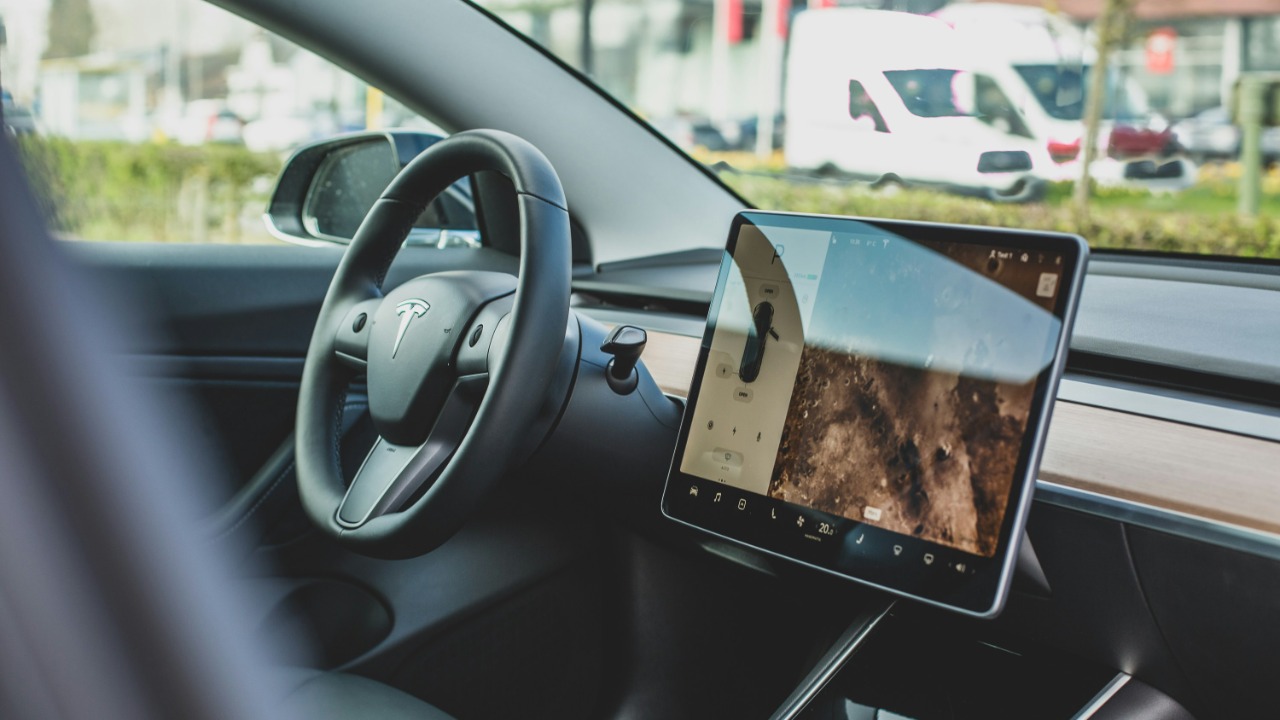

California regulators have delivered a stark message to Tesla: change how Autopilot is marketed within three months or risk losing the right to sell cars in the country’s largest electric vehicle market. The ultimatum crystallizes a long‑running fight over whether the company’s branding has oversold what its driver‑assistance software can actually do, and whether that gap between promise and reality violates state consumer protection rules. At stake is not just a product name, but the broader question of how far tech‑driven carmakers can push futuristic language before it becomes unlawful deception.
The confrontation follows a formal finding that Tesla misled buyers about the capabilities of Autopilot and related features, a decision that now forces the company to either reframe its technology or test the limits of California’s enforcement power. I see this as a pivotal moment for the entire autonomous driving sector, because whatever happens in Sacramento is likely to shape how advanced driver‑assistance systems are described, sold, and regulated across the United States.
California’s legal case against Tesla’s Autopilot branding
California’s Department of Motor Vehicles has already concluded that Tesla crossed a legal line in how it described Autopilot and related systems, and that finding is the foundation for the current 90‑day ultimatum. In a formal enforcement action, the DMV adopted an administrative law judge’s proposed decision in cases numbered 21‑02188 and 21‑02189, determining that Tesla’s marketing of its driver‑assistance technology was misleading and violated state law. The decision focused on the gap between the impression created by the company’s branding and the actual requirement that a human driver remain fully engaged and responsible at all times.
The DMV’s announcement makes clear that the agency is not challenging the existence of Autopilot itself, but the way Tesla has portrayed its capabilities to consumers. By finding that the company’s representations were “misleading and violates state law,” the regulator signaled that phrases suggesting self‑driving functionality are unacceptable when the product is, in legal and technical terms, still an assistance feature. That conclusion, laid out in the DMV’s own enforcement decision, is what now allows California to demand concrete changes to Autopilot’s name and advertising.
The 90‑day ultimatum and what it actually requires
On the back of that legal finding, California has given Tesla a fixed window to clean up its marketing or face escalating penalties. The state’s directive is blunt: the company has 90 days to stop using Autopilot branding and related advertising that regulators say overstates the system’s capabilities. In practice, that means Tesla must rework how it describes its driver‑assistance technology in sales materials, online configurators, in‑car menus, and any other consumer‑facing channels that might suggest the vehicle can drive itself.
The ultimatum is not just about a logo on a screen, it is about the entire narrative Tesla has built around its software. California’s position, as reflected in legal analysis of California Gives Tesla, is that the company must align its language with the reality that these are driver‑assistance tools, not autonomous chauffeurs. If Tesla fails to comply within those 90 days, the DMV has the authority to move toward suspending or revoking the company’s license to sell or manufacture vehicles in the state, a step that would be unprecedented for a major automaker.
How the administrative law judge framed Tesla’s violations
The administrative law judge, often referred to in the record as the ALJ, played a central role in shaping the state’s case by dissecting Tesla’s marketing claims in detail. In the proposed decision that the DMV later adopted, the ALJ examined how phrases like “Autopilot” and references to self‑driving capabilities would be understood by a reasonable consumer, especially one not steeped in the technical nuances of driver‑assistance systems. The conclusion was that Tesla’s language created an impression of near‑autonomous operation that did not match the system’s actual performance or the company’s own fine‑print warnings.
By endorsing the ALJ’s reasoning, California regulators effectively set a benchmark for how advanced driver‑assistance features must be described if they are to comply with state law. The decision in cases 21‑02188 and 21‑02189, which the DMV summarized in its public notice, treats the combination of branding, promotional statements, and user interface language as a single marketing package. In my view, that holistic approach is significant, because it means automakers cannot rely on buried disclaimers to cure bold, front‑facing promises about what their cars can do.
Why “Autopilot” and “Full Self‑Driving” are in the crosshairs
At the heart of the dispute is the simple fact that words like “Autopilot” and “Full Self‑Driving” sound like autonomy, not assistance. California’s regulators argue that when a company labels a feature Autopilot, many drivers will reasonably infer that the car can handle most driving tasks on its own, similar to how aviation autopilot systems can manage large portions of a flight. The ALJ’s analysis, later adopted by the DMV, found that Tesla’s branding and descriptions encouraged that interpretation even though the system still requires constant human supervision and intervention.
From a legal standpoint, the problem is not that Tesla offers advanced lane‑keeping, adaptive cruise control, or automated lane changes, but that the marketing suggests a level of independence the technology does not yet deliver. The DMV’s finding that Tesla’s representations were misleading under state law reflects a broader concern that such language can foster overconfidence, leading drivers to disengage from the driving task. By targeting the Autopilot name and related claims, California is effectively telling the industry that aspirational branding cannot outrun the underlying engineering without running into consumer protection rules.
Potential penalties: from fines to losing California entirely
The most dramatic consequence hanging over Tesla is the possibility that California could suspend or revoke its license to sell vehicles in the state if the company refuses to comply. That threat is not theoretical, it flows directly from the DMV’s authority over manufacturer and dealer licenses, which the agency invoked when it opened cases 21‑02188 and 21‑02189. If Tesla does not meet the 90‑day deadline to change its Autopilot advertising and naming, regulators could escalate from warnings and administrative orders to more severe sanctions that would effectively bar new Tesla sales in California.
Even short of that nuclear option, the company faces the prospect of civil penalties, mandated corrective advertising, and ongoing oversight of its marketing practices. Legal commentary on The Ruling on Deceptive Marketing notes that the DMV’s findings could also bolster private lawsuits by consumers who say they were misled about the capabilities of their cars. In that sense, the 90‑day ultimatum is both a forward‑looking demand for change and a backward‑looking validation of claims that Tesla’s marketing went too far.
What a rebrand could look like for Tesla’s driver‑assistance suite
If Tesla chooses to comply rather than fight, it will have to rethink not only the Autopilot name but the entire way it presents its driver‑assistance stack. One obvious path would be to adopt more conventional terminology, such as “advanced driver‑assistance system” or “Level 2 assist,” language that aligns with industry standards and makes clear that the human remains in charge. The company could also break out specific functions with descriptive labels, for example “traffic‑aware cruise control” or “lane centering assist,” to reduce the risk that any single brand name implies full autonomy.
Such a shift would require changes across software interfaces, marketing copy, and sales training, but it would not necessarily diminish the underlying technology. In fact, by stripping away the most aggressive branding, Tesla could focus on demonstrating real‑world performance improvements rather than debating semantics with regulators. The DMV’s enforcement posture, as reflected in its state law finding, leaves room for robust driver‑assistance features as long as they are presented accurately. The real test for Tesla will be whether it can preserve its image as a software‑driven innovator while speaking in the more grounded language that California now demands.
Implications for other automakers and the broader AV industry
Whatever Tesla decides, the ripple effects of California’s ultimatum will extend far beyond a single company. Other automakers that have flirted with futuristic branding for their assistance systems will now have to ask whether their own language could be vulnerable under the same reasoning the ALJ used in cases 21‑02188 and 21‑02189. Features like “Super Cruise,” “Drive Pilot,” or “ProPILOT Assist” may come under fresh internal review, as legal teams weigh whether any term that hints at autonomy could be seen as overstating the technology’s capabilities.
For the broader autonomous vehicle industry, the message is that regulators are no longer content to let marketing run ahead of engineering. California’s willingness to declare that Tesla’s Autopilot advertising was misleading and violates state law, and to back that up with a 90‑day deadline to change Autopilot advertising, sets a precedent that other states and federal agencies can study. In my view, this marks a shift from a largely hands‑off approach to a more assertive stance in which the words used to sell automation are treated as a safety issue in their own right, not just a matter of creative branding.
What California’s stance signals about the future of driver‑assistance regulation
California’s confrontation with Tesla is also a window into how regulators may approach emerging vehicle technologies in the years ahead. By grounding its action in existing consumer protection and vehicle code provisions, rather than writing entirely new rules for Autopilot, the DMV has shown that traditional legal tools can be adapted to police cutting‑edge products. The ALJ’s reasoning, now embedded in the DMV’s official findings, suggests that agencies will scrutinize not only technical compliance with safety standards but also the expectations that marketing sets for ordinary drivers.
Looking forward, I expect that this case will encourage more explicit guidance on how companies should describe driver‑assistance and automated driving features, perhaps through formal advisories or rulemaking that build on the logic of the current decision. California’s insistence that Tesla change how it portrays its driver‑assistance technology within 90 days is a clear signal that regulators want to close the gap between what cars can do and what drivers think they can do. For Tesla, the choice is stark: adapt its language to that new reality or risk being shut out of a market that has been central to its rise.
More from MorningOverview