
California is moving to plug a major hole in the electric vehicle market, shifting $200 million in state money to cushion the loss of federal tax credits that had helped make plug-in cars affordable. Instead of letting the market absorb a sudden price shock, state leaders are trying to keep buyers in the game while preserving momentum toward cleaner transportation. The fight over who pays for that transition, and how, is now squarely on Sacramento’s budget ledger.
Newsom’s $200 million pivot after Trump’s rebate rollback
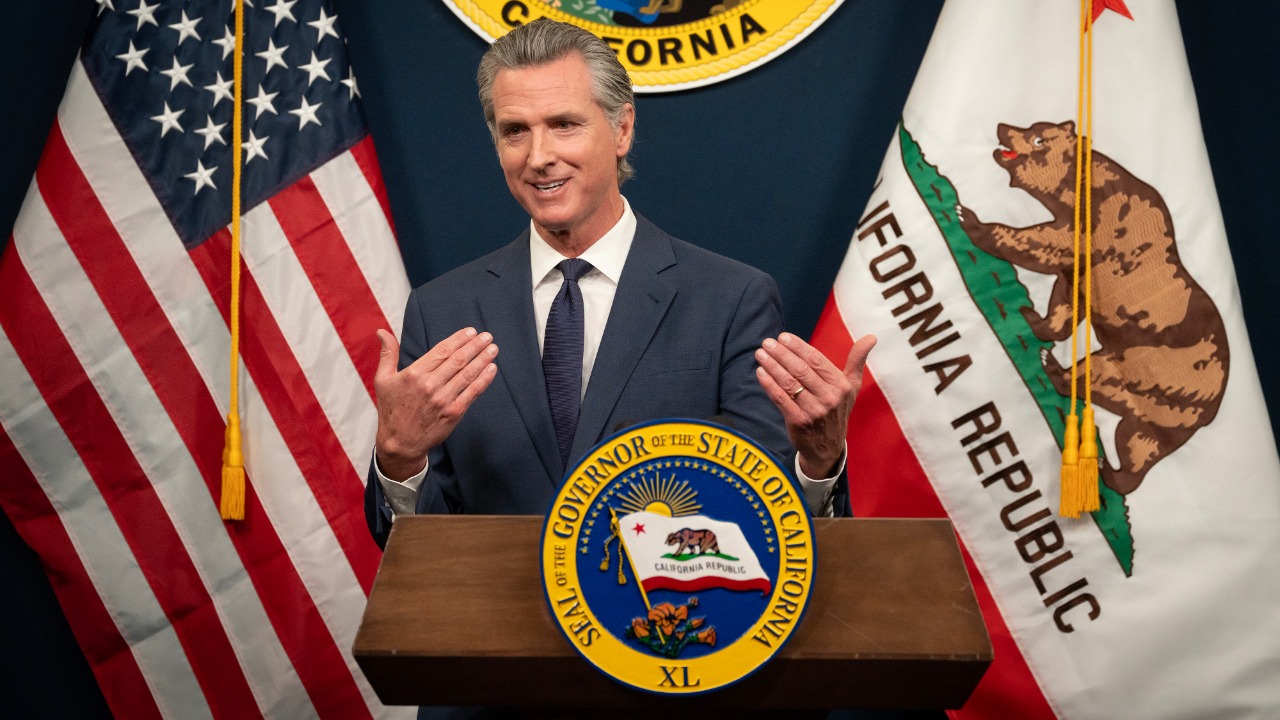
Governor Gavin Newsom has framed his latest budget as a direct response to President Donald Trump’s decision to cancel federal electric vehicle rebates, positioning California as a backstop for climate policy that Washington is walking away from. The spending plan carves out $200 million specifically to offset the loss of those federal incentives, part of a broader climate package that also targets pollution from new gas powered cars and other fossil fuel sources. In practical terms, the state is trying to prevent a sudden spike in effective EV prices that could stall adoption just as automakers are finally bringing more models to market.
That $200 million is not a symbolic gesture, it is a line item meant to keep California’s clean car goals on track even as federal support recedes. The budget language ties the new funding to consumer-facing incentives, effectively replacing a portion of the federal help that buyers had counted on when comparing a Chevrolet Equinox EV or a Tesla Model 3 to a similarly sized gasoline SUV. By stepping in after Trump’s move to cancel EV rebates, Newsom is signaling that California will not let national politics dictate whether residents can afford to participate in the shift away from internal combustion, a stance reflected in the climate spending described in Newsom’s state budget.
From federal tax credits to state point‑of‑sale rebates
The structure of the new California aid matters as much as the dollar amount. Instead of relying on tax credits that show up months later at filing time, state officials are moving toward point of sale rebates that cut the price right on the showroom floor. For a buyer cross-shopping a Hyundai Ioniq 5 against a Toyota RAV4, an instant discount can be the difference between choosing an EV and sticking with gasoline. California’s new incentives are designed so that, instead of tax credits, buyers could receive rebates at the time of purchase, letting them benefit immediately rather than waiting until tax season.
That shift reflects a lesson learned from the federal program, which often failed to reach lower income households that do not have large tax liabilities. By focusing on upfront rebates, California is trying to make the market work for drivers who live paycheck to paycheck and cannot float an extra several thousand dollars for a year. The move also gives dealers a clearer sales pitch, since they can advertise a lower drive away price without sending customers to a tax professional. The state’s own explanation of how California’s new incentives will work underscores that “instead of” tax credits, the goal is to deliver immediate savings.
The legacy and limits of earlier California EV subsidies
California is not starting from scratch. For years, The Clean Vehicle Rebate Project, known as CVRP, offered up to $7,500 to purchase or lease a new battery electric vehicle, plug in hybrid electric vehicle or fuel cell electric vehicle. That program helped tens of thousands of drivers cut the cost of models like the Nissan Leaf, Chevrolet Bolt and Toyota Mirai, and it became a central pillar of the state’s strategy to seed an early EV market. CVRP is now closed, effective November 8, 2023, leaving a gap that the new $200 million allocation is partly intended to fill.
The end of CVRP coincided with a confusing period in which drivers were told that California would not replace the federal $7,500 EV rebates with its own identical subsidy. At one point, public messaging suggested that California will not replace $7,500 EV rebates, signaling that the state would not simply mirror the federal tax credit structure even as Washington pulled back. That stance created uncertainty for automakers and buyers who had grown used to stacking state and federal help. The official notice that Clean Vehicle Rebate is closed, and the separate statement that California Will Not the $7,500 federal rebates, set the stage for the more targeted, budget based approach Newsom is now pursuing.
Trump’s EPA pressure and California’s zero‑emission goals
The clash over EV incentives is part of a broader confrontation between California and Trump’s environmental regulators. Trump’s EPA has put California in its crosshairs with proposed car rules that would weaken the state’s authority to set its own tailpipe standards and zero emission vehicle mandates. Documents outlining that federal plan reportedly mention California by name 27 times, underscoring how central the state is to the national fight over climate policy. The same political dynamic that produced the cancellation of federal EV rebates is also driving attempts to limit California’s ability to require cleaner cars in the first place.
State officials have responded by doubling down on their own roadmap for zero emission vehicle goals, including calls for new zero emission vehicle incentives that do not depend on federal cooperation. Not long after Trump’s election, California policymakers began baking those ideas into the state’s budget bill, anticipating that Washington might retreat from climate commitments. The new $200 million for EV buyers fits into that longer arc, a financial tool meant to keep the state’s clean car trajectory intact even if national rules tilt back toward gasoline. The tug of war is evident in the detailed zero emission vehicle report that spells out how Trump, the EPA and California are colliding over car rules.
What $200 million can and cannot fix in the EV market
Even a $200 million state fund has limits in a market as large as California’s. Spread across tens of thousands of vehicles, the new rebates will not fully replace the value of the lost federal tax credits, especially for higher priced models like the Ford F 150 Lightning or Rivian R1T. The goal is not to make every buyer whole, but to blunt the immediate fallout of fewer EV sales and keep the state’s adoption curve from flattening. By targeting the money toward new state EV tax rebates, Newsom is trying to stabilize demand long enough for automakers to bring down costs through scale and for charging infrastructure to catch up.
The political message is just as important as the financial one. By David Shepardson reported that the governor is explicitly proposing $200 million in new state EV tax rebates, a move that tells both Washington and the car industry that California intends to remain the country’s largest electric vehicle market regardless of federal headwinds. For buyers, the practical takeaway is that state help is still available, but it will look different from the old mix of CVRP checks and federal tax forms. The new structure, described in coverage of new state EV, is a reminder that the rules of the road for clean car incentives are changing even as the underlying climate stakes remain the same.
More from Morning Overview