
Cadillac built its reputation on eight cylinders. From the earliest days of American luxury motoring to the current era of downsized turbo engines, the brand’s V8s have defined how its cars accelerate, sound, and even look. To understand Cadillac’s place in automotive history, I need to follow those V8s from their pioneering beginnings to their high-tech twilight.
The story stretches from prewar engineering bravado to postwar horsepower wars, through missteps in the fuel crisis and into the sophisticated electronics of the Northstar age. Along the way, Cadillac’s V8s helped set industry standards, stumbled in public, and then quietly ceded the stage to more efficient layouts while their legacy lived on in modern performance models.
The first American luxury V8s
Cadillac did not invent the V8, but it turned the layout into a practical, mass-produced luxury engine in the United States. Academic work on product innovation notes that Cadillac, which introduced the first V 8 engine built in this country in 1914, quickly moved to a higher compression design that other General Motors divisions copied. That innovation fed directly into the 1915 production V8 that powered the Type 51, a car that period observers treated as proof that eight cylinders could be reliable and refined rather than experimental. A century later, engine specialists still describe that 1915 unit as the start of 100 years of Cadillac V8 development, with the 1915 V8 Type 51 singled out as a milestone in smooth, multi-cylinder power.
Dealer histories point out that this early engineering push did not happen in isolation. One retrospective notes that an earlier ignition innovation would soon be used to create the first mass-produced V8, and that in September 1914, In September 1914, Cadillac introduced what it promoted as one of the most powerful engines of its time. A century-on anniversary piece from a Canadian retailer underscores that Cadillac even pioneered one of the first mass-produced V8 engines in 1915, and that Today the brand still trades on that early engineering experience. Even in enthusiast media that surveys American V8 history broadly, the early American eight from Cadi is treated as a reference point for what a luxury powerplant should feel like.
Refinement, overhead valves, and the postwar horsepower race
By the late 1920s, Cadillac was already on its second generation of V8 refinement. Company records show that Cadillac created a new V8, the 341, for 1928, displacing 341 cu in (5.6 L) and producing 90 hp (67 kW). That engine powered the Series 353 and Series 355, and it signaled that eight cylinders were no longer exotic hardware reserved for the ultra-rich but a core part of the brand’s mainstream lineup. Later in the 1930s, Cadillac layered on even more prestige with multi-cylinder options, while still evolving its V8s for smoother running and better torque.
Prewar engineering also set the stage for the postwar revolution. A technical history from a Sarasota retailer notes that the flathead V8s of the 1930s and early 1940s gave Cadillac a reputation for quiet power, and that this innovation would soon be used to create the first modern overhead valve design. That leap arrived with the 1949 overhead valve V8, which period coverage credits with starting the postwar horsepower race and, by 1952, adopting a four barrel carburetor that turned the engine into a template for high output American luxury power. One retrospective on early engines stresses that the 1949 Cadillac overhead valve V8 became the foundation of the modern Cadillac V 8, while a separate social media history reminds readers that Cadillac THE FIRST modern V 8 ENGINE was framed internally as both WELL engineered and, in the company’s own words, a YES AND moment that would redefine the brand.
Big blocks, 500 cubic inches, and the age of excess
As American highways expanded and fuel was cheap, Cadillac leaned into displacement. In its pricier Series 70 and 75 models, Series 70 and 75 m cars moved to a 346-cid V8 based on a 322-cid version, with a 3 1/2 in bore and a deep oil pan that underscored how seriously the company took durability. That appetite for size culminated in the late 1960s and early 1970s, when Cadillac engineers created the 472 cubic inch big block and then stretched it further. A detailed technical feature notes that the Cadillac 500 cubic inch V8 was built on the same platform as its 472 cubic inch unit, and that the 500 became GM’s last classic big block, a New Start The Cadillac moment that embodied the go big or go home philosophy of the era.
Enthusiast video essays underline how deeply that engine shaped public perception. One analysis of the 500 points out that when people think of Cadillac, they usually picture luxury big cars, plush leather seats, and the feeling of gliding on a wave of torque, and it frames the 500 as the mechanical core of that image for a generation of buyers. Another documentary style piece explains how, in 1970, while the rest of the automotive world was talking about smaller, more efficient engines, Cadillac engineers were finalizing the 500 as the largest production V8 of its time. A separate video on the same theme describes how, in Jun of that period, Cadillac marketing leaned into the idea that more cubic inches meant more effortless luxury, even as the first rumblings of the fuel crisis were starting to reach Detroit.
331, 8-6-4, and the struggle to modernize
Not every Cadillac V8 story is about excess. The 331 cubic inch overhead valve engine that arrived for 1949 is often credited with changing the direction of American car design. A recent video essay argues that in Oct of that year, Detroit stood at a crossroads, with postwar optimism colliding with outdated flathead technology, and that the 331 gave stylists and engineers the compact, powerful package they needed to lower hoods and lengthen bodies without sacrificing performance. That same piece, titled around why the Oct era 331 V8 changed America forever, ties the engine directly to the sweeping, lower slung Cadillacs of the 1950s that came to symbolize mid century prosperity.
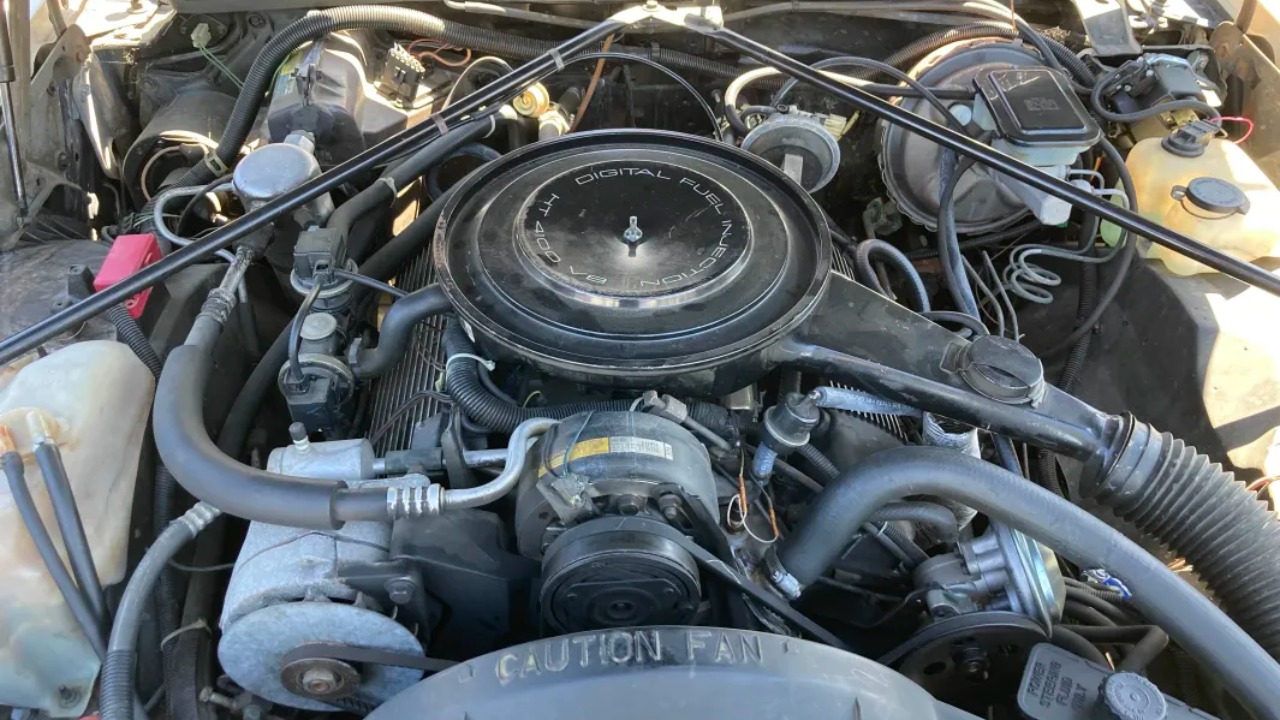
The push to modernize did not always go smoothly. By 1980, bmw and audi sales significantly surpassed those of Cadillac by way of smaller, sportier models, and the American luxury brand scrambled to respond. One answer was the V8 6 4, a variable displacement version of its existing 368 cubic inch engine that could shut down cylinders to save fuel. Technical coverage notes that the V8 6 4 (L62 in GM engine code parlance) debuted for the 1981 model year, and that Everything below the heads was based on the stout 472 and 500 architecture that had been Cadillac’s primary engine in 1980. A detailed Everything breakdown of the system describes how the electronics of the day simply were not fast or robust enough, leading to drivability complaints.
Retrospective analysis labels the 8 6 4 experiment a Cautionary Tale. One technical history notes that, Unlike other GM drivetrain snafus of the same era, the response from Cadillac was swift, and that After attempts to refine the control system, the company quietly dropped the technology rather than risk further damage to its image. Yet the same piece argues that the basic idea of cylinder deactivation was ahead of its time, and that the industry as a whole has not entirely learned how to balance ambitious fuel saving tech with the expectations of luxury buyers.
Northstar, proprietary power, and the legacy in today’s performance
Cadillac’s last great V8 push arrived in the early 1990s with the Northstar family. A detailed history of the brand’s engines notes that Cadillac came roaring back in the early 1990s with the Northstar V 8, which it billed as its most technologically advanced engine yet, complete with four valves per cylinder, aluminum construction, and the ability to propel a full size sedan to a sub six second 0 to 60 time. A fan manual for the 1997 DeVille even notes on Page 8 that the car’s documentation was widely regarded as one of the finest of its kind, and that it was published following the introduction of the first Northstar powered DeVille that ushered in a new era in styling, tying the engine directly to the car’s identity. In enthusiast rankings of powertrains, the Northstar often appears alongside other icons in lists of the 10 best V8 engines of all time, with one video arguing that There is a Strong case that the V8 layout, as executed by Cadillac and its rivals, remains the best configuration for a blend of power and sound.
Corporate histories underline how significant that engine family was inside General Motors. An internal style encyclopedia notes that in 2010, when the Northstar engine series ended production, Cadillac became the last General Motors division to retain its own proprietary V8 design. Since then, the brand has relied on corporate small blocks and, increasingly, on downsized turbocharged engines. Yet the V8 spirit lingers in modern performance sedans and coupes. A horsepower ranking of recent models highlights that 500 Horsepower has become a benchmark figure, and that The Cadillac CT6 was a brilliantly luxurious sedan that topped the brand’s lineup with a V8 making enough power to make anyone smile, a nod to how the old big block ethos survives in a more efficient package. Broader industry pieces on driveline technology note that What happened next in automatic transmissions was a quantum leap, as Manufacturers came up with groundbreaking designs that made multi gear automatics more efficient and responsive, which in turn helped modern V8 Cadillacs shed their reputation as energy sapping and inefficient. Even as the market shifts toward crossovers and electrification, museum pieces like The Perrier Cadillac Triple V8, a World War II era Australian project that used three standard production L head Cadillac V8s as a single power unit, preserved at the Australian War Memorial in Canberra, remind enthusiasts how far the brand once pushed eight cylinder engineering. That story of The Perrier Cadillac unit, named for engineer Robert Perrier, sits alongside modern timelines like The Modern Era 2000s to Now The Redesign in showing how V8s moved from default choice to curated heritage. Even as Cadillac prepares for an electric future, its century of V8s, from the early Nov era American Cadi experiments to the last proprietary Northstar, continues to shape how drivers think about luxury, power, and what a flagship should feel like.
That legacy also lives on in how enthusiasts talk about the engines themselves. Video histories of American V8s routinely circle back to Cadillac’s role, with one segment on There being a Strong argument that the V8 is the best configuration out there, and another deep dive into Cadillac V8 engine history that opens with a Nov greeting and a promise to explore how the American Cadi eight evolved from side valves to high tech overhead cams. Together, these accounts show that Cadillac’s V8 story is not just a sequence of displacements and model years, but a running commentary on what American luxury has meant at every stage of the last century.
More from Morning Overview