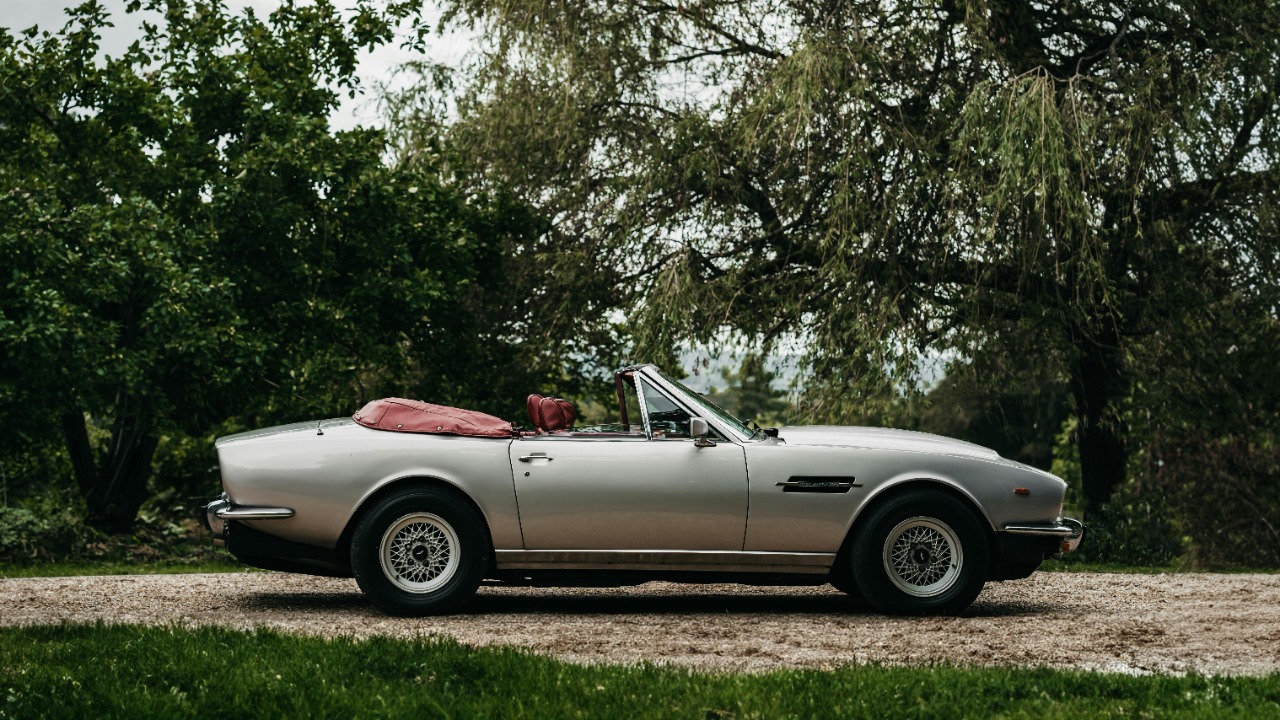

At the end of the 1990s, BMW quietly built a V8 roadster that was aimed squarely at the rarefied territory usually occupied by Aston Martin and other grand touring specialists. Rather than chasing lap times alone, the company set out to create a glamorous flagship that mixed classic proportions with modern engineering and a soundtrack to match. The result was the BMW Z8, a car that has since slipped from niche curiosity to blue-chip modern classic.
What makes the Z8 so compelling today is not just its performance, but the way it crystallized BMW’s ambition to stand alongside the most exclusive British and Italian marques. From its retro-inspired styling to its aluminium structure and hand-finished build, it was conceived as a statement of intent, a halo roadster that could sit in the same conversation as an Aston Martin DB7 Volante or a Ferrari 360 Spider without apology.
BMW’s late‑1990s ambition to play in Aston Martin territory
By the late 1990s, BMW had already proven it could build fast, capable sports cars, but the company wanted something more rarefied than an M3 or a Z3. The brief was to create a limited production roadster that would not just compete on performance, but also on presence, craftsmanship and exclusivity, the qualities that defined Aston Martin’s open‑top GTs of the era. Internally, the project was treated as a showcase for what the brand could do when freed from the constraints of volume production and conventional cost targets.
That ambition culminated in a car unveiled in 1999, when BMW set out to build a V8 roadster that could credibly rival the likes of Aston Martin in both style and substance. The company positioned the Z8 as a flagship, not a derivative of an existing model line, and used it to signal that its design and engineering teams could deliver something truly special at the very top of the market.
Designing a retro‑modern icon with serious intent
The Z8’s styling was not an accident of nostalgia, but a calculated move to tap into BMW’s heritage while appealing to buyers who might otherwise gravitate toward an Aston Martin. Its long hood, short rear deck and side vents were clear visual callbacks to the 1950s BMW 507, a car that had once tried, and largely failed, to crack the same glamorous roadster niche. By reinterpreting those cues with sharper surfacing and modern detailing, BMW created a shape that looked both familiar and futuristic, a deliberate contrast to the more conservative lines of many contemporary GTs.
Underneath that bodywork, the company invested heavily in materials and construction to ensure the car’s beauty was backed by substance. The Z8 used an aluminium spaceframe and body panels, a costly choice that underscored its halo status and helped keep weight in check for a V8 grand tourer. That combination of retro design and advanced engineering gave the roadster a distinctive character, one that felt more bespoke and hand‑crafted than the brand’s mainstream models, and aligned it with the artisanal image that Aston Martin had long cultivated.
The V8 heart: performance with grand touring manners
Any car hoping to sit alongside an Aston Martin in a buyer’s garage needs an engine with both power and personality, and BMW responded with a muscular V8. The Z8’s long bonnet concealed an aluminium 4.9-litre unit that had already proven itself in the brand’s high‑performance sedans. In the roadster, it delivered a broad spread of torque and a rich exhaust note that suited the car’s dual role as a fast cruiser and an engaging driver’s car, rather than a stripped‑out track special.
Crucially, the powertrain was paired with a manual gearbox and rear‑wheel drive, a traditional layout that appealed to enthusiasts and echoed the mechanical purity of classic GTs. The result was a car that could cover ground at a pace comparable to contemporary exotics, yet still felt relaxed and composed when driven at a gentler rhythm. That balance of performance and refinement was central to BMW’s pitch, positioning the Z8 as a grand tourer in the same spirit as an Aston Martin, but with a distinctly Bavarian flavor.
From concept to Bond car: how cinema amplified the halo
BMW did not rely on engineering alone to elevate its V8 roadster into the rarefied air of Aston Martin’s world. The company also pursued cultural cachet, most notably by placing the car in a James Bond film, a franchise long associated with British GTs. On screen, the Z8 was presented as a sophisticated yet menacing machine, a gadget‑laden tool of espionage that could hold its own in a universe previously dominated by Aston Martin coupes and convertibles.
That exposure mattered, because it framed the car in the public imagination as something more than a niche BMW. Driven by Pierce Brosnan’s Bond, the Z8 appeared as a fully equipped spy car, bristling with high‑tech features and cinematic presence. The association with Bond, a character so closely linked to Aston Martin, effectively placed BMW’s roadster on the same aspirational stage, reinforcing its role as a rival in both image and intent.
Targeting Ferrari and Aston Martin on the road
While the Z8’s styling and marketing leaned heavily on heritage and glamour, its performance benchmarks were set against some of the most serious sports cars of its day. BMW wanted the car to be measured not only against Aston Martin’s open‑top GTs, but also against mid‑engined Italian exotics. In period comparisons, the company looked at how its V8 roadster stacked up against rivals like the Ferrari 360 Spider, a car that offered similar straight‑line pace but a more track‑focused personality.
Reports from the time note that The Ferrari 360 Spider delivered comparable performance figures, yet was positioned as a sharper, more uncompromising machine, while the Z8 leaned into its grand touring brief. BMW also considered how the car felt relative to other luxury convertibles, such as the Jaguar XKR Convertible, and aimed for a driving experience that combined strong acceleration with a supple ride and long‑distance comfort. In that context, the Z8’s mission was clear: to offer Aston Martin levels of style and presence, Ferrari‑rivaling pace, and a uniquely BMW blend of usability and engineering polish.
Pricing, exclusivity and the Aston Martin comparison
BMW priced the Z8 to reflect its ambitions, positioning it firmly in the territory usually reserved for low‑volume exotics. When it went on sale in 1999, the car carried a sticker of approximately $128,000, a figure that placed it in direct competition with high‑end Aston Martin and Ferrari convertibles. That pricing strategy signaled that BMW did not see the Z8 as a mere styling exercise or a halo for showroom traffic, but as a genuine alternative to the established players in the luxury GT segment.
Exclusivity was part of the equation as well. Production was limited and the build process was more artisanal than that of BMW’s mainstream models, which helped justify the price and reinforced the car’s boutique image. In the same way that rarity can distort perceptions of value for classic Aston Martins, the Z8’s limited numbers and high initial cost have shaped how it is viewed today. As values have climbed, some observers have described the car as a textbook definition of return on investment, a sign that BMW’s decision to price and position it alongside the most exclusive roadsters of its era has been vindicated in the collector market.
From 1950s inspiration to 2000s modern classic
The Z8’s story cannot be separated from the 1950s BMW 507 that inspired it, and from the man who pushed BMW toward that original American dream. In the 1950s, American car importer Max Hoffman convinced BMW that the way to win over his fellow countrymen was to invest in a glamorous roadster that could appeal to affluent buyers in the United States. The resulting 507 was beautiful but commercially troubled, produced in tiny numbers and nearly ruinous for the company’s finances, yet it left a powerful design legacy that lingered for decades.
When BMW returned to the idea of a flagship roadster in the late 1990s, it did so with the benefit of stronger finances and a clearer understanding of the market. The Z8 was, in many ways, a second attempt at the same dream: a car that could capture the imagination of American and European buyers who might otherwise choose an Aston Martin or a Ferrari. Over time, that strategy has paid off, as the Z8 has evolved from a niche halo model into a widely recognized modern classic, with collectors now treating it as a key chapter in BMW’s long quest to build a world‑class luxury roadster.
Why the Z8 still matters in BMW’s performance story
Looking back, the Z8 stands out as a rare moment when BMW stepped outside its usual performance playbook and aimed directly at the emotional appeal that defines brands like Aston Martin. The car did not spawn a direct successor with the same mix of retro styling and V8 power, but its influence can be seen in the way BMW has approached later halo models, from limited‑run coupes to high‑end M cars that prioritize character as much as capability. The Z8 proved that the company could build a car that was as much about theatre and presence as it was about numbers on a spec sheet.
For enthusiasts, the car’s enduring appeal lies in that blend of qualities. It is a V8 roadster with genuine performance credentials, a design that nods to history without feeling trapped by it, and a backstory that ties together Hollywood, heritage and high‑stakes ambition. In that sense, the Z8 did exactly what it was meant to do: it showed that BMW could step into a space long dominated by Aston Martin and hold its own, not by imitation, but by offering its own distinct interpretation of what a flagship grand touring roadster should be.
More from MorningOverview