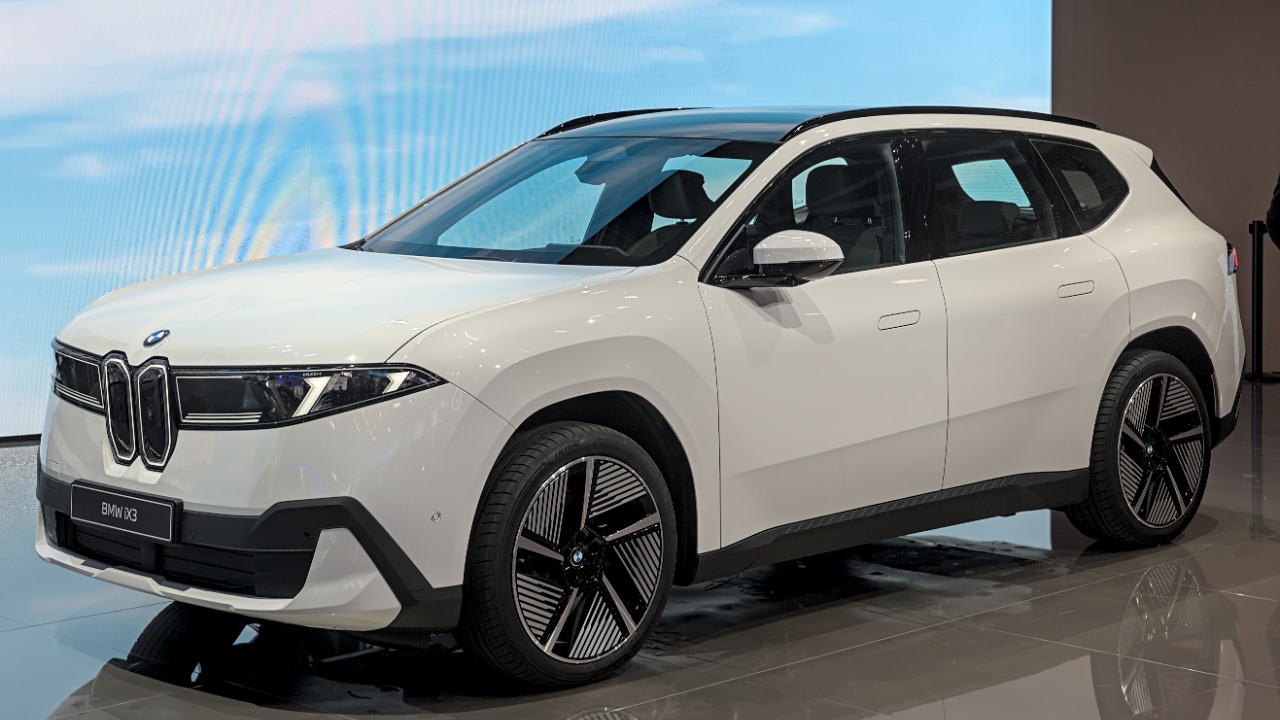

The next BMW iX3 will not just be another electric SUV, it will be the first production BMW that treats a generative AI voice assistant as a core system rather than a bolt‑on gadget. By building its BMW Intelligent Personal Assistant on Amazon’s Alexa+ architecture, BMW is turning the iX3 into a rolling test bed for natural conversation, proactive help and deep integration with the driver’s digital life. The move signals a shift in how premium brands think about software, with the voice “brain” now as central to the experience as the battery or the chassis.
BMW is using the iX3 launch window in the second half of 2026 to showcase this strategy in front of a global audience at CES in Las Vegas, positioning Alexa+ as the foundation for a new generation of in‑car interaction. I see this as a pivotal moment: if BMW can make talking to the car feel as fluid as talking to a person, the iX3 could reset expectations for every electric SUV that follows.
BMW’s Alexa+ bet, from Munich to Las Vegas
BMW is not dabbling at the margins of voice control, it is rebuilding its BMW Intelligent Personal Assistant on top of Amazon’s Alexa+ architecture and treating that as a milestone in human‑vehicle interaction. In communications from Munich and Las Vegas, the company frames this as an expansion of the existing assistant into a more capable system that leans on artificial intelligence to understand context, sustain dialogue and handle more complex tasks than the scripted commands drivers are used to. The decision to align so closely with Amazon reflects a strategic choice: rather than invent its own large language model stack, BMW is betting that Alexa+ will evolve fast enough to keep the iX3’s software feeling fresh over the life of the vehicle.
What stands out to me is how explicitly BMW links this technical shift to everyday use cases, from adjusting climate and navigation to managing entertainment and smart home devices without taking hands off the wheel. By describing the updated BMW Intelligent Personal Assistant as a new level of natural dialogue that is “built on Amazon’s AI Alexa+ architecture,” the company is signaling that the iX3’s voice experience will be defined as much in Seattle as in Bavaria, even as it insists that the assistant remains a BMW‑branded feature tailored to its own interface and driving philosophy, as outlined in its Munich/Las Vegas announcement.
iX3 as the first Alexa+ showcase
The iX3 is the spearhead for this integration, and BMW is using CES in Las Vegas to make that point unmistakable. At the show, the company has presented the iX3 as a showcase for its Neue Klasse technology, with the first public demonstration of an AI‑powered Intelligent Personal Assistant running on Alexa+ inside a production‑intent vehicle. Positioning the iX3 in this way turns a single model into a symbol of BMW’s broader software ambitions, and it also gives Amazon a high‑profile partner to prove that Alexa+ can live comfortably in the demanding environment of a moving car.
From my perspective, the timing matters as much as the hardware. BMW has said that the iX3, featuring this assistant, is planned to reach customers in the second half of 2026, which gives the company a clear runway to refine the experience based on feedback from CES demonstrations and internal testing. By tying the iX3’s debut to the Neue Klasse platform and to a new generation of voice technology, BMW is effectively telling buyers that this SUV is the reference point for its digital future, a message reinforced in coverage of how the BMW iX3 showcases Neue Klasse tech at CES.
Inside the Panoramic iDrive cockpit
Voice is only one part of the story, because the iX3 is also debuting a new Panoramic iDrive cockpit that changes how drivers see and touch information. Instead of a traditional cluster plus central screen, BMW stretches a continuous display band across the cabin, turning the entire upper dash into a digital canvas that can respond to both spoken commands and physical inputs. In practice, that means Alexa+ does not live in a disembodied speaker, it is visually anchored in animations, cards and prompts that appear in the driver’s line of sight, making the assistant feel like a native part of the car rather than an aftermarket gadget.
I see this Panoramic iDrive approach as critical to making generative AI feel trustworthy on the road, because drivers need clear visual confirmation of what the system heard and what it plans to do. BMW has already previewed how the iX3 will use this wide display to show navigation suggestions, climate changes and media controls that are triggered by voice, with the assistant’s responses woven into the interface instead of popping up in a separate window. That design philosophy was highlighted in a CES preview that described BMW’s iX3, the Panoramic iDrive and the Alexa+ integration as a combined effort to redefine the cockpit, with the Panoramic iDrive and Alexa+ pairing presented as the centerpiece of the tech story.
What Alexa+ actually brings to the car
Alexa+ is not just a rebranding of the Alexa people know from smart speakers, it is a generative AI upgrade that changes how the assistant understands and responds to complex, conversational requests. In the context of the iX3, that means drivers should be able to speak naturally, ask follow‑up questions and combine tasks in a single sentence, such as adjusting the route, tweaking the temperature and sending an arrival message without breaking the flow. The system’s large language model backbone is designed to interpret intent rather than rely on rigid command phrases, which is essential in a noisy, distraction‑prone environment like a moving vehicle.
From what Amazon has shared, Alexa+ is also meant to be more proactive, surfacing suggestions based on context, such as offering to navigate to a charging station when the battery is low or reminding the driver of a calendar appointment that requires leaving earlier due to traffic. That generative layer is what BMW is tapping into for its Intelligent Personal Assistant, and it aligns with Amazon’s own description of Alexa+ as a car‑ready evolution of its assistant that is coming to vehicles as part of a broader mobility push, as outlined when Amazon said at CES that Alexa+ is coming to your car with a generative AI upgrade.
How BMW keeps the assistant feeling like BMW
One of the most interesting tensions in this partnership is branding, because BMW wants the benefits of Alexa+ without turning its cars into generic Amazon endpoints. The company is clear that the in‑car helper remains the BMW Intelligent Personal Assistant, with its own visual identity, wake words and integration into vehicle functions that go far beyond what a third‑party app could access. In practice, that means the assistant can adjust chassis modes, lighting signatures or driver profiles in ways that feel specific to BMW, even if the underlying language understanding is powered by Amazon’s models.
I read this as BMW trying to strike a balance between leveraging a powerful cloud platform and preserving its own character, much like it did when it first introduced its Intelligent Personal Assistant several years ago. The difference now is that the assistant is being expanded to include Amazon Alexa Technology, which allows it to tap into the broader Alexa ecosystem for skills and services while still presenting itself as a BMW feature. That dual identity is spelled out in BMW’s description of how the Intelligent Personal Assistant is being expanded to include Amazon Alexa Technology starting in the second half of 2026, with a promise that it will fit seamlessly into the customer’s digital ecosystem.
From CES preview to production reality
CES has become the stage where carmakers preview software features long before they reach showrooms, and BMW is following that playbook with the iX3 and Alexa+. Ahead of the show, the company and its partners framed the event as a chance to see how the Panoramic iDrive, the updated assistant and the electric SUV’s hardware all come together in a cohesive experience. That preview set expectations that the iX3 would not just be another EV reveal, but a demonstration of how a premium brand can weave generative AI into the cockpit in a way that feels polished rather than experimental.
What I find notable is how explicitly the preview linked the iX3, the Panoramic iDrive and the Alexa+ integration as a “revolution” in how drivers interact with their cars, rather than treating each feature as a separate bullet point. By grouping them together, BMW is signaling that the value lies in the combination: a wide, flexible display, a powerful voice brain and an electric platform that can support constant software updates. That narrative was captured in a CES 2026 preview that described BMW’s anticipated CES debut of the iX3, Panoramic iDrive and Alexa revolution, framing the show car as a near‑production glimpse of what buyers will get in the second half of 2026.
Why BMW wants to be “first” with Alexa+ in cars
BMW is also keen to claim a first mover advantage, presenting the iX3 at CES as the first car to integrate Amazon’s Alexa+ directly into its core systems. That positioning matters in a crowded EV market where software differentiation is increasingly hard to achieve, and it gives BMW a talking point against rivals that either build their own assistants from scratch or rely on more limited smartphone mirroring. By saying it is the first automaker to integrate Alexa+ in cars, BMW is staking out leadership in a specific, high‑visibility slice of the in‑car tech landscape.
From my vantage point, this “first” claim is as much about perception as it is about technical reality, because other brands are also exploring generative AI assistants, sometimes under different names or with different partners. Still, being the first to showcase a deep Alexa+ integration in a production‑intent vehicle at CES gives BMW a credible story to tell, especially when paired with the futuristic Panoramic iDrive cockpit. That narrative was emphasized in coverage of how BMW used CES to show the new iX3 with Panoramic iDrive and to say it is the first automaker to integrate Amazon’s Alexa+ in cars, a claim that underscores the strategic importance of this partnership for both companies.
What this means for drivers and the wider market
For drivers, the practical impact of all this branding and architecture talk will be measured in how easy it feels to live with the iX3 day to day. If BMW and Amazon get the integration right, owners should be able to treat the car as an extension of their existing Alexa routines, from controlling smart home devices on the way out of the driveway to accessing familiar skills for news, shopping or entertainment. At the same time, the assistant needs to feel deeply embedded in the vehicle, with fast, reliable control over driving‑related functions even when connectivity is patchy, something BMW will have to manage carefully as it blends cloud intelligence with on‑board systems.
In the wider market, I expect this move to intensify the competition around who owns the in‑car experience, especially as other tech giants push their own assistants and ecosystems into vehicles. BMW’s decision to align its Intelligent Personal Assistant with Alexa+ suggests that even premium brands are willing to share the cockpit with external platforms if the payoff in capability and speed of innovation is high enough. As the iX3 heads toward its launch window in the second half of 2026, the success or failure of this Alexa+ experiment will be watched closely by rivals, regulators and drivers alike, because it will help answer a bigger question: whether the future of in‑car intelligence belongs to carmakers, to tech companies, or to some uneasy blend of both.
More from Morning Overview