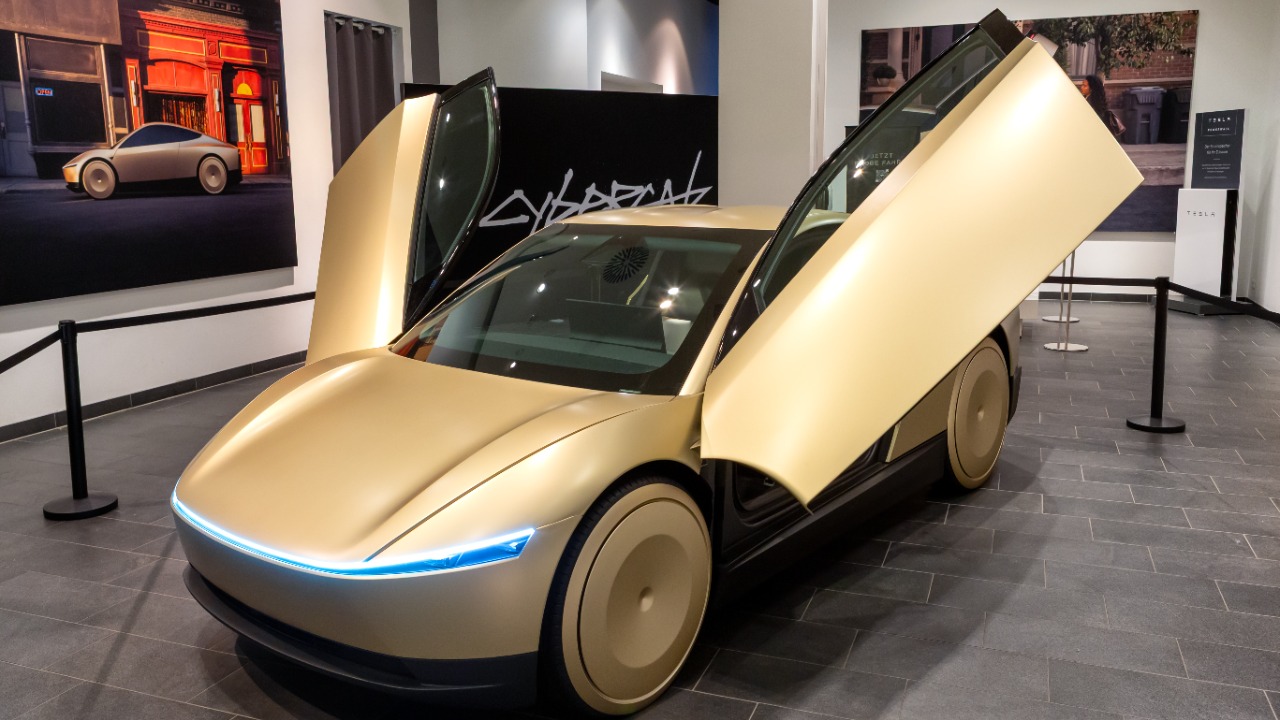

The sight of sleek, driverless Cybercabs gliding past food trucks and office towers has quickly become part of Austin’s daily rhythm, signaling that the city is once again an early test bed for a new kind of mobility. As Tesla’s purpose-built robotaxi begins to circulate more visibly, Austin is feeling a subtle but unmistakable shift in how residents move, how regulators respond, and how the local tech economy positions itself around autonomous vehicles.
What started as scattered sightings of unfamiliar gold prototypes has evolved into a broader conversation about safety, jobs, and the future of ride hailing in Texas’s capital. I see that conversation unfolding at street level, in statehouse hearings, and inside Tesla’s own roadmap for 2026, where the Cybercab is framed as a cornerstone product rather than a side experiment.
The moment Cybercab went from rumor to street reality
The Cybercab story in Austin moved from online speculation to physical presence when residents began sharing clips of a distinctive Tesla Cybercab weaving through downtown traffic. One widely shared video captured a Tesla Cybercab on public roads in Austin, its angular profile and robotaxi styling standing out even in a city used to prototype hardware. That sighting, amplified across social feeds, confirmed that the company was no longer limiting testing to closed tracks but was instead integrating early vehicles into the city’s everyday flow.
Those first glimpses were not isolated. Another clip, posted around New Year’s, showed two Tesla cyber cabs in Austi, with the creator noting that it was New Year, Day and of course Tesla never stops working as the vehicles looped through familiar intersections. The repetition of these sightings, from a single Tesla Cybercab in the central business district to pairs of test vehicles on a holiday morning, signaled that Austin had become a primary proving ground rather than a one-off demo route.
From prototypes to production: Tesla’s Cybercab timeline
On the corporate side, Tesla has been steadily turning the Cybercab from concept into a scheduled product line, and that shift is now shaping expectations in Austin. Tesla CEO Elon Musk confirmed that Tesla Cybercab production starts Q2 2026, positioning the vehicle as a dedicated robotaxi designed specifically for unsupervised self-driving rather than a modified consumer car. That commitment, framed as NEWS alongside SHOP TESLA gear and upgrades, tells investors and city officials alike that the company sees the Cybercab as a core business, not a speculative pilot.
Separate reporting that Tesla Starts Cybercab Production Ahead Of Launch In 2026 reinforces that message by describing The Cybercab as a dedicated robotaxi offering with no pedals and no steering wheel, built as an addition to electric vehicle manufacturing rather than a replacement. For Austin, that means the prototypes already on local streets are directly connected to a near term production ramp, not distant research. Residents watching test vehicles navigate South Congress or the Domain are effectively seeing the front edge of a product Tesla expects to scale across ride hailing fleets within the next year.
How Texas cleared the way for Tesla Robotaxi
Austin’s streets did not become a Cybercab test track by accident, they sit inside a statewide regulatory framework that has been unusually welcoming to autonomous ride hailing. Tesla Robotaxi scores permit to run ride-hailing service in Texas, giving Tesla the legal footing to operate a ride service with a safety driver on board, tasked with manually intervening when necessary. That permit, granted at the state level, allowed the company to treat Texas, and by extension Austin, as a launch market for its robotaxi ambitions rather than a secondary test site.
At the same time, lawmakers have been working on broader rules that go beyond a single company. One measure, listed under Introduced Session as TX HB3837, establishes a comprehensive regulatory framework for autonomous vehicles in areas such as safety standards, data reporting, and advertising about autonomous vehicle capabilities. Another proposal, described in a discussion of the Texas automated vehicle regulation bill HB5426, defines automated vehicles as those with Level 4 or Level 5 automation based on Society of Automotive standards and assigns oversight to the Texas Commission of Licensing, with a mandate for ensuring public safety and transparency. Together, these efforts show that the state is trying to codify what counts as a fully automated vehicle and how it should be supervised, even as Tesla pushes ahead with its own definition of unsupervised self-driving.
Crash reports and the shadow of safety concerns
For all the excitement around Cybercab sightings, Austin’s experience with Tesla’s earlier robotaxi efforts has been complicated by safety questions. Reports filed with federal regulators describe Tesla’s 8 robotaxi crashes in Austin, a cluster of incidents that has drawn scrutiny to how the company deploys its autonomous systems on public roads. Those reports sit alongside a separate regulatory finding in California, where the DMV ruled that FSD is only a Level 2 ADAS, a designation that treats Full Self-Driving as an advanced driver assistance system rather than a fully autonomous stack.
That contrast matters in Texas, where Tesla’s robotaxi permit in Texas exists within a state framework that is still defining how to treat Level 4 and Level 5 systems. The crash record in Austin has already prompted questions about whether the company is moving too quickly from supervised features like FSD to unsupervised robotaxis, and whether the safety case for the Cybercab is materially different from the vehicles involved in those earlier incidents. As more Cybercabs appear on local streets, those eight crashes are likely to be cited in city council hearings, insurance debates, and neighborhood meetings about where and when autonomous vehicles should be allowed to operate.
What Austin’s streets reveal about Tesla’s testing strategy
Watching how and where Cybercabs operate in Austin offers a window into Tesla’s broader testing strategy. Social clips and eyewitness accounts describe Tesla Cybercab Prototypes Hit Austin Streets for Testing, with Pairs of sleek gold Cybercabs gliding through downtown Aus in coordinated runs. The fact that these vehicles appear in pairs suggests a deliberate approach to data collection, where one prototype might be running a new software build while another serves as a control, or where the company is observing how multiple autonomous vehicles interact with each other in dense urban traffic.
Those prototype runs are not limited to weekday commutes. The New Year’s Day video that showed two Tesla cyber cabs in Austi underscored that testing is happening across different traffic patterns, from holiday lulls to late night bar closings. By seeding Cybercabs into such varied conditions, Tesla is effectively using Austin as a living laboratory, capturing edge cases around scooters, pedestrians, and unpredictable ride share pickups that are hard to replicate elsewhere. For residents, that means the city’s signature mix of tech workers, students, and tourists is now part of the training data that will shape how Cybercabs behave when they eventually operate without any human backup.
Inside Tesla’s 2026 roadmap and what it means for Austin
The Cybercab is not an isolated project, it sits at the center of a broader corporate plan that treats 2026 as a pivotal year. In a detailed roadmap, Tesla laid out what it expects from 2026, describing how, if 2025 was the year Tesla introduced major new products, the next year is positioned as the time when those products scale and integrate. That roadmap, written By Karan Singh for Not a Tesla App, frames the Cybercab as a key piece of Tesla’s strategy to expand beyond selling cars into operating services, with the company itself, Tesla, increasingly acting like a mobility platform.
For Austin, that framing has concrete implications. If Tesla executes on its plan to ramp Cybercab production in Q2 and roll out unsupervised self-driving at scale, the city could see a rapid increase in autonomous ride options layered on top of existing services like Uber and Lyft. The roadmap suggests that Tesla is not just testing hardware in Austin but preparing to plug the city into a larger network of robotaxis that share software updates, fleet management tools, and pricing strategies. That could reshape everything from downtown parking demand to how new apartment buildings market themselves to residents who may no longer feel the need to own a personal vehicle.
Regulators race to keep up with Level 4 and Level 5 ambitions
As Cybercabs become more visible, Texas regulators are under pressure to reconcile Tesla’s ambitions with the technical language of automation standards. The discussion around the Texas automated vehicle regulation bill HB5426 makes clear that the state intends to define automated vehicles as those with Level 4 or Level 5 automation, using the Society of Automotive framework as its reference. That definition matters because it determines which vehicles fall under stricter oversight, what kind of safety case they must present, and how liability is assigned when something goes wrong.
The same discussion notes that the Texas Commission of Licensing would be responsible for ensuring public safety and transparency, a role that includes monitoring how companies describe their systems to consumers and how they report incidents. That is particularly relevant for Tesla, which has seen its FSD system labeled as a Level 2 ADAS in California while simultaneously promoting the Cybercab as a vehicle designed for unsupervised self-driving. In Austin, the gap between those classifications is not an abstract legal issue, it is a live question about whether the Cybercab should be treated as a fully automated Level 4 or Level 5 service under Texas law, or as an advanced driver assistance feature that still requires a human in the loop.
How Austin’s mobility ecosystem is bracing for change
On the ground, Austin’s transportation ecosystem is already adjusting to the prospect of a large scale Cybercab rollout. Traditional ride share drivers worry that a fleet of dedicated robotaxis with no pedals and no steering wheel could undercut their earnings, especially if Tesla uses aggressive pricing to gain market share. At the same time, some local businesses see opportunity in a future where visitors can summon a Cybercab from the airport to downtown without ever interacting with a human driver, potentially increasing foot traffic in entertainment districts that are already well served by curbside pickup zones.
City planners are watching closely as well. The combination of Tesla’s robotaxi permit in Texas, the state’s evolving autonomous vehicle bills, and the company’s 2026 roadmap suggests that Austin could soon host a mixed fleet of human driven and autonomous ride services. That raises practical questions about curb management, dedicated loading zones, and how to integrate Cybercabs into existing transit corridors without overwhelming bike lanes or bus stops. For a city that has long marketed itself as a test bed for innovation, the arrival of Cybercabs is both a validation of that identity and a stress test of whether its streets, laws, and institutions can adapt as quickly as the technology rolling through them.
More from MorningOverview