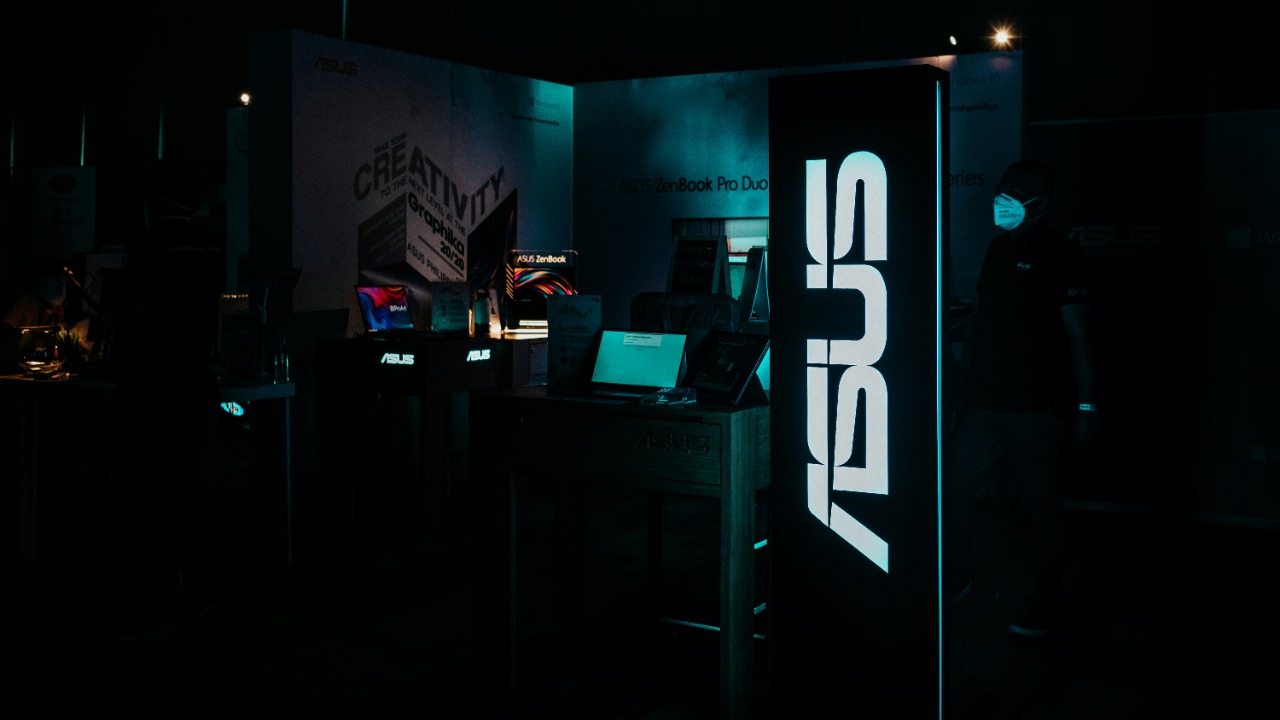

The artificial intelligence boom that has supercharged demand for high‑end chips is now colliding with the everyday PC market. Asus is warning that the same forces feeding data center build‑outs are pushing up the cost of memory and storage, and that those higher component prices will soon show up on store shelves. For anyone planning to buy a new laptop, desktop, or SSD upgrade, the AI gold rush is about to become a line item on the receipt.
Instead of treating AI as a distant cloud phenomenon, Asus is effectively telling consumers that the technology is reshaping the economics of personal computing. The company is preparing to raise prices on selected product lines, citing the cost of RAM and SSDs, and analysts expect the ripple effects to extend to tablets and smartphones as well. The AI era is not only changing what PCs can do, it is changing what they cost.
Asus turns AI demand into a concrete price warning
Asus has moved beyond vague hints and is now explicitly preparing customers for higher bills. The company has confirmed imminent price increases on several PC‑related products, making it clear that your next PC will cost more due to AI and the component pressures that come with it. In its messaging, Asus ties these hikes directly to the surge in demand for advanced hardware, a shift that has turned what used to be incremental cost changes into a noticeable jump for end users, a point underscored when ASUS Confirms Imminent Price Increases and warns that this is bad news for those planning to upgrade.
The company is not just talking in generalities about inflation or logistics. According to a new statement, Asus will start raising prices on several products starting January 5, and it explicitly cites AI as the main culprit, with RAM and storage cost pressure identified as the primary triggers for these pricing changes. By linking the adjustments to specific components rather than hiding behind broad economic language, Asus is signaling that the AI hardware race is now a structural factor in PC pricing, a reality reflected in the company’s own explanation that According to its announcement, AI is to blame.
Price hikes land just as the industry’s biggest showcase begins
The timing of Asus’s move is as strategic as the decision itself. Partners have been told that ASUS will adjust pricing for some products starting January 5, right before CES 2026, the moment when the PC industry traditionally unveils its most ambitious hardware. That means new motherboards, graphics cards, and AI‑ready laptops could debut with higher baseline prices baked in, rather than creeping up months later, a shift that is already being flagged in notices that ASUS has sent to its channel.
Launching price increases on the eve of CES also sends a message to competitors and component suppliers. It signals that Asus is willing to pass through higher costs rather than absorb them, and it sets expectations for how “AI PC” branding will be monetized in 2026. Instead of AI features arriving as a free bonus, they are arriving alongside a new pricing floor, a reality that will shape how retailers position everything from gaming rigs to creator workstations once the show’s announcements hit the market and those adjustments take effect, a pattern that has already been telegraphed ASUS confirms as the AI boom drives up costs and customers pay the bill.
Memory and storage are the pressure points
Behind the headlines about AI lies a more prosaic story about RAM chips and NAND flash. Asus is pointing to DRAM and SSDs as the components under the most acute pressure, and it is adjusting its own pricing accordingly. The company has already framed these moves as “strategic price adjustments” for DRAM and SSDs, a phrase that reflects both the reality of higher input costs and a deliberate effort to reposition its product stack, a shift that is spelled out in detail when ASUS announces strategic price adjustments for DRAM and SSDs.
Industry trackers are seeing the same pattern at a broader scale. With memory prices surging, Asus is not acting in isolation but is instead following a trend that has already prompted other major PC brands to rethink their pricing. Reports citing Business Insider and Commercial Times note that Asus will raise prices on selected PC lines from January 5 amid a memory cost surge, following Dell’s own moves, a sign that the cost of RAM is now a shared headache across the sector, as highlighted when Please note that this shift is tied directly to information from Business Insider and Commercial Times.
AI data centers are crowding out consumer hardware
The AI boom is not just a marketing slogan, it is a massive reallocation of silicon. Companies racing to train and deploy large models are buying up GPUs, high bandwidth memory, and fast storage at a pace that has reshaped the chipmaking supply chain. Analysts describe Nvidia as turning GPUs into capital, with AI companies financing hardware purchases that soak up hard drives, SSDs, and DRAM alike, a dynamic that leaves fewer components available for mainstream PCs and pushes up prices for what remains, a trend captured in a deeper look at how Nvidia is turning GPUs into capital while tightening supply.
What makes this squeeze particularly painful for consumers is that production capacity is not scaling up fast enough to match AI demand. Foundries and memory makers remain conservative about adding new fabs or lines, wary of overbuilding after previous boom‑and‑bust cycles. As a result, when hyperscalers and AI startups lock in long‑term contracts for DRAM and SSDs, the remaining spot market becomes more volatile, and PC makers like Asus are left paying more for the same modules that went into last year’s laptops. Those higher component costs then flow directly into retail prices, which is why Asus now feels compelled to warn that AI is to blame for the next round of hikes.
Experts see 2026 as only the start of higher PC prices
Asus’s warning fits into a broader forecast that 2026 will be a difficult year for anyone buying new computing devices. Analysts are already cautioning that your next PC, tablet, or smartphone could cost more as RAM prices climb further, with the AI boom identified as a key driver of that trend. Projections suggest that memory costs will not simply spike and fall but could remain elevated, especially for high performance modules, a concern that is front and center in reports that Your next PC could be hit by soaring RAM costs.
Market researchers at IDC are particularly focused on the impact at the premium end of the spectrum. They warn that flagship RAM upgrades could be delayed or repriced as manufacturers juggle limited supply, and they expect price rises to be sharper for devices that rely on cutting edge memory technologies. That means high refresh gaming laptops, creator‑class desktops, and AI‑accelerated ultrabooks are likely to see the steepest increases, a pattern that aligns with IDC’s view that Still, IDC believes RAM costs will keep flagship configurations under pressure.
From desktops to phones, the AI squeeze spreads across devices
The impact of these component shortages is not confined to tower PCs or gaming rigs. Analysts are warning that the same AI‑driven demand for RAM and fast storage will ripple through laptops, tablets, and smartphones, particularly devices that rely on newer, high performance hardware. As AI features like on‑device assistants and generative photo tools become standard, manufacturers are loading more memory and faster SSDs into even midrange models, which magnifies the cost impact of each incremental price rise in the supply chain, a dynamic that Analysts say goes well beyond desktop PCs.
For consumers, that means the AI boom could quietly add cost to everything from a basic school laptop to a flagship Android phone. A 16 GB RAM configuration that once felt like a luxury on a thin‑and‑light notebook is rapidly becoming the baseline for AI‑capable Windows machines, and 256 GB of storage is giving way to 512 GB or 1 TB as local models and datasets grow. Each of those spec bumps is more expensive to deliver when DRAM and NAND prices are climbing, which is why Asus’s warning about higher PC prices is likely a preview of similar moves across the broader device ecosystem.
Asus is not alone, but it is unusually blunt
One reason Asus’s announcement has resonated is that it strips away the usual euphemisms around pricing. Rather than quietly adjusting SKUs or blaming generic “market conditions,” the company is directly connecting its higher price tags to AI and the cost of memory and storage. In some regions, Asus has even framed the shift as a necessary response to the AI boom, telling customers that selected product configurations will become more expensive as the company passes through those component increases, a stance that is spelled out when ASUS explains that customers will pay the bill for AI‑driven costs.
Other manufacturers are making similar calculations, even if they are less explicit in their public messaging. Reports that Asus is set to raise prices on several products and that AI is to blame, including references to its Home Hardware portfolio, suggest that the company is aligning its strategy with a wider industry shift rather than acting as an outlier. The fact that Asus is willing to say so out loud, and that it is doing so just as new AI‑branded PCs are about to debut, underscores how central AI economics have become to the entire hardware stack, a reality captured in coverage that ASUS Is Set To Raise Prices On Several Products And Yes, Is To Blame, according to Lowyat NET’s Home Hardware reporting.
What buyers can do as AI reshapes the PC budget
For anyone in the market for a new machine, the practical question is how to navigate this AI‑driven price environment. One option is to move quickly, locking in current prices before January 5 adjustments and similar hikes from other brands filter through retailers. Another is to be more strategic about configurations, prioritizing RAM and SSD capacity, which are under the most pressure, while compromising on less constrained components like CPU tier or cosmetic features, a trade‑off that becomes more important as memory costs rise in line with the AI boom that Bad news reports have already flagged for would‑be upgraders.
There is also a case for stretching the life of existing hardware rather than rushing into an AI‑branded upgrade. Many current desktops and laptops can handle everyday workloads, from office apps to streaming and light creative work, without the need for dedicated AI accelerators or the latest DDR5 kits. For users who do not rely on local model inference or heavy machine learning tasks, waiting for the supply chain to stabilize could avoid paying the early adopter premium that Asus’s pricing signals now represent. In the meantime, understanding that AI is not just a feature but a cost driver can help buyers read spec sheets and price tags with a more critical eye as the next generation of PCs arrives.
More from MorningOverview