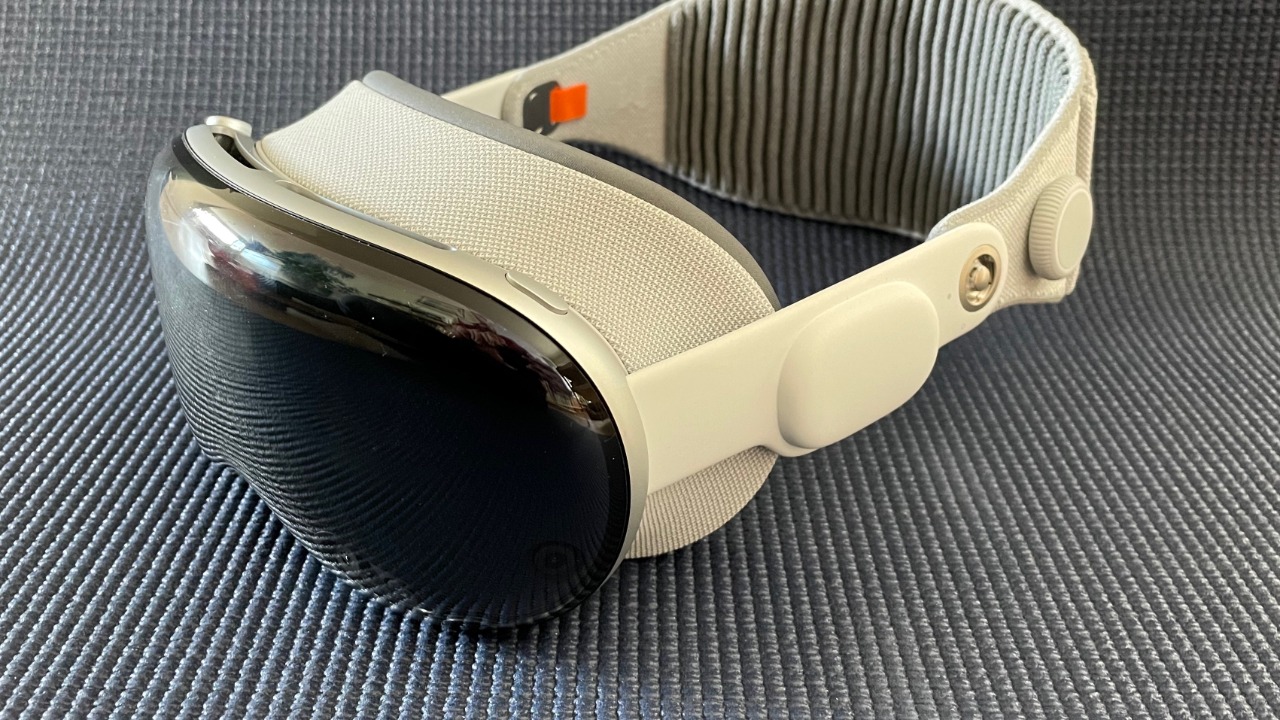

Apple set out to redefine personal computing with its mixed reality headset, but the Vision Pro’s early stumbles have hardened into a pattern that is difficult to ignore. Hardware complaints, software instability, weak content and now reports of scaled‑back production have combined into a narrative of a flagship product struggling to justify its price and ambition. The problems have not arrived all at once, but they are now stacking on top of one another in a way that raises deeper questions about Apple’s strategy in spatial computing.
What began as a bold, $3,499 experiment in immersive computing is increasingly being treated by customers and analysts as an expensive misstep rather than the next iPhone moment. Instead of a virtuous cycle of excitement, apps and upgrades, Apple is facing returns, reliability issues and a user base that is still trying to understand why this device should exist at all.
The promise of Vision Pro and the reality check
From the outset, Apple framed the Apple Vision Pro as a new category of spatial computer, not just another headset. The company priced it at $3,499, a figure that signaled confidence that early adopters would pay a premium for Apple’s take on mixed reality. In theory, that price bought cutting‑edge displays, advanced sensors and tight integration with the broader Apple ecosystem, all wrapped in the company’s familiar industrial design language.
In practice, the Vision Pro has struggled to live up to that positioning, especially as a mainstream consumer product. Even sympathetic observers now describe the Apple Vision Pro as an “expensive misstep” that arrived while the broader market for head‑worn computers was still finding its feet, leaving Apple to defend a luxury device before the use cases were clear. Instead of cementing Apple’s dominance, the headset has opened space for rivals to chase lighter, cheaper smart glasses while Apple is still trying to prove why its first‑generation hardware deserves a place in everyday life.
Returns, discomfort and the human factors problem
One of the earliest warning signs came from the people who actually wore the headset for more than a demo session. Human‑factors specialists who studied the Vision Pro’s ergonomics warned that its weight distribution and visual demands could create problems for extended use, and those concerns quickly showed up in customer behavior. A widely shared analysis of Vision Pro buyers noted that returns were piling up, matching predictions that the headset’s design would clash with real‑world comfort expectations.
Those ergonomic critiques have been reinforced by more formal commentary from imaging and cinema specialists. One detailed breakdown of why Apple has failed with the Vision Pro points back to earlier work titled Researchers Warn Against Apple Vision Pro, which highlighted how prolonged use of the headset can cause eye strain, headaches and potentially even cognitive issues. When a device is meant to be worn on the face for hours at a time, those kinds of side effects are not just minor annoyances, they are existential threats to adoption.
Cracks, black screens and bricked headsets
Comfort is only part of the story. Vision Pro owners have also reported a series of hardware and software failures that undermine trust in such an expensive device. Early in its life, The Vision Pro was hit with reports of spontaneous cracking on the front glass, with some owners saying hairline fractures appeared without any obvious impact. For a headset that doubles as a status symbol, visible damage on a carefully handled unit is more than cosmetic, it suggests fragility in a product that is supposed to be worn and adjusted constantly.
Software stability has become another sore point. On Apple’s own discussion boards, one user described how their Apple Vision Pro began shutting down unexpectedly even with plenty of battery remaining, raising the question of whether the device was defective. In developer and enthusiast communities, owners have shared stories of My Apple Vision Pro units that were completely bricked after a visionOS 26 update, leaving them to wonder whether to go through Developer Support or Customer Relations. When a premium headset can be rendered unusable by a software update, it makes prospective buyers think twice.
Random reboots and the reliability cloud
Even when the Vision Pro is not fully bricked, intermittent failures are eroding confidence. Some owners of the M5 version have described “instant black screen” reboots that occur without warning, interrupting work or entertainment sessions. One detailed Troubleshooting post recounts how the user contacted Apple Support, only to be told that They could not yet pinpoint a specific panic log cause, leaving the customer to experiment with resets and different usage patterns to see if the crashes would stop.
These are not isolated anecdotes. Another owner described “Sudden Reboots of Apple Vision Pro” on Apple’s forums, explaining that their headset had started to shut down unexpectedly and asking whether the Vision Pro could be defective. When a device that is supposed to blend seamlessly into daily life instead becomes a source of anxiety about when it might fail next, it undermines Apple’s core promise of reliability. For a company that built its reputation on products that “just work,” recurring reboot and crash reports are particularly damaging.
Immersive content that never fully arrived
Even if the hardware were flawless, the Vision Pro would still need compelling reasons to strap a computer to your face. On that front, Apple has struggled to deliver the kind of immersive content that makes the headset feel essential rather than optional. In user communities, owners complain that Apple’s Vision Pro is suffering from a lack of immersive video, with some saying they do not understand how the product made it out of logistics and design without a stronger pipeline of spatial films and experiences.
That content gap is especially glaring given how Apple marketed the device. The company showcased cinematic environments, 3D movies and interactive experiences as proof that the Vision Pro could transform entertainment, yet the day‑to‑day reality for many buyers has been a glorified floating monitor for existing apps. Without a steady flow of must‑see spatial content, the headset’s value proposition shrinks, and the $3,499 price tag starts to look less like an investment in the future and more like an expensive toy waiting for its killer app.
EyeSight, design quirks and the uncanny valley
Apple’s attempt to make the headset feel less isolating has also backfired in some ways. The EyeSight feature, which projects a representation of the wearer’s eyes on an outward‑facing display, was supposed to make interactions with nearby people feel more natural. Instead, teardown specialists note that Tech journalists have called EyeSight “bizarre,” “uncanny,” and “of highly dubious utility,” and from a repair perspective it appears to be an achilles heel that adds complexity and potential failure points.
These design quirks feed into a broader perception that the Vision Pro is a first‑generation product that prioritizes technical bravado over practical refinement. In discussions about what is going on with the headset, some users contrast the original Apple Vision Pro with a brand new second generation Apple Vision Pro arriving nearly two years later, highlighting how quickly Apple has had to iterate to address early missteps. One widely shared Apple Vision Pro thread captures the confusion, with buyers asking whether they should commit to the current model or wait for a lighter, more polished successor that might finally resolve the uncanny design elements.
Sales slowdown, production cuts and a shrinking runway
All of these issues are now showing up in the numbers. Reports from within Apple’s supply chain suggest that the company has cut production of the Vision Pro headset after poor sales, a striking move for a product that was supposed to anchor a new computing platform. One widely circulated discussion notes that Apple reportedly cuts production of Vision Pro after lackluster demand, reinforcing the sense that the initial wave of curiosity did not translate into sustained momentum.
Apple’s own leadership has started to temper expectations. CEO Tim Cook told The Wall Street Journal that most consumers may not be ripe for the Apple innovation, a rare public acknowledgment that the market for a $3,500‑class headset is far smaller than the company once implied. When the chief executive is effectively saying that the world is not yet ready for your flagship device, it is a sign that internal expectations have shifted from mass adoption to a slower, more experimental rollout.
A product caught between pro gear and mass market
Part of the Vision Pro’s struggle comes from its identity crisis. Apple has tried to pitch it as both a professional tool and a consumer entertainment device, but the reality is that it sits awkwardly between those worlds. For creative professionals, the headset’s limitations in comfort and long‑term wear make it a tough sell as an all‑day workstation, especially when traditional monitors and laptops remain more practical. For everyday consumers, the combination of price, bulk and limited content makes it feel like a niche gadget rather than a must‑have upgrade.
That tension shows up in how the device is marketed and sold. On Apple’s own storefronts, the Vision Pro is presented as a premium product with carefully staged lifestyle imagery, yet the real‑world stories coming from owners focus on troubleshooting, returns and uncertainty about long‑term support. When a device cannot clearly answer whether it is a pro tool, a gaming console, a movie screen or something else entirely, it risks satisfying none of those audiences fully.
Software maturity and the long road to visionOS stability
Underneath the hardware, visionOS is still maturing, and that immaturity is contributing to the perception that the Vision Pro is not ready for prime time. Developers and power users have encountered bugs that go beyond the usual first‑version quirks, including the complete bricking of units after system updates and persistent instability in core experiences. One developer described how My Apple Vision Pro became unusable after installing visionOS 26, a scenario that would be unthinkable for a Mac or iPhone update at this stage in their lifecycles.
Even outside the developer community, owners are wrestling with system‑level issues that feel more like beta software than a polished Apple release. The “instant black screen” reboots described in one Apple Support exchange show how difficult it can be to diagnose and fix problems when the platform is new and diagnostic tools are limited. Until visionOS reaches the kind of stability that users take for granted on iOS and macOS, every update will carry a hint of risk, and that is not a comfortable place for a $3,499 headset to be.
Where Apple goes from here
For Apple, the Vision Pro’s troubles are not just about one device, they are a test of how the company handles a rare high‑profile stumble. The decision to scale back production, the candid comments from Tim Cook about consumer readiness and the steady drumbeat of user complaints all suggest that Apple is recalibrating its ambitions in spatial computing. The company can either double down on a smaller, more professional market or push aggressively toward lighter, cheaper hardware that looks more like smart glasses than a full‑face headset.
There are hints that Apple is already preparing for that pivot. Enthusiast discussions about what is going on with the Apple Vision Pro often reference a second‑generation model that arrives nearly two years after the original, suggesting that Apple is racing to address weight, comfort and reliability in new hardware. At the same time, the company continues to present the Vision Pro as a flagship product, a sign that it is not ready to concede the category. The question now is whether Apple can fix the piling problems fast enough to keep developers, early adopters and investors believing that spatial computing is still worth the bet.
More from Morning Overview