
The Antarctic seafloor is one of the last truly unseen places on Earth, and the machines we send into that darkness are starting to come back with stories that sound less like routine fieldwork and more like warnings. When one of those robots vanishes under the ice, the mystery is gripping enough, but what unsettles scientists most is what the surviving missions are revealing about how fast the frozen continent is changing. The disappearance of a bright orange submersible beneath a so‑called “doomsday glacier” has become a symbol of how dangerous, and how urgent, this work has become.
The lost robot is not an isolated mishap. It sits inside a pattern of Antarctic expeditions where autonomous vehicles slip under ice shelves, sometimes go missing for months, and then reappear with data that redraws projections for sea level rise. The footage and measurements they bring back show warm water tunneling into glaciers, strange structures carved into the ice, and hidden cavities that act like heat traps, all in places that human divers and ships cannot safely reach.
Ran’s last dive beneath Thwaites
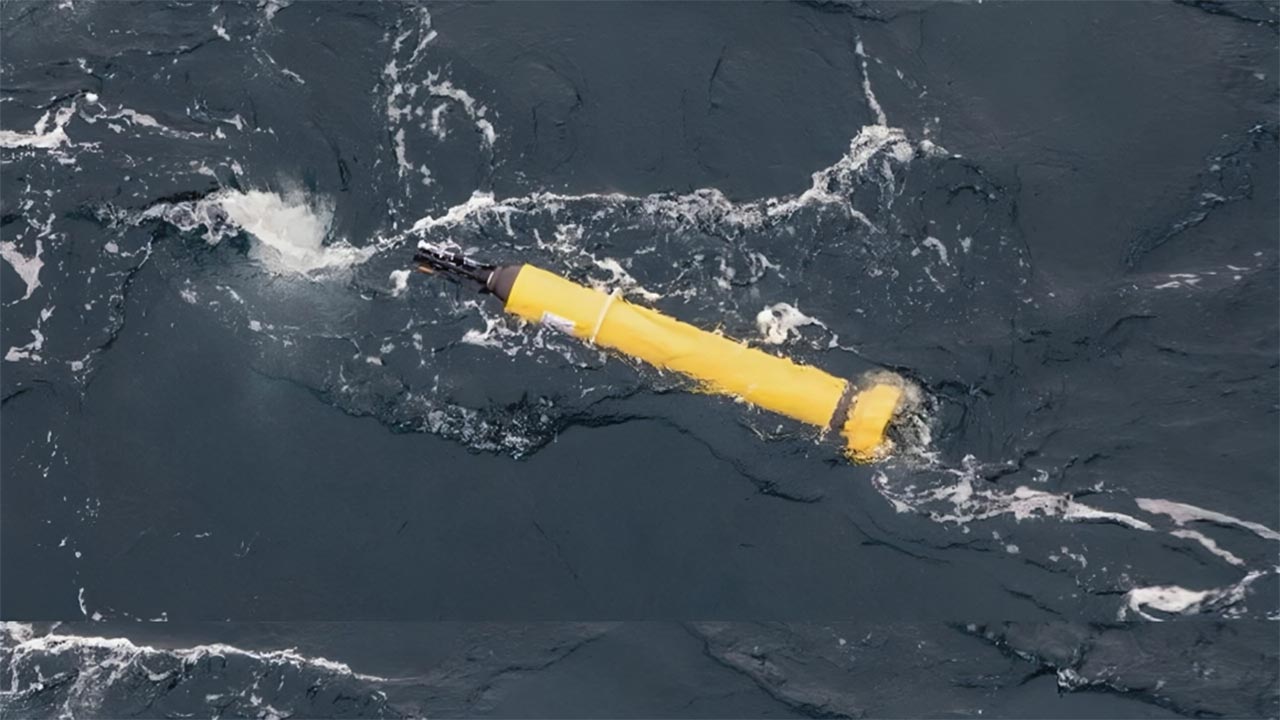
On its final mission, the seven metre-long, bright orange autonomous underwater vehicle known as Ran slipped under the floating edge of the Thwaites Glacier and never returned. Ran was a key part of the International Thwaites Glacier Collaboration, often shortened to Inte, and had already logged missions in Greenland, New Zealand and many other locations before it was sent beneath one of Antarctica’s most feared ice fronts. According to the project team, the AUV’s last assignment was to map the seafloor and ice underside in a region that has been almost completely inaccessible to ships and satellites, a place where the glacier’s future stability is being decided out of sight.
Ran’s route under the ice was preprogrammed, with the vehicle expected to navigate by onboard sensors and then surface at a rendezvous point once its batteries ran low. Instead, contact was lost and the AUV failed to appear, leaving researchers to conclude that the robot was likely trapped or disabled somewhere beneath the glacier after its final mission under Thwaites. The loss of Ran is more than a financial setback, it is a reminder that the very places scientists most need to observe are also the ones most likely to swallow their instruments.
The moment the Antarctic robot vanished
From the outset, the mission that ended with Ran’s disappearance was a calculated risk. The Underwater Droid AUV was sent back for a second visit beneath an Antarctic glacier, with the team relying on a carefully plotted route that the vehicle would follow autonomously. The route is programmed in before launch, and the AUV is expected to complete its survey and then head for a designated surfacing point, a choreography that had worked on earlier expeditions in Antarctica and elsewhere.
This time, the choreography broke. The unmanned underwater vehicle Ran, owned by the Universit that operates it, never reached its planned recovery location, and by the time search efforts ended, the team believed that at this point, Ran’s batteries are dead and the AUV is lost under the ice. The disappearance beneath Antarctica has been described as a perplexing turn of events, with one account calling Ran AUV a high-tech explorer that simply vanished beneath the ice after leaving its support ship near the University of Goththin’s research area. The mystery under the ice has been highlighted in coverage of how Underwater Droid AUV missions can fail and how the unmanned underwater vehicle Ran has gone missing under a glacier in Antarctica, while video explainers have framed it as a high-tech explorer from the University of Goththin that disappeared beneath the ice.
What the “doomsday glacier” robots are actually seeing
The reason Ran was sent under Thwaites in the first place is that this glacier has earned the nickname “doomsday glacier” for its potential to destabilize large parts of West Antarctica. Earlier missions used a pencil-shaped robot to give scientists their first close look at the forces eating away at the Thwaites ice front, sending back footage of a labyrinth of crevasses and channels where warm ocean water was attacking the glacier from below. One researcher, Ted, described watching the robot’s camera feed as “kind of a wild experience,” because it showed an under-ice landscape that looked more like a crumbling city than a solid wall of ice.
Separate work with another underwater robot beneath a vulnerable Antarctic glacier has revealed widespread cracks and stepped features in the floating ice shelf, the kind of damage that can speed up retreat once the ice is weakened. Those first-of-their-kind observations beneath the floating shelf showed that melting is not uniform, with some areas eroding much faster than others, a pattern that makes it harder to predict when large sections might break away. The findings, reported in Feb, used an underwater robot to help explain an Antarctic glacier’s retreat, while another mission showed how a robot named Icefin documented troubling conditions under the Doomsday Glacier, with video evidence of warm water intruding into the ice shelf and accelerating its decline, as highlighted in coverage of a Doomsday Glacier robot.
Strange structures and unsettling seafloor maps
Ran’s story does not begin and end at Thwaites. Before it vanished, the same submarine had already uncovered some of the most visually unsettling features yet seen beneath Antarctic ice. Using sonar, Ran mapped 54 square miles of ice underside beneath the Dotson Ice Shelf, revealing a landscape that looked nothing like the smooth, gently sloping surfaces many models had assumed. Instead, the maps showed Strange shapes under the ice, with ridges, terraces and abrupt steps where meltwater had carved away some areas and left others almost untouched.
Scientists described how Using high-resolution sonar, Ran found that the underside of the Dotson Ice Shelf was pitted and sculpted in ways that suggested complex interactions between ocean currents and the ice base. Rather than a simple, flat ceiling, the ice shelf underside resembled a series of flats and leaves small steps, features that can channel warm water into specific zones and create hotspots of melting. Those anomalous structures, documented when Ran mapped the Dotson Ice Shelf, help explain why some parts of West Antarctica are thinning faster than expected and why small changes in ocean circulation can have outsized effects.
When “lost” robots come back with worse news
Ran’s disappearance is haunting partly because other Antarctic robots that went missing have eventually reappeared, and what they brought back was alarming. In September 2020, researchers deployed an Argo float near Totten Glacier in eastern Antarctica, a region that holds enough ice to raise global sea levels significantly if it were to melt. The robotic float quickly disappeared under the ice and was written off as lost, only to resurface Months later with a trove of data from a part of the ocean that had never been measured before, including temperature and salinity profiles that showed warm water reaching the glacier’s base.
One account described how the Argo float traveled beneath the Totten Glacier and into a hidden cavity, collecting 195 profiles of data that revealed a pathway for warm deep water to reach the ice. The robot traveled beneath the glacier in a free-floating mode, drifting with currents that pulled it away from its planned route, and the measurements it returned suggested that if similar flows continue, sea levels could eventually rise by almost 5 feet. The data the robot discovered could not be transmitted immediately, because it could not surface to reach satellites, so it had to be navigated back toward open water before it could send its logs. Those findings, described in detail in coverage of a Totten Glacier mission and in reports that the same robot collected 195 profiles of data while trapped under the ice, have been cited as some of the most worrying Antarctic ocean measurements yet, and they were only possible because a robot went missing and then came back. A separate analysis of how a missing Antarctic robot reappeared with rare polar climate science noted that in September 2020, researchers deployed an Argo float near Totten Glacier in eastern Antarctica and that the float later delivered measurements from parts of the planet never measured before, as detailed in a Dec report.
The free-drifting Argo that survived the ice
The Argo float that vanished near Totten Glacier is part of a broader push to send small, relatively inexpensive robots into places that ships cannot safely go. In September 2020, researchers deployed an Argo float near Totten Glacier in eastern Antarctica, and instead of following a predictable pattern of diving and surfacing, the float quickly slipped under the ice and into a region where it could not communicate. For months, the only sign that it was still operating came from the eventual data dump, which showed that the float had been adrift beneath the ice shelf, recording conditions in a hidden cavity.
Later reconstructions showed that the float had traveled under the Denman and Shackleton Ice Shelves, spending the next eight months in a part of the ocean that had never been accessed before. One account described how the Argo float disappeared under the ice and survived to send back the first-ever ocean transect beneath an East Antarc ice shelf, documenting temperature, salinity, pH and nitrate levels along its path. Another report on how In September an Argo float near Totten Glacier in Antarctica went missing and later resurfaced emphasized that the robot had delivered data from a region of the planet never measured before, while a separate analysis of how The Argo float disappeared under the ice and survived to send back the first-ever ocean transect beneath an East Antarc ice shelf highlighted its path under the Denman and Shackleton ice shelves. Together, these accounts show how an Underwater robot survived a voyage to a never-accessed region of the planet, and how The Argo float disappeared under the ice and survived to send back the first-ever ocean transect beneath an East Antarc ice shelf, as described in a CSIRO account.
Eight months in a hidden Antarctic cavity
Another robotic float has shown just how long these machines can survive in the dark. A tiny Robot survived months in never-seen Antarctic cavity, drifting under the ice for eight months while continuing to log data. The float was designed to operate autonomously, adjusting its buoyancy to move up and down through the water column while measuring temperature, salinity and other properties, and it did so in a place where no ship could have followed.
During that time, the robot found heat beneath glaciers, documenting how relatively warm water was pooling in the cavity and lapping at the ice base. The mission was overseen by Dr Steve Rintoul from CSIRO, who has described how the float’s survival in such a hostile environment opens the door to more ambitious under-ice campaigns. The story of how a tiny robotic float survived eight months in a never-seen Antarctic cavity and found heat beneath glaciers has been detailed in coverage of a Robot that survived months in a never-seen Antarctic cavity, while another account of how the float at one point journeyed underneath the Denman and Shackleton Ice Shelves, where it spent the next eight months underneath the ice shelf itself, underscores how long these machines can operate out of contact, as described in a However section of the same mission.
Why the footage feels like a warning
Viewed together, the footage and data from these missions have a cumulative effect that is hard to shake. Cameras show robots threading through crevasses under the Doomsday Glacier, sonar maps reveal jagged steps and Strange shapes under the ice at places like Dotson Ice Shelf, and sensor logs from Argo floats document warm water reaching the bases of glaciers like Totten and Denman. The unsettling part is not just the alien look of these under-ice landscapes, it is the realization that they are already being reshaped by heat that was not supposed to reach them so quickly.
Climate projections have long warned that as the planet warms and land-based ice makes its way to the oceans, sea levels will rise, threatening islands and coastal cities. What the missing and returning robots are showing is how that process is unfolding in real time, in hidden cavities and along fracture lines that satellites cannot see. One video explainer framed it starkly, describing how a robot sent to study Antarctica vanished beneath the ice and was written off as lost, only to resurface with data that revealed a hidden danger beneath the ice and became the first to map ocean conditions beneath an ice shelf. That narrative, captured in a piece titled Lost Robot In Antarctica Reveals Hidden Danger Beneath Ice and in a video where Antarctica is the setting for a robot that vanished and later mapped ocean conditions beneath the ice, mirrors the story of Ran: a machine disappears into the dark, and whether it comes back or not, the message from under the ice is that the ground rules for the frozen continent are changing faster than expected.
Building Ran II and the next generation of explorers
Despite the risks, or perhaps because of them, researchers are already planning the next generation of Antarctic robots. Ran II will be delivered in just over a year, in the winter of 2026/2027, as a successor to the lost AUV. The deal is done for the new submarine, which is intended to take over where Ran left off, with improved navigation, redundancy and communication systems designed to reduce the chances of another disappearance under the ice.
The team behind Ran II has been explicit that the new vehicle is meant to return to the same kind of environments that claimed its predecessor, including future expeditions with Ran in Antarctica that will target glaciers like Thwaites and ice shelves like Dotson. Credit for the project has been given to planners and engineers such as Filip Stedt, who have argued that the only way to reduce uncertainty about future sea level rise is to keep sending machines into these dangerous places. The announcement that Ran II will be delivered in the winter of 2026/2027, with Credit noted to Filip Stedt and plans for another expedition with Ran in Antarctica, signals that even the loss of a flagship AUV is not enough to deter scientists from probing the underside of the ice.
The stakes above the ice line
All of this under-ice exploration can feel remote, but the stakes reach far beyond the Southern Ocean. As the planet warms and land-based ice makes its way to the oceans, sea levels will rise, threatening islands and coastal cities that are already grappling with more frequent flooding. The data from robots under Totten Glacier, Denman and Shackleton Ice Shelves, Thwaites and Dotson Ice Shelf feed directly into models that estimate how quickly that rise might happen and how high it might go. When one mission suggests that continued warm water intrusion could eventually raise sea levels by almost 5 feet, it is not an abstract number, it is a projection with direct consequences for places from Miami to Mumbai.
That is why the disappearance of Ran under the ice feels so unsettling. It is not just the loss of a machine, it is a gap in our understanding at a time when every new measurement can shift the timeline for coastal adaptation. The story of Ran sits alongside accounts of missing Antarctic robots that reappeared with rare polar climate science, of tiny floats that survived eight months in never-seen Antarctic cavities, and of underwater robots that helped explain Antarctic glacier retreat, all pointing to the same conclusion: the most important changes on the planet are happening in places we can barely reach, and the robots we send there are our only eyes. As the Feb video on the mystery under the ice put it, a high-tech explorer like Ran AUV can vanish beneath Antarctica’s doomsday glacier, but the questions it was sent to answer are not going away.
More from MorningOverview