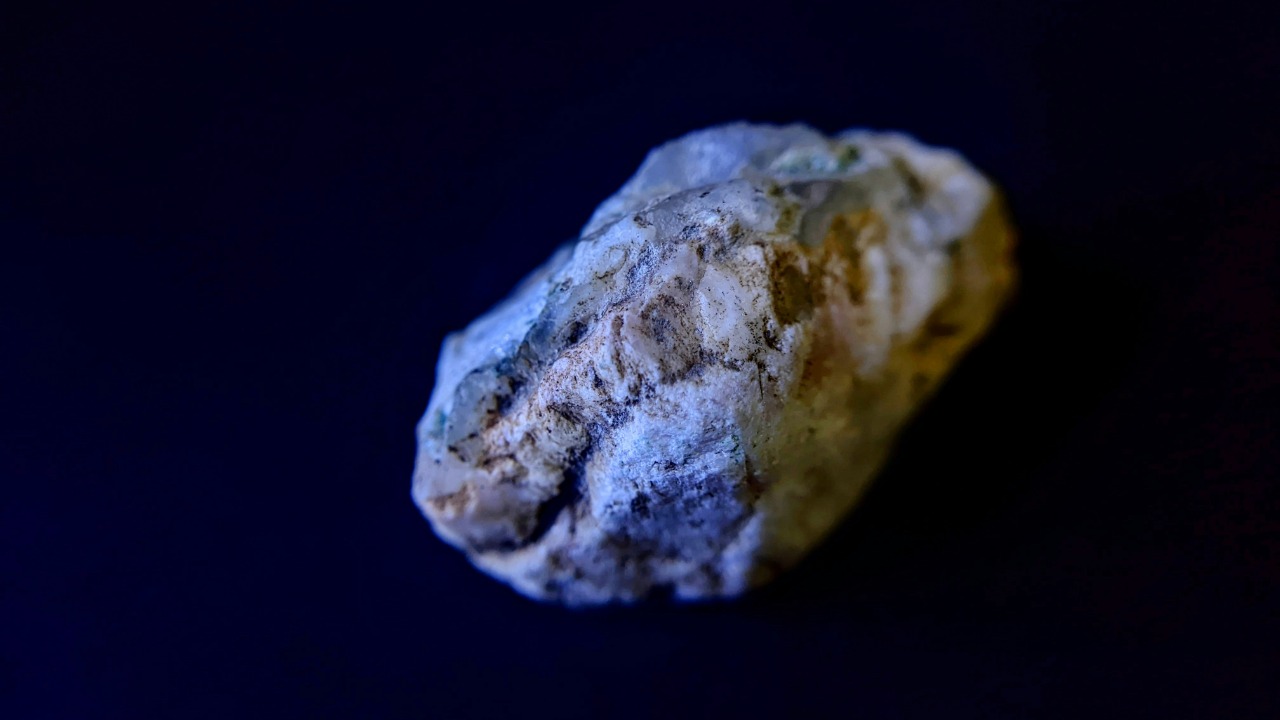

Far from being solid bullets of rock, many asteroids are fragile clusters of debris that spin so quickly they flirt with self-destruction. When their rotation rate climbs past a critical threshold, gravity and weak internal forces can no longer hold them together, and the body begins to shed dust, boulders, or even split into multiple pieces. Astronomers are now catching these breakups in the act, turning a once abstract idea into a vivid, slow-motion disaster playing out in deep space.
That spectacle is more than a cosmic curiosity. The same physics that lets an asteroid spin itself apart also shapes how moons form, how planetary defense strategies must be designed, and how sunlight alone can gradually tear a small world to pieces. I want to unpack how an asteroid reaches this breaking point, what happens when it does, and why the images of disintegrating objects are quietly rewriting our understanding of the solar system.
When spin outruns gravity
The starting point is simple: if you spin any solid body fast enough, centrifugal force will eventually overwhelm the pull holding it together. As one detailed analysis puts it, Any solid body that rotates too quickly will begin to lose pieces from its surface once the outward fling of material exceeds gravity and internal cohesion. For asteroids made of loose rubble rather than solid rock, that threshold arrives surprisingly early, because their internal strength is closer to a sand pile than a granite boulder.
Researchers who study these so‑called rubble piles have identified a practical speed limit. A detailed survey of small bodies shows that a rubble pile’s rotational speed is particularly important, because if it spins faster than a period of about 2.2 hours, material at the equator can be flung off the surface beyond its escape velocity. That critical threshold, described in work on a rubble pile’s rotational speed, effectively marks the point where the asteroid begins to tear itself apart. Once that limit is crossed, the breakup can proceed gradually, with dust and small fragments drifting away, or catastrophically, with the body splitting into multiple components.
Rubble piles held together by a whisper
Most small asteroids, in fact, are thought to have been battered so severely by past collisions that they now have a “rubble pile” internal structure. Observations of disintegrating objects show that Most small asteroids are essentially heaps of gravel and boulders barely bound by their own gravity. That makes them incredibly vulnerable to rotational instability, because there is little internal strength to resist the outward pull as the spin rate climbs.
At the same time, these loose aggregates are not completely strengthless. Detailed modeling of asteroid (29075) 1950 DA shows that Cohesive forces between grains, similar to the van der Waals attraction that lets fine powders clump together, can prevent the rotational breakup of rubble‑pile asteroids made of loose aggregates of sand‑ to boulder‑sized components. That whisper of cohesion lets some objects spin faster than gravity alone would allow, delaying but not necessarily preventing the moment when centrifugal force wins.
Asteroids caught in the act of breaking apart
The most dramatic evidence that spin can destroy an asteroid comes from objects we have watched disintegrate in real time. The nucleus of P/2013 R3 (Catalina–PanSTARRS) is the first asteroid discovered while in the process of disintegrating, and detailed analysis shows that Rotational breakup occurs when the centrifugal force exceeds the gravitational and van der Waals cohesive forces holding the asteroid together. Instead of a single impact shattering the body, the asteroid appears to have spun itself apart, with multiple fragments drifting away like a slowly exploding cluster of ice.
Another striking case is asteroid (6478) Gault. High resolution images revealed multiple narrow dust tails, and follow‑up work showed that these dust puffs were caused, ultimately, by Gault’s superfast spin rate, with the object shedding mass as its rotational period approached the critical two‑hour mark. The observations of Gault fit neatly into the broader picture of rotational instability, in which material first fails at the surface while the interior remains structurally intact, a process described in detail for active main‑belt asteroid (6478) Gault where One of the key processes is rotational instability that triggers surface failure.
Sunlight as a cosmic spin‑up engine
What drives an asteroid to such extreme spin rates in the first place is often not a collision but sunlight itself. When an irregularly shaped body absorbs solar radiation and re‑emits it as heat, the slight imbalance in that emission can act as a tiny thruster. Astronomer David Jewitt described the YORP torque effect as a process in which sunlight is absorbed by a body and then re‑emitted as heat, gradually changing its spin. Over long timescales, that subtle push can accelerate a small asteroid until centrifugal forces rival gravity.
Laboratory and theoretical work backs up this picture. Experiments on irregular models showed that the results seemed to show that sunlight reflecting off an asymmetrical object of asteroid size would not only give it a spin but could spin it up to the point of ‘bursting’, shedding mass to slow themselves down. This scenario, detailed in a study aptly titled Spun in the sun, matches what telescopes now see in space. A separate analysis of small bodies notes that Most asteroids, known as “rubble piles”, are collections of rocks loosely held together, and that the YORP effect is particularly effective at objects around 1–100 meters in diameter, precisely the size range where spin‑up to disruption is most likely.
From fast rotators to new moons and planetary defense
Once an asteroid reaches its spin limit, it does not always simply vanish. Sometimes the excess material coalesces into a companion, creating a binary system. Detailed work on spin limits of solar system bodies suggests that small satellites around fast rotators formed from parent bodies spinning at the critical rate, at the gravity spin limit for asteroids, with YORP identified as the dominant source of spin‑up to instability. This scenario, laid out in a study of spin limits of solar system bodies, implies that some moons are essentially the cast‑off debris of a once faster‑spinning parent.
That same fragility complicates how we think about deflecting a hazardous asteroid. Many asteroids are “rubble piles”, i.e., aggregates of small pebble‑sized particles loosely held together by the object’s gravity, which means a forceful impact on one part of the object might leave the rest relatively untouched. Planetary defense specialists studying Many rubble piles have to account for the risk that a deflection attempt could instead trigger surface failure or partial breakup, changing the threat rather than eliminating it. Understanding whether an object is a cohesive monolith or a barely bound aggregate is therefore central to any strategy that aims to nudge it off a collision course.
How fast is too fast?
Pinning down the exact spin rate at which an asteroid fails is not just a theoretical exercise. Hartmann and Larson [ 35 ] have claimed that if the asteroid’s rotation speed is faster than this speed, the inertial force on the surface exceeds the gravitational force, and the asteroid may also disintegrate due to centrifugal force. That conclusion, drawn from a comprehensive comparison of period extraction algorithms, reinforces the empirical 2.2‑hour limit seen in rubble‑pile populations and the roughly two‑hour period inferred for objects like Gault.
Real‑world cases show how this plays out. In one well‑studied breakup, astronomers ruled out collisions and ice sublimation, leaving a possible scenario in which the asteroid disintegrated due to a subtle effect of sunlight, known as the YORP effect, that spun the body up until it began to gently pull apart due to centrifugal force. That narrative, summarized in an overview of the YORP‑driven breakup of an asteroid, dovetails with earlier work that likened the process to grapes on a stem being slowly tugged apart. It is a quiet, relentless mechanism, but over millions of years it can turn a once coherent world into a trail of dust and fragments.
Why fast‑spinning asteroids matter back on Earth
For planetary scientists, these spinning time bombs are laboratories for fundamental physics. Detailed case studies of active asteroids show that there are two leading hypotheses for how such bodies become active, with one key scenario involving rotation rates that exceed the force of their own gravity and trigger mass loss. That framework, explored in depth in work on There fast‑spinning asteroids, helps explain why some objects suddenly sprout comet‑like tails without any ice to sublimate. It also feeds directly into mission planning for spacecraft that might one day visit or even redirect such bodies.
At the same time, the rubble‑pile nature of these objects shapes how we think about risk. Studies of asteroid populations emphasize that Many near‑Earth objects are fragile aggregates, not solid rocks, which means their response to tidal forces, atmospheric entry, or human intervention will be complex. As I see it, every newly observed disintegrating asteroid is not just a spectacle but a data point, tightening the constraints on how fast a small world can spin before it flies apart and reminding us that even seemingly stable celestial bodies are, under the right conditions, only a few extra turns away from coming undone.
More from Morning Overview