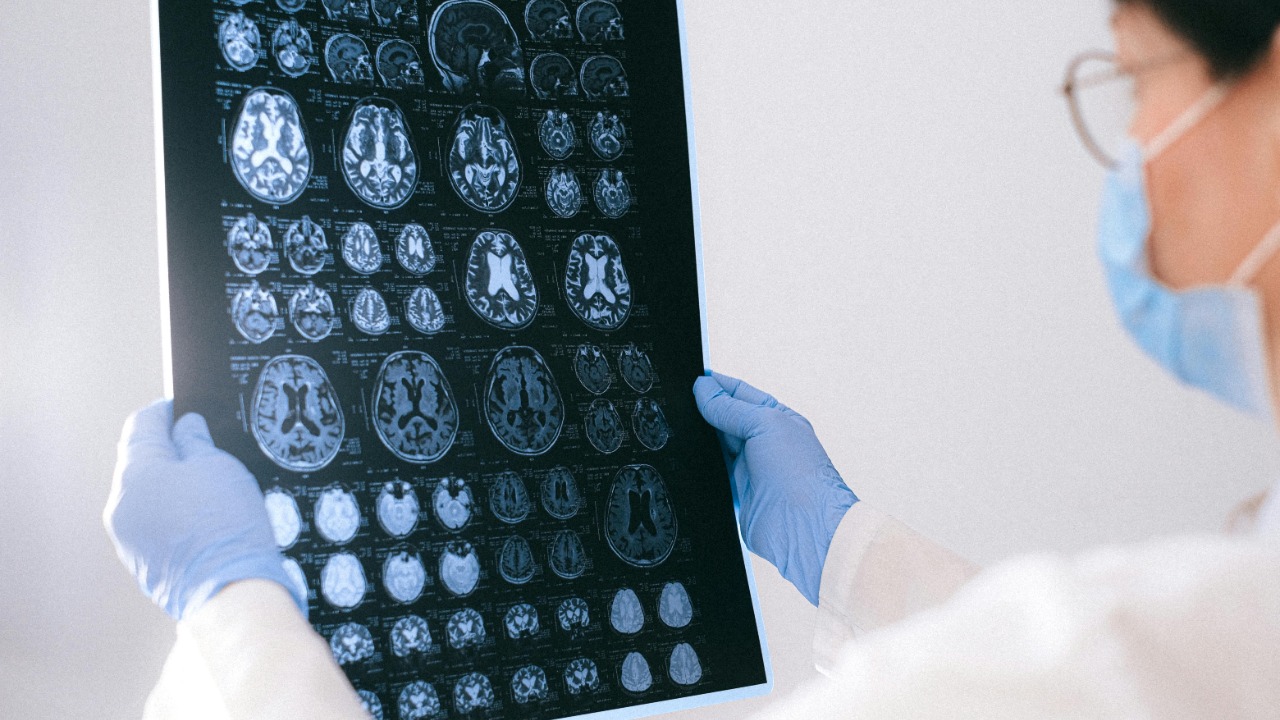

Scientists have spent decades trying to pin down what fatigue really looks like inside the brain, but until now they have mostly been stuck with snapshots instead of a full day’s story. New work using all-day brain tracking at the level of single cells is finally turning that story into a movie, revealing shifting neural networks that rise and fall with our energy and attention. Those patterns are giving researchers the first realistic path to objective fatigue tests that could eventually sit alongside blood pressure cuffs and glucose meters in routine care.
Instead of relying on people to rate how tired they feel, researchers can now watch how specific circuits change as the hours pass, how sleep resets those changes, and how the brain’s own internal clock shapes performance. That shift from self-report to direct measurement is already reshaping how I think about everything from late-night driving to mental health care, because it suggests fatigue is not a vague feeling but a measurable brain state that unfolds predictably across the day.
The leap from snapshots to all-day brain maps
For most of modern neuroscience, fatigue research has been limited by the tools available. Functional MRI and short EEG recordings could show which regions lit up during a task, but they captured only brief windows and averaged the activity of thousands or millions of neurons. The new all-day tracking studies follow individual cells across many hours, revealing how their firing patterns drift as animals move from alert exploration to weary inattention, and how those same cells respond again after sleep. In one set of experiments, researchers built single-cell brain maps that charted these shifts across the day and then watched how sleep appeared to reset the altered networks, a level of detail that earlier methods simply could not reach, as described in all-day brain tracking work.
That continuous view matters because fatigue is not a binary switch but a sliding process that accumulates with time awake and effort spent. By following the same neurons through entire waking periods, the researchers could see networks that support attention and decision making gradually reorganize, then snap back after rest, which is exactly the kind of signature needed for an objective fatigue marker. The fact that these maps are built at single-cell resolution also opens the door to linking specific cell types and circuits to different flavors of tiredness, from physical exhaustion to the mental fog that makes complex reasoning feel impossible.
What the new experiments actually measured
The core of the new approach is deceptively simple: track brain activity continuously while animals go about a full day of normal behavior, instead of only during short, artificial tasks. In the studies summarized in one report, the team recorded from large populations of neurons while the animals cycled through exploration, rest, and sleep, then analyzed how patterns of firing changed as the day wore on. The researchers were not just counting spikes, they were mapping how networks reorganized, which cells tended to fire together, and how those coalitions shifted with time awake, a strategy that the coverage of how brain activity changes throughout the day describes as a powerful new experimental approach.
What the team found is that the brain’s activity landscape is anything but static. Networks that are tightly synchronized early in the day can become noisier and less coordinated as fatigue builds, then reorganize again after sleep. Certain patterns were especially sensitive to time awake, providing a kind of neural clock that tracked how long the animals had been active. Those signatures, which emerged only when the data were collected across full waking periods, are exactly the kind of measurable changes that could be translated into fatigue indices in humans, whether through invasive recordings in clinical settings or noninvasive proxies like high-density EEG.
Daily rhythms and the brain’s internal clock
One of the most striking insights from the new work is how strongly the brain’s internal clock shapes these fatigue-related patterns. Your brain does not move through the day quietly, it responds to both how long you have been awake and where you are in your circadian cycle. Earlier in the waking period, networks that support attention and working memory tend to be more efficient, while later in the day the same circuits show more variability and slower responses, even when the tasks look identical on the surface. Reporting on these experiments emphasizes that daily shifts in brain activity could become a direct way to measure fatigue, precisely because they track both time awake and circadian phase.
That dual influence helps explain why a 3 a.m. shift can feel so different from a long afternoon, even if the total hours awake are similar. The new data suggest that some networks are tuned to the day’s natural ebb and flow, so pushing them to operate at their peak in the middle of the biological night may be fighting against deeply wired rhythms. For policy makers and employers, that is not just an abstract neuroscience point, it is a concrete argument for aligning high-stakes work, from surgery to air traffic control, with times when the brain’s own activity patterns are most supportive of sustained attention and rapid decision making.
Why self-reported tiredness is not enough
For most of us, fatigue is something we feel and then try to describe, often with vague language that does not capture how impaired we actually are. The new research underscores how unreliable that self-assessment can be. In the experiments, neural signatures of fatigue emerged even when behavior looked relatively normal, suggesting that the brain can be operating in a degraded mode before people notice or admit that they are tired. The coverage of these findings notes that we are often poor judges of our own fatigue, which is exactly why objective measures based on daily shifts in brain activity are so appealing.
In practical terms, that gap between feeling and function can be dangerous. A driver who insists they are fine to continue a long overnight haul may already show the neural hallmarks of slowed processing and reduced vigilance. A surgeon who feels only “a bit tired” after a string of cases might still be operating with networks that are less coordinated than they were earlier in the day. By tying fatigue to measurable brain states instead of subjective reports, the new work points toward tools that could flag risk even when people underestimate their own impairment.
Hemispheres, handoffs, and how the tired brain copes
Another layer of this story comes from research on how the brain’s two hemispheres share work. It turns out that the brain accomplishes the handoff from one hemisphere to the other much like two colleagues passing a project across a desk, with overlapping periods where both are engaged before one steps back. In studies led by Earl Miller and colleagues, the team showed that this division of labor is not rigid, the hemispheres can flexibly coordinate and reassign tasks depending on demands, a process detailed in work on how and why the brain’s division across hemispheres supports cognition.
When I put that hemispheric choreography next to the new all-day tracking data, a picture emerges of a brain that is constantly juggling tasks between networks to maintain performance as fatigue builds. Early in the day, handoffs between hemispheres and between frontal and sensory regions may be crisp and efficient, but as time awake increases, those transitions could become slower or less coordinated. That would help explain why complex tasks that require rapid integration of information, like interpreting subtle facial expressions or navigating heavy traffic, feel especially fragile when we are tired, even if simpler reflexes remain intact.
From lab recordings to real-world fatigue tests
The obvious question is how to move from invasive recordings in animals to practical tools for people. The researchers behind the all-day tracking work argue that the patterns they see at the single-cell level can guide the search for noninvasive markers in humans, for example by identifying frequency bands or network connectivity signatures that mirror the cellular changes. High-density EEG caps, wearable headbands, and even advanced eye-tracking systems could be tuned to pick up those signatures, turning the lab’s continuous monitoring into something closer to a real-world fatigue meter that could run quietly in the background.
In safety-critical fields, that kind of objective test could be transformative. Imagine a long-haul truck driver whose cab includes a dashboard indicator that draws on brain-based metrics to warn when their neural networks are slipping into a risky state, or an airline scheduling system that uses each pilot’s recent activity patterns to assign flights when their brain is most likely to support peak performance. The reporting on what the team found makes clear that the goal is not to monitor people for its own sake, but to build tools that can prevent accidents and errors by catching fatigue before it becomes visible.
Implications for mental health and chronic conditions
Fatigue is not only about long shifts and late nights, it is also a core symptom in depression, anxiety disorders, and chronic illnesses like long COVID and myalgic encephalomyelitis / chronic fatigue syndrome. The new all-day tracking work suggests that these conditions might involve disruptions in the normal daily choreography of brain networks, where circuits that should reset during sleep remain stuck in a fatigued configuration, or where the internal clock is out of sync with the external day. Coverage of new single-cell brain maps emphasizes how sleep appears to restore network function, which raises the possibility that when that restoration fails, chronic fatigue may follow.
If that hypothesis holds up, it could reshape how clinicians assess and treat these conditions. Instead of relying solely on questionnaires about energy levels, psychiatrists and neurologists might use brain-based measures to distinguish between different fatigue profiles, for example separating patients whose networks never fully reset during sleep from those whose circuits degrade unusually quickly during the day. That kind of precision could guide more targeted interventions, from tailored sleep therapies to medications that stabilize specific networks, and it could also give patients something they have long lacked, an objective marker that validates their experience and tracks their progress over time.
Everyday choices in a world where fatigue is measurable
Even outside clinics and control rooms, the idea that fatigue has a clear neural signature has implications for daily life. If phone-based tools eventually emerge that can infer brain-state changes from patterns of behavior, such as reaction times in simple games or subtle shifts in speech, people might get personalized feedback about when their cognitive performance is slipping. That could nudge someone to delay a difficult conversation, reschedule a high-stakes exam, or avoid driving after a long day, not because they feel dramatically tired but because their brain’s patterns match those that the all-day tracking studies associate with reduced vigilance.
There is a risk, of course, that constant monitoring could become intrusive or anxiety provoking, turning every dip in performance into a cause for alarm. The challenge will be to design systems that respect privacy and autonomy while still leveraging the insights from daily brain activity shifts to keep people safer and healthier. Used well, these tools could help individuals align their most demanding tasks with their brain’s natural peaks, turning the science of fatigue from a warning label into a guide for smarter living.
More from MorningOverview