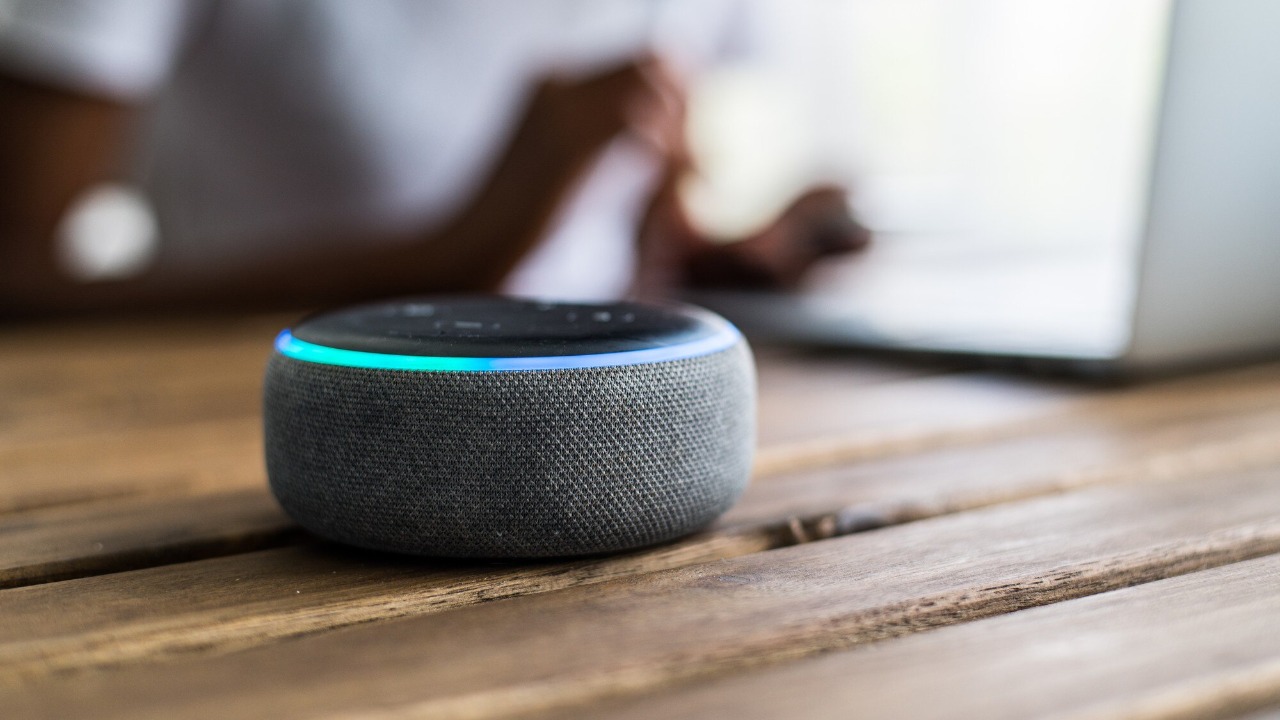

Amazon is turning Alexa.com into the front door for its next generation of AI, shifting the assistant from a voice gadget in the corner of the room to a full‑fledged productivity hub in the browser. Instead of needing an Echo speaker or Fire tablet, people can now type or talk to Alexa+ on the web, manage files and tasks, and connect the assistant to a growing ecosystem of services. That move signals a deeper bet that AI helpers will live wherever users already are, not just inside dedicated hardware.
Alexa.com becomes the new front door for Alexa+
Alexa.com is no longer just a retired traffic‑ranking domain, it is the new home for Amazon’s AI assistant in the browser. Amazon describes the site as a completely new way to interact with Alexa+, with the same core assistant now reachable through voice, mobile, and web so people can move between devices without losing context. The company pitches this as a shift from quick queries to completed tasks, positioning Alexa.com as the place where users can ask for help drafting documents, organizing information, or coordinating their day, all powered by the upgraded assistant that Amazon introduced as Introducing Alexa.
By putting Alexa+ in the browser, Amazon is also lowering the barrier to entry for people who never bought an Echo or who prefer typing to talking. Instead of treating Alexa as a feature of smart speakers, the company is reframing it as a cloud service that happens to show up on Echo devices, Fire tablets, and now any laptop or phone with a modern browser. That shift is central to Amazon’s pitch that Alexa is evolving from a voice interface into a general AI assistant that can live alongside email, calendars, and collaboration tools in the same browser tabs people already use for work and home.
From generative upgrade to web-native assistant
The web launch builds on a broader overhaul of the assistant that Amazon unveiled earlier, when it announced Alexa+ at its Devices and Services Event as a generative AI upgrade to the original Alexa. At that event in Feb, the company framed the new system as a more conversational, capable assistant that could reason across different inputs and handle complex requests, not just timers and trivia. Amazon said the new Alexa+ would be powered by generative AI, more context aware, and available as a core benefit that is capable and free with Prime, a positioning that underscored how central the assistant has become to the company’s ecosystem of Devices and Services Event products.
That generative foundation is what makes a browser‑based hub plausible. Instead of routing every interaction through fixed voice commands, Alexa+ can now interpret free‑form text, follow up with clarifying questions, and remember context across a session, which fits naturally into a chat‑style web interface. The same underlying model that powers richer conversations on the latest Echo speakers is now exposed at Alexa.com, so the assistant can help draft emails, summarize documents, or plan trips in a way that feels closer to a modern chatbot than a traditional smart speaker. In practice, the web experience turns the generative upgrade from a behind‑the‑scenes improvement into something users can see and manipulate directly on screen.
CES spotlight and the end of hardware lock‑in
Amazon used CES to make clear that Alexa+ is no longer tied to dedicated hardware, announcing that the new AI‑powered version of Alexa can now be used from the web without requiring an Echo or other device. During CES, the company emphasized that Alexa+, the souped‑up assistant, is accessible in a browser so people can get help with the same kinds of tasks they might ask a human assistant to do, from organizing schedules to handling online errands. That message, delivered in Jan, signaled that Amazon wants Alexa to compete directly with browser‑first AI tools, not just with other smart speakers, and that the company sees the web as a primary surface for Amazon Alexa.
Removing the hardware requirement also changes the economics of the assistant. Instead of relying on Echo sales to seed usage, Amazon can now invite anyone with an Amazon account to try Alexa+ in the browser, then later upsell them on devices that deepen the experience. That reverses the original funnel, where people bought a speaker first and discovered the assistant second. It also puts Alexa+ in the same arena as other AI chatbots that live entirely online, which is why the company is leaning on CES to showcase Alexa.com as a flagship experience rather than a side feature for existing customers.
Early Access, sign‑ins, and how Alexa.com actually works
For now, Alexa.com is not a free‑for‑all. Amazon is rolling out the web experience to a defined group of Alexa+ Early Access users, who can sign in with their existing Amazon credentials to reach the assistant in the browser. The company’s own Alexa portal explains that customers in the United States who own or purchase eligible devices can join Alexa+ Early Access, and that the assistant will be available across Echo speakers, Fire tablets, and the Alexa app, with the web experience layered on top for those who qualify. That means the first wave of users hitting Alexa.com are already familiar with the assistant and are now being invited to extend it into their browsers through the same Alexa Early Access program.
Reporting on the rollout notes that Alexa.com will initially be limited to these Early Access customers, who must sign in with their Amazon account before they can start chatting with the assistant. The same coverage points out that this staged approach lets Amazon test how people actually use the web interface, from file uploads to smart home controls, before opening the doors more widely. One report describes how the site is being positioned as a central place where Alexa can be configured and managed, not just a chat window, reinforcing the idea that Alexa.com is meant to become the control room for the assistant as it spreads across devices and services linked to an Amazo account.
A single pane of glass for devices, files, and smart homes
The move to a web hub is also about unifying a fragmented experience that has grown around Alexa over the years. Earlier reporting on Amazon’s plans for a new Alexa website described how the company wanted a single place where people could see and control their smart home devices, manage files they share with the assistant, and interact with AI features that go beyond simple voice commands. That reporting highlighted how the new site would tie together Amazon’s consumer AI vision, bringing together the assistant’s ability to handle documents, media, and connected gadgets in one interface that actually feels useful for everyday tasks. In that framing, Alexa.com is less a novelty and more the missing piece that lets Alexa sit alongside other tools people use to manage files and smart home devices.
More recent coverage of the web rollout reinforces that idea, describing how Amazon has been relying on tools that let users forward and upload files to Alexa+ so its AI can work with them. In that setup, Alexa.com becomes the natural place to see which documents have been shared, what tasks the assistant is working on, and how it is connected to different services and devices. One report notes that the revamped Alexa app is being updated in parallel so that the same controls and AI features are accessible on phones and tablets, but the browser remains the most flexible canvas for managing complex workflows that involve multiple files, services, and smart home routines, all orchestrated by Image Credits Amazon.
Third‑party services turn Alexa into a real productivity hub
Alexa+ is not just about Amazon’s own ecosystem, it is increasingly wired into third‑party services that make the assistant more useful as a daily tool. Reporting on the assistant’s integrations notes that Amazon’s AI assistant Alexa+ now works with Angi, Expedia, Square, and Yelp, letting users tap into home services, travel bookings, payments, and local business information through a single conversational interface. Those connections mean someone could ask Alexa to find a contractor on Angi, check flight options on Expedia, review transactions through Square, or pull up restaurant details from Yelp, all without leaving the assistant. That kind of cross‑service orchestration is what turns Alexa.com from a chat box into a genuine productivity hub that can reach into different corners of a person’s digital life through Alexa integrations.
On the web, those integrations can be even more powerful because Alexa+ can display structured results, links, and forms directly in the browser. Instead of reading out a list of restaurants or flights, the assistant can show options on screen, let users click through to details, and then continue the conversation in context. Combined with file uploads and smart home controls, this makes Alexa.com feel closer to a dashboard for personal logistics than a simple AI chatbot. It also gives Amazon a way to showcase partners like Angi and Expedia in a richer environment, which could become a selling point for more services to plug into Alexa+ as the assistant’s web presence grows.
Pricing, Prime, and the promise of a ‘best friend’ assistant
Behind the new web interface sits a business model that is still taking shape. Coverage of Amazon’s revamped assistant explains that the company’s new AI‑powered Alexa is being marketed as a kind of “best friend in a digital world,” with a monthly fee for some users and different terms for Prime members. One report notes that the generative AI version of Alexa is expected to be included as a benefit for Prime subscribers, while other users may pay a monthly amount to access the full capabilities of the assistant. That framing, described in Feb, positions Alexa+ as a premium service layered on top of the existing Alexa, with the web experience at Alexa.com serving as a key part of the value proposition for people who pay for Amazon Alexa.
At the same time, Amazon has been careful to reassure existing customers that they are not being forced into the new model. A company FAQ makes clear that users who simply prefer using the original Alexa can continue doing so, even as Alexa+ rolls out with new features and potential fees. That dual‑track approach lets Amazon experiment with generative AI and subscription pricing without alienating people who bought Echo devices for basic voice control. It also means Alexa.com is likely to be most attractive to those who opt into Alexa+, since the web hub is designed around the richer capabilities of the generative assistant rather than the more limited feature set of the legacy version described in the Alexa FAQ.
Early Access limits and what Alexa.com can actually do today
For people already in Alexa Plus Early Access, Alexa.com is starting to show what a browser‑based assistant can handle. Reporting on the launch explains that Amazon’s Alexa Plus Early Access customers can now use the service at Alexa.com, where they can chat with the assistant, manage tasks, and connect it to other parts of their digital lives. The same coverage notes that if someone has been using Alexa Plu features on devices, they can now continue those interactions on the web, with the assistant syncing context across platforms. That continuity is central to Amazon’s pitch that Alexa.com is not a separate product but an extension of the same Alexa Plus Early Access experience.
At this stage, the site is still framed as an Early Access offering, which means features and performance may change as Amazon gathers feedback. The company is using this period to refine how Alexa+ handles complex tasks in the browser, from multi‑step planning to document analysis, and to see how people balance typing and talking when both options are available. For users, that means Alexa.com is already a capable AI assistant hub if they are in the program, but it is also a preview of a broader rollout that could eventually make the web interface the default way many people interact with Alexa+, especially in work and school settings where laptops and desktops are more common than smart speakers.
Competing with ChatGPT and Gemini in the browser
By bringing Alexa+ to the web, Amazon is stepping directly into a competitive field dominated by other AI assistants that already live in the browser. Reporting on the launch notes that Alexa+ is being positioned against rivals like Google’s Gemini and OpenAI’s ChatGPT, both of which are well established with proven capabilities as text‑based AI tools. The same coverage points out that it remains to be seen how well Alexa+ will perform in that environment, given that those competitors have had a head start in refining their models and user interfaces for browser‑centric use. Amazon is effectively betting that the combination of its generative AI, its device ecosystem, and the new Alexa.com hub will be enough to carve out space alongside Google Gemini and ChatGPT.
In that context, Alexa.com is both a catch‑up move and a differentiator. On one hand, Amazon is finally offering the kind of web‑based AI chat experience that users have come to expect from other platforms. On the other, the company can lean on its unique strengths, such as deep integration with smart home devices, retail services, and partners like Angi and Expedia, to offer something those rivals cannot easily replicate. If Amazon can turn Alexa.com into a true command center for both online and offline tasks, the assistant may stand out not just as another chatbot, but as a bridge between the browser and the physical world that other AI tools struggle to match.
More from Morning Overview