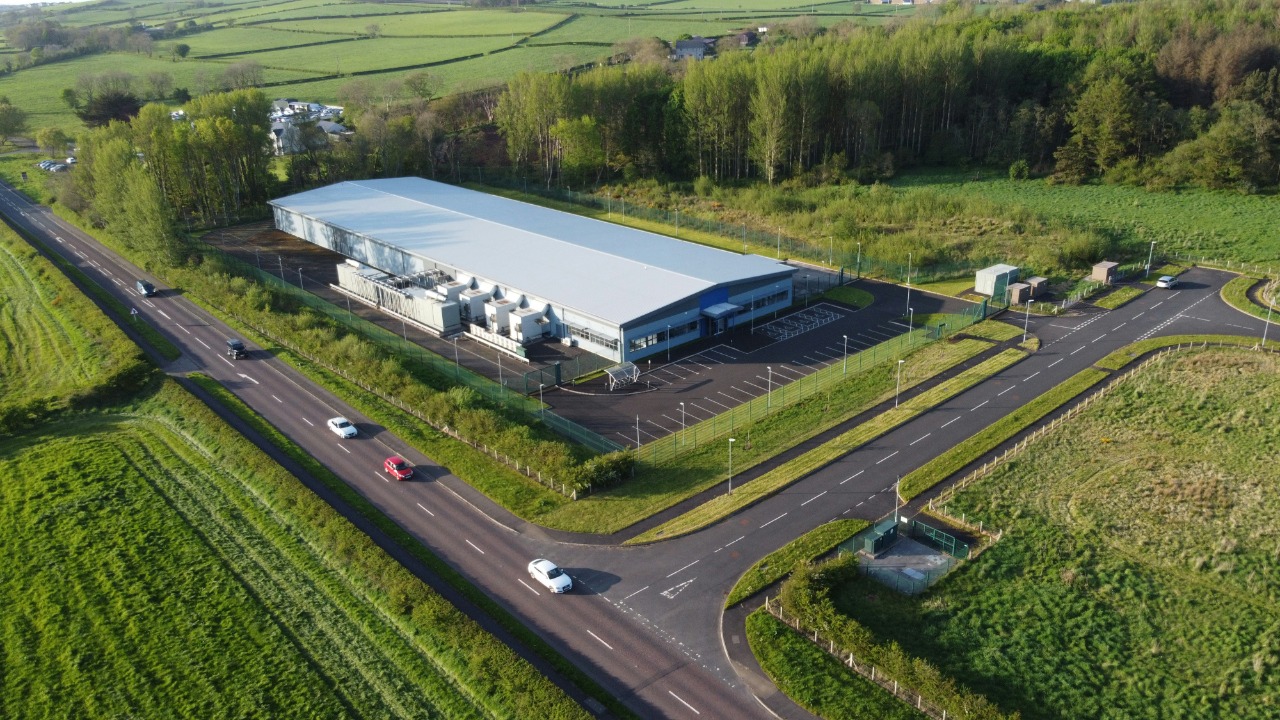

Artificial intelligence is supposed to be the clean, digital brain of the modern economy. Instead, the race to build ever larger AI data centers is colliding with the physical limits of power grids, and operators are increasingly turning to jet fuel and diesel to keep the lights on. The result is a quiet but dramatic shift in how critical computing infrastructure is powered, with mobile turbines and standby generators filling gaps that utilities cannot close fast enough.
I see a new kind of energy system emerging around AI, one that sits awkwardly between the long timelines of grid upgrades and the instant gratification of cloud services. As grids struggle to keep up, AI data centers are effectively building their own fossil-fueled microgrids at the fence line, reshaping local pollution, national power planning, and the climate math of the digital economy.
The AI boom is outrunning the grid
The surge in AI workloads is transforming data centers from background infrastructure into headline energy users, and the existing grid was never designed for this pace of growth. Massive clusters of GPUs and high-density servers draw power at a scale that rivals industrial plants, and they need that electricity with near-perfect reliability, not after a decade of permitting and transmission buildout. As AI adoption accelerates, the mismatch between how fast companies can deploy new compute and how slowly utilities can expand capacity is becoming the central constraint on the sector.
In the United States, utilities often must make expensive upgrades to power grids so they can handle increased energy demands from new data centers, and those costs can flow through to households, including an estimated $16 a month in Ohio. That kind of capital-intensive work takes years, not quarters, which is why AI operators are increasingly unwilling to wait for traditional interconnection queues. Instead, they are layering on-site generation on top of whatever grid capacity they can secure, effectively treating the public network as one input among several rather than the sole source of power.
Why data centers are rolling in jet engines
To bridge the gap between AI demand and grid supply, operators are turning to technologies that look more at home on an airfield than in a server farm. Trailer-mounted turbines derived from aviation engines can be dropped into a parking lot, hooked up to fuel, and spun up to deliver tens or hundreds of megawatts in a matter of weeks. For companies racing to bring new AI capacity online, that speed is often worth the higher operating cost and emissions compared with waiting for a substation upgrade.
One supplier describes how Data Centers Turn to Jet Engine Generators Amid Soaring AI Power Demands, using compact and rapidly deployable units that can be moved as projects evolve. These jet engine generators are effectively mobile peaker plants, but instead of serving a regional grid, they sit behind the fence to feed racks of AI chips. The appeal is straightforward: they can be financed and controlled by the data center operator, they bypass congested interconnection queues, and they can be scaled up or down as AI workloads shift.
Supersonic jet engines as a new power class
The aviation lineage of these turbines is not just a marketing hook, it is central to how they fit into the AI energy puzzle. Companies are adapting supersonic-capable engine cores, originally designed for high-thrust flight, into stationary generators that can deliver dense, flexible power in a small footprint. In effect, the same engineering that once promised faster-than-sound travel is being repurposed to keep AI clusters humming.
One developer argues that This Company Thinks It Can Power AI Data Centers With Supersonic Jet Engines, using the same tech that could bring back supersonic air travel to deliver reliable power even in hot environments where traditional gas turbines struggle. In a separate presentation, a proponent notes that in the future when you use AI the result may be powered by a supersonic jet engine, explicitly linking the glamour of high-speed flight to the gritty reality of data center power. I see this as a telling symbol of the AI era: cutting-edge digital services leaning on repurposed fossil-fuel hardware to overcome infrastructure bottlenecks.
Diesel generators move from backup to frontline
Alongside jet turbines, diesel generators are shifting from their traditional role as emergency backup to something closer to everyday infrastructure for AI. Historically, big server farms installed rows of diesel units to ride through outages, testing them periodically but rarely running them for extended periods. Now, as AI loads push facilities toward the edge of their grid allocations, operators are increasingly dispatching those generators to cover peak demand or to support new capacity before permanent grid connections are ready.
Industry suppliers report that standby generators provide data centers with reliable backup power and new options for sustainability, as operators work to improve their environmental performance while still keeping the digital world connected and communicating. Yet even as vendors tout advanced controls and cleaner-burning designs, the basic reality remains that these machines run on diesel, a fuel with high local pollution and carbon intensity. When AI workloads turn what used to be rare emergency use into routine operation, the environmental and public health stakes change dramatically.
Developers are bypassing slow grid hookups
The deeper driver behind this fossil-fueled buildout is the friction of connecting new AI campuses to the grid at the scale and speed developers want. Interconnection queues are long, transmission projects face local opposition, and substation upgrades can take years to complete. Faced with that timeline, data center builders are increasingly designing projects around self-contained power solutions that can be deployed in parallel with construction rather than waiting for utility schedules.
Reports describe how Data centers turn to jet engines and diesel generators as AI power needs surge, with Companies building data centers able to get power fast without needing immediate grid access. Another account notes that ProEnergy has delivered over 1,000 megawatts of such generation, underscoring how quickly this parallel infrastructure is scaling. In practice, this means AI campuses can break ground with only a modest grid connection, then layer on jet engines and diesel to reach full capacity, treating the eventual utility upgrade as a bonus rather than a prerequisite.
Public health and “digital smog”
Running jet turbines and diesel engines next to neighborhoods is not just a climate problem, it is a public health issue. These generators emit nitrogen oxides, particulate matter, and other pollutants that contribute to respiratory and cardiovascular disease, especially when operated frequently or in clusters. As AI data centers proliferate, the cumulative effect of these emissions risks creating what some researchers describe as a new form of digital-era air pollution.
One analysis warns that AI data centers pose public health risks by releasing ambient air pollutants, described as “digital smog,” both directly from on-site generators and indirectly from off-site power plants that are highly polluting. The authors draw on a poll and other research methods to highlight how communities near these facilities often have limited visibility into how often backup generators run or what fuels are used. I see a growing tension here: AI is marketed as an invisible, weightless service, yet its physical footprint is increasingly concentrated in specific zip codes that bear the brunt of its emissions.
Diesel’s regulatory advantage over cleaner options
Given the climate and health downsides, it might seem obvious that data centers would leap to cleaner alternatives like battery storage, hydrogen, or fully renewable microgrids. In practice, diesel retains a powerful advantage because of how reliability standards and permitting rules are written. Many jurisdictions have long-standing frameworks that assume diesel generators are the default for critical backup, with streamlined approvals and clear compliance pathways, while newer technologies face more uncertainty and red tape.
One assessment of AI’s energy footprint notes that AI’s demand for data centers relies on diesel generators because outdated permitting and reliability rules make cleaner alternatives harder to deploy, effectively making diesel the path of Least Resistance for Powering AI. That regulatory inertia helps explain why, even as some operators experiment with lower-carbon fuels or hybrid systems, the default build for new AI campuses still includes long rows of conventional diesel units. Until reliability standards explicitly recognize and reward cleaner options, I expect diesel to remain deeply embedded in the AI power stack.
How AI is reshaping long-term power planning
While jet engines and diesel generators grab attention, the bigger story is how AI is forcing utilities and policymakers to rethink long-term power demand. AI data centers do not just add a bit of load at the margin, they introduce large, lumpy blocks of demand that can reshape regional planning assumptions. That is pushing grid operators to revisit everything from generation mix to transmission corridors, with AI as a central scenario rather than a niche use case.
One detailed outlook on the current AI data center market outlook and its implications on U.S. power demand argues that the rapid rise of AI is reshaping electricity consumption patterns and greenhouse gas emissions. Executives are being pulled into high-level discussions about how to balance new baseload-like AI demand with decarbonization targets and grid reliability. In my view, the spread of on-site jet and diesel generation is both a symptom and a warning sign: it shows what happens when planning lags behind digital growth, and it hints at the stranded assets that could result if cleaner grid-scale solutions eventually catch up.
Flexible turbines and the new “AI peaker plant”
One reason jet-engine-based turbines are so attractive to AI operators is their flexibility. Unlike traditional large gas plants that prefer steady operation, these units can ramp up and down quickly to follow the erratic profile of AI workloads, which spike during training runs and then settle into lower-intensity inference. That makes them a kind of bespoke peaker plant for the AI era, tuned not to the needs of a regional grid but to the rhythms of a single hyperscale campus.
Observers note that Data centre builders are turning to jet-engine-based turbines and diesel generators to get power fast when grid hookups are delayed, with the added benefit that these turbines are capable of ramping to follow load changes. Another analysis describes how Data Centers Pivot to Jet Engines and Generators to Fuel AI Boom Amid Grid Delays, as operators under pressure to deliver services use these assets to train algorithms and process data without waiting for new transmission lines. I see this as the early stage of a broader shift in which large digital platforms start to behave like independent power producers, optimizing their own fleets of flexible generators around AI demand curves.
Could AI eventually help fix the problem it is creating?
There is a paradox at the heart of this story: the same AI systems that are driving up electricity demand could, in theory, help manage and decarbonize the grid. Advanced forecasting, real-time optimization, and automated control could make it easier to integrate renewables, reduce waste, and smooth out peaks that currently require fossil-fueled backup. The question is whether those benefits will arrive fast enough, and be deployed at sufficient scale, to offset the immediate surge in energy use from AI data centers themselves.
Analysts point out that AI is changing the grid, as Massive data centers are pushing energy demand higher, while Some applications could help utilities operate more efficiently. Could AI help more than it harms depends on choices being made now about siting, fuel mix, and integration with renewables. For the moment, the reality on the ground is that AI’s growth is being propped up by jet fuel and diesel, even as its advocates promise a smarter, cleaner energy future. Bridging that gap will require not just better algorithms, but faster grid investment and regulatory reforms that make low-carbon options as easy to deploy as a trailer full of turbines.
More from MorningOverview