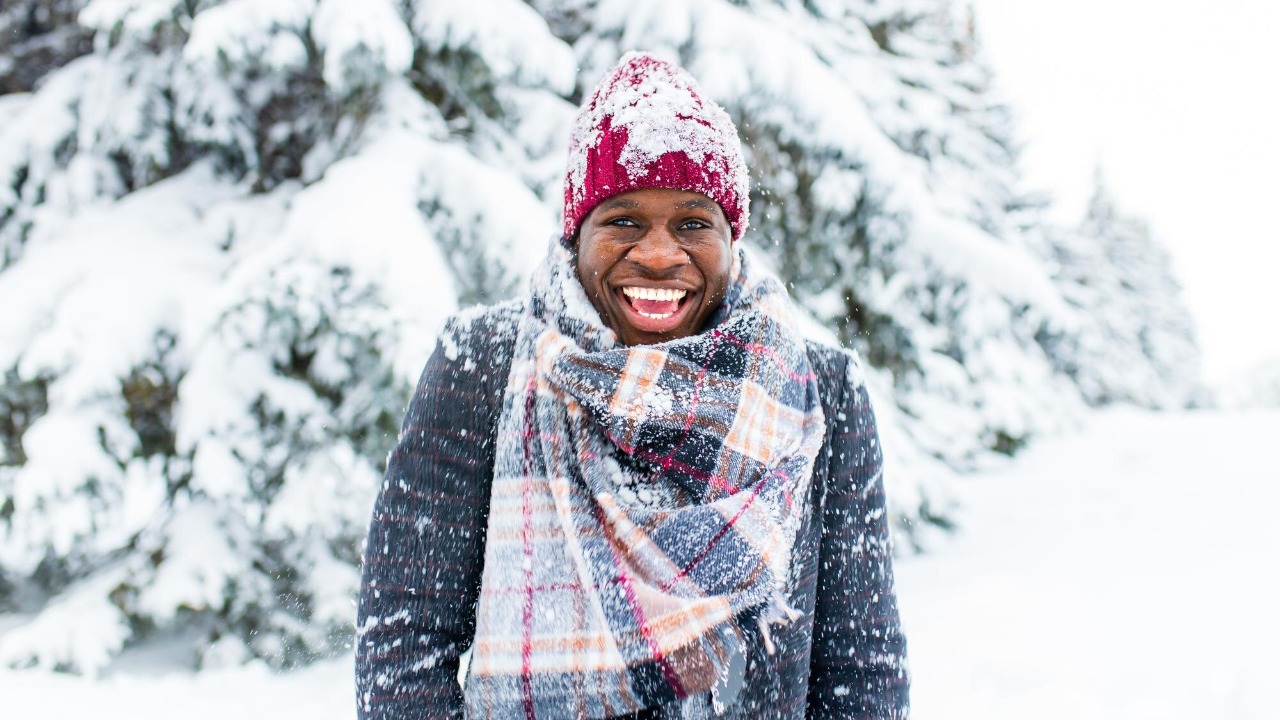

Residents of a North African city woke up to an unfamiliar sound this week, the muffled quiet that follows heavy snowfall. For the first time in roughly a quarter of a century, streets, rooftops, and palm-lined avenues in this African nation were coated in white, turning a place better known for heat and dust into a fleeting winter postcard. The surprise storm has stirred awe, logistical headaches, and a fresh round of questions about how a warming climate can still produce such startling cold snaps.
According to early reports, Residents in a North African city that sits inland and above sea level watched thick flakes fall for hours, marking what local observers describe as the first significant snow in about 25 years. The event has already become a regional talking point, not only because it is rare, but because it arrived at a moment when water, weather extremes, and climate resilience are dominating political and economic debates across the continent.
Snow returns to a North African city after a generation
I start with the basic fact that has captivated people far beyond the country’s borders: an African nation that had not seen meaningful snow in roughly 25 years suddenly found its main northern city blanketed. Residents described the storm as “significant,” with accumulation deep enough to disrupt traffic and close some local roads, a sharp contrast with the dry winters they had grown used to. Reporting on the event notes that the city is inland and at higher elevation, which helps explain why it can occasionally slip below freezing even in a region more commonly associated with desert heat.
The broader national context matters here. The country sits in North Africa and shares climatic traits with neighbors along the Mediterranean rim, where winter cold fronts can collide with moist air from the Atlantic and produce rare but intense snowfalls. In this case, the storm’s impact was magnified by the long gap since the last comparable event, which local accounts put at about a quarter of a century, turning an otherwise modest meteorological episode into a generational memory. The story, credited as a Story by Jowena Riley, highlights how quickly images of snow-dusted streets in a North African setting can travel worldwide.
Morocco’s shifting water story, from drought to downpour
To understand why this snowfall resonates so strongly, I look at how it intersects with a wider weather whiplash in the region. In Morocco, authorities recently declared an official end to a seven year drought after reservoir levels surged, a dramatic turn for a country that had been rationing water and rethinking its entire agricultural model. That announcement, carried by the national agency MAP and detailed by Hespress EN, framed the end of the dry spell as a turning point for how the state manages national water resources. The same atmospheric patterns that refill dams can also deliver cold, moisture laden air to inland plateaus, setting the stage for snow in places that rarely see it.
Snow itself is not foreign to the country’s higher terrain. In the Atlas Mountains, winter snow is a regular feature that sustains ski resorts such as Oukaïmeden, often shortened locally to Ouka. What is unusual is seeing similar scenes in lower lying urban centers that typically experience milder winters. The contrast between snowy peaks that rely on annual accumulation and lowland cities that can go decades without a flake underlines how varied climate patterns are within a single North African state, even as national statistics about rainfall and drought tend to flatten those differences.
From Oujda to Lesotho, Africa’s quiet winter map
One reason the latest storm has surprised so many outside the region is that global perceptions of African weather remain stubbornly narrow. The North African city at the heart of this story sits near the Algerian border, in and around the area of Oujda, where winter nights can be sharply colder than on the coast. Farther south, the continent’s highlands and interior plateaus experience regular snow that rarely makes international headlines. The surprise is less that snow can fall in Africa, and more that it has taken 25 years for this particular city to see a storm of this scale.
In Southern Africa, for example, the mountain kingdom of Lesotho is often described as a “kingdom in the sky” because its entire territory lies at high elevation, and winter snow is part of everyday life. A Facebook post from early winter celebrated what it called the first snowfall of 2025 in the country, noting that “You might think this is Europe or America, but surprisingly, it’s Lesotho,” and punctuating the point with a long “Brrrrrrrr!” that captured the chill as well as the novelty for visitors. That same post, shared in a community group, underlined that You can stand in an African landscape that looks, at first glance, like a European ski village.
Social media, surprise storms, and a changing climate
What has changed in recent years is how quickly these moments travel. When Residents in the North African city stepped outside to see cars and courtyards covered in white, many reached for their phones, turning the storm into a cascade of short clips and photos that ricocheted across platforms. A separate clip from Southern Africa, posted by a creator who declared “bro Africa is a wonderland man i feel like Africa got everything. i was born and raised in Africa. including you watching this vid,” showcased snow in Africa as a kind of gentle shock to viewers who still associate the continent almost exclusively with heat. These viral fragments help reset expectations about what African weather can look like, even if they capture only a few minutes of a much longer climatic story.
At the same time, social feeds are filling with more extreme examples of cold in places that rarely see it. In the Arabian Peninsula, a historic storm recently turned parts of Al Jawf into a winter landscape, with snow blanketing desert mountains and captivating both locals and global audiences. These images sit alongside footage from the North African snowfall and from highland regions like Lesotho, creating a patchwork of cold weather events that challenge simple narratives about which regions are “supposed” to be hot or cold. I see in this collage a public that is slowly becoming more literate about the complexity of regional climates, even as the underlying science warns of rising average temperatures.
When rare snow becomes a risk, not just a spectacle
For all the wonder, the North African snowfall also exposed how unprepared many communities are for weather that falls outside the norm. Local reports from the inland city describe slippery roads, minor collisions, and power interruptions as heavy, wet snow weighed on lines and trees. The country’s infrastructure, built for heat and seasonal rain rather than ice, struggled to cope. That vulnerability is echoed further south, where forecasters in South Africa issued a The Level 5 snow warning across parts of the Eastern Cape, including Senqu, Barkly East, Elundini, Maclear, Matatiele, and Sakhisizwe / Elliot, and even spoke of a Level 9 disruptive weather alert with a high likelihood of major impacts.
Those warnings were paired with a separate alert about Flooding Warning South for SUNDAY 11 JANUARY 2026, highlighting how snow, meltwater, and heavy rain can combine into a cascade of hazards. In that context, the North African snowfall is not just a curiosity, it is a stress test for emergency systems, road maintenance, and housing built without much thought for freezing conditions. I read the generational gap since the last major snow not only as a meteorological statistic, but as a warning that infrastructure and planning may have drifted away from the full range of what the climate can still deliver.
Memory, money, and what comes after the melt
There is also a quieter economic and social dimension to a storm like this. For older Residents who remember the last major snow roughly 25 years ago, the return of white streets is a reminder of how much the city has changed, from its population to its skyline. For younger people, it is a first encounter with a kind of weather they have only seen in films or in clips from Europe and America. The MSN report that flagged the event alongside a financial advice segment titled “Should You Leave Assets to Your Children in a Trust or as a Gift?” underlines how quickly such stories are folded into broader conversations about planning for the future, whether that is family wealth or climate resilience. The juxtaposition of snow and estate planning in a single scroll, with phrases like Should You Leave, Your Children, Trust, and Gift, is a reminder that weather shocks are now part of the background noise of everyday decision making.
As the snow melts, the city returns to its usual palette of browns and greens, but the images will linger. I find it telling that so many of the most widely shared clips of African snow, from the North African city to the highlands of Lesotho, carry a tone of delighted disbelief. They challenge the mental map that still paints Africa as a monolith of heat, and they hint at a future in which rare events, whether snow in the desert or floods in cities built for drought, become more common features of the news cycle. The task now, for governments and communities alike, is to treat a once in 25 years snowfall not only as a spectacle, but as a prompt to prepare for whatever the next surprise in the forecast might be.
More from Morning Overview