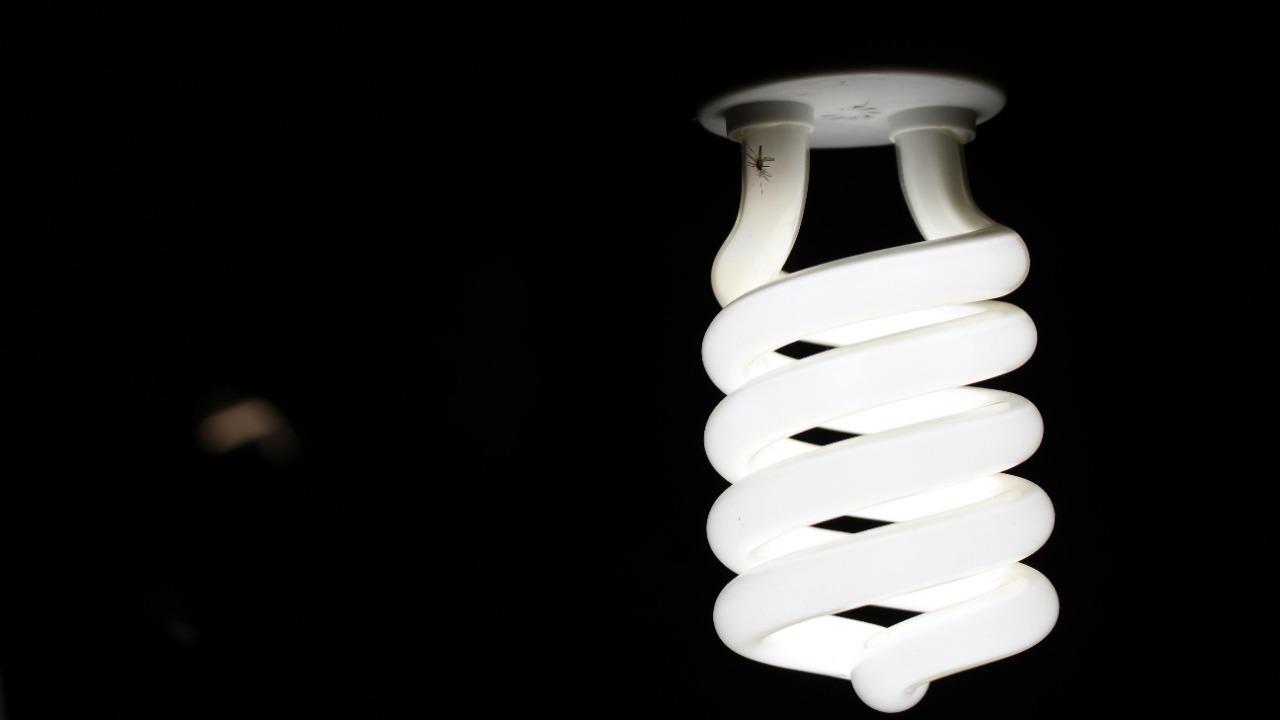

Across the United States, fluorescent lighting is quietly entering its final act. In 2026, one Midwestern state will flip the switch on a sweeping prohibition of common fluorescent bulbs, signaling how quickly policy is catching up with the economics and health science of lighting. I see that deadline not as an isolated quirk of state law, but as a turning point in a broader national and global retreat from mercury-laced lamps.
The coming ban is part of a coordinated push to replace aging tubes and compact fluorescents with more efficient, less toxic LEDs in homes, offices, schools, and factories. As other states line up their own phaseouts and international agreements lock in end dates for fluorescent technology, the question for building owners and households is no longer whether the bulbs will disappear, but how fast they can afford to get ahead of the curve.
Illinois sets a 2026 line in the sand
Illinois is the state that will make fluorescent bulbs effectively obsolete starting in 2026, and the scope of that decision is striking. Under a law signed by Gov. J.B. Pritzker, the state is cutting off the sale of many fluorescent products, including compact lamps and common tubes, on a schedule that begins in 2026 and tightens again in 2027. The policy is framed as a way to push building owners to swap out older fixtures rather than simply replacing burned-out bulbs when they fail, a shift that will be felt in offices, schools, and warehouses across Illinois.
Reporting on the measure notes that the first wave of restrictions will hit screw-in compact fluorescents, with a later step targeting the linear tubes that have long dominated commercial ceilings. By tying the ban to a clear calendar and pairing it with other product rules, Illinois is signaling that fluorescent lighting is no longer compatible with its environmental and public health goals. For residents and businesses, that means the familiar hum and flicker of these lamps will start disappearing from store shelves well before fixtures themselves are retired.
How the Illinois ban is structured and phased
What stands out to me about the Illinois approach is how methodical it is. Rather than yanking every fluorescent product at once, lawmakers created a phased schedule that distinguishes between different lamp types and bases. Screw-based CFLs are set to be phased out by 2026, while linear lamps and pin-based CFLs follow in 2027, a sequence that gives distributors and building managers time to plan bulk retrofits and avoid stranded inventory. That structure also reflects the reality that some fixtures are easier to convert to LED than others.
Industry analysis describes Illinois as the tenth state to enact a comprehensive fluorescent ban, underscoring that this is not a one-off experiment but part of a maturing policy trend. The details matter: the law explicitly calls out screw-based CFLs, pin-based CFLs, and linear lamps, categories that cover the bulk of legacy fluorescent products in circulation. By sequencing those categories over two years, Illinois is trying to balance environmental urgency with the practical constraints of rewiring millions of sockets.
Other states are racing toward the same deadline
Illinois is not alone in targeting 2026 as a turning point for fluorescent lighting, and that convergence is what gives the date its national significance. Minnesota, for example, has set up a two-phase process under which the sale of fluorescent lightbulbs will be banned on Jan. 1, 2026, as part of a broader state program to eliminate inefficient and hazardous products. The policy is explicit that, on that date, sale of fluorescent lamps will be banned, with Phase 2 tightening remaining loopholes.
Hawaii is moving on a similar timeline, with state officials preparing to end retail availability of fluorescent bulbs in 2026 and urging residents to plan for the transition. Local coverage has framed the change as a health and climate measure, noting that there will be no more fluorescent lightbulbs for Hawai in 2026 as residents and businesses make the switch to LEDs. When Minnesota and Hawaii join Illinois in cutting off new fluorescent sales, the practical effect for manufacturers and national retailers will be a de facto regional standard, even before any federal rule catches up.
Maine and the growing map of state regulations
Zooming out, the 2026 bans sit within a patchwork of state rules that are steadily squeezing fluorescent technology out of the market. Maine was an early mover, becoming the sixth state to pass legislation against common fluorescent light sources and setting its own effective date for restrictions on linear and compact lamps. That law positions Maine as a bellwether for how smaller states can use product standards to drive building upgrades and reduce mercury exposure.
Manufacturers and lighting designers now track a detailed state-by-state matrix of rules that cover screw-base CFL bans, pin-base CFL bans, and linear fluorescent restrictions. Industry guides lay out these State Regulations in tables that specify when each State will prohibit a given category, from screw-base CFL Ban dates to Pin and Linear Fluorescen phaseouts. The result is a regulatory map where 2026 and 2027 appear again and again as inflection points, effectively locking in the end of fluorescent sales across much of the country even without a single national rule.
Why policymakers are turning against fluorescent lamps
At the core of these bans is a simple calculus: fluorescent lamps contain mercury, while LEDs do not. That difference has become harder to ignore as states weigh the costs of hazardous waste programs and the risks of broken bulbs in homes, schools, and landfills. Advocates point out that, unlike fluorescent, Unlike LED lighting does not contain toxic materials like mercury and does not risk contaminating public areas or land, which makes every new fluorescent bulb sold today a future disposal problem.
Energy efficiency is the other driver. LED bulbs are more energy-efficient than fluorescent bulbs, and that gap has widened as LED prices have fallen and performance has improved. Environmental groups emphasize that, because LED bulbs are more energy efficient than fluorescent options, states can lead the way by banning outdated lamps and accelerating the shift to cleaner technology. For lawmakers, that combination of lower power bills, reduced greenhouse gas emissions, and avoided mercury contamination is a compelling justification for setting hard end dates.
How the bans will hit businesses and public buildings
For businesses, the fluorescent phaseouts are less about losing a product choice and more about facing a compressed retrofit timeline. In Illinois, guidance aimed at commercial customers spells out how the fluorescent ban will impact offices, warehouses, and retail spaces, urging owners to plan upgrades before supply chains tighten. State materials explain that How the Illinois Fluorescent Ban Impacts Businesses depends on what is changing and when, with a focus on avoiding last-minute scrambles to replace fixtures in large buildings or spending a fortune on emergency work.
Small enterprises are also on notice. Trade groups have warned their members that new product bans going into effect in Illinois on January 1 will limit the sale of fluorescent lights and layer on other requirements, such as restrictions on single-use plastic toiletries in small hotels. Official summaries stress that these Bans in Illinois and related rules will begin on January 1, 2026, with a ban on the sale of certain fluorescent lamps extending into 2027. For building managers juggling tight budgets, that means factoring lighting upgrades into capital plans now rather than waiting for bulbs to fail.
Consumers, LEDs, and the household transition
On the consumer side, the bans will mostly be felt at the checkout aisle and in the occasional scramble to replace a dead kitchen tube. Retailers in Minnesota are already preparing for a future where screw- or bayonet-based compact fluorescent lamps are no longer on shelves, steering shoppers toward LED multipacks instead. Local electrical suppliers highlight that in Minnesota, screw-based compact fluorescents will be banned from sale, and that households can save up to 75 percent on lighting energy by switching to LEDs while shrinking their carbon footprint.
In practice, I expect most households to experience the transition as a gradual, almost invisible shift. As old bulbs burn out, they will be replaced with LEDs that promise longer life and lower bills, and the bans will simply ensure that fluorescent options are not available as a fallback. Public information campaigns in places like Hawaii, amplified by outlets such as Hawaiʻi Public Radio, are already coaching residents on how to choose LED replacements and what to do with old fluorescent tubes. The key challenge will be ensuring that low-income households and renters are not left with outdated fixtures that are harder to retrofit.
A global push to eliminate mercury in lighting
The state bans unfolding in 2026 are not happening in a vacuum; they are part of a wider international effort to get mercury out of products altogether. The Minamata Convention on Mercury, a program of the United Nations with delegates from at least 150 countries, is dedicated to improving human health and the environment by controlling mercury use, phasing out new mercury mines, and limiting mercury emissions. As part of that agenda, parties have agreed to eliminate most fluorescent lamps by 2027, effectively setting a global sunset date that aligns closely with the state timelines in the United States.
From my perspective, that alignment between state policy and international treaty commitments is what makes the 2026 bans so consequential. When Illinois, Minnesota, Maine, and Hawaii move in step with The Minamata Convention on Mercury under the United Nations framework, manufacturers receive a clear signal that investing in new fluorescent lines no longer makes sense. That, in turn, accelerates innovation in LED and emerging technologies, ensuring that by the time the last fluorescent bulb is unscrewed, few people will miss it.
More from MorningOverview