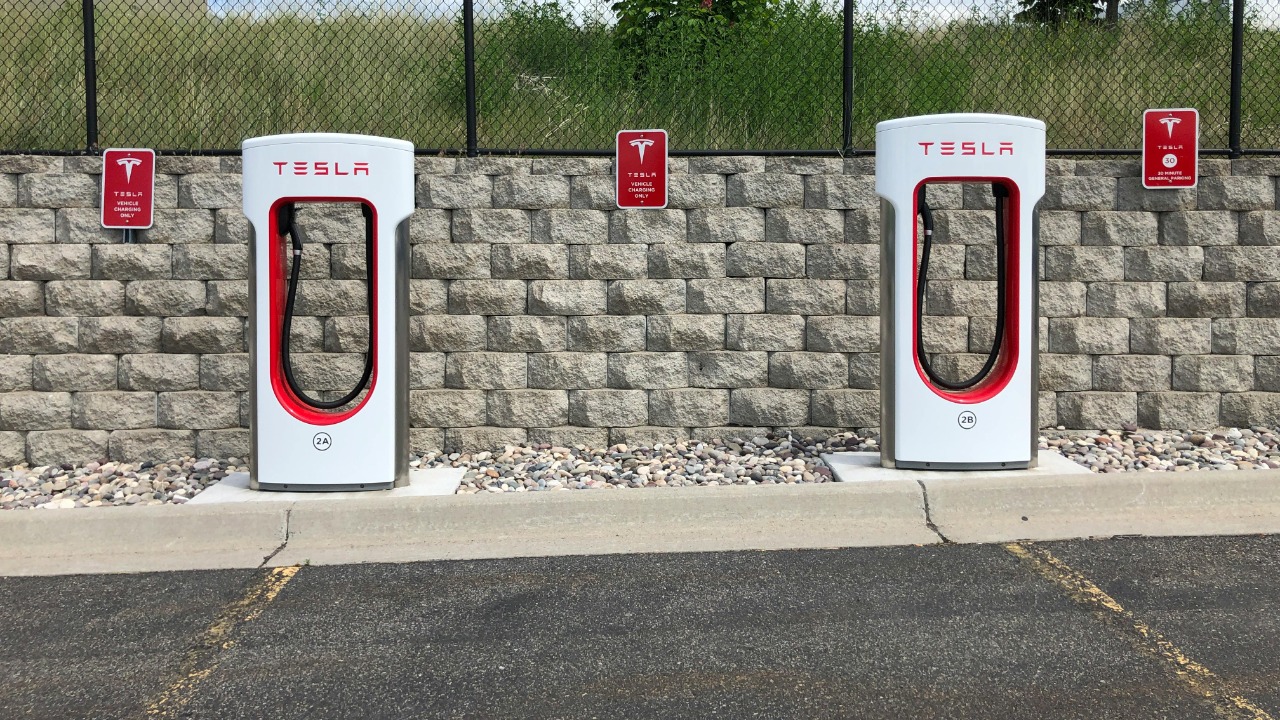

The race to decarbonize transport is no longer a straight sprint toward battery‑electric cars. While Tesla has doubled down on its electric vehicle and battery strategy, a new generation of synthetic and hydrogen-based fuels is quietly moving from lab benches to working hardware, promising cleaner combustion without ripping out the existing fuel infrastructure. The result is a more complicated, and potentially more resilient, transition in which electric drivetrains and new fuels are likely to coexist rather than cancel each other out.
I see the emerging contest less as a clash between old and new than as a reshuffling of what “clean mobility” actually means. Tesla’s singular focus on EVs has helped define the last decade, but the next one may be shaped just as much by machines that pull fuel from air and water, hydrogen engines that run on “just water” inputs, and automakers that hedge their bets across multiple technologies at once.
Tesla’s EV-first strategy meets a more crowded field
Tesla built its identity on the premise that battery‑electric vehicles would outcompete combustion on performance, cost and convenience, and it has not meaningfully deviated from that thesis. The company is still pouring capital and engineering talent into scaling its energy storage business, targeting 100 GWh of annual output from Megapack and Powerwall systems as it tries to knit cars, home batteries and grid storage into a single ecosystem. That kind of vertical integration gives Tesla leverage over both the supply of batteries and the software that manages them, reinforcing its bet that electrons, not molecules, will dominate future transport.
At the same time, the broader picture around Tesla Motors in 2026 shows a company still framed as an electric specialist rather than a diversified energy player. In an Overview of Tesla Motors, the emphasis remains on EV innovation, software and energy storage, with little sign that the company is preparing to compete directly in synthetic fuels or hydrogen. That clarity of focus has advantages, but it also leaves room for rivals to define alternative decarbonization paths that work better for heavy transport, legacy fleets or regions where charging infrastructure is slow to arrive.
A machine that makes fuel from air, water and electricity
While Tesla refined its EV playbook, a different kind of breakthrough has been gathering attention: compact systems that synthesize liquid fuel directly from ambient resources. One such effort centers on Modular Fuel Synthesis From Air, Water and Electricity, a system that uses electricity to pull carbon and hydrogen from the atmosphere and water, then recombines them into a liquid fuel compatible with existing engines. Crucially, this is described not as a distant concept but as a working prototype, demonstrated in public to show that the chemistry can be packaged into a machine rather than a sprawling refinery. The fuel it produces is designed to work without pipelines, tankers or traditional refineries, which could radically simplify distribution in remote or infrastructure-poor regions.
Another report describes the same concept in slightly different terms, highlighting Modular fuel synthesis from air, water and electricity as a petroleum‑free alternative that integrates direct capture of carbon dioxide. Its technology is described as modular by design, prioritizing proximity and operational flexibility so that fuel can be produced close to where it is used. If such systems scale, they could let fleets keep their combustion engines while switching the carbon source from fossil reservoirs to recycled atmospheric CO₂, a very different vision of transition than the one Tesla has championed.
Hydrogen combustion and “just water” engines in Europe
Parallel to synthetic liquid fuels, hydrogen combustion is gaining traction as a way to decarbonize without abandoning the internal combustion engine architecture. Reporting on hydrogen engines notes that Reuters describes this approach as a way to use existing production lines, providing a quicker and cheaper path toward reduced emissions. Instead of building entirely new battery platforms, manufacturers can adapt current engine families that share common components, swapping fossil fuels for hydrogen while preserving much of their sunk investment in factories and supply chains.
Europe is also experimenting with what some advocates call an engine of the future that effectively runs on “just water” inputs. Trials described as Just water tests in Europe suggest that hydrogen or hydrogen‑derived fuels could allow the continent to position itself as a counterweight to Tesla in the wake of tariffs and trade tensions. The reporting credits Europe and Tesla as central reference points in this contest, and notes that the work, highlighted by More M., comes at a critical time for the region’s auto industry. If these engines prove viable at scale, they could offer European manufacturers a way to differentiate themselves from EV‑only competitors while still cutting tailpipe emissions.
EVs keep advancing with solid-state batteries and infrastructure
None of this means the electric path is stalling. Battery technology is on the cusp of a significant upgrade as automakers prepare to roll out solid‑state cells that promise higher energy density, faster charging and improved safety. Analysts expect that EVs are set to make a major technological leap as these solid‑state batteries arrive, allowing drivers to go farther on a charge and potentially shrinking pack sizes for the same range. For Tesla, which already optimizes its vehicles around battery performance, that shift could reinforce its core advantage if it can secure supply and integrate the new chemistry quickly.
Infrastructure is also catching up to the ambitions of EV makers. Key developments in the sector include the expansion of charging networks, new business models around public fast charging and the electrification of commercial fleets, all of which are cited as Key drivers of the current EV wave. As more delivery vans, buses and ride‑hailing vehicles plug in, the case for large‑scale battery production strengthens, reinforcing Tesla’s decision to invest heavily in grid‑scale storage and home energy products alongside its cars.
Auto demand is fragmenting, and no single technology is winning
Even as technologies proliferate, the overall auto market is showing signs of strain and segmentation. Forecasts for 2026 suggest that new vehicle demand in the United States will soften, with Forecast Highlights New Vehicle Sales indicating that Our new vehicle SAAR estimate of 15.8 m is down 2.4% from 2025 levels. That slowdown, combined with higher interest rates and the winding down of some incentives, will weigh on demand for both EVs and combustion models, making it harder for any single technology to dominate purely through growth.Industry strategists are increasingly explicit that the winners in this environment will be those that can juggle multiple solutions rather than bet everything on one. A 2026 trends assessment argues that Success in 2026 will not be measured by the adoption of any single technology or trend, but by the ability to synthesize flexibility, affordability and practicality. That framing implicitly favors automakers that can offer EVs where charging is strong, hydrogen or synthetic fuels where infrastructure is limited, and hybrids or efficient combustion where customers remain price sensitive.
EV competition intensifies as BYD overtakes Tesla
On the EV front, Tesla is no longer the undisputed volume leader. Latest figures show that global EV sales jumped 28% in 2025, led by China’s BYD, which reported selling about 2.26 m electric vehicles. That surge means Tesla has lost its crown as the top EV seller, even as it continues to shape the conversation around software, autonomy and charging. The report, dated in Jan, underscores how quickly the competitive landscape can shift when rivals like BYD leverage scale in China and aggressive pricing to capture market share.
Policy headwinds are also complicating Tesla’s path. The same analysis notes that the EV sector is grappling with reduced incentives and mounting political headwinds in key markets, including China, where BYD has home‑field advantages. For an American brand that built its growth story on generous subsidies and early‑adopter enthusiasm, that environment raises the stakes of Tesla’s decision to stay tightly focused on EVs instead of branching into alternative fuels that might appeal to different regulatory regimes or consumer segments.
Tesla doubles down on batteries and China, not new fuels
Rather than diversify into synthetic fuels or hydrogen, Tesla has chosen to deepen its commitment to batteries and to China as a manufacturing and supply hub. The company recently sealed a $557 M agreement described as Tesla’s $557 Million China Battery Deal Fuels EV and Energy Storage Growth, committing $557 Million to expand its battery capacity in partnership with Chinese suppliers. The deal, announced on a Friday, is framed as a way to support both electric vehicles and energy storage solutions, reinforcing Tesla’s belief that scaling lithium‑ion and related chemistries is the most effective way to decarbonize transport and the grid.
That strategy aligns with Tesla’s broader narrative of building a tightly integrated battery supply chain, but it also concentrates risk. By tying its future so closely to China and to a single technology family, Tesla is exposed to geopolitical tensions, trade restrictions and raw material volatility. In a world where synthetic fuels from air and water, hydrogen combustion and other alternatives are beginning to attract investment, Tesla’s choice to stay out of those arenas looks bold if EVs keep winning, and potentially limiting if the market fragments further.
Why modular fuel and hydrogen matter even if EVs dominate cities
From my perspective, the most important implication of the new fuel breakthroughs is not that they will replace EVs, but that they could fill gaps where batteries struggle. Long‑haul trucking, aviation, shipping and older vehicle fleets are all sectors where range, weight or infrastructure constraints make pure electric solutions difficult. Modular systems that synthesize fuel from air, water and electricity, combined with hydrogen combustion engines that can be built on existing production lines, offer a way to decarbonize those segments without waiting for a universal charging build‑out or next‑generation batteries to reach every corner of the market.
That is why the details matter: the fact that a prototype machine has already produced usable fuel, that Europe is actively testing engines built around water‑derived hydrogen, and that industrial players see value in modular, locally sited fuel plants. These are not yet mass‑market solutions, and their economics remain unverified based on available sources, but they point toward a future in which electrons and molecules share the decarbonization workload. In that future, Tesla’s EV‑centric model will be one powerful piece of a larger puzzle rather than the only picture on the box.
More from Morning Overview