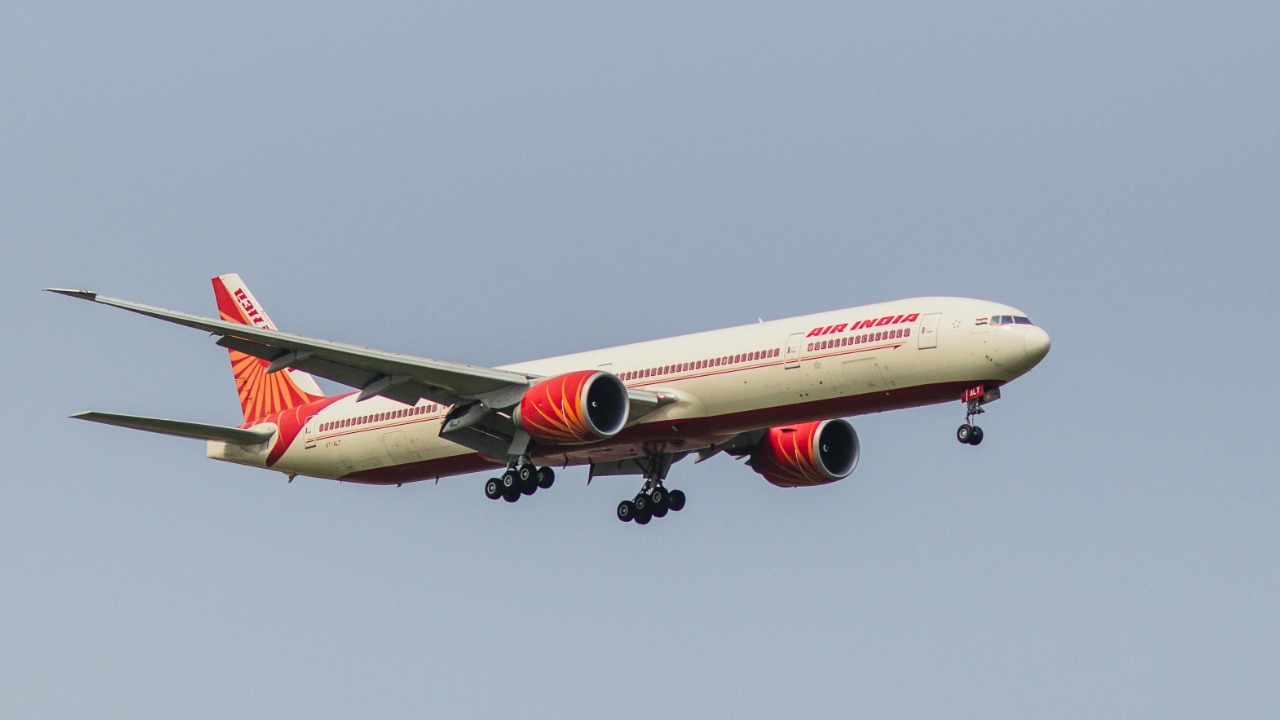

A Boeing jet that seemed to vanish from an airline’s books for 13 years never left the ground. It was sitting in plain sight at Kolkata airport, quietly accumulating dust, paperwork and a parking bill that would eventually run into a staggering sum. The rediscovery of this aircraft is not just an odd aviation anecdote, it is a case study in how corporate mergers, outdated systems and human complacency can combine to make a 737-size asset effectively disappear.
The jet that “went missing” without moving an inch
The aircraft at the heart of the story is a Boeing 737 that belonged to Air India and was parked at Kolkata airport around 2012, then effectively forgotten. For more than a decade, the jet sat in a remote bay, visible to anyone who cared to look, yet absent from the mental map of the airline’s managers and, crucially, from the systems that should have tracked every airframe in the fleet. When Air India finally acknowledged that it had lost track of the plane, the admission sounded surreal, but it reflected a deeper breakdown in how the company handled its own inventory.
According to accounts of the episode, the aircraft had become a kind of ghost in the system, a physical presence that no one felt responsible for and that no department fully owned. The jet was part of a batch of assets that shifted hands when Indian Airlines merged with Air India, a process that left behind a tangle of unresolved records and liabilities. The 737’s long limbo only came into focus when airport authorities pressed for unpaid charges and the airline had to confront the fact that a supposedly missing aircraft had been sitting in a parking bay the entire time, a situation later described as an Airplane “lost” for 13 years.
How a merger helped a 737 slip through the cracks
The roots of the disappearance lie in the complex merger between Indian Airlines and Air India, a union that was supposed to streamline operations but instead created layers of overlapping responsibility. When the two carriers combined, fleets, staff and debts were folded into a single entity, yet the integration of records lagged behind. The Boeing 737 at Kolkata was one of the aircraft that shifted from Indian Airlines to Air India the on paper, but the practical follow through on maintenance, storage and ownership was far less tidy.
Reporting on the case has pointed to “administrative lapses” that date back to those merger years, when aircraft registers and internal documentation were not fully reconciled. The confusion meant that some jets, including the Kolkata 737, were effectively orphaned in the system, with no clear line of accountability inside the new company. Later, when Air India began trying to settle legacy liabilities from the merger, it had to revisit the status of aircraft that had once belonged to Indian Airlines and were now part of Air India’s fleet, a process that exposed just how incomplete the earlier integration had been and left the carrier facing a large bill tied to the forgotten jet and other Indian Airlines and Air India records.
The quiet life of a grounded Boeing at Kolkata
While the airline’s databases lost track of the aircraft, Kolkata airport never did. The Boeing 737 remained parked in a designated bay, a fixed landmark for ground crews and a reminder of how quickly a modern jet can become a static object once it is taken out of service. Over the years, the plane’s condition inevitably deteriorated, with systems aging and components becoming obsolete, but the airframe itself stayed where it had been towed, a full size symbol of bureaucratic inertia.
Airport authorities, however, did not treat the jet as a curiosity. They treated it as an occupying vehicle that owed money. Parking and handling charges accumulated year after year, and the airport eventually moved to recover what it was owed for hosting the idle aircraft. Accounts of the dispute describe how Kolkata airport ultimately recovered close to the full amount it claimed, after a prolonged back and forth over who should pay for a jet that had been left in limbo. The episode highlighted how unresolved ownership disputes and neglected planes can become a financial drag on airports as well as airlines, a point underscored when the airport’s recovery of fees and the long running argument over the 737 were detailed in coverage of Air India’s Boeing at Kolkata.
From “lost” to found: the moment the paperwork caught up
The turning point came when Air India was forced to reconcile its records with the reality on the ground at Kolkata. As the airline worked through old files and airport invoices, managers realized that a Boeing jet they had effectively written off was still very much present, just not in any usable sense. The rediscovery was less a dramatic revelation than a slow dawning, as finance and operations teams pieced together that the aircraft in the parking bay matched a tail number that had been floating in legacy documents.
Once the connection was made, Air India had to admit publicly that it had lost track of one of its own planes for 13 years. That admission drew attention not only because of the time span, but because the aircraft had been sitting in the most obvious place possible, a standard parking area at a major airport. Reports on the case noted that the jet was a Boeing 737 belonging to Air Ind, and that the airline’s own internal confusion had allowed it to slip into a kind of administrative black hole. The rediscovery, and the acknowledgment that the aircraft had finally been found in a routine parking bay, were captured in accounts that described how a Boeing 737 belonging to Air Ind reappeared in the airline’s consciousness.
The bill for 13 years of forgetting
By the time the jet’s status was clarified, the financial consequences were unavoidable. Parking a commercial aircraft at a major airport is not cheap, and leaving it in place for more than a decade multiplies the cost into a serious liability. Kolkata airport calculated the charges that had accrued while the Boeing sat idle, and Air India found itself facing a parking bill that reflected 13 years of inaction. The sum was large enough to become a story in its own right, a reminder that even a grounded plane can burn money at a remarkable rate.
The airline’s obligation to settle those charges was tied directly to the merger era confusion that had allowed the aircraft to be forgotten. As Air India worked to clean up its balance sheet and settle old debts, the rediscovered 737 became a line item that could not be ignored. The case was cited as an example of how legacy issues from the integration of Indian Airlines and Air India the had lingered for years, leaving the combined carrier to pay for mistakes made long before its current management took over. The scale of the parking bill and the way it emerged from the shadows of the merger were highlighted in accounts of how an Air India Boeing 737 had quietly generated costs while everyone looked the other way.
Why a “lost” plane in a parking bay matters for safety culture
On its face, the Kolkata story is about money and mismanagement rather than physical danger, since the aircraft never left the ground during its 13 year disappearance from the books. Yet the fact that a Boeing jet could effectively vanish from an airline’s operational awareness raises broader questions about safety culture and oversight. If a full size airliner can be forgotten in a parking bay, it is reasonable to ask what else might slip through the cracks in maintenance schedules, training records or incident reporting systems that are far less visible than a parked 737.
Aviation safety depends on rigorous tracking of every aircraft, part and procedure, and the Kolkata case shows what happens when that discipline erodes under the weight of corporate restructuring and outdated processes. The rediscovery of the jet came at a time when Air India was already under scrutiny for other incidents, including a separate case involving an Air India Boeing 787-8 Dreamliner that crashed and killed passengers, an event that drew attention to how the airline managed its modern widebody fleet. That tragedy, involving an Air India Boeing 787-8 Dreamliner, underscored that the stakes of poor oversight are measured not just in parking fees but in lives, and it cast the forgotten 737 as part of a wider pattern of organizational strain.
How this compares with a jet that truly vanished
The Kolkata Boeing never left the airport, which makes it very different from the rare but haunting cases where aircraft disappear in flight. One of the most notorious examples is the Angola Boeing 727 case, in which a Boeing 727-223 airliner, registered as N844AA, was stolen from Quatro de Fevereiro Airport in Luanda and flown away without authorization. That aircraft had been grounded and stripped of some seating, yet it still managed to depart with only two people on board, including a man named Padilla who was believed to be at the controls, and it has never been found.
In that Angola Boeing incident, the mystery is physical as well as administrative, since the 727 and its 223 series airframe vanished from radar and left investigators with no wreckage to examine. The Kolkata 737, by contrast, was always physically present and visible, its disappearance confined to spreadsheets and organizational memory. Yet both cases highlight different vulnerabilities in aviation oversight, one involving a failure to secure and monitor a grounded jet that could be flown away, the other involving a failure to keep track of a parked aircraft that no one bothered to reclaim. The contrast is stark in accounts of the 2003 Angola Boeing 727 disappearance, which show how a missing plane can mean very different things depending on whether it is lost in the sky or lost in the paperwork.
What the saga reveals about airline accounting and public trust
For passengers, the idea that an airline could misplace a jet is unsettling, even if the aircraft in question never carried them. Commercial carriers present themselves as stewards of complex, tightly controlled systems, and that image is part of what persuades people to board their planes. When an airline concedes that it lost track of a Boeing 737 for 13 years, it chips away at that confidence, suggesting that the systems behind the scenes are more fragile and fragmented than the polished brand suggests.
The Kolkata case also exposes how much of modern aviation rests on accounting and data management that the public never sees. The jet’s disappearance was not the result of a dramatic failure in the sky, but of mundane lapses in record keeping, asset tracking and interdepartmental communication. When the story surfaced, it was framed as a missing aircraft found after 13 years in India, with Air India admitting that a Boeing 737 believed to be missing had turned up in an unremarkable parking bay. That framing, captured in reports of a missing aircraft found after 13 years, underlined how the gap between public perception and back office reality can be wide, and how quickly trust can erode when that gap is exposed.
Lessons for an industry that cannot afford to lose track
From an industry perspective, the forgotten 737 is a warning about the risks that come with rapid consolidation and legacy systems. Airlines around the world have merged, restructured and privatized in recent decades, often stitching together fleets and workforces that were never designed to operate as one. Without meticulous integration of records and clear lines of responsibility, assets can fall into grey zones where no one feels accountable, and the Kolkata case shows how that can play out in the most literal way, with a jet left to decay in a corner of an airport.
The financial sting of the 13 year parking bill may help focus minds, but the deeper lesson is about building systems that make it impossible for such an oversight to persist. That means modern asset tracking, regular audits that reconcile physical inventories with digital records, and a culture that treats every aircraft, whether flying or grounded, as a live responsibility. The fact that an AIRLINE had to admit it recently found a missing Boeing passenger jet it lost over a decade ago, and now faces a hefty parking fine tied to its long stay at Kolkata Airport back in 2012, has already become a cautionary tale. The episode, described in coverage of how an AIRLINE missing Boeing passenger jet reappeared with a bill attached, is likely to be cited in boardrooms and training sessions for years as an example of what happens when the basics of accountability are neglected.
More from MorningOverview