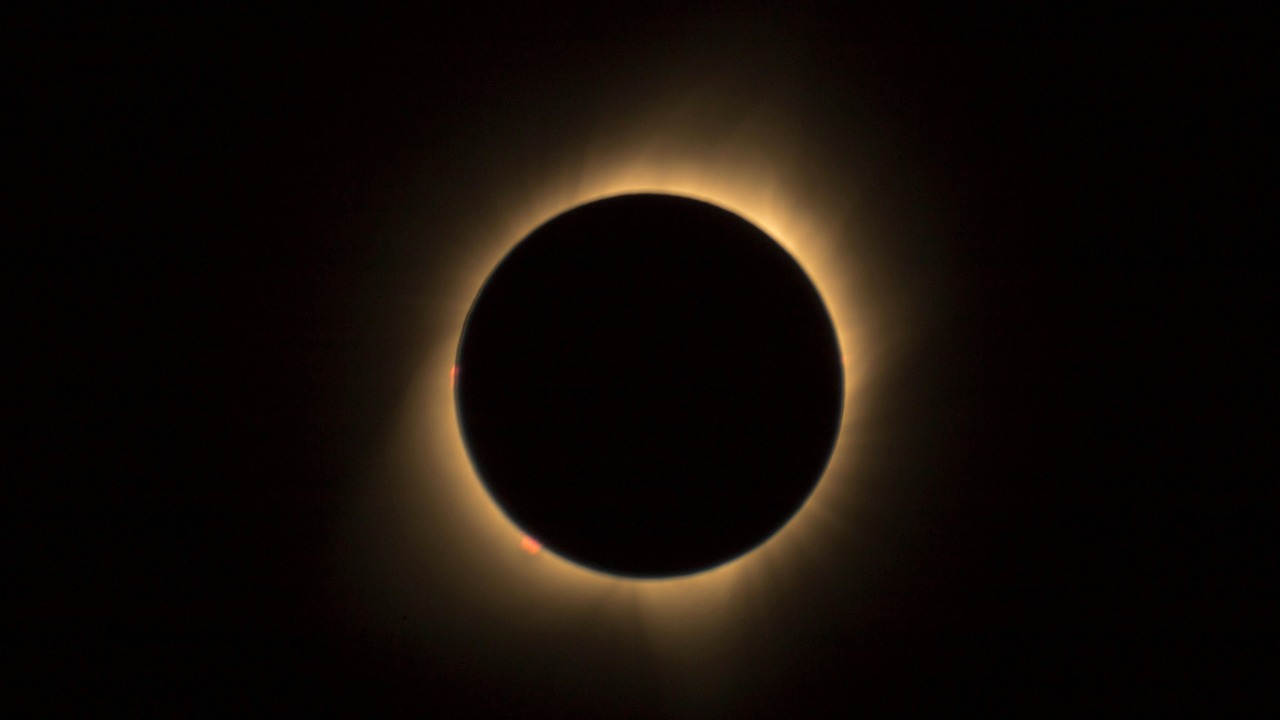

In a little over a year, the Moon will carve a shadow across three continents and briefly turn midday into deep twilight. The total solar eclipse on August 2, 2027 is expected to last more than six minutes at its peak, making it the longest such event in decades and a magnet for travelers, scientists, and sky watchers. I see it as a rare chance not just to witness a spectacle, but to stand inside a moving line that connects Europe, Africa, and the Middle East in a single sweep of darkness.
The path has been mapped in extraordinary detail, and the timing is precise down to the second. What matters now is understanding where that narrow ribbon of totality will fall, how long the Sun will stay hidden in different places, and what tools can help you get yourself under the shadow when it arrives.
Why this eclipse is such a big deal
Total solar eclipses are not rare in a global sense, but eclipses that linger for more than six minutes are generational events. On August 2, 2027, Earth will experience a totality that stretches up to 6 minutes 23 seconds, a duration that makes it the longest since 1991 and a standout in modern eclipse records, according to detailed forecasts shared in Dec in advance of the event by eclipse specialists on On August. That kind of longevity gives observers more time to absorb the eerie light, the sudden chill, and the appearance of the solar corona that usually hides in plain sight.
Scientists have already labeled the solar eclipse of August 2, 2027 as the Eclipse of the, a reflection of both its length and its geography. The event is part of a well studied cycle that predicts when the Moon’s apparent diameter will be larger than the Sun’s, allowing the disk to be fully covered and the sky to darken in the middle of the day. For many people who saw shorter eclipses in 2017 or 2024, this will be the first time they can stand in the shadow long enough to look around, breathe, and really notice how the world changes when the Sun disappears.
The path of totality across three continents
The 2027 eclipse is remarkable not just for how long it lasts, but for where it goes. On August 2, 2027, a total solar eclipse will occur in Europe, Africa, and the Middle East, cutting a diagonal track that begins over the Atlantic and ends deep in Asia. In Europe, the path of totality will clip the southern tip of Spain and the tiny territory of Gibraltar (U.K.), giving cities in that region a brief but dramatic plunge into darkness as the Moon’s shadow first touches land.
From there, the shadow races into North Africa, where the same event is mapped as part of a broader set of Eclipse Maps that show its path across Africa and the Middle East. The line of totality crosses Morocco, Algeria, Tunisia, Libya, and Egypt before continuing into Saudi Arabia and beyond, giving a string of countries a front row seat to the longest phases of totality. For travelers, that means a wide menu of potential viewing locations, from Mediterranean coasts to desert plateaus and historic river valleys.
Zooming in: where the eclipse will last the longest
Within that broad track, some locations will enjoy significantly more darkness than others. The August 2 event has been analyzed in detail by solar physicists, who note that the geometry of the alignment will give certain parts of North Africa and the Middle East more than six minutes of totality, far longer than typical eclipses that barely clear two or three minutes. The maximum totality of the total solar eclipse in August has been described as the longest for the next 100 years, which is why astronomers are already urging people to travel to see it rather than settling for a partial view.
According to detailed path calculations that track the Moon’s shadow as it sweeps across the planet, the solar eclipse of August 2, 2027 has a Gamma value of 0.1421, a technical measure that helps determine how centrally the Moon passes in front of the Sun and therefore how long totality can last. Analysts who have compared this event to previous long eclipses point out that the duration of a total solar eclipse depends on a delicate balance of orbital distances and angles, and that in 2027 those factors line up especially well over parts of North Africa, where the shadow will linger and the corona will shine for more than six minutes.
How to read the maps and pick your spot
For anyone planning to travel, the first step is understanding the maps that define the path of totality. Dedicated eclipse cartographers have produced a global view that shows the entire track of the August 2 event, along with local timing and duration for thousands of points along the way, all accessible through a detailed map that lets you zoom in on specific cities and regions. I find that starting with this global perspective helps clarify which countries and major transport hubs fall inside the path, and which are close but will only see a partial eclipse.
Once you have a sense of the big picture, it becomes crucial to drill down to the street level. An Interactive Google Map created by the National Solar Observatory (NSO) in Boulder, Colorado lets you click on any point along the path to see exactly how much of the Sun will be covered and for how long. Eclipse enthusiasts also point to Eclipse Planning Resources Interactive tools, including advice that highlights how Google Map of path can be paired with local weather statistics and transportation options to narrow down a final viewing site that balances clear skies, accessibility, and safety.
Key cities and landscapes along the shadow’s route
As the shadow moves inland, it will cross a series of countries that each offer distinct backdrops for the event. The August 2, 2027 total solar eclipse will cross Spain, Gibralter, Morocco, Algeria, Tunisia, Libya, Egypt, Saudi Arabia and more, a sequence laid out in the Overview prepared by solar researchers who have modeled the path. According to those same calculations, the eclipse will begin in Morocco and southern Spain, then advance through Algeria and other North African nations, a progression that has already inspired tour operators to scout locations from Atlantic beaches to Saharan dunes as potential viewing platforms.
Dec reports that, according to According to the NASA map, the eclipse will give some of its longest totality to regions near the Nile and to desert sites that are already famous for their funerary temples, turning ancient monuments into silhouettes against a suddenly darkened sky. Other coverage in Dec has framed the event as something not to miss, with reminders from Don that this Total event will not be matched in length for generations. For travelers willing to plan ahead, that combination of celestial rarity and cultural setting is what makes this six minute eclipse feel like a once in a lifetime appointment with the sky.
What to do now if you want to see it
With a long lead time, the most practical step is to choose a region along the path and start tracking logistics. I recommend beginning with the high level The August eclipse map that outlines the full route across Spain, Gibralter, Morocco, Algeria and neighboring countries, then cross checking that with local tourism information and historical cloud cover data. From there, you can use more granular tools like the Africa and Middle East path overlays to identify specific cities or rural areas that sit near the centerline, where totality will last longest.
Dec coverage has already highlighted that this Upcoming event will be the longest for the next century, which is why I think it is worth treating it less like a casual sky show and more like a major trip that demands early reservations and backup plans, as emphasized in Upcoming analyses. I also keep in mind that safe viewing will require proper eclipse glasses for the partial phases and careful planning for heat, crowds, and transportation in regions that may see a surge in visitors. If you start now, you can give yourself the best chance of standing in the path when the Moon’s shadow arrives and the Sun disappears for more than six unforgettable minutes.
More from Morning Overview