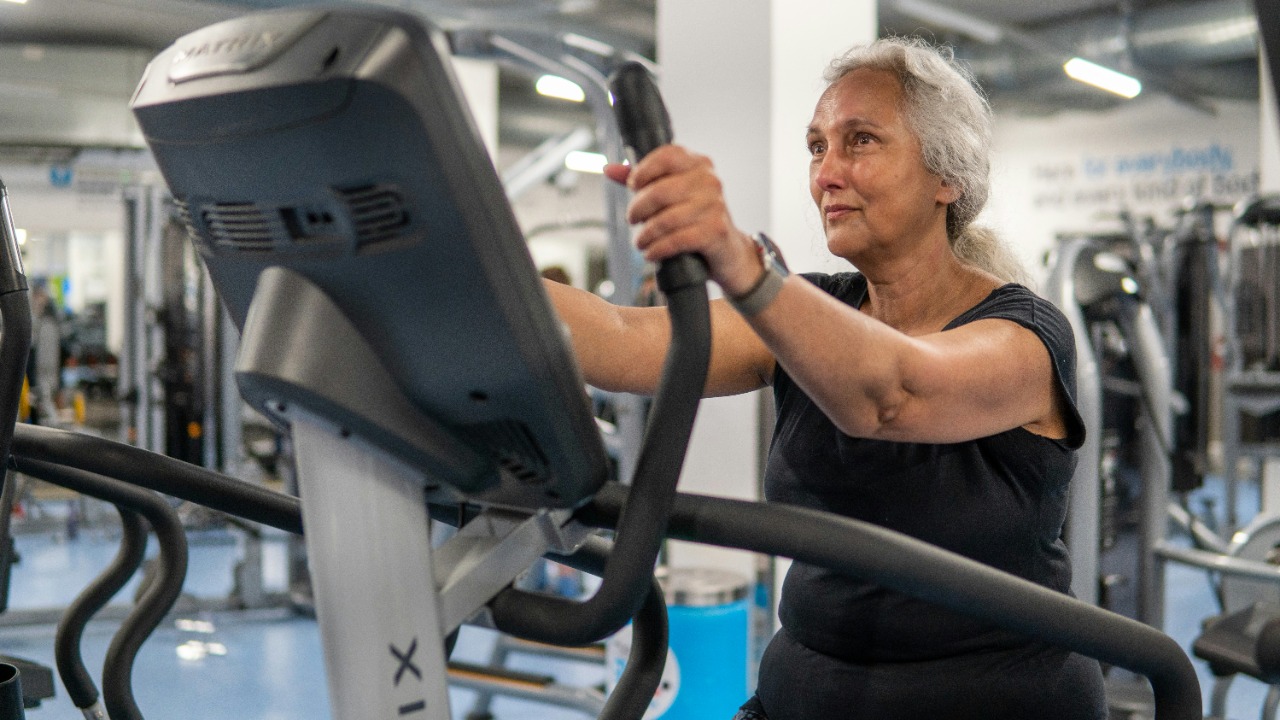

For decades, people have guessed at the age when the body truly starts to slow down. Now a rare 50‑year fitness project, tracking the same adults across most of their lives, offers one of the clearest answers yet about when physical aging really takes hold. The findings do not just redraw the curve of human performance, they also show how much of that curve remains under our control.
Instead of a gentle, late‑life slide, the data reveal a sharp turning point in midlife, with measurable changes in strength, endurance, and everyday capacity long before retirement. I see a second, more hopeful message running through the same evidence: while biology sets the broad outline, consistent movement, smart training, and even what we eat can slow the descent and keep people functional, independent, and active far beyond the statistical averages.
The Swedish experiment that followed fitness for a lifetime
The backbone of this new understanding is a 47‑year‑long Swedish study that repeatedly tested the physical capacity of adults as they moved from youth into older age. Researchers at Karolinska Institutet recruited volunteers and kept bringing them back to the lab, building a rare, continuous record of how the same bodies changed over time. Instead of comparing a 25‑year‑old today with a 65‑year‑old from a different generation, they could watch the exact same person move through those decades.
Across that long window, the pattern that emerged was surprisingly consistent. Physical capacity, measured through tests of aerobic power and muscular performance, climbed through adolescence and early adulthood, then reached a clear high point around age 35 before starting to fall. The project, described as a 50 year effort that followed people between the ages of 16 and 63, effectively turned the arc of human fitness into a long‑running natural experiment.
Peak performance at 35, and what happens next
The most headline‑grabbing number from the Swedish data is simple: the average person’s overall physical ability peaks at 35. That is the age when the combination of endurance, strength, and power appears to be at its highest in the cohort tracked by the 47‑year‑long project. Before that point, training and maturation push capacity upward. After it, the same tests start to show a gradual but unmistakable decline, even in people who remain active.
What changes after 35 is not just how fast someone can run a treadmill test, but how the body responds to effort. The long‑term data suggest that oxygen uptake, a key marker of aerobic fitness, begins to slip, and muscles recover more slowly from the same workload. Reporting on the same cohort notes that Dec findings from this decades‑long Swedish study show that the downward trend appears regardless of earlier training levels, which means even former athletes are not exempt from the basic biology of aging.
Why “physical aging” starts earlier than most people think
Most of us still associate physical decline with retirement, or at least with the first gray hairs. The longitudinal evidence tells a different story. Analyses of the Swedish cohort, echoed in coverage that notes how Physical fitness is often associated with youth, show that the body’s capacity is already changing in the thirties, far earlier than most people assume. The shift is subtle at first, perhaps a slightly steeper hill on a familiar run or a heavier feeling in the legs after a long day on your feet, but it is measurable in the lab.
Other lines of research push the starting line even earlier. Some Scientists argue that physical aging can begin as soon as our twenties, even if the more noticeable effects appear later in life. That does not mean a 22‑year‑old is “old,” but it does suggest that the cellular and metabolic processes that eventually show up as slower mile times or stiffer joints may already be underway, shaped by lifestyle choices, sleep, stress, and nutrition.
The body’s internal clock and the midlife acceleration
While the Swedish fitness curve points to 35 as the performance summit, other research looks inside the body to find when aging speeds up at the molecular level. A large analysis of blood proteins, described in a Study of more than 20,000 proteins, suggests that aging does not progress at a constant pace. Instead, there appear to be turning points when the body’s systems collectively shift into a faster gear of decline, with one of the most striking inflection points emerging in midlife.
Separate work from Researchers in China, who examined how tissues and organs change over time, points to around age 50 as a moment when the body’s “BODY CLOCK” seems to tick faster. Their findings indicate that at this specific number, tissues and organs begin to age at a faster pace, suggesting that the gradual decline seen after 35 may steepen into a more dramatic slide around 50. Together, these results help explain why some people feel relatively unchanged through their forties, then suddenly notice a cluster of physical setbacks in the decade that follows.
How lifestyle bends the curve of decline
Even as these studies map out a clear timeline for physical aging, they also highlight how much room there is to change the slope of the curve. The Swedish longitudinal work found that people who stayed active into midlife and beyond lost capacity more slowly than those who became sedentary, even though both groups faced the same basic biological aging. In the detailed analysis of the cohort, researchers note that, However, the rate of later decline appears to be modifiable by physical activity, which is consistent with a large body of evidence on how movement shapes aging.
Other population studies back up that message. One project that tested 775 adults between age 30 and 90-plus found that while everyone lost some strength and endurance with time, people who kept exercising preserved far more of their capacity. The researchers concluded that even in advanced age, elements of fitness can be preserved with regular exercise, a finding that lines up with the Swedish data and reinforces the idea that the calendar is not destiny.
Mortality, movement, and why midlife matters most
Beyond performance metrics, the long view of fitness is now being tied directly to survival. A large European analysis of activity patterns and death rates found that people who maintained or increased their movement over time had significantly lower long‑term mortality than those who stayed inactive. The authors noted that This research may have important implications because levels of physical activity are dramatically reduced in the adult population, especially in midlife when work and family pressures peak.
That timing matters. If physical capacity peaks at 35 and molecular aging accelerates around 50, then the years in between become a crucial window for prevention. Staying active through the forties can help people enter that faster‑aging phase with a higher baseline of strength and endurance, which in turn may delay disability and reduce the risk of chronic disease. In practical terms, it is the difference between hitting 50 already struggling with stairs and arriving with enough reserve to absorb the inevitable losses that follow.
Food, recovery, and the quieter levers of aging
Exercise is not the only lever that shapes how quickly the body ages after its mid‑thirties peak. Nutrition, sleep, and recovery all influence how well muscles repair, how stable blood sugar remains, and how much chronic inflammation smolders in the background. Reporting on dietary strategies notes that certain patterns of eating, including more whole foods and fewer ultra‑processed products, can support healthier skin, joints, and energy levels, which indirectly preserve physical capacity. Coverage of 6 anti-aging foods highlights how targeted choices can help people look and feel younger even as the underlying aging processes continue.
These quieter levers matter because they interact with the same biological clocks identified in the protein and tissue studies. If physical aging can begin as early as our twenties, as some scientists suggest, then habits formed in college or early work life may echo decades later in how quickly someone declines after 35 or 50. I see the emerging science as a nudge to treat sleep, stress management, and food quality not as cosmetic extras but as part of the same toolkit that includes strength training and cardio.
What the 50‑year fitness curve means for everyday life
For most people, the idea that physical aging starts in the thirties and accelerates around 50 is less a cause for alarm than a call to recalibrate expectations. It means that feeling a bit slower on a weekend hike at 40 is not a personal failure, it is a predictable part of the curve that showed up in a Nature discussion of how human performance rises and falls over the lifespan. At the same time, the same evidence shows that people who keep moving, lifting, and challenging themselves can stay far above the average line for their age, often into their seventies and beyond.
In practical terms, I think of the Swedish data and related studies as a rough map. The peak around 35 marks the top of the hill, the acceleration around 50 signals a steeper descent, and the choices made in between determine how hard that descent feels. The science does not promise immortality or a frozen biological age, but it does offer a clear, evidence‑based message: while no one can stop the clock, almost everyone can change how their body feels as it ticks.
More from MorningOverview