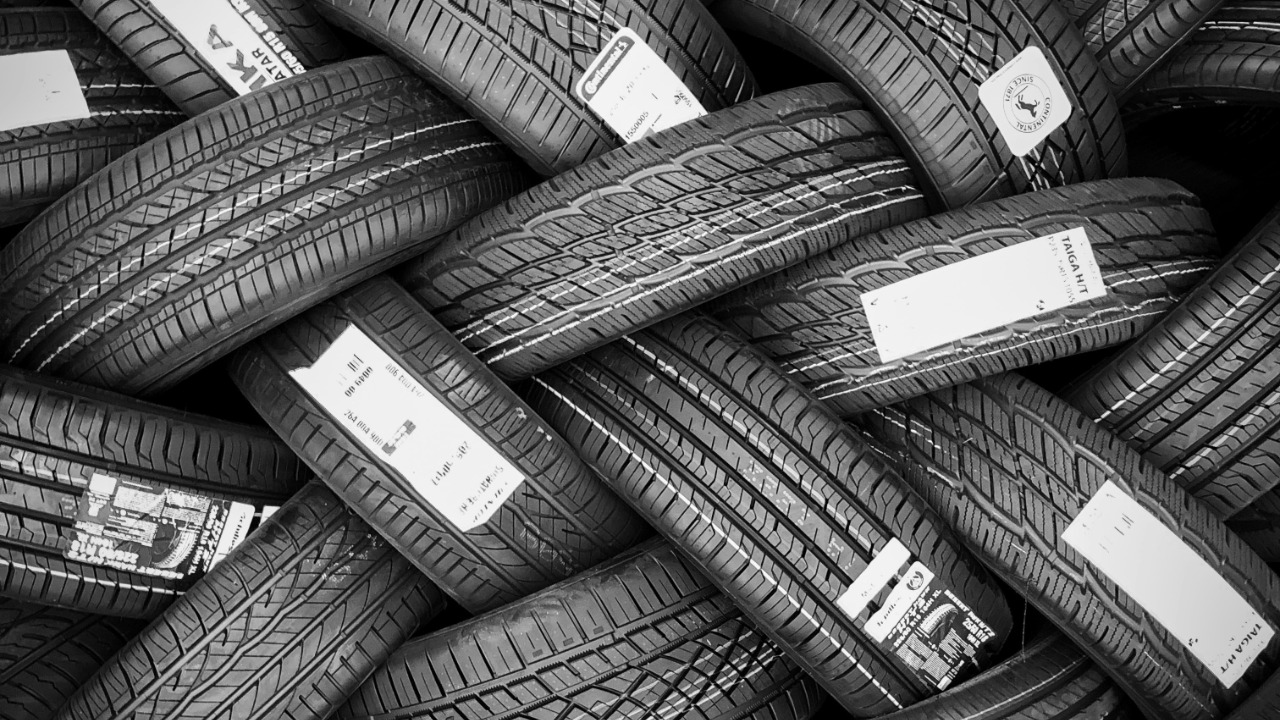

Knowing when a tire has crossed the line from worn to dangerous is not guesswork, it is a matter of clear, measurable red flags. I focus here on five specific warning signs that safety engineers and tire researchers agree mean you should replace your tires now, not at the next service visit. Each one ties directly to hard data on failures, blowouts, and braking performance, so you can look at your own tires and make a confident, safety‑first decision.
1. Tread Depth Below 2/32 Inch – Michelin Defender
Tread depth below 2/32 of an inch on a tire like the Michelin Defender is a hard stop, not a suggestion. The National Highway Traffic Safety Administration (NHTSA) states that tires with tread depth less than 2/32 of an inch must be replaced immediately, as measured by the penny test where Lincoln’s head is fully visible when inserted upside down into the tread grooves, and that simple check is one of the fastest ways to decide if a tire is legally and mechanically worn out. That 2/32 inch threshold aligns with broader guidance that a tire tread that is 1/16th of an inch or less is a clear indicator that it is time to change your tires, a point echoed in practical dealer advice on tire warning signs that drivers can spot in their driveway. For fleet and commercial operators, federal rules reinforce the same boundary, with DOT tire tread depth regulations specifying 4/32″ tread depth for steer tires and 2/32″ for all others, while New tires Start at 10/32″–12/32″ and are expected to be replaced before hitting the minimum.
On a practical level, once a Michelin Defender or any comparable all‑season tire is worn to that 2/32 inch mark, its ability to clear water, grip in emergency braking, and maintain stability in curves drops sharply, especially on wet pavement. Hydroplaning risk rises because the shallow grooves cannot channel standing water away from the contact patch, and stopping distances lengthen, which matters whether you are driving a compact Honda Civic or a heavier SUV like a Toyota Highlander. I always recommend checking several points across the tread, including inner and outer shoulders, because localized bald spots can reach the 2/32 inch limit even when the center still looks acceptable. If the penny test shows Lincoln’s head fully visible anywhere in the main grooves, or if built‑in wear bars are flush with the tread blocks, the tire has already crossed the safety line and should be replaced as a set on that axle to keep handling balanced.
2. Sidewall Cracks Over 1 Inch – Goodyear Assurance
Sidewall cracks exceeding 1 inch in length on a tire such as the Goodyear Assurance are a clear sign of dry rot and require immediate replacement. The sourced guidance is explicit, sidewall cracks exceeding 1 inch in length indicate dry rot and require replacement, and a 2022 Consumer Reports survey found that 15% of inspected vehicles showed such damage leading to blowouts, which underscores how common and dangerous this problem is. These cracks form as rubber compounds age, lose oils, and are stressed by UV exposure, heat cycles, and underinflation, and once they reach that 1 inch threshold, the structural cords beneath the rubber can be compromised. Technical advice on tire sidewall Cracks notes that drivers should Replace a tire if cracks are deep, widespread, or near the bead or rim, because those locations are critical to keeping the tire intact at highway speeds.
On a Goodyear Assurance fitted to a family sedan like a Toyota Camry or a Nissan Altima, long sidewall cracks change the risk profile from cosmetic aging to a real chance of sudden air loss. Once dry rot sets in, the sidewall can no longer flex repeatedly without tearing further, especially when the tire hits potholes or expansion joints, and that is when blowouts occur. I advise drivers to inspect both the outward‑facing and inward‑facing sidewalls, since the inner side often sits closer to hot suspension components and can age faster. If you see multiple cracks that each run more than 1 inch, or a network of shorter cracks clustered near the bead, the tire should not be trusted for daily commuting or highway trips, even if the tread still looks deep. Replacing a set of Goodyear Assurance tires at that stage is far less costly than dealing with a high‑speed failure that can damage the wheel, the fender, and, most importantly, put occupants and nearby traffic at risk.
3. Bulges or Blisters on Sidewall – Bridgestone Turanza
Bulges or blisters on the sidewall of a tire like the Bridgestone Turanza are among the most urgent red flags, because they signal structural weakness that can fail without warning. The key sourced insight is that bulges or blisters on the tire sidewall, often from impact damage, signal structural weakness, and the Tire Industry Association reports that such defects caused 78% of tire failures in a 2021 field study of 5,000 tires, a striking figure that shows how closely these visible deformities track with real‑world breakdowns. These Bulges typically form when the internal cords are broken by hitting a pothole, curb, or road debris, allowing pressurized air to push the inner liner outward into a bubble that the outer rubber can barely contain. Guidance on early warning signs of tire failure stresses that if you see a bulge or blister on the sidewall, you should replace the tire at once, because that spot is a potential weak point that can open up suddenly.
On a Bridgestone Turanza fitted to a midsize sedan or a compact crossover like a Subaru Forester, a sidewall bulge means the tire’s carcass is no longer intact, and no external patch or plug can repair that internal damage. As technical advice on Bulges explains, the correct response is to Replace the tire immediately, with no exceptions, and if in doubt, to err on the side of safety. I recommend running your hand along the sidewall to feel for any raised areas, especially after a hard impact that you remember, because some blisters are easier to detect by touch than by sight when the car is parked. If a bulge is present, the tire should be taken out of service right away, including the spare if that is the one affected, since a failure at highway speed can cause a sudden swerve that even modern stability control systems on vehicles like the Honda Accord or Mazda CX‑5 may not fully correct. Given that 78% of failures in that 5,000‑tire study were linked to this exact defect, treating any bulge or blister as a non‑negotiable replacement trigger is one of the most effective ways to prevent catastrophic tire incidents.
4. Uneven Tread Wear with Exposed Bars – Continental TrueContact
Uneven tread wear with exposed wear bars on a tire such as the Continental TrueContact is another red flag that calls for replacement, not just an alignment check. The sourced finding is that uneven tread wear, such as feathering on the edges, points to alignment issues but mandates replacement if wear bars are exposed, and Michelin’s 2020 engineering analysis found that unevenly worn tires reduce wet traction by 40%, a huge loss of grip when you need it most. Feathering, cupping, or one‑sided wear can come from misaligned suspension, worn shocks, or chronic underinflation, and once the molded wear bars between tread blocks are flush with the surface in any of those thin areas, the tire has effectively reached the same limit as a uniformly worn tire at 2/32 inch. Fleet guidance on DOT tread depth reinforces that 2/32″ is the minimum for most positions, and that New tires Start with 10/32″–12/32″, so a Continental TrueContact that has worn unevenly to the bars has already lost most of its designed water‑evacuation capacity in that section.
On a front‑wheel‑drive car like a Volkswagen Jetta or Hyundai Elantra, uneven wear on the driven axle can combine with that 40% reduction in wet traction to produce unpredictable braking and cornering, especially in heavy rain. The tire may still have decent tread depth in the center or on the opposite shoulder, which tempts some drivers to keep using it, but the exposed bars in the thinnest area become the weak link that determines overall safety. I advise running your fingers across the tread blocks to feel for a sawtooth pattern that indicates feathering, and visually checking whether the wear bars are level with the surrounding rubber anywhere around the circumference. If they are, the Continental TrueContact should be replaced, and the vehicle should be inspected for alignment or suspension issues so the new set does not wear out in the same uneven pattern. Ignoring this combination of exposed bars and irregular wear does not just shorten tire life, it directly increases the chance of hydroplaning and loss of control in conditions where even modern ABS and traction control systems may not fully compensate.
5. Tires Over 6 Years from Manufacture Date – Pirelli Cinturato
Tires over 6 years old from the date of manufacture, such as an aging Pirelli Cinturato, should be replaced regardless of how much tread appears to be left. The key sourced insight is that tires over 6 years old from the date of manufacture (found on the DOT code) should be replaced regardless of tread, as rubber compounds degrade, and a 2019 study by the Rubber Manufacturers Association noted a 25% increase in failure rates for tires aged 7–10 years, which quantifies how aging alone raises the risk. The DOT code stamped on the sidewall includes a four‑digit date, with the first two digits indicating the week and the last two the year of manufacture, so a code ending in “1818” would mean the tire was built in the 18th week of 2018. Even if a Pirelli Cinturato has been stored or driven lightly, oxidation, heat, and UV exposure gradually harden the rubber, reduce flexibility, and weaken the bond between components, and that process continues whether the tire is on a BMW 3 Series, a Ford Fusion, or sitting as a full‑size spare in the trunk.
Once a tire passes the 6‑year mark, the 25% increase in failure rates for 7–10‑year‑old tires becomes a critical consideration for highway use, long‑distance travel, and high‑speed driving. I recommend checking the DOT code on all five tires, including the spare, because it is common to find a Pirelli Cinturato spare that is several years older than the set currently on the car, especially on vehicles like older Honda CR‑V or Toyota RAV4 models that keep the original spare for a decade or more. If any tire is older than 6 years, planning a proactive replacement avoids the scenario where an apparently “good” but aged tire fails under load, such as when the car is fully packed for a road trip. Even if tread depth is well above 2/32 inch and there are no visible cracks or bulges, the internal aging documented in the Aging Tires Safety Alert means the tire no longer offers the safety margin it did when new, so treating age as a standalone replacement trigger is a key part of responsible tire maintenance.
More from MorningOverview