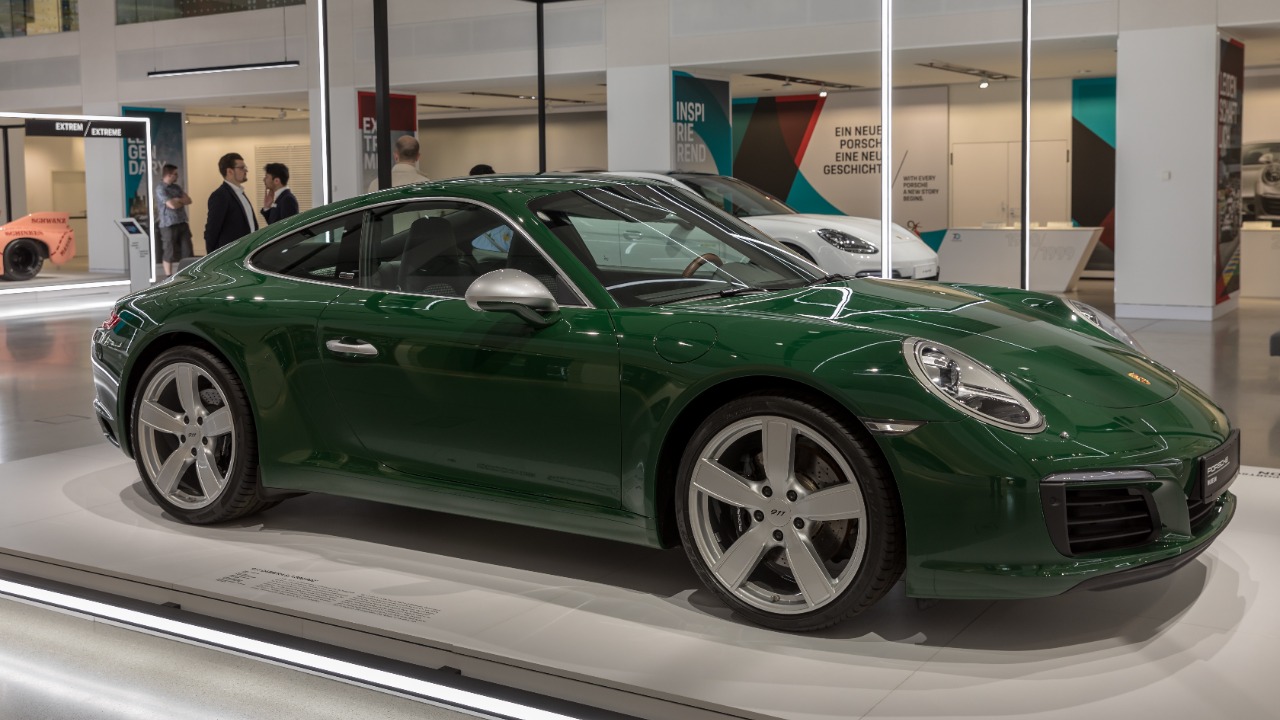

Porsche is recalling a large slice of its U.S. fleet after discovering that backup cameras in several popular models can suddenly stop showing an image, stripping drivers of a key safety aid. The campaign covers roughly 174,000 vehicles and marks one of the brand’s biggest safety actions in years, underscoring how even a luxury performance marque is not immune to the growing pains of complex in-car tech. For owners, the issue is less about horsepower and more about whether the car will reliably show what is behind it when reverse is engaged.
At the heart of the recall is a defect that can cause the rearview camera display to fail, putting the affected cars out of compliance with federal rules that require clear rear visibility. Regulators say the problem raises the risk of a crash, particularly in driveways, parking lots, and other low-speed situations where drivers rely heavily on the camera rather than mirrors alone. I see this as a revealing test of how quickly a prestige brand can identify, communicate, and fix a software-driven safety flaw across a broad lineup.
What exactly Porsche is recalling
The recall centers on a software problem that can cause the backup camera image to disappear or fail to appear when the driver selects reverse, leaving only a blank or frozen screen. According to safety filings, the issue affects a wide range of recent Porsche models sold in the United States, and the total number of vehicles involved has been pegged at about 173,538 cars, a figure that aligns with other references to roughly 173,000 and “173,000-Plus” vehicles. That scale makes it a significant event for a brand that typically sells far fewer units than mass-market manufacturers.
Regulators describe the defect in straightforward terms: the rearview camera image may not display when required, which means the cars do not meet the federal rear visibility standard and must be repaired. The problem has been cataloged under a specific safety campaign, and owners are being told that the malfunction can occur intermittently, so a camera that works one day might fail the next. In practical terms, that uncertainty is what pushes a glitch into recall territory, since a driver cannot reliably know whether the system will function at the moment it is most needed.
How the defect violates rear visibility rules
In the United States, rearview cameras are not just a convenience feature, they are mandated by a federal safety rule known as FMVSS, short for Federal Motor Vehicle Safety Standards. The specific requirement at issue here is FMVSS 111, which governs rear visibility and spells out how quickly and reliably a camera image must appear when a vehicle is shifted into reverse. When the image fails to show up, even sporadically, the car is considered noncompliant with that standard.
In its recall documentation, Porsche Cars North America, Inc is listed as the responsible manufacturer, and the defect is summarized under the phrase “Rearview Camera Image May Not Display,” a concise description that captures why regulators view the issue as more than a minor annoyance. The rule is designed to prevent back-over crashes, especially those involving children or pedestrians who may be in a driver’s blind spot. By acknowledging that its vehicles can fall short of FMVSS 111, Porsche is effectively conceding that the cars need a software remedy before they can fully meet the safety expectations built into modern U.S. law.
Which Porsche models and owners are affected
The recall sweeps across several of Porsche’s most recognizable nameplates, cutting across both SUVs and sports cars. Reporting that breaks down the affected fleet notes that the Cayenne and Cayenne E-Hybrid account for almost 89,000 vehicles, making the midsize SUV family the single largest group involved. The iconic 911 follows with over 44 thousand units, and other models fill out the remainder of the nearly 174,000-vehicle total. That mix means the issue touches everything from family haulers to high-performance coupes.
For owners, the impact varies depending on how heavily they rely on the camera and how often they drive in tight urban or suburban environments. Someone who uses a Cayenne or Cayenne E-Hybrid as a daily family vehicle may feel the loss of a dependable rearview image more acutely than a 911 driver who spends most of their time on open roads, but the safety risk exists in both cases. The recall is limited to U.S. vehicles, and the affected population is described in filings as “over 173,000 US vehicles,” a phrasing that underscores both the scale and the geographic focus of the campaign.
Why regulators pushed for action
From a regulatory perspective, the backup camera problem is not just a matter of customer satisfaction, it is a clear-cut safety compliance issue. The National Highway Traffic Safety Administration maintains a public database of safety campaigns, and the Porsche case appears there among other automotive recalls that involve electronic systems and driver-assistance features. Anyone can search the agency’s recall portal, which is hosted at NHTSA recalls, to see how the defect is described and which models are covered.
In the official summary, the agency notes that the failure of the rearview image to display increases the risk of a crash, particularly when reversing. That language is consistent with how NHTSA has treated similar camera issues in other brands, reflecting a broader shift toward treating software reliability as a core safety concern rather than a secondary technical matter. Once the problem was documented and linked to specific Porsche models, the expectation from regulators was straightforward: the company needed to notify owners, develop a fix, and implement it at no cost, all under the supervision of federal safety officials.
How Porsche is handling the recall process
Porsche has set up dedicated channels to help owners understand whether their car is affected and what steps to take next. The company’s recall portal, accessible through recall information, allows drivers to enter their vehicle identification number and see if any open campaigns apply to their specific car. That site is framed as part of Porsche’s broader commitment to making ownership a “superior experience,” with an emphasis on transparency when a safety issue arises.
Within that portal, a section labeled Lookup current recalls explains that vehicles which have already been repaired are not shown, which helps avoid confusion for owners who may have had earlier work done. The company’s messaging stresses that recall repairs are performed free of charge, and regulatory filings echo that point, noting that the remedy will be provided at no cost to the customer. In practice, that means scheduling a visit to an authorized Porsche dealer, where technicians will apply a software update or related fix to restore full compliance with the rear visibility standard.
Inside the “uncommon” scale of this Porsche recall
For a brand that trades heavily on engineering precision and exclusivity, a recall of this magnitude is unusual. One analysis described it as an “uncommon” recall of more than 173,000 vehicles, highlighting how rarely Porsche has to address a defect that touches such a large portion of its U.S. fleet at once. The same reporting notes that the campaign covers vehicles built across multiple years and that the company expects to have a final remedy available for all affected models by the middle of 2025, with some references pointing to June 2025 as a target for fully rolling out the fix to every car in scope. That timeline reflects the complexity of validating software updates across different infotainment and camera configurations.
From my perspective, what stands out is not just the raw number of cars but the nature of the problem: a modern digital feature that did not even exist in mainstream vehicles a quarter century ago is now at the center of one of Porsche’s biggest safety actions. Coverage that breaks down the campaign notes that the recall is “almost 174,000” vehicles and frames it as a kind of “first world problem,” yet the underlying safety stakes are real for anyone backing out of a driveway with children playing nearby. The combination of scale and the relatively new type of defect helps explain why some observers see this as a milestone moment in how luxury brands manage software-driven safety risks.
What owners should do right now
For current owners, the most practical step is to confirm whether their specific vehicle is covered and then schedule the repair as soon as possible. Porsche is sending formal notifications, but I would not wait for a letter if I suspected my car might be involved. Instead, I would use the company’s online tools and the federal database to check my vehicle identification number, then contact my local dealer to ask about appointment availability and how long the update is expected to take.
Several consumer-focused reports emphasize that the recall affects “173,000-Plus” Porsche vehicles and encourage owners to use VIN lookup tools to learn more. In parallel, coverage that frames the campaign as an “uncommon recall of more than 173K vehicles over rearview cameras” points readers to the importance of confirming whether their car is among those built during the affected production window, which stretches into mid 2025 for some models. One such analysis, hosted at Driving the news site, underscores that owners should not assume their vehicle is safe simply because the camera appears to work today.
The broader lesson about tech-heavy cars
Stepping back, the Porsche camera recall illustrates a broader trend in the auto industry: as vehicles become more software dependent, the nature of safety defects is shifting from purely mechanical failures to digital glitches. A generation ago, a recall of this size might have involved fuel systems or braking components; now, it is a camera image that may or may not appear on a screen. The fact that a non-functioning display can trigger a federal safety campaign shows how deeply integrated electronics have become in the basic act of driving and parking.
In this case, the defect has been formally logged as a camera image that may not display, and Porsche Cars North America is coordinating with regulators to roll out a remedy across roughly 173,000 U.S. vehicles. Another report, which notes that Porsche recalls “173,538 cars over camera problem,” reinforces that this is one of the largest safety actions the company has undertaken in recent years and that it will remain open until the final remedy is available for every affected car. For owners and regulators alike, the episode is a reminder that as cars evolve into rolling computers, keeping their software safe and compliant will be just as important as maintaining their engines and brakes.
More from MorningOverview