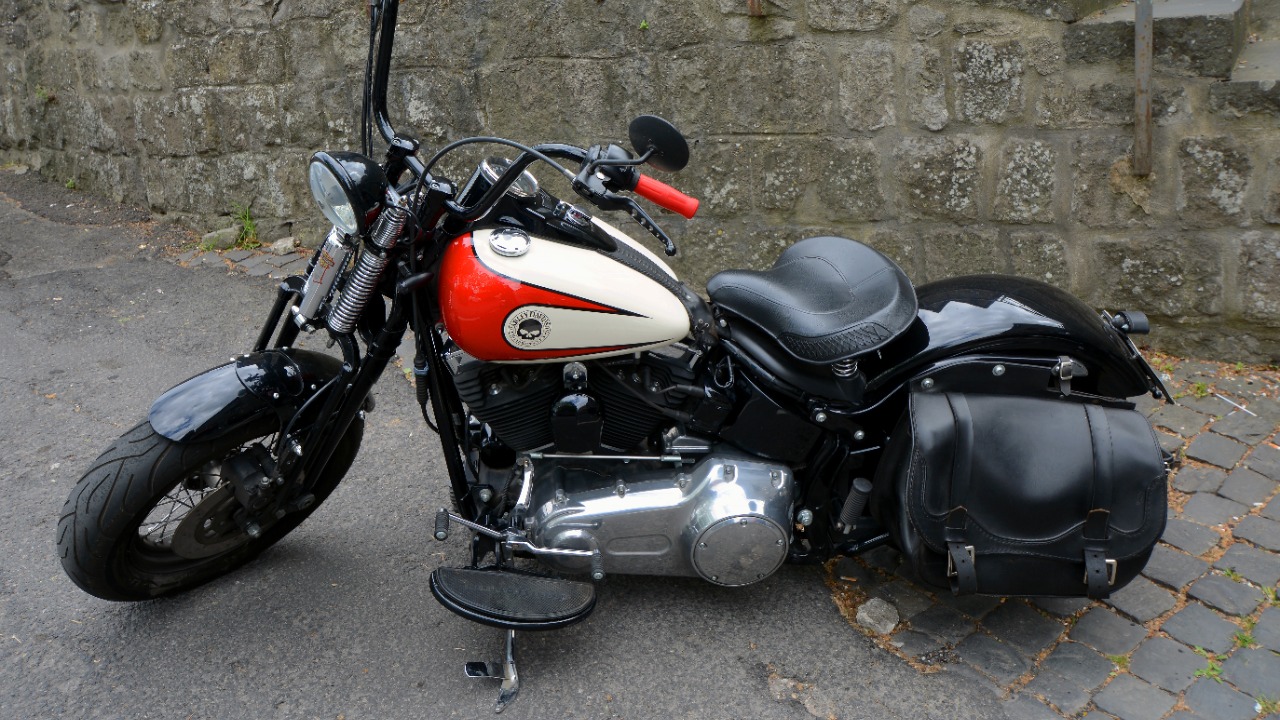

Harley-Davidson has never chased outright drag-strip numbers the way some sportbike brands do, yet a handful of its machines now launch hard enough to embarrass performance cars. Only a very short list of Harleys can legitimately sprint from 0 to 60 miles per hour in roughly three seconds or less, and they span everything from short-lived power cruisers to cutting-edge electric streetfighters. I want to map out that exclusive club, explain why these bikes are so quick, and show how they fit into the broader shift toward high-performance electric and modern liquid-cooled platforms.
The tiny club of sub‑3‑second Harleys
For decades, Harley’s identity revolved around air-cooled V-twins, relaxed ergonomics, and a soundtrack that mattered more than stopwatch numbers. That image is still powerful, but it hides the fact that only a few Harleys have ever been tuned and geared to rip from 0 to 60 in about three seconds or less. The bikes that make the cut share a common formula: strong power-to-weight ratios, aggressive gearing, and chassis setups that prioritize acceleration over long-haul comfort.
Based on available performance data, the core group consists of the Harley Davidson FXDR 114, the original LiveWire electric, the LiveWire ONE, and the LiveWire S2 Del Mar, with the FXDR standing out as the quickest internal-combustion entry and the LiveWire family delivering instant-torque launches. The FXDR 114 is described as having the quickest 0 to 60 m time of only 2.5 seconds, which puts it comfortably inside the sub‑3‑second bracket and makes The Harley FXDR one of the most extreme production Harleys ever sold. On the electric side, the LiveWire ONE is rated at 0 to 60 Mph in 3 Sec, and the S2 Del Mar is promoted as being built for Speed, Agility, and linear acceleration, with marketing and independent testing converging on a roughly three-second 0 to 60 run.
FXDR 114, the brutal outlier
Among gasoline-powered Harleys, the Harley Davidson FXDR 114 is the clear acceleration outlier. It combines a Mil spec of big-displacement torque with a relatively lean, drag-inspired chassis, forward controls, and a long wheelbase that helps keep the front wheel down when the rider launches hard. The result is a bike that feels purpose-built for stoplight sprints rather than cross-country touring, and that character shows up in the numbers.
Performance testing credits the FXDR 114 with the quickest 0 to 60 m time of only 2.5 seconds, a figure that puts it in the same conversation as serious superbikes and high-end electric cars, and firmly establishes it as a member of the sub‑3‑second Harley club. That same reporting notes that the FXDR’s combination of the 114 cubic-inch engine, aggressive gearing, and relatively low weight is what lets Harley Davidson FXDR hit those numbers without electronic launch control. It is a reminder that, even in a brand known for heritage, a focused engineering brief can produce a brutally quick machine.
How the original LiveWire rewrote Harley’s performance playbook
Harley’s first production electric motorcycle, the original LiveWire, marked a turning point in how the company thought about acceleration. Instead of building power through revs, the electric motor delivered a near-instant wall of torque, so there was no buildup, just an abrupt thrust that made the bike feel faster than many riders expected from a Harley badge. That character, combined with a relatively sporty riding position, made the LiveWire feel more like a naked sportbike than a cruiser.
Performance writeups describe the Harley Davidson LiveWire as capable of hitting 0 to 60 in roughly three seconds, with riders emphasizing how the lack of shifting and the immediate torque make the experience feel even more violent than the stopwatch suggests. One analysis of the fastest Harleys highlights how the electric powertrain delivers that abrupt thrust with no buildup, underscoring why the original LiveWire belongs in the same performance conversation as the FXDR 114 and other rapid Harleys, even if The Harley Davidson LiveWire targeted a very different kind of rider.
LiveWire ONE, the electric Sport Tourer that still hits 3 seconds
After spinning off LiveWire as a separate brand, Harley repositioned its flagship electric as the LiveWire ONE, an Electric Sport Tourer that balances performance with a more approachable price and range. The bike is marketed with a City Range of 146 M, which signals that it is meant to be ridden daily, not just taken out for short blasts. Yet the performance numbers show that LiveWire did not walk away from the original bike’s party trick.
Official specs list the LiveWire ONE at 0 to 60 Mph 3 Sec, which keeps it right on the edge of the sub‑3‑second club and means it can still out-accelerate most combustion motorcycles and cars off the line. The same spec sheet notes an Energy 15 kWh battery and DC fast charge capability, reinforcing that this is a real-world machine, not a science project. With a starting price of $16,499 and the ability to Check for incentives, the LiveWire ONE positions itself as a relatively attainable high-performance EV, and the combination of 146 M of city range and that three-second sprint is central to how LIVEWIRE ONE is pitched to riders who want both speed and practicality.
S2 Del Mar, the urban sprinter
The LiveWire S2 Del Mar pushes the electric performance story in a more compact, urban-focused direction. Where the ONE leans toward Sport Tourer duty, the Del Mar is framed as a lighter, more agile streetfighter aimed at city riders who value quick reactions and short-burst acceleration. The design emphasizes a slim profile, upright stance, and a chassis tuned for rapid direction changes rather than highway stability.
LiveWire describes the S2 Del Mar under the banner of Speed & Agility, stating that it is Built for speed, agility, and linear acceleration, and that it is meant to make every second count in urban riding. Independent testing and ride impressions have zeroed in on a roughly three-second 0 to 60 figure, with one widely shared video review showing a rider attempting repeated full-throttle launches and reacting to how violently the bike surges forward as it approaches 60. In that clip, recorded in Sep, the rider struggles to keep the bike steady during the run, underscoring how the compact chassis and instant torque combine to make the LiveWire S2 Del Mar 0-60 experience feel raw and intense even by performance-bike standards.
Sportster S, blisteringly quick but just outside the club
Harley’s modern liquid-cooled middleweight, the Sportster S, deserves mention because it shows how close a combustion Harley can get to the three-second barrier without going full drag bike. The Sportster S uses the Revolution Max 1250T engine, a high-tech V-twin that produces 121 horsepower and revs far higher than traditional big twins. That output, combined with a relatively low weight and aggressive gearing, gives the bike a very un-Harley-like top-end rush.
Performance estimates for the Sportster S put its 0 to 60 time in about 3.1 to 3.4 seconds, which means it misses the strict sub‑3‑second cutoff but still accelerates harder than many riders expect from a machine with the Sportster name. One detailed breakdown refers to the Harley, Davidson Sportster S as The Current Speed Champion in the lineup, highlighting how the Revolution Max platform has transformed what a factory Sportster can do. Official marketing for the bike emphasizes its muscular styling and modern electronics, while the spec sheet for the Sportster S backs up the performance story with details on its chassis geometry, braking hardware, and rider aids that help keep that 121 horsepower under control.
Why the FXDR’s brief life still matters
The FXDR’s time in Harley showrooms was short, but its impact on the brand’s performance narrative is outsized. The bike Appeared For Just Two Years, yet in that window it demonstrated that Harley could build a factory machine that looked like a custom drag bike and accelerated like one too. Its long, low stance, minimalist bodywork, and focus on straight-line speed made it polarizing among traditionalists, but that same focus is what allowed it to post such startling 0 to 60 numbers.
Analyses of Harley’s quickest models describe The FXDR Is Harley as the Quickest Production Bike Yet in terms of 0 to 60 performance, with tables that break down its Engine, Torque, and 0-60 MPH figures alongside other fast Harleys. Those comparisons consistently show the FXDR at or near the top of the heap for internal-combustion acceleration, even when stacked against newer liquid-cooled models. The fact that The FXDR Is Harley no longer appears in the current lineup only adds to its cult status among riders who care more about quarter-mile slips than chrome.
LiveWire ONE’s detailed specs show how it balances speed and stability
Raw acceleration is only part of the story with the LiveWire ONE. The chassis geometry and dimensions reveal how LiveWire tried to balance that three-second 0 to 60 capability with stability and everyday usability. The bike’s Detailed Specs list a Length of 84.1 in, a Seat height, laden of 30 in, Ground clearance of 5.1 in, a Rake of 24.5°, a Trail of 4.3 in, and a wheelbase that supports both agility and high-speed composure. Those numbers place it squarely in the realm of sporty naked bikes rather than cruisers.
That geometry, combined with a low center of gravity from the battery pack, helps the LiveWire ONE put its power down cleanly without constant wheelspin or wheelies, which is crucial when a bike can hit 0-60 3 seconds. The relatively steep Rake and short Trail contribute to quick steering, while the 84.1 inch Length and modest 5.1 inch Ground clearance keep it stable enough for highway work. By publishing such granular Dimensions, LiveWire signals that the ONE is engineered as a serious performance motorcycle, not just an electric novelty, and those details are central to how the LiveWire ONE electric motorcycle manages to combine rapid launches with predictable handling.
How Harley’s fastest bikes compare with broader EV performance trends
The acceleration figures for Harley’s quickest bikes sit within a broader context of rapidly improving electric performance across the vehicle market. In the automotive world, performance EVs are now expected to deliver sub‑4‑second 0 to 60 times, and some compact crossovers and SUVs are edging closer to the three-second mark that used to be reserved for supercars. That shift has raised expectations for what electric motorcycles should be able to do off the line.
One example of this trend is the Rivian R3X, a sporty EV SUV that is part of a lineup where the R2 is supposed to go into production with an estimated range of more than 300 miles, showing how quickly electric platforms are gaining both performance and endurance. While the R3X is not directly comparable to a motorcycle, the fact that a family-sized vehicle can deliver that kind of range and likely strong acceleration puts pressure on two-wheeled EVs to offer something special. Harley’s decision to push the LiveWire ONE and S2 Del Mar into the roughly three-second 0 to 60 bracket reflects that reality, and it is no coincidence that Rivian’s 300 miles benchmark arrives at the same moment electric motorcycles are being judged not just on novelty, but on how they stack up against high-performance cars.
Why the Sportster S matters even if it is a few tenths slower
Even though the Sportster S does not quite crack the sub‑3‑second barrier, it plays an important role in Harley’s performance story. It shows that the Revolution Max architecture can deliver serious acceleration in a package that still feels like a Harley to riders who want a muscular, low-slung bike with a familiar silhouette. The 121 horsepower output from the Revolution Max 1250T engine is a significant leap over older air-cooled Sportsters, and it gives the bike the kind of midrange punch that makes real-world overtakes effortless.
Analysts who have compared Harley’s lineup point out that the Sportster S, even with a 0 to 60 time in the low three-second range, is effectively The Current Speed Champion among the company’s combustion models that remain in production. That status matters because it means riders can buy a factory Harley with near-superbike acceleration without stepping into the more polarizing styling of the FXDR or the different feel of an electric. The official product page for the Harley, Davidson Sportster highlights its modern electronics, adjustable ride modes, and chassis upgrades, all of which help riders exploit that 121 horsepower safely even if they never chase a 0 to 60 time on a timing slip.
How dealers and enthusiasts frame Harley’s speed hierarchy
Within Harley’s own community, the conversation about the fastest models often blends hard numbers with brand loyalty and riding style. Some riders prioritize quarter-mile trap speeds, others care more about roll-on acceleration from highway speeds, and a growing segment is focused on how electric Harleys feel in everyday traffic. That diversity of priorities shapes how the sub‑3‑second club is perceived, and why some riders still gravitate toward the FXDR 114 or Sportster S even when electric options are objectively quicker off the line.
Dealer-focused breakdowns of Harley’s performance hierarchy tend to place the Sportster S at the top of the current combustion lineup, referring to it as The Current Speed Champion and emphasizing the Revolution Max engine’s 121 horsepower output. Those same analyses often note that the LiveWire family sits in a separate category because of its instant torque and different ownership experience, even though the LiveWire ONE and S2 Del Mar clearly belong in any discussion of the brand’s quickest machines. One such overview of the fastest Harleys uses both narrative and tabular data to show how the FXDR 114, Sportster S, and LiveWire models stack up, and it is in that context that the fastest Harley overview underscores just how exclusive the sub‑3‑second club really is.
The future of Harley acceleration
Looking ahead, the pattern is clear: Harley’s quickest machines are no longer limited to big-displacement air-cooled cruisers with drag bars. The FXDR 114 proved that a focused power cruiser could deliver a 2.5 second 0 to 60 run, while the original LiveWire and its successors showed that electric torque could match or exceed that performance in a more versatile package. As battery technology improves and platforms like the Revolution Max continue to evolve, it is reasonable to expect more Harleys to flirt with or break through the three-second barrier, although any specific future models or figures are Unverified based on available sources.
For now, the list of Harleys that can genuinely rip from 0 to 60 in about three seconds or less remains short: the Harley FXDR 114, the original LiveWire, the LiveWire ONE, and the S2 Del Mar, with the Sportster S sitting just outside that group as a near-miss that still reshapes expectations for a factory Sportster. Riders who care about acceleration above all else will continue to seek out those models on the new and used markets, while the broader Harley community debates how much outright speed should matter in a brand built on style, sound, and long-distance comfort. What is clear from the current spec sheets and performance tests is that the era of slow Harleys is over, and the company’s fastest bikes now belong in any serious conversation about high-performance motorcycles.
Supporting sources: S2 Del Mar electric motorcycle | LiveWire United States.
More from MorningOverview