
In a series of observations that read like science fiction, astronomers now suspect they have watched a star quite literally pull itself apart. Instead of a neat, textbook explosion, the dying object appears to have been stripped, shredded and shocked from within, exposing layers that are usually hidden forever. Together, these events are forcing a rewrite of how I, and many researchers, think stars live and die.
What is emerging from these discoveries is a portrait of stellar death that is far more chaotic and creative than the tidy diagrams in astronomy handbooks. From a star stripped to its core before it blew, to a system where a black hole seems to be breaking the usual rules as it devours its victim, the universe is offering a rare front row seat on how gravity, nuclear physics and extreme violence can make a star unmake itself.
A star that arrived at its own funeral already half gone
One of the clearest hints that stars can dismantle themselves before the final blast comes from a supernova where the progenitor had already been peeled almost down to its heart. By the time its light reached Earth, the object looked like a bare stellar core, with most of its outer layers missing, a configuration that Sep and other astronomers describe as extraordinary because it exposes material that is usually buried deep inside. In practical terms, that means the explosion did not just tear the star apart, it finished a process of stripping that had been underway for months or years.
In this event, the blast revealed a compact remnant that had lost nearly all of its envelope, leaving behind a kind of skeletal star that then detonated in a supernova. Astronomers studying this star stripped to its core argue that such explosions are rare, with only one clear example so far, but they are disproportionately valuable because they let researchers test models of how mass loss, stellar winds and binary companions sculpt a star before it dies. For me, the striking part is that the violence did not start with the supernova; the star had been quietly tearing itself down long before the final flash.
Capturing a final explosion in almost cinematic detail
If that stripped star showed the aftermath of a long unravelling, another recent observation caught the instant of destruction itself with remarkable clarity. Using a network of telescopes, astronomers captured a star’s final explosion in such stunning detail that they could track how the blast brightened, cooled and expanded in near real time. The event, described as a rare opportunity to watch a massive star’s death throes, turned a single point of light into a frame-by-frame record of how a supernova shock front races outward.
What stands out in this case is the combination of timing and coverage. Observers were able to monitor the star before, during and after the explosion, which meant they could see how the outer layers responded as the core collapsed and the shockwave burst through. The result is a data set that lets researchers test long standing theories about how energy moves through a dying star’s interior, and how quickly the debris cloud forms. The team behind this work described the event as a star’s final explosion recorded with unprecedented precision, and for me it reads like the closest thing we have yet to a slow motion replay of a stellar death.
Peering into the inner workings of a dying star
Other teams have gone a step further, using unusual explosions to probe the internal structure of stars that are on the brink. In one first of its kind supernova, They focused on the way the blast interacted with material that had been shed shortly before the final collapse, effectively turning the surrounding gas into a diagnostic tool. By comparing the light from the explosion with models of different pre supernova scenarios, They explored possibilities that included a close companion star siphoning mass, a massive outburst just before death, or a combination of both.
The key insight from this work is that the supernova did not occur in isolation, it unfolded inside a cocoon of gas and dust that the star itself had ejected. That environment shaped the light curve and spectrum in ways that let astronomers infer how the star had been losing mass in its final months. With access to Zwicky Transient Facility data, the team could rewind the clock and see how the object behaved leading up to the blast, turning a single bright flash into a detailed case study of stellar instability. In their analysis of this first of its kind supernova, They argue that such events are crucial for understanding how stars shed their outer layers and set the stage for the kind of self destruction seen in more extreme cases.
A weird explosion that exposed only the final months
Even among these exotic deaths, some supernovae stand out as genuinely strange. One event described as a weird explosion appears to have illuminated only the material formed in the months immediately before the star blew, leaving earlier layers effectively invisible. When massive stars explode, their debris usually carries a record of millions of years of nuclear burning, but in this case astronomers could only see the outermost shell, as if the star had wrapped itself in a fresh coat of gas just before the end.
For researchers, that narrow window is both frustrating and revealing. On one hand, it hides the deeper history of the star’s interior, but on the other, it offers a clean look at the last chapter of its life, when instabilities and violent outflows can reshape the envelope in a matter of weeks. The senior author on the study of this first supernova of its kind emphasized that the explosion effectively highlighted only the most recent mass loss, suggesting that some stars may undergo rapid, last minute transformations that standard models do not yet capture. To me, it is another hint that a dying star can rearrange and discard its own layers in a frantic attempt to maintain balance, only to fail catastrophically.
The strangest supernova yet, stripped almost bare
Perhaps the most dramatic example of a star dismantling itself is the object now described as the strangest supernova ever seen, designated SN2021yfj. Scientists studying this explosion found that the star had lost nearly all of its outer hydrogen and helium before it went off, leaving behind a compact core that then detonated in a way that defies standard categories. The result is a light curve and spectrum that do not fit neatly into the usual supernova types, suggesting that the progenitor evolved along a far more exotic path than textbooks predict.
In their analysis, Scientists argue that SN2021yfj shows how massive stars can die in more varied and exotic ways than previously thought, with mass loss driven by processes that are still poorly understood. The near complete stripping of the outer layers could point to extreme stellar winds, violent eruptions, or intense interaction with a close companion that siphoned material away. By identifying this never before seen supernova, Scientists have effectively flagged a new route to stellar death, one where the star spends its final years whittling itself down until almost nothing is left to explode.
Did astronomers catch a star splitting in half?
All of these stripped and peculiar explosions set the stage for perhaps the most startling claim of all, that astronomers may have watched a star split in half with catastrophic results. In this scenario, the object did not simply shed its outer layers, it appears to have been torn into two pieces, possibly by internal instabilities or the influence of a compact companion. The observation has been described as a case where Astronomers Appear to Have Caught a Star Splitting In Half, a phrase that captures just how radical the underlying physics might be if the interpretation holds.
Researchers involved in this work, which sits at the intersection of space astrophysics and gravitational dynamics, suggest that the event could help explain some of the most energetic and asymmetric explosions in the sky. If a star can fragment before or during core collapse, that would change how energy and momentum are distributed in the blast, potentially leading to jets, lopsided debris fields and unusual light curves. The early reports on this star splitting in half emphasize that the results are still being digested, but even as a working hypothesis, the idea that a star can literally tear itself into two is a powerful extension of the broader theme emerging from recent observations, that stellar death is less a single event and more a drawn out process of self destruction.
When black holes join the act of stellar destruction
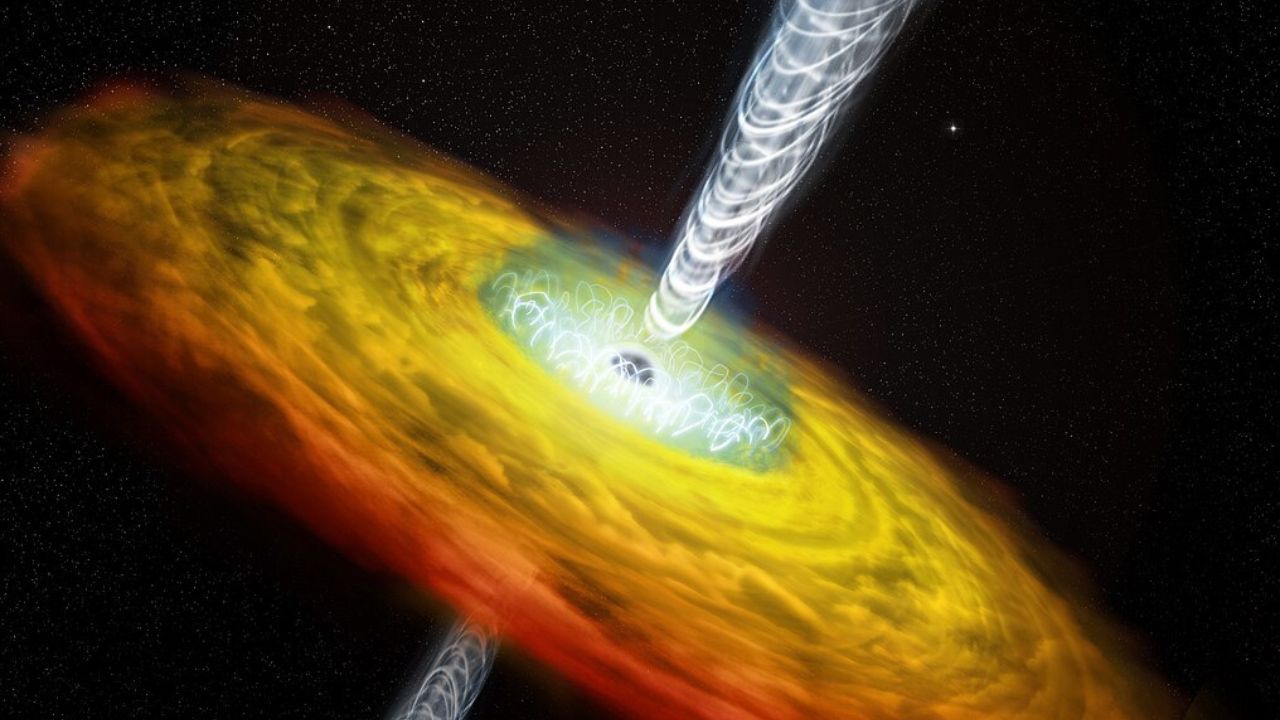
Not every star that is torn apart dies by its own hand. Some are destroyed by the gravity of black holes that catch them in a fatal embrace, stretching and shredding them in what astronomers call tidal disruption events. In one recent case, scientists detected the biggest black hole flare ever seen, with the power of 10 trillion suns, as a massive object ripped into a star in a puzzling way. The flare was so bright that it outshone its host galaxy, a sign that the black hole was feeding on stellar debris at an extraordinary rate.
What makes this event especially intriguing is that it appears to break some of the usual rules that govern how black holes consume stars. The flare’s timing, brightness and spectral features suggest that the accretion process unfolded differently from standard models, hinting at new physics in the way matter falls into extreme gravitational wells. For astronomers, this biggest black hole flare is both a spectacular light show and a laboratory for testing ideas about how black holes grow. From my perspective, it also blurs the line between a star tearing itself apart and being torn apart, since the tidal forces can trigger internal disruptions that finish the job the black hole starts.
A dying star that revealed its heart
While black holes can strip a star from the outside, some supernovae seem to peel them from within, exposing layers that are usually hidden. In one case described as a dying star that revealed its heart, the progenitor was stripped nearly to its core before it exploded, leaving astronomers with a rare view of the inner structure. Before the blast, the star had already lost much of its outer envelope, so when the explosion occurred, the light carried signatures of the deeper layers that are normally buried.
Schulze and colleagues, who studied this event, propose that the stripping could have been driven by a combination of strong stellar winds and interaction with a companion, a pattern that echoes other cases where stars seem to dismantle themselves over time. By analyzing the spectra, they were able to infer the composition and density of the exposed core, effectively turning the supernova into a probe of the star’s heart. Their work on this dying star revealed its heart reinforces the idea that mass loss is not a side note in stellar evolution, it is a central driver of how and when a star finally comes apart.
Watching a shockwave race through a doomed star
To understand how these self inflicted wounds translate into full blown explosions, astronomers have been racing to catch the moment when a supernova shockwave punches through a star’s surface. In one rare success, Yang, Baade and their colleagues managed to watch a shockwave shoot through a dying star, capturing the brief flash that marks the transition from internal collapse to outward blast. They had been monitoring the object closely, and Had they arrived even a day later, they would have missed the crucial signal.
The measurement showed that the shockwave moved through the star at a speed and in a pattern that matched some theoretical models but challenged others, providing a direct test of how energy is transported during core collapse. By comparing the observed light curve with simulations, the team could infer details about the star’s radius, envelope structure and pre explosion mass loss. Their observation of this supernova shockwave is a reminder that the way a star tears itself apart is governed not just by how much mass it has lost, but by how the final collapse sends a shock racing through whatever remains.
A rare, unjumbled glimpse inside an exploding star
Most of the time, by the moment a supernova becomes visible, its interior has already been churned and mixed beyond recognition. That is why a recent observation that offered an amazing rare glimpse inside a dying star as it explodes is so valuable. Researchers were able to observe its unjumbled layers, seeing distinct shells of material rather than a homogenized cloud, which provided a unique window into the heart of a stellar demise. The structure of those layers carries a record of the star’s nuclear burning history, from hydrogen on the outside to heavier elements deeper in.
According to the team, the explosion also shed additional material, but the key was that the initial view preserved the original stratification long enough to study it. One of the Researchers involved noted that they had never observed a supernova with such a clear separation of layers, and warned that it might be tough to capture again because it requires catching the event at just the right moment. Their account of this rare glimpse inside a dying star shows that even when a star is in the act of tearing itself apart, there can be brief moments of order that reveal how it was built.
Stars ripped apart by black holes, from Hubble to rule breakers
While supernovae show stars destroying themselves from within, tidal disruption events reveal what happens when an external monster does the tearing. Images shared in a popular Comments Section about Hubble observations highlight a star being ripped apart by a black hole, with astronomers noting that the resulting flare can outshine the star’s parent galaxy. In such events, the star is stretched into a long stream of gas, part of which falls into the black hole while the rest is flung back into space, creating a luminous display that can last for months.
These encounters are common enough that astronomers have developed standard models for them, but some recent cases are forcing a rethink. One report describes a rule breaking black hole that destroys a star in a puzzling way, challenging expectations about how and where such events should occur. When a star becomes caught in the vice like gravitational grip of a massive black hole, tidal forces set about stretching and compressing it, yet in this case the timing and energy release did not match the usual pattern. Researchers studying this rule breaking black hole argue that it may represent a new class of tidal disruption events, one where the star’s own structure and prior mass loss play a decisive role in how it is torn apart. For me, it is another piece of evidence that whether a star dies by internal collapse or external assault, the path to destruction is shaped by a long history of shedding, stripping and self inflicted change.
A universe of stars unmaking themselves
Taken together, these discoveries sketch a universe in which stars rarely follow a simple script to their end. Some, like the star stripped to its core that Sep and colleagues analyzed, arrive at their final explosion already half dismantled. Others, such as SN2021yfj, show that Scientists are only beginning to map the full diversity of ways a massive star can lose its outer layers and still find a way to blow. A few, if the reports of a star splitting in half hold up, may even fragment under their own internal stresses before gravity finishes the job.
As I look across this landscape of strange supernovae, tidal disruptions and shockwaves caught in the act, the common thread is that stellar death is a process, not a moment. Mass loss, binary interaction, black hole encounters and internal instabilities all conspire over years, centuries or longer to set the stage for what we eventually see as a single bright flash in the sky. The latest observations do not just confirm that scientists may have witnessed a star tearing itself apart, they suggest that in one form or another, almost every dying star is engaged in a slow, complex act of unmaking long before the universe notices.
More from MorningOverview