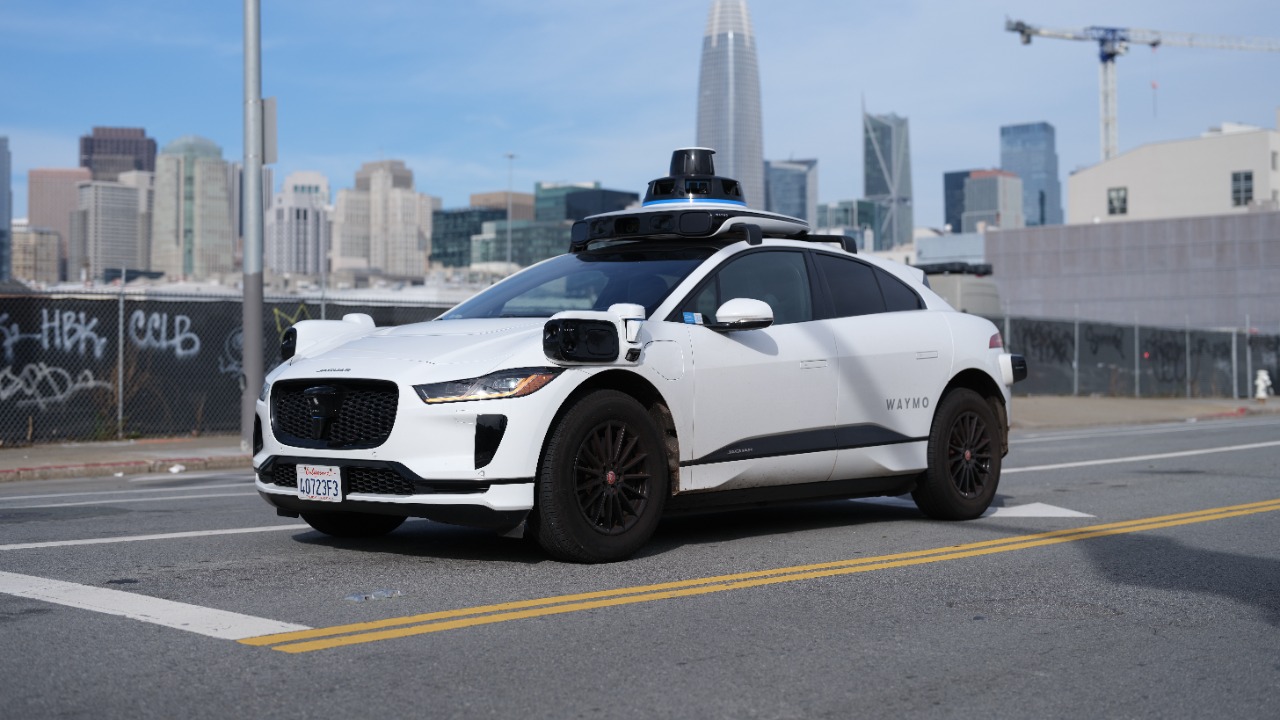

Waymo spent years promising a driverless future, then cut much of the human labor that once sat behind the wheel. Now it is quietly paying people to walk up to stalled robotaxis and shut their doors so the vehicles can move again. The contrast captures a messy truth about automation: even the most advanced self-driving fleets still depend on a patchwork of human work, from remote operators to gig-style “door closers.”
The company’s door problem is not a quirky edge case, it is a structural reminder that autonomy is far from absolute. When a robotaxi refuses to budge because a latch is ajar or a seat belt is caught, the system grinds to a halt and traffic around it can snarl. That is why Waymo has created a small but telling side hustle economy around its cars, even after shedding staff in the name of efficiency and scale.
From bold autonomy pitch to quiet layoffs
Waymo built its brand on the idea that software and sensors could replace professional drivers, a vision that helped justify years of heavy investment inside Alphabet. That vision also underpinned a restructuring push that saw the company trim staff as it tried to prove it could run a lean, scalable robotaxi business. Earlier in its cost-cutting cycle, the company disclosed that the latest round of job cuts would affect 8 percent of its workforce, or more than 130 employees, inside the Alphabet unit that trades under the ticker GOOG.
Those layoffs were framed as a necessary step to focus on core priorities like scaling robotaxis in Phoenix, San Francisco and Los Angeles. Yet cutting staff while expanding service has exposed how much invisible human labor still props up the system. The company may have removed many safety drivers from the front seats, but it has not removed the need for people to intervene when its vehicles get confused, stuck or physically blocked from closing a door.
The “secret army” behind stuck robotaxis
Behind every glossy video of a driverless ride, there is a support network of workers who step in when the technology falters. When a robotaxi stops mid-route or refuses to depart because a door is not fully shut, the app does not magically fix the problem. Instead, a human is dispatched to the scene, sometimes walking several blocks, to push the door closed, free a trapped seat belt or reassure a nervous rider. Reporting on these interventions has described a kind of hidden workforce that exists precisely because the cars cannot yet handle every mundane physical task on their own.
One detailed account of this “secret army” quoted a former head of economics, Keith Chen, who described how even simple actions like making sure doors are latched are treated as part of being “the captain of the ship” for these vehicles. That reporting showed how Waymo’s robotaxis can sit frozen in traffic until a person arrives to resolve the issue, underscoring how much human work still surrounds the supposedly autonomous fleet and how often robot work quietly becomes human work again.
How the door-closing side hustle works
To keep cars moving, Waymo has turned door fixing into a paid micro-task. When a vehicle detects that a door is ajar or obstructed and cannot proceed, the system can trigger a job that appears in a dedicated app for nearby workers. Those workers accept the task, walk to the stranded car, and perform what is often a single physical action: shutting the door firmly until the sensors register that it is secure. For that brief intervention, people are being offered around $20 to $24, a rate pitched as an easy side gig for anyone willing to be on call in robotaxi-heavy neighborhoods.
One report described the program in unmistakable gig-economy terms, noting that “Need a Side Hustle? Waymo Is Paying $20 for Humans to Close Its Doors” and that the company is paying Humans specifically to Close Its Doors. The same reporting highlighted that the simplest fixes, like a single stuck latch, can earn $24 for just a few minutes of work, a rate that has attracted people looking for flexible, low-commitment income in cities where the fleet operates.
From $22 visits to $80 rescues
The pay scale for these interventions reflects how disruptive a stuck robotaxi can be. For routine cases, workers are being paid around $22 to walk up and shut a door on a stranded vehicle, a task that might involve nothing more than checking for debris or a misaligned latch. One account described how Waymo Pays Workers that amount specifically To Close Doors on Stranded Robotaxis, detailing how the company relies on this ad hoc labor pool whenever its cars detect that a door is not properly sealed or that seat belts are caught in doors and preventing movement.
When the situation is more complicated, the payouts rise. If the car is stranded mid-route, blocking a lane or stuck while looking for a charger, workers can earn between $60, $80 for helping the robotaxi recover. Another report put the standard rate at $22 for stuck doors and described how these jobs can involve guiding confused passengers, clearing obstructions or dealing with vehicles that have halted in awkward spots, reinforcing that the more a stranded car disrupts traffic, the more valuable the human fix becomes.
Coverage of these payouts has emphasized how routine the problem has become. One piece noted that Waymo Has to Pay People $22 to close stuck robotaxi doors, describing scenes where vehicles sit motionless with hazard lights on while looking for a charger until a worker arrives to slam the door shut. That reporting underscored how a single misread sensor or slightly open door can immobilize a vehicle that otherwise navigates complex city streets without a driver, and how the company has effectively priced that vulnerability into its operating model through these door-closing payments.
Safety features that still need human backup
Waymo has not ignored the safety risks that come with passengers opening doors into bike lanes or busy traffic. The company has promoted “Safe Exit” features that use the car’s perception system to warn riders before they step out, asking, in its own words, “When arriving at your destination and opening the door, how often do you stop to think who might be on the other side?” Those features are designed to protect cyclists and other road users as riders exit the car, with alerts that nudge people to look before they swing a door open.
Technical upgrades have followed the same logic. Waymo has added new audio and visual alerts that tap into its existing sensor suite to prevent exit door collisions, particularly with cyclists and passing cars. By leveraging the same lidar and camera data that guide the vehicle, the system can warn passengers if someone is approaching, reducing the risk of “dooring” incidents and reinforcing the company’s claim that its robotaxis can be safer than human-driven cars. Yet even as When the software works as intended, the physical reality of doors that must open and close in the real world still creates failure points that often require a person on the sidewalk to resolve.
External observers have noted that these safety alerts are a meaningful improvement but not a complete solution. One analysis pointed out that Waymo utilizes its sensor tech to prevent door collisions and that, by leveraging its existing sensor network, the company can better protect cyclists and other vulnerable road users. However, the same analysis implicitly acknowledged that no amount of software can fully eliminate the need for human judgment and intervention around doors, especially when riders ignore warnings or when the car’s own mechanisms misinterpret whether a door is truly shut, a gap that has helped sustain the door-closing gig.
Blackouts, breakdowns and the limits of full autonomy
The reliance on human helpers becomes even more visible when the broader system falters. During a recent power blackout, reports described how Google’s Waymo taxis mysteriously died in the streets, leaving vehicles stranded and highlighting how dependent the fleet is on a stable electrical grid. Analysts warned that Increased traffic and the industry’s demand for electricity could complicate things for cities, and that In the long term, experts say, driverless services will still need contingency plans for outages, from backup charging to on-the-ground staff who can secure vehicles and assist passengers.
Those same reports raised questions about what happens when a robotaxi loses power mid-ride and cannot manage its own doors or hazard lights. In such scenarios, the company’s existing practice of dispatching workers to close doors or move stranded cars becomes a safety necessity rather than a mere convenience. The blackout incidents showed that even if the driving stack is sophisticated, the vehicles are still embedded in a fragile urban infrastructure, and when that infrastructure fails, human workers are the ones who step in to manage the chaos, a pattern documented in coverage of Waymo taxis during power outages.
From drivers to “door closers”: what jobs are really being created
Waymo’s leadership has long argued that autonomous vehicles will reshape, not erase, transportation jobs, shifting workers from driving to higher value roles. In practice, the company’s current labor footprint looks more like a patchwork of layoffs, remote support teams and low-commitment gigs. The move to cut drivers and other staff while simultaneously paying people to close doors on stranded robotaxis illustrates how automation can hollow out stable employment while creating smaller, more precarious tasks that still rely on human presence.
One synthesis of recent developments put it bluntly, noting that Waymo Ditched Drivers, But It is Paying People To Close Robotaxi Doors. That reporting described how the company’s vehicles will not move if a door is not fully shut, which could impede traffic, and how the firm has responded by building a network of on-call workers who can be summoned through an app to fix the issue. The piece framed this as a telling example of how the autonomous vehicle industry is redefining work, replacing full-time driving jobs with sporadic, narrowly defined tasks that keep the machines running but offer little of the security or identity that came with being a professional driver, a shift captured in the coverage of Waymo Ditched Drivers, But It.
What the door problem reveals about the future of robotaxis
The spectacle of people earning $20 or $22 to close a robotaxi door has become an easy punchline, but it also reveals something deeper about the state of the technology. Self-driving systems excel at pattern recognition and route planning, yet they still struggle with the messy, physical edge cases that human drivers handle without thinking, from coaxing a sticky door to reassuring a hesitant passenger. The fact that Waymo has institutionalized a paid response for these scenarios suggests that the company expects such glitches to persist for some time, even as it refines its software and hardware.
For cities and regulators, the rise of door-closing gigs raises practical questions about how to integrate robotaxis into already strained streets. If vehicles can freeze in place whenever a door sensor misreads, and if the fix depends on a human worker arriving in time, then the reliability of the service is tied not only to code but to the availability of people willing to do this work. The current arrangement, in which workers are paid set amounts to resolve specific problems, looks less like a temporary patch and more like an emerging layer of the mobility ecosystem, one that will shape how residents experience “driverless” rides long after the novelty of seeing a car without a driver has worn off.
Waymo’s balancing act between image and reality
Waymo now finds itself walking a tightrope between its public image as a pioneer of fully autonomous transport and the operational reality that its cars still need human help. On one side, the company showcases sleek Jaguar I-Pace and Chrysler Pacifica robotaxis gliding through city streets, guided by lidar domes and high definition maps. On the other, it quietly coordinates a network of workers who respond when those same vehicles refuse to move because a door is slightly ajar or a sensor is confused, a contradiction that has become harder to ignore as more riders encounter stalled cars in the wild.
In public statements, executives emphasize that there is “always going to be human error” when people interact with complex systems, a line that implicitly shifts some responsibility to riders who leave doors open or seat belts dangling. Yet the company’s willingness to pay for quick fixes, from $20 side hustles to higher rates for more disruptive incidents, shows that it understands the reputational risk of robotaxis that block intersections or sit lifeless during a blackout. The current door-closing program is a pragmatic response to that risk, but it also serves as a reminder that the road to full autonomy is paved with small, often invisible jobs that keep the illusion of a driverless future intact.
More from MorningOverview