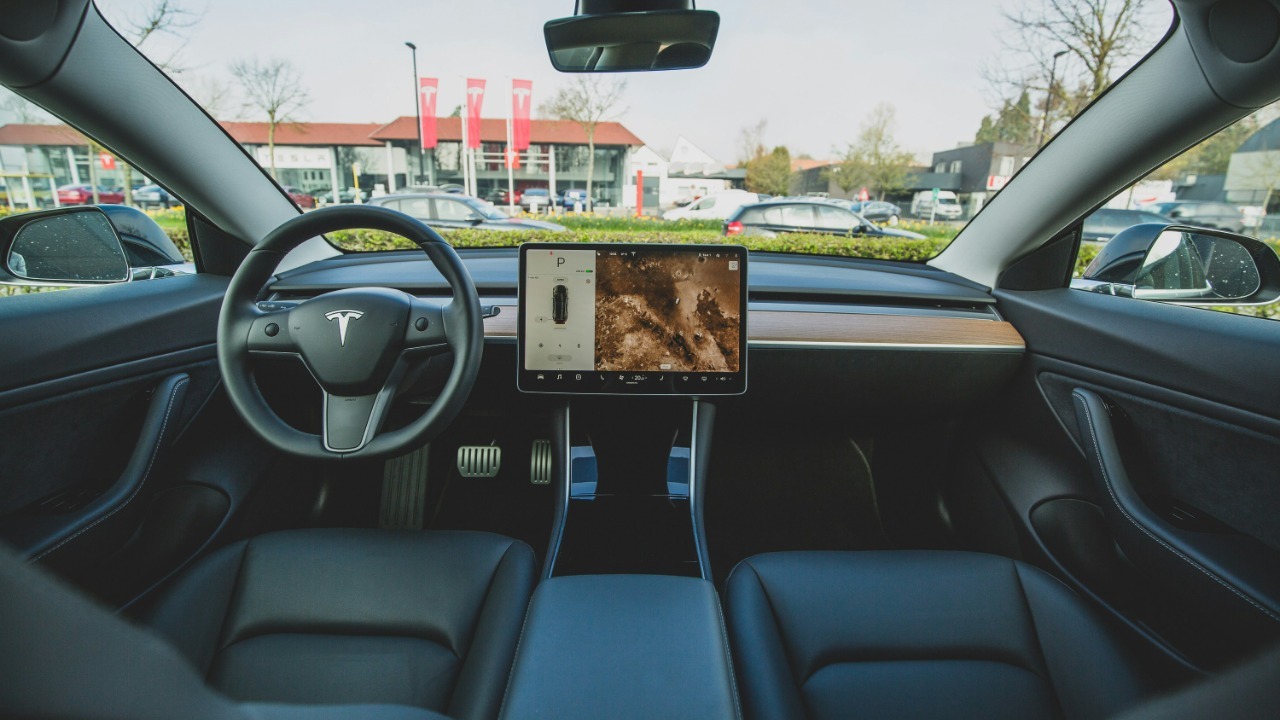

Tesla is quietly edging closer to a feature that could make its cars feel even more like rolling extensions of the iPhone, with evidence mounting that native Apple Car Key support is on the way. Instead of relying solely on Tesla’s own app and Bluetooth key cards, drivers could soon unlock, lock, and start their vehicles directly from Apple Wallet, using the same interface that already holds boarding passes and credit cards. For a company that has historically preferred its own software stack, this shift would mark a significant concession to how deeply the iPhone now shapes daily life.
If Tesla follows through, the upgrade would land alongside a broader pivot toward tighter integration with Apple’s ecosystem, including long‑rumored CarPlay support and a growing list of iPhone‑style conveniences. I see this as less a sudden change of heart and more a pragmatic response to customer expectations, as rivals embrace Apple and Android features that make ownership simpler, safer, and more shareable.
Hints inside Tesla’s software point to Apple Wallet car keys
The clearest sign that something is changing comes from Tesla’s own software, where code sleuths have spotted references that strongly suggest work on an Apple Wallet car key. Internal strings indicate that Tesla might be working on support for iPhone car key functionality that would live alongside existing digital keys, rather than replace them. That matters because it suggests a native implementation of Apple’s standard, not just a cosmetic shortcut to the existing Tesla app.
Under the hood, the same digging points to hooks that would let a Tesla key live inside Apple Wallet and behave like other secure passes, with the same system‑level protections and convenience. The code references are not a public feature toggle yet, but they are specific enough to show that engineers are building toward a Wallet‑based credential rather than a generic Bluetooth key. For a company that typically ships features as soon as they are usable, the presence of this scaffolding is a strong early indicator of where the product is headed.
Why Apple Car Key support would be a bigger deal than it sounds
On paper, Tesla owners already enjoy phone‑as‑key convenience, so it is fair to ask why Apple Car Key matters. The answer is that Apple’s implementation is deeply integrated into iOS, which means the key can be managed, backed up, and restored like any other Wallet pass, and it can work even when the dedicated Tesla app is not running. Reports suggest that this could hint that Tesla plans to add native support for Apple and Android standards more broadly, which would align its cars with the way other major automakers now handle digital keys.
Apple Car Key also brings a standardized user experience that travels with the driver, not the car brand. Someone who already uses Wallet keys for a BMW or Hyundai would find the same interface when adding a Tesla, with the same security prompts and sharing flows. That consistency reduces friction for buyers who move between brands and makes it easier for Apple to keep improving the underlying technology without waiting for each automaker to reinvent the wheel.
From CarPlay holdout to iPhone‑friendly: Tesla’s broader pivot
The Wallet integration chatter is landing just as Tesla appears to be softening its long‑standing resistance to Apple’s in‑car software. According to reporting that cites internal planning, Bloomberg reports that Tesla will add Apple’s CarPlay phone projection system to its vehicles, a move that would reverse years of insisting on its own interface. For drivers who live inside Apple Maps, Messages, and Apple Music, that shift would instantly make Tesla cabins feel more familiar.
At the same time, coverage of the Wallet work notes that Tesla Might Add Another iPhone Feature Users Will Love With Apple CarPlay, suggesting that the company is not treating CarPlay and Car Key as isolated experiments. Instead, I read this as a coordinated strategy to meet iPhone owners where they already are, from the lock screen to the dashboard. For a brand that once prided itself on going it alone, embracing Apple’s ecosystem looks less like capitulation and more like a calculated way to keep its cars at the center of a user’s digital life.
How Wallet keys could change daily life for Tesla drivers
For owners, the appeal of a Wallet‑based key is not abstract. If Tesla follows Apple’s template, drivers would be able to tap an iPhone or Apple Watch near the door handle to unlock, then start the car without ever opening the Tesla app. Reporting notes that Tesla could soon let iPhone users lock and start cars directly from Apple Wallet, which would put the key alongside payment cards and transit passes in a single, glanceable interface. That reduces the cognitive load of juggling multiple apps just to get moving.
There is also a subtle but important benefit when something goes wrong. If the Tesla app crashes, or if a software update temporarily breaks its Bluetooth permissions, a Wallet key can still function because it is managed by the operating system itself. For drivers who rely on their car for work or school runs, that extra layer of redundancy can be the difference between a minor annoyance and a ruined day. In that sense, the feature is less about novelty and more about resilience.
Sharing, security, and what happens when your phone dies
One of the most powerful aspects of Apple Car Key is how easily it lets owners share access without handing over a physical fob. Coverage of the Tesla work notes that if the company moves its keys into Wallet, you could also share your car key just like you share photos or contacts, through Messages, Mail, and AirDrop. That makes it trivial to grant a partner, teenager, or visiting friend temporary access without meeting in person or coordinating key cards.
Security is the other side of that coin, and here Apple’s system offers some clear advantages. Wallet keys can be revoked instantly if a phone is lost, and they can be limited to specific functions or time windows. The same reporting points out that Apple’s implementation can work even when the smartphone battery is dead, using a low‑power mode that keeps the NFC chip alive for a limited period. For Tesla owners who have ever returned to a parking lot with a drained phone, that detail alone could make the feature feel indispensable.
What the Apple Car Keys reports actually say about Tesla
Speculation about Wallet support is not happening in a vacuum, it is grounded in detailed reporting that tracks how Tesla is testing and rolling out new capabilities. One analysis notes that Support for Apple Car Keys may now be more likely to come to Tesla vehicles, with indications that the company could start with limited regions or models before expanding globally. That phased approach would mirror how Tesla has handled features like Full Self‑Driving and new Autopilot behaviors, which often debut in North America before reaching Europe or Asia.
Another report highlights how the Wallet work fits into a broader pattern of Tesla quietly aligning with Apple’s standards while still maintaining its own identity. It notes that the company has historically preferred to control every pixel of the in‑car interface, yet is now preparing to host both CarPlay and Car Key alongside its own software. I see that as a recognition that the value of a Tesla is no longer just in its hardware or even its proprietary UI, but in how seamlessly it plugs into the devices people already carry.
Inside Tesla’s recent software updates: Grok, FSD, and more
The Wallet rumors are emerging against a backdrop of rapid software evolution inside Tesla’s fleet. Recent release notes for version 2025.45.5 Overview highlight how the company continues to treat its cars as updatable computers, with FSD (Supervised) v14.2.2 listed as a New Feature alongside Arrival Options and other refinements. The explicit mention of 45.5 and 2.2 underlines how quickly Tesla iterates on its Full Self‑Driving stack, often shipping multiple builds in short succession.
Shortly afterward, another update, 2025.45.7, introduced a new layer of intelligence inside the cabin. The notes explain that Grok can now add and edit navigation destinations, becoming your personal guide, and that You can ask Grok to navigate to the best nearby coffee shop or adjust routes on the fly. That same update also references the ability to capture snapshots of your vehicle’s cabin, underscoring how Tesla is weaving AI assistance and camera features deeper into the everyday driving experience.
Grok, Tesla Photobooth, and the iPhone‑style feature creep
The 45.7 build did more than upgrade navigation, it also added a playful but telling capability called Tesla Photobooth. The release notes describe how Tesla Photobooth (part of 2025.45.7) lets you Turn your car into a photobooth, Take selfies from inside your Tesla and give you new ways to share moments from the cabin. Owners can set Grok’s personality to Assistant, tailoring how the system responds, which feels very much like the personalization options people expect from smartphones.
Features like Photobooth might seem frivolous at first glance, but I see them as part of the same trajectory that leads to Wallet keys and CarPlay. The car is becoming a social and creative space, not just a transportation appliance, and Tesla is borrowing liberally from the language of mobile apps to keep drivers engaged. In that context, adding an iPhone‑native key is less a bolt‑on and more a natural extension of a strategy that treats the vehicle as another node in a user’s digital ecosystem.
How Tesla stacks up against Apple‑friendly rivals
Tesla’s move toward Apple Wallet and Car Key also reflects competitive pressure from other automakers that have already embraced Cupertino’s standards. One report points out that Elon Musk’s Tesla cars may soon get support for another Apple feature, noting that HarmonyOS is very popular in China and that local brands have started moving toward similar systems. In other words, Tesla is not just responding to Apple, it is responding to a global shift in how cars integrate with dominant phone platforms, whether that is iOS, Android, or HarmonyOS.
At the same time, coverage of Wallet keys in the context of other EV makers notes that Rivian, another electric car brand, has already experimented with advanced digital key sharing as part of the company’s testing strategy. When Tesla finally lands on a full Apple Car Key implementation, it will be catching up to, not inventing, a trend that competitors have used to differentiate their offerings. That reality likely adds urgency to Tesla’s efforts to deliver something that feels at least as polished as what is already available elsewhere.
CarPlay Ultra, future dashboards, and what comes next
Any discussion of Tesla and Apple integration now has to account for the next generation of in‑car interfaces that Apple is preparing. A recent video breakdown shows how Apple’s new CarPlay Ultra is designed to take over multiple screens, control climate settings, and deliver a deep, customizable layout that goes far beyond simple mirroring. The same coverage notes that Tesla’s 2025 holiday update brings Grok navigation, Santa Mode, and more, underscoring how both companies are racing to define what a modern dashboard should feel like.
If Tesla does indeed roll out full CarPlay alongside Wallet keys, it will have to decide how much of its own interface to cede to Apple’s Ultra experience. I suspect the company will try to strike a balance, letting CarPlay handle media and messaging while keeping core vehicle controls inside its own UI. Whatever the exact split, the direction of travel is clear: the line between car software and phone software is blurring, and Tesla is preparing to live in a world where Apple, not just Tesla, shapes what happens when you sit behind the wheel.
Why this iPhone‑style key could be the feature drivers talk about most
For all the attention on Full Self‑Driving and AI copilots, the feature that owners may feel most often is the one they use every time they approach the car. A Wallet‑based key that just works, that can be shared in seconds, and that survives a dead battery through low‑power NFC is the kind of quiet convenience that quickly becomes non‑negotiable. When reports say Apple Car Key could make its way to Tesla vehicles, they are really describing a shift in how drivers will think about ownership, access, and trust.
In my view, that is why the emerging support for Apple Wallet keys feels like more than just another bullet point in a software update. It signals that Tesla is willing to let the iPhone sit at the center of the experience, from navigation with Grok to entertainment with CarPlay and now to the fundamental act of unlocking the door. If and when the feature arrives, it will not just be another iPhone‑style flourish, it will be a daily reminder that the car in your driveway is part of the same ecosystem as the phone in your pocket.
More from MorningOverview