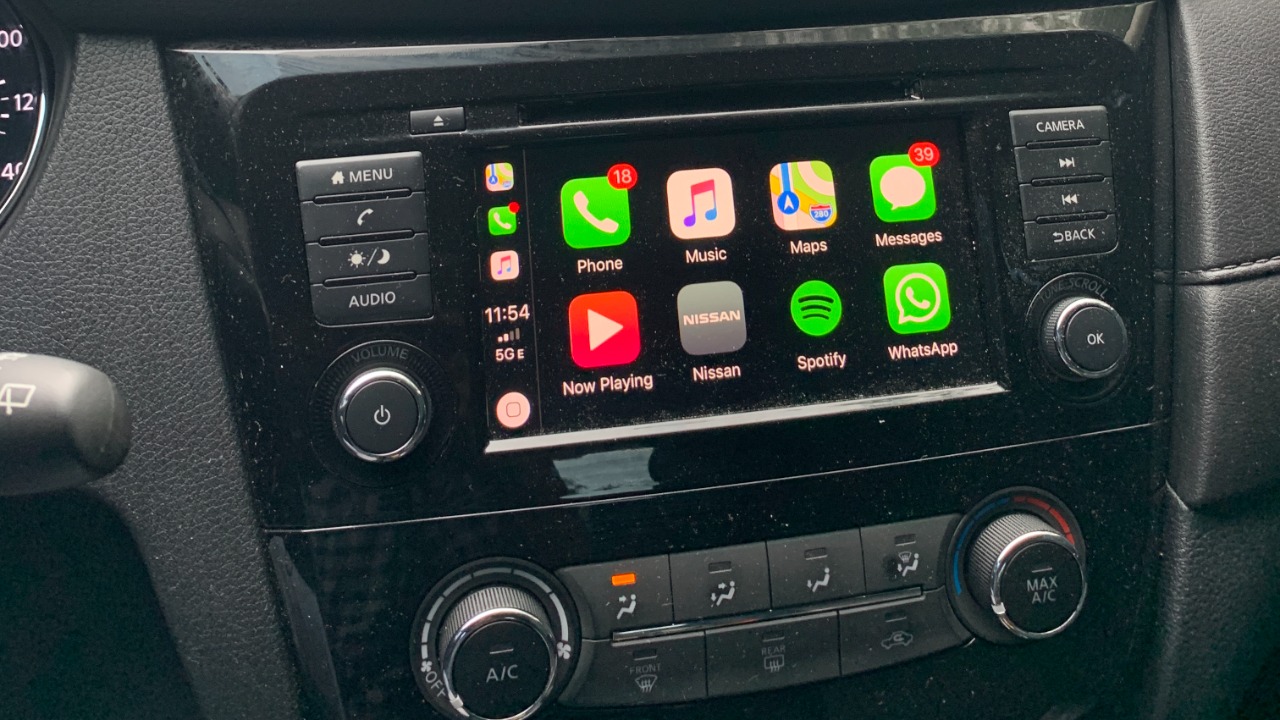

Ford is drawing a clear line in the dashboard wars, telling customers that Apple CarPlay is not going anywhere in its vehicles even as rivals rethink their approach. The company is betting that keeping familiar phone-mirroring systems is better for drivers and for sales than chasing every new software trend. That stance has turned Ford into an unlikely standard-bearer for CarPlay loyalists just as the rumor mill keeps predicting its demise.
Ford’s public promise: CarPlay and Android Auto are staying
Ford has not been coy about its position. Ford CEO Jim Farley has said directly that the company will keep Apple CarPlay and Android Auto in its vehicles, conceding that in the battle over who controls the in-car screen, “we lost that battle 10 years ago.” In other words, Ford CEO Jim Farley is acknowledging that drivers already expect their phones to run the show, and that trying to rip out Apple and Google at this point would be a losing move for a mass-market brand that sells everything from compact SUVs to work trucks, a stance that has been contrasted with General Motors after GM’s decision to move away from these integrations in some models was widely noted in the same context, including the phrase “After General Motors” in coverage of Farley’s comments, which appeared in a piece titled Ford CEO Says It Will Keep Apple. That blunt assessment helps explain why Ford is not following the industry trend of quietly phasing out phone projection in favor of proprietary software.
Farley’s comments have been echoed in enthusiast communities that track Ford’s tech decisions closely. On one owners’ forum, users highlighted how Ford will keep Apple CarPlay and Android Auto in its vehicles and cited the same interview with Ford CEO Jim Farley as proof that the company is not just hedging its bets but making a clear commitment to Apple integration, with posters dissecting what that means for upcoming electric crossovers and trucks and linking back to the original Ford CEO Jim Farley remarks. I see that consistency between executive statements and community expectations as a key reason the latest rumors about Ford “dropping” CarPlay have struggled to gain traction among informed buyers.
Why some automakers are walking away from CarPlay
To understand why Ford’s stance matters, it helps to look at the companies moving in the opposite direction. The prime reason GM and other automakers have been moving away from CarPlay and Android Auto is simple, and it is not about aesthetics or even reliability, it is about data. When drivers plug in their phones and live inside Apple’s or Google’s interface, the data about routes, media habits, and even voice commands flows primarily to the phone maker and not the car company, a dynamic that has been laid out bluntly in analysis of why automakers are ditching these systems in favor of in-house software, with one report noting that “The prime reason GM and other automakers have been moving away from CarPlay and Android Auto is simple: data. When you…” and tying that shift to broader efforts to own the customer relationship, as detailed in coverage of Android Auto. For those companies, the logic is that controlling the operating system means controlling the revenue streams that come with subscriptions, app stores, and targeted services.
That strategy has already produced visible flashpoints. A Spanish-language video segment that has circulated widely among enthusiasts, titled “GM removes Apple CarPlay | Ford cancels the F-150 …,” walks through how General Motors is stripping CarPlay from some electric models while Ford is making separate, controversial decisions like canceling certain F-150 configurations, and the host warns viewers in Spanish to “agárrense” as the situation escalates, underscoring how emotionally charged these tech choices have become for drivers who see them as part of a broader shift in control, a moment captured in the clip labeled with “Oct” in its description and shared at Oct. I read that reaction as a sign that automakers who cut off Apple and Google are not just making a software swap, they are asking customers to trust a new ecosystem that may not yet match the polish or familiarity of what they are losing.
Ford’s customer-first argument: people “love the capability”
Ford’s counterargument is straightforward: customers like what they already have. In tech forums that track industry moves, users have cited internal chatter that Ford reportedly commits to Apple CarPlay “because customers love the capability,” a phrase that has become shorthand for the company’s belief that ripping out a feature people use every day is a recipe for backlash, with one discussion thread explicitly titled “Ford reportedly commits to Apple CarPlay ‘because customers love the capability’” and linking that sentiment to Ford’s broader product planning, as seen in the conversation around Ford reportedly commits to Apple. I see that as more than a throwaway line, it is a recognition that in-car tech is now a primary purchase driver, especially for younger buyers who treat the dashboard as an extension of their smartphone.
That customer focus shows up again in Apple-centric communities where Ford’s stance has been warmly received. In one discussion titled “Ford reaffirms its ongoing commitment to CarPlay,” users on r/apple praised the company for listening to drivers, with one commenter noting that “They’ve done it for as long as I’ve been alive” when talking about automakers making controversial decisions, and others contrasting Ford’s reassurance with brands that are “pretty much death traps in the modern…” context of tech and safety, a thread that is explicitly tagged with “Dec” in its metadata and has become a touchpoint for Apple fans evaluating which carmakers still feel aligned with their preferences, as seen in the conversation at They. When I read those exchanges, I see Ford effectively turning CarPlay support into a brand differentiator, a way to signal that it is on the driver’s side in a tug-of-war over who controls the screen.
Enter CarPlay Ultra, and Ford’s cool reception
The twist is that Ford’s embrace of CarPlay does not extend uncritically to every new Apple feature. Apple has introduced a more capable next-generation system called CarPlay Ultra, a platform that aims to spread across multiple screens, integrate more deeply with vehicle functions, and “nearly conquer” the automotive market by turning the car into an Apple-skinned environment, a vision described in coverage that opens with the phrase “Having nearly conquered the automotive market, Apple recently unveiled a more capable next-generation system, CarPlay …” and frames CarPlay Ultra as the logical next step in that expansion, as laid out in analysis of Having. For Apple, Ultra is a way to move from being a guest on the dashboard to being the host.
Ford has been far more cautious about that leap. Reporting on the company’s internal view notes that Ford will not install CarPlay Ultra for now, with executives signaling that they do not think the current version is worth using yet, even as they insist they will continue to support Apple CarPlay in its existing form and leave the door open to reconsider Ultra in future iterations, a position summarized in coverage that states “Ford insists it will continue to support Apple CarPlay. While some car manufacturers are turning their back on CarPl…” and explains that Ford will look at future versions before making a final call, as detailed in analysis of how Ford is weighing the tradeoffs. I read that as Ford trying to thread a needle: keep the CarPlay people know, but avoid handing Apple the keys to every gauge and control in the cabin until the value proposition is clearer.
What Ford’s CEO really thinks of CarPlay Ultra
Jim Farley has not hidden his skepticism about Apple’s more ambitious dashboard takeover. In enthusiast discussions that dissect his comments, one recurring theme is that Ford’s CEO is not impressed with CarPlay Ultra, with users on r/cars summarizing his view as seeing Ultra as “simply just a customizable visual overlay that can be toggled on or off as you please,” and one commenter named lostboyz adding that “Thi…” version of CarPlay does not yet justify the engineering and control tradeoffs that come with deeper integration, a sentiment captured in a thread explicitly titled “Ford’s CEO isn’t impressed with Apple CarPlay Ultra” and tagged with “Sep” in its metadata, which has been widely shared among car tech watchers and can be read in full at Thi. When I look at that reaction, it suggests Farley sees Ultra as more cosmetic than transformative, at least in its current form.
That skepticism is not happening in a vacuum. Other premium brands have already started rolling out CarPlay Ultra, with Aston Martin introducing Ultra in May 2025 on models like the DBX and earning positive reviews for the seamless way it spans multiple displays, a rollout that has been chronicled in forum discussions listing “Aston Martin rolled out CarPlay Ultra in May 2025 on models like the DBX, with positive reviews highlighting seamless …” and grouping Aston Martin, Porsche, and others into a camp that is leaning into Ultra while also noting that multiple reports confirm some brands have no interest in CarPlay at all, a dynamic laid out in a thread that also speculates about Ford (potentially) joining the Ultra adopters later, as seen in the detailed breakdown of Aston Martin. Against that backdrop, Ford’s hesitation looks less like technophobia and more like a deliberate choice to wait and see whether Ultra’s deeper hooks into the car justify the loss of control over the interface.
The Ford Digital Experience: Ford’s own software play
Ford’s confidence in keeping CarPlay while holding Ultra at arm’s length is easier to understand once you look at its own software roadmap. The company is rolling out something it calls The Ford Digital Experience, described in its support materials as “our newest spin” on in-car tech and framed explicitly as an evolution of SYNC, with FAQs that ask “How does the Ford Digital Experience Technology compare to SYNC Technology?” and answer that The Ford Digital Experience is designed to offer a more app-like environment, faster updates, and tighter integration with vehicle systems than the older SYNC platform, a positioning laid out in detail in the official overview of How. From my perspective, that shows Ford wants to own the base layer of the car’s operating system even as it continues to host Apple and Google on top.
In practice, that means future Ford dashboards are likely to feel more like smartphones even before you plug in a device. The Ford Digital Experience is pitched as a way to bring streaming apps, navigation, and over-the-air updates into a unified interface that Ford controls, while still allowing drivers to switch into Apple CarPlay or Android Auto when they prefer those ecosystems, a dual-track approach that the company contrasts directly with SYNC by describing Ford Digital Experience Technology as a more modern, flexible platform that can coexist with phone projection rather than replace it, as spelled out in the same support documentation for The Ford Digital Experience. I see that as Ford trying to capture some of the data and subscription upside that has tempted rivals to ditch CarPlay, without forcing customers to abandon the Apple and Android experiences they already rely on.
Rumors, Reddit, and the reality of Ford’s CarPlay stance
Despite these clear signals, rumors about Ford “dropping” CarPlay have persisted, often fueled by confusion over CarPlay Ultra versus the existing system. In Apple-focused communities, some users initially interpreted Ford’s refusal to adopt Ultra as a broader retreat from Apple integration, only to be corrected by others who pointed back to Farley’s explicit promise to keep Apple CarPlay and Android Auto and to Ford’s insistence that it will continue to support Apple CarPlay even as it evaluates Ultra, a clarification that has been repeated in threads like the r/apple discussion where Ford reaffirms its ongoing commitment to CarPlay and in the AppleInsider coverage that notes “Ford insists it will continue to support Apple CarPlay. While some car manufacturers are turning their back on CarPl…,” which is linked directly in the piece about how While Ford is handling Ultra. When I follow those conversations, the pattern is clear: speculation flares up, then gets tempered by the actual record of what Ford has said.
On the car enthusiast side, the narrative is similar. Threads that start with provocative titles about Ford’s CEO not being impressed with CarPlay Ultra often evolve into nuanced debates about the difference between rejecting Ultra and rejecting CarPlay itself, with posters pointing back to the earlier interviews where Ford CEO Jim Farley said the company would keep Apple CarPlay and Android Auto and acknowledged that “we lost that battle 10 years ago,” a line that has become something of a meme among tech-savvy drivers who see it as a rare moment of candor from a major automaker, as originally reported in the piece labeled We Lost That Battle. From where I sit, the persistence of the rumor mill says less about Ford’s actual plans and more about how unsettled the broader industry still is about who should own the digital cockpit.
What Ford’s decision means for drivers and the industry
For drivers, Ford’s message is relatively simple: if you buy one of its vehicles, your existing Apple CarPlay setup will continue to work, and you will not be forced into a proprietary interface that may or may not match what you are used to. That reassurance matters most for buyers who have built their routines around CarPlay features like Apple Maps, Spotify, and Messages, and who see the car as just another screen in their Apple ecosystem, a group that has been vocal in r/apple threads praising Ford’s ongoing commitment and criticizing brands that are “turning their back on CarPl…” as described in the coverage of how Apple fans are reacting. I see Ford effectively using CarPlay support as a trust signal, especially as more of the ownership experience moves into software updates and connected services.
For the industry, Ford’s stance complicates the narrative that automakers are uniformly marching away from Apple and Google. On one side, there are companies like GM that are willing to sacrifice short-term goodwill to chase long-term data and subscription revenue, a strategy dissected in the analysis of why automakers are ditching CarPlay and Android Auto for data advantages, as seen in the breakdown of When carmakers made that call. On the other side, Ford is trying to have it both ways, building The Ford Digital Experience as its own software platform while keeping Apple CarPlay and Android Auto as core features and taking a wait-and-see approach to CarPlay Ultra. From my vantage point, that hybrid strategy may end up being the template for mainstream brands that cannot afford to alienate customers but also do not want to surrender the entire digital experience to Silicon Valley.
More from MorningOverview