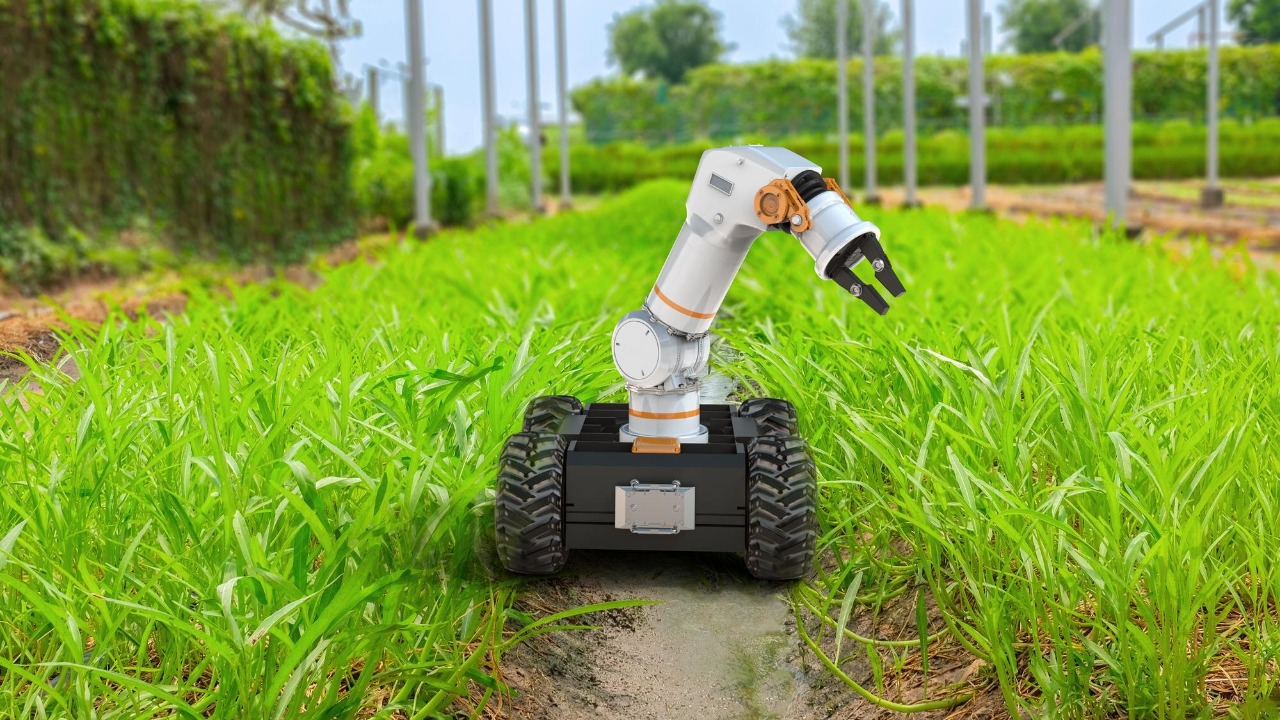

Artificial intelligence is quietly reshaping how crops are bred, and the biggest gains may come not in corn or wheat but in the neglected staples that feed millions on the margins. By pairing data-driven breeding with local knowledge, researchers hope to turn “orphan crops” into climate-resilient anchors of food security rather than afterthoughts in global agriculture. I see AI breeding emerging as a bridge between cutting-edge genomics and the everyday resilience strategies of smallholder farmers.
That shift matters because population growth, climate volatility and fragile supply chains are converging on the same pressure point: the need for more diverse, robust crops that can thrive where industrial staples fail. AI-guided breeding promises to speed up improvement cycles, sharpen trait selection and make it easier to match seeds to local diets and cultures, giving orphan crops a realistic path from research plots to dinner plates.
Why orphan crops matter in a warming, crowded world
Orphan crops are the grains, legumes and roots that rarely appear in global commodity markets but are central to diets in specific regions, from millets in the Sahel to teff in the Horn of Africa. In agricultural research and development, they have historically received a fraction of the funding and scientific attention devoted to major cereals, even though they are often better adapted to poor soils, erratic rainfall and heat. As climate change accelerates and population growth strains already stressed food systems, that neglect has become a structural risk to food security rather than a mere oversight.
Researchers working on Caretakers of Orphan Crops describe how these species underpin livelihoods across eastern and southern Africa, yet remain underfunded despite their resilience and cultural importance. A separate analysis framed as an Abstract argues that Population growth, climate change and limited dietary diversity are converging to threaten food security, and that revitalizing orphan crops is one of the most direct ways to diversify diets while adapting to harsher conditions. I see AI breeding as the missing accelerator that can finally give these crops the scientific backing they have long lacked.
From neglected to strategic: the case for AI in orphan crop breeding
Traditional breeding for orphan crops has been slow because breeders often work with limited funding, sparse genetic data and small, scattered field trials. AI changes that equation by making it possible to extract value from every data point, whether it comes from a research station, a farmer’s field or a smartphone photo. Instead of waiting through many seasons to see which lines perform best, breeders can use predictive models to narrow the field, focusing scarce resources on the most promising crosses.
One review of orphan crop genomics notes that with concurrent advancements in genomics and data science, these species can finally be integrated into modern breeding pipelines that contribute to global food security, a point underscored in the Population growth analysis. At the same time, AI tools originally built for major crops, such as image recognition and sensor platforms, are being adapted to smaller programs, as described in a survey of Artificial Intelligence in Plant Breeding. I see this convergence as a strategic opening: once AI pipelines exist for maize or rice, extending them to sorghum, cowpea or finger millet becomes a question of political will and data collection, not basic feasibility.
How AI is changing the mechanics of plant breeding
At its core, AI breeding is about using algorithms to predict which crosses will produce offspring with the traits breeders want, from drought tolerance to higher iron content. Instead of manually sifting through thousands of plots, breeders can feed genomic markers, environmental data and past performance into machine learning models that rank candidate lines by their likelihood of success. This does not replace fieldwork, but it dramatically reduces the number of lines that need to be grown and evaluated in detail.
Analysts tracking Plant Breeding report that AI is now used to integrate satellite imagery, drone data and ground sensors, allowing breeders to see how plants respond to stress across entire seasons rather than at a few snapshot moments. In parallel, yield prediction tools built on recurrent neural networks are learning from time-series data to track how changing conditions over a season affect performance, with one guide noting that such neural networks demonstrate high accuracy when trained on well curated datasets. For orphan crops, which often grow in highly variable environments, this kind of dynamic modeling is especially valuable because it captures the real-world stress patterns farmers face.
Participatory AI: putting farmers at the center of crop improvement
AI breeding can easily become a top-down exercise if it is driven only by data scientists and breeders sitting far from the fields. The most promising work I see instead treats farmers as co-designers, using digital tools to capture their preferences and observations at scale. Participatory AI approaches aim to align models with what communities actually value, whether that is taste, cooking time, storage qualities or cultural significance, not just yield per hectare.
One study on Computer vision enabled mobile phenotyping reports RESULTS AND CONCLUSIONS showing that smartphone-based scoring can cut variation in trait assessment while making it easier for farmers to contribute data. The authors highlight that such systems help identify high performing and culturally relevant varieties, a crucial safeguard against breeding programs that might otherwise push seeds that do not fit local cuisines or labor patterns. I see this as a template for orphan crops: if farmers can use simple apps to record how new lines perform in their own fields, AI models can learn from thousands of micro-experiments instead of a handful of research plots.
AI, gene editing and the race for climate resilience
AI breeding does not operate in isolation; it increasingly sits alongside gene editing tools that can introduce or tweak traits with surgical precision. In practice, AI can help identify which genes or genomic regions are most strongly associated with desirable traits, guiding CRISPR experiments and reducing the trial-and-error that has long characterized molecular breeding. For climate resilience, that means faster progress toward crops that can survive droughts, floods or heat waves that would wipe out conventional varieties.
Reporting on climate smart agriculture describes how Scientists are using AI together with CRISPR genome editing to develop drought resistant rice paddies, with one trial showing that only a fraction of the modified plants survived under extreme stress but that those survivors offered a blueprint for future breeding. The same logic applies to orphan crops: AI can help sift through thousands of candidate edits or gene combinations to find the few that deliver real gains in harsh environments. I see this as a race against time, because climate shocks are already hitting smallholder regions where orphan crops are staples, and incremental improvements may not be enough.
Startups and speed: compressing breeding cycles with AI
While public research institutions lay much of the groundwork, startups are pushing the limits of how fast AI can move new varieties from concept to field. Their pitch is simple: use machine learning to predict the best crosses, automate parts of the breeding process and deliver seeds that are tuned to future climates rather than past averages. For orphan crops, which often lack commercial champions, these models could be adapted to accelerate improvement once basic genomic and phenotypic data are available.
One company profiled for using AI to “supercharge” breeding explains that conventional crossing still involves rubbing two flowers together, then growing out thousands of plants over several seasons to see which ones work, a process that can take a decade or more. By contrast, its Dec era platform uses models to narrow the field before a single seed is planted, cutting years off the cycle and reducing the land and labor required. I see a clear opportunity for public private partnerships here: startups can supply the algorithms and automation, while national programs focused on Caretakers of Orphan Crops, Nurturing Resilience and Food Security can supply local germplasm, farmer networks and a mandate to prioritize nutrition and equity over short term profit.
Data, bias and the risk of leaving farmers behind
For all its promise, AI breeding is only as good as the data it learns from, and orphan crops start with a disadvantage. Many have limited genomic resources, patchy yield records and few standardized phenotyping protocols, which can lead models to overfit small datasets or misinterpret noise as signal. If most of the training data comes from research stations or better resourced farmers, the resulting varieties may perform poorly in the marginal environments where they are most needed.
The participatory phenotyping work that produced the RESULTS and CONCLUSIONS on mobile tools offers one way to counter this bias by expanding who contributes data and how traits are defined. Similarly, yield prediction systems built on Jul era neural networks must be stress tested across diverse environments before they are used to make high stakes breeding decisions. I believe that without explicit safeguards, AI breeding could inadvertently deepen existing inequalities by channeling resources toward crops, regions and farmers that already generate the cleanest data.
What success could look like for food security
If AI breeding for orphan crops lives up to its potential, the impact on food security would be felt in multiple layers at once. Farmers in drought prone regions could access varieties that not only survive erratic rainfall but also meet local taste and processing requirements, reducing the pressure to switch to imported staples. Nutrition could improve as iron rich millets, protein dense legumes and vitamin packed leafy crops become more productive and reliable, helping households diversify away from calorie heavy but micronutrient poor diets.
The Nov analysis on revitalizing orphan crops argues that with concurrent advancements in genomics and AI, these species can make a measurable contribution to global food security rather than remaining niche. Combined with the field level insights from Jun work on Caretakers of Orphan Crops, Nurturing Resilience and Food Security, a picture emerges of a food system that is more regionally grounded yet globally informed. I see AI breeding not as a silver bullet but as a powerful amplifier: if it is aligned with farmer priorities and backed by sustained investment, it can turn long overlooked crops into frontline defenses against hunger in a hotter, more crowded world.
More from MorningOverview