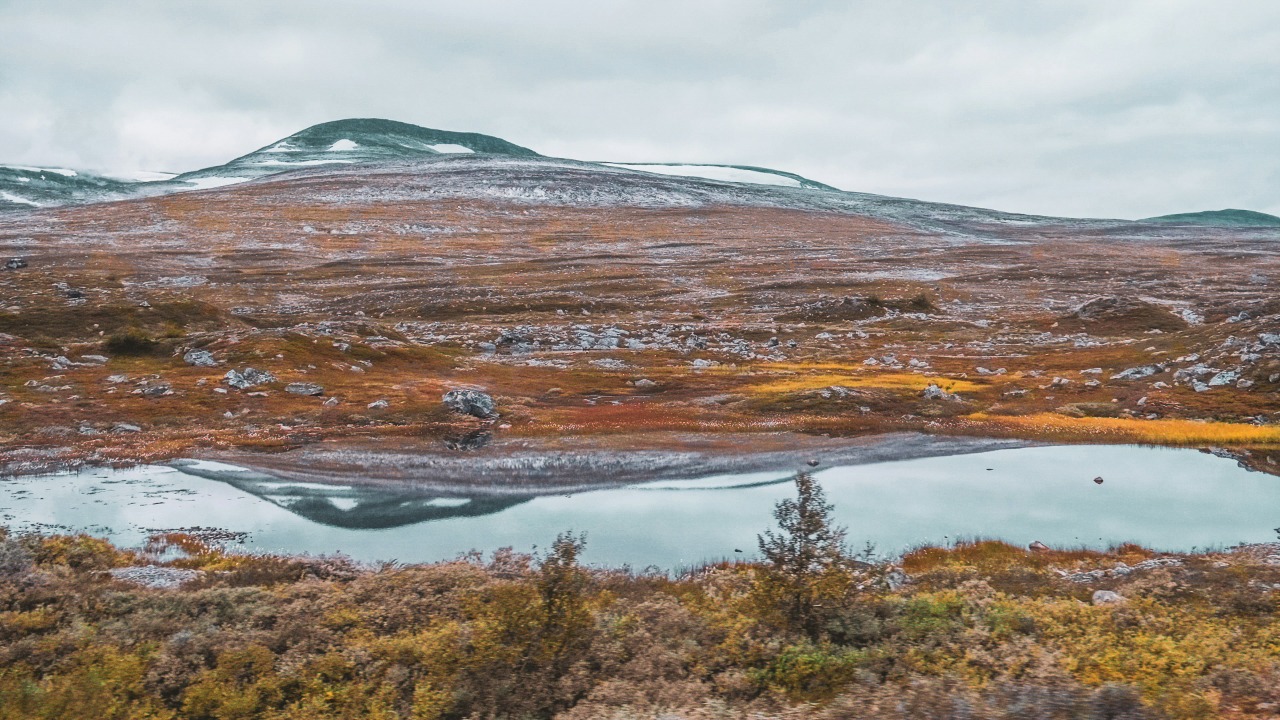

Across Arctic Alaska, once-clear rivers are shifting to shades of pumpkin, rust and even blood red, a startling visual proof that thawing ground is spilling buried minerals into the water. What looks like pollution from a mine is, in many cases, a climate-driven chemical reaction that is reshaping ecosystems, threatening fish and unsettling communities that depend on these streams for food and drinking water.
Scientists now see these color changes as an early warning system for a deeper transformation under way in the far north, where warming is destabilizing frozen soils and releasing metals that had been locked away for millennia. I see the orange rivers as a visible line connecting global greenhouse gas emissions to local consequences in Alaska, the Arctic and beyond.
From pristine blue to “milky orange juice”
The first thing that strikes people on the tundra is how fast the water has changed. Pilots and researchers who once navigated by clear, blue channels now describe stretches that look like “milky orange juice,” with opaque swirls of rust-colored sediment replacing the glassy surface they knew. In places that were long considered untouched wilderness, the transformation is so extensive that some of these pristine rivers are now visible from the air as bright orange scars cutting through the landscape.
Researchers working with the National Park Servi and other agencies have traced the discolored plumes through remote valleys, noting that the shift often begins in small headwater streams before spreading into larger river systems. In their field notes, they describe how once-clear tributaries now carry a cloudy, orange-brown load that stains rocks and coats streambeds, a pattern that has turned “Alaska’s rusting waters” into a shorthand for a broader environmental breakdown.
Thawing Permafrost May Be Driving Degradation
At the heart of this story is permafrost, the frozen ground that underpins much of the Arctic and northern Alaska. As temperatures rise, that ground is thawing, exposing ancient soils and buried mineral deposits to oxygen-rich water for the first time in thousands of years. Scientists involved in the project titled Thawing Permafrost May Be Driving Degradation describe a cascading process in which newly thawed layers release iron and other metals that then wash into nearby streams.
In technical terms, the thaw opens up pathways for groundwater to move through mineral-rich sediments, picking up iron, nickel and zinc before emerging in springs and seeps. Once that metal-laden water hits the surface and encounters oxygen, it oxidizes, turning the dissolved iron into the orange precipitate that gives rivers their rusted look. The National Park Servi team has documented how this thaw-driven chemistry is altering water quality across multiple watersheds, turning what was once a stable frozen barrier into a source of contamination.
Metals released from thawing permafrost are rusting Arctic streams
What had been a theoretical concern is now documented in detail in northern Alaska, where scientists have measured surging concentrations of iron and other elements in affected waterways. A National Park Servi analysis of Arctic streams in northern Alaska describes how the mobilization of iron and toxic metals is degrading water quality across a growing network of rivers. In their words, they present an emergent phenomenon in which metals released from thawing permafrost are literally rusting Arctic channels.
These researchers have found that the chemical signature of the orange water is consistent with oxidized iron, not the unoxidized forms more typical of deep groundwater. That distinction matters, because oxidized iron tends to form flocculent, rust-colored coatings that blanket streambeds and can trap other contaminants. The same work in Arctic Alaska notes that this mobilization is happening alongside other climate stresses, compounding the pressure on fish, invertebrates and the people who rely on these rivers for subsistence.
Rivers Turns Orange across Alaska’s Brooks Range
The scale of the change is now clear in the Brooks Range, where a new study identified at least 75 Arctic streams that have shifted to a muddy orange-brown color. That work, summarized under the headline Alaska’s Rivers Turns Orange, links the discoloration directly to thawing ground and the release of metals that had been locked in permafrost. The affected sites are scattered across remote valleys, which suggests a broad, climate-driven driver rather than a single industrial source.
Another report focused on the Brooks Range notes that 75 streams in Alaska’s Brooks Range have turned orange due to thawing permafrost and the metals unleashed by that process. I read that figure as a warning that the phenomenon is no longer isolated to a few odd creeks, but is instead a regional pattern that could expand as warming penetrates deeper into the Arctic soils of Alaska and the wider Arctic.
Communities and fish face a color-changing crisis
For people who live along these rivers, the color shift is not just an aesthetic shock, it is a direct threat to food security and cultural practices. Reports from northern Alaska describe how Communities and scientists are watching once-clear rivers turn orange, clogging fish gills and disrupting spawning habitats. Subsistence fishers who depend on salmon, char and whitefish are now forced to weigh the risks of eating fish exposed to elevated metal levels, even as they see traditional fishing spots degrade before their eyes.
Laboratory work backs up those fears. Experiments described as a “color-changing crisis” show that orange rivers in Alaska are exposing fish to toxic metals that accumulate in their tissues and can damage organs. One analysis from a university team notes that orange rivers in Alaska signify a color-changing crisis, exposing fish to toxic metals that settle on the bottom of a stream and work their way up the food web. For Indigenous communities that have harvested from these waters for generations, the orange tint is a visible sign that the safety of their catch can no longer be taken for granted.
Inside the chemistry: oxidized iron and toxic metals
To understand why the water looks the way it does, I find it useful to zoom in on the chemistry. When permafrost thaws, it releases groundwater that has been in contact with mineral-rich rocks for centuries, picking up iron, nickel and zinc along the way. Once that water surfaces and mixes with air, the iron oxidizes, forming the rust-colored particles that give the rivers their distinctive hue. A detailed explanation of this process notes that oxidized iron is what turned the river streams orange, not unoxidized iron, nickel, zinc or other metals that remain dissolved and invisible.
Those invisible metals are no less worrying. Research summarized in a climate-focused Q&A points out that the same waters that carry oxidized iron also contain higher levels of dangerous chemicals, including metals that can cause oxidative stress and DNA damage in fish. A separate synthesis of lab results notes that this “toxic threat to fish” is linked to oxidative stress and genetic damage, a finding highlighted in a feature on a toxic threat to fish from orange rivers. The combination of visible iron and hidden contaminants turns each rust-colored stream into a complex chemical hazard.
When permafrost thaw turns rivers red, toxicity levels rise
Field stories from Arctic Alaska bring this chemistry to life. When scientists Patrick Sullivan and Roman Dial set out for a remote river, they expected clear water and intact habitat. Instead, they found a channel that had turned reddish-orange, with a metallic sheen and a smell that hinted at something deeply off. Reporting on their work notes that When permafrost thaw turns an Arctic Alaska river red, toxicity levels rise in ways that Sullivan and his colleagues could measure directly.
In that case, the waters Sullivan and Dial found were reddish-orange and carried metal concentrations that exceeded safety thresholds for aquatic life. One of their key findings was that the contamination was not limited to a single point source, but was instead spread along the river, consistent with a diffuse input from thawing slopes and seeps. The same report notes that their measurements showed levels of certain metals up to 55 times higher than background, a stark indicator of how quickly thaw-driven chemistry can push rivers into dangerous territory.
Orange tributaries and a rapidly changing Arctic
The orange rivers are not an isolated curiosity, they are part of a larger pattern of rapid change in the far north. A recent federal assessment of Arctic conditions highlights an orange tributary of the Kugororuk River in Alaska as a textbook example of a “rusting river,” one of many signs that the region is warming faster than the global average. In that report, the orange tributary of the Kugororuk River is used to illustrate how climate-driven thaw is altering water chemistry alongside melting glaciers and shifting sea ice.
Another broadcast summary of the same federal findings notes that, over ensuing years, satellite imagery, water testing and ground observations have revealed contaminated rivers over hundreds of miles, a sign of rapid environmental change in the region. That account, which describes how orange rivers and melting glaciers are reshaping the Arctic, reinforces the idea that the rusting streams are one symptom of a much broader climate disruption that is unfolding in real time.
From local streams to global climate signals
For climate scientists, the orange rivers are both a local crisis and a global signal. They show how warming temperatures can unlock feedbacks in the Earth system, in this case by turning frozen soils into sources of metals and potentially greenhouse gases. A detailed analysis of warming soils in the Arctic notes that as the ground thaws, it unleashes metals deadly to fish and other organisms that had not been exposed to such levels prior to the permafrost thawing. That work, which describes how warming soil unleashes metals deadly to fish, frames the rivers as a warning that hidden stores of contaminants can be mobilized as the climate warms.
Other researchers have begun to document similar changes in waterways near permafrost around the world, suggesting that Alaska is not unique. One synthesis notes that metals are leeching out of thawing permafrost in multiple regions, and that scientists like Roman Dial are using these rivers as case studies in how climate change can trigger unexpected chemical cascades. I see that global context as a reminder that what is happening in Arctic Alaska could foreshadow similar transformations in other permafrost-rich landscapes.
Tracking the shift: satellites, report cards and expert warnings
Monitoring this transformation requires tools that can capture both the big picture and the fine detail. Climate specialists in Alaska have started to fold the orange rivers into broader assessments of regional change, including a recurring synthesis known as The Climate Report Card. One analyst, Rick Thoman, has warned that changing rivers will affect subsistence and that the impacts stretch from the interior to the Bering Sea Coast in Alaska, a point underscored in coverage of how The Climate Report Card links pumpkin-orange rivers to record warming.
At the same time, individual experts are sounding the alarm that the bright colors are more than a curiosity. One recent account quotes an Expert who issues a warning as Arctic rivers turn bright orange, stressing that “it’s having an impact” and that the problem is more than cosmetic. I read those warnings as a call to treat the orange rivers as a measurable indicator of climate stress that should inform policy, research funding and local adaptation plans.
Alaska, Arctic rivers and what comes next
For Alaska and the wider Arctic, the rusting rivers pose hard questions about how to live with a landscape that is changing from the ground up. The phenomenon has been documented across northern Alaska, where Rivers across northern Alaska are turning bright orange, and in other parts of the Arctic where thawing permafrost is reshaping hydrology. In some cases, the discolored water flows past communities that have few alternatives for drinking water or fish, forcing residents to weigh the risks of contamination against the realities of remote life.
Scientists and local leaders are beginning to discuss mitigation options, from monitoring and early warning systems to potential engineering fixes at specific hotspots, but the underlying driver remains global warming. As one synthesis of Arctic change notes, the Alaska rivers that are turning orange are a visible reminder that the Arctic is warming faster than the global average, and that the consequences of that warming are now etched into the water itself. I see those rust-colored currents as both a local emergency and a global message, one that will only grow louder as permafrost continues to thaw.
Supporting sources: Alaska’s rusting waters: Pristine rivers and streams turning orange.
More from MorningOverview