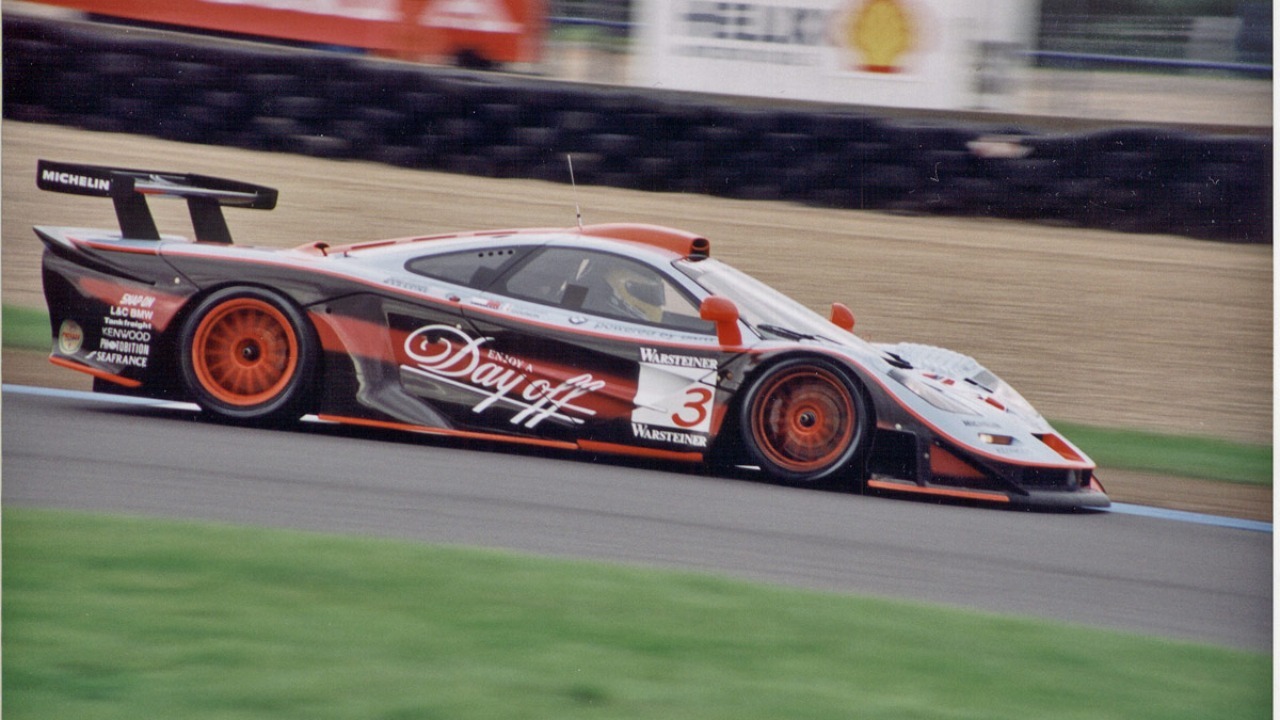

McLaren did not set out to reinvent how road cars corner, yet its obsession with shaving tenths off a lap in Formula 1 quietly birthed a new way to think about traction and stability. What began as a clever extra brake pedal in a single grand prix car evolved into a philosophy of using software and hydraulics to shuffle torque, a philosophy that now shapes how supercars and family crossovers alike put power to the ground. By tracing that arc from the McLaren F1 team’s “brake steer” experiment to modern torque vectoring, I can show how a niche racing hack ended up changing how ordinary drivers feel at the wheel.
From extra pedal to extra rotation
The story starts with a simple racing problem: how to get a rear wheel that is spinning uselessly to do something productive mid corner. In the late 1990s McLaren’s engineers answered it with a second brake pedal in the McLaren MP4/12, a device the driver could use to slow a single rear wheel and pivot the car toward the apex. Photographs of the cockpit later revealed that this extra control allowed the driver to trim understeer and sharpen turn in when exiting slow corners, a trick that was quickly dubbed “brake steer” and formally linked to the McLaren MP4/12. What looked like a simple braking aid was, in practice, an early form of torque vectoring, because it changed how much usable drive each rear wheel could produce as the car rotated.
That extra pedal was controversial in Formula 1, but the underlying insight was straightforward: if you can selectively slow an inside wheel, you can effectively send more of the engine’s effort to the outside wheel that still has grip. Instead of relying only on a mechanical differential to apportion torque, the car’s braking system becomes an active partner in steering. The governing body eventually outlawed the specific hardware, yet the concept survived inside McLaren’s engineering culture, where the idea of using targeted braking to influence yaw would later resurface in road cars as a fully integrated system rather than a visible extra control.
Brake steer crosses from pit lane to showroom
When McLaren returned to building road cars in the 2010s, it did not simply bolt a limited slip differential into its mid engine coupes. The company leaned on its racing heritage and revived brake steer as a software led feature, this time hidden behind the brake pedal and stability control logic. In the McLaren MP4-12C, engineers added a system that applies the inside rear brake as the car corners to aid turning, explicitly described as something the company had pioneered in its Formula 1 cars and then adapted for the street, a direct line from the grand prix era to the McLaren MP4-12C. Instead of a second pedal, the car’s brain decides when and how hard to pinch that inner disc, subtly rotating the chassis.
On track, the effect is that the car feels eager to turn without demanding heroic inputs from the driver. One account of a McLaren supercar describes turning hard for a 190-degree left hander and feeling the car neatly clip its double apexes, with the electronics quietly helping by applying the inside rear brake, a vivid description of how the system works in a 190-degree bend. The driver simply feels a car that resists understeer and seems to tighten its line on command, even though the real work is happening at a single rear caliper that is being pulsed in fractions of a second.
Open differentials, closed loop control
McLaren’s decision to pair this brake based yaw control with open differentials in its road cars has puzzled some enthusiasts, because many rivals tout mechanical limited slip units as a badge of seriousness. Owners and engineers have pointed out that the company continues to use an open diff with brake torque interventions because its traction control and ABS can manage wheel speed more precisely than a purely mechanical solution, a view captured in a discussion that notes the brand’s advanced systems can better control wheel speed than a traditional diff and that this helps make the cars very much like to drive, a point made explicitly in a thread asking why McLaren persists with an open diff. In other words, the company trusts software and hydraulics more than clutches and gears when it comes to apportioning torque.
That choice also has packaging and cost implications. A mechanical limited slip differential adds weight and complexity, while brake based torque vectoring can piggyback on hardware the car already needs for safety systems. Commenters comparing McLaren’s approach to more conventional sports cars note that for a 370-Miata-Camaro buyer the extra cost of an LSD and brake pack can be a big decision, a contrast that highlights how McLaren bakes its philosophy into every car rather than offering it as a line item, a point made in a discussion that explicitly references the phrase 370-Miata-Camaro. By keeping the differential simple and letting the electronics do the clever work, McLaren can deliver a consistent handling character across its range while still claiming a direct link to its racing innovations.
Torque vectoring, defined in plain language
Strip away the jargon and torque vectoring is simply the art of deciding which wheel gets how much of the engine’s effort at any given moment. Instead of letting a passive differential split torque based only on mechanical resistance, a torque vectoring system uses sensors and control logic to send more drive to the wheel that can use it, or to trim power at a wheel that is about to break traction. Modern explanations of the technology emphasize that this active distribution has left a clear mark on the driving experience, redefining the limits of performance and safety by making cars more agile and more stable at the same time, a summary captured in a guide that notes how the rise of torque vectoring has reshaped both performance and safety. The core idea is that the car is no longer a passive object reacting to the road, but an active participant in managing its own grip.
There are several ways to achieve this, from brake based systems like McLaren’s to fully independent electric motors at each wheel. Technical discussions stress that without independent control of the power going to the left and right wheels, only a small amount of torque vectoring is possible, and that while some of this can be faked with brakes, true left right power control requires more sophisticated hardware, a point made explicitly in a thread that begins with the phrase Without independent control. McLaren’s approach sits in the middle of this spectrum, using brakes to mimic some of the benefits of a fully active system while avoiding the complexity of multiple drive units.
How McLaren’s philosophy shaped modern supercars
As the technology matured, McLaren began to integrate brake based torque vectoring more deeply into the character of its flagship models. The McLaren Senna, for example, uses race bred software that imperceptibly brakes the inside rear wheel to enhance turn in and reduce understeer, encouraging the driver to apply the throttle earlier on corner exit, a behavior described in detail in material that notes how this race bred technology quietly works the inside rear to let the driver get on the power sooner in the McLaren Senna. The system is no longer a hidden helper but a defining trait, allowing a car with extreme aerodynamics and power to feel approachable at the limit.
From my perspective, this is where McLaren’s early brake steer experiment truly reshaped driving. Instead of building cars that demand a professional’s reflexes, the company uses torque vectoring to flatten the learning curve, letting ordinary drivers explore higher cornering speeds with confidence. That same philosophy has filtered into other brands and segments, where similar inside wheel braking strategies are used to make heavy SUVs feel nimble and to keep front wheel drive hot hatches from washing wide under power. McLaren did not invent every form of torque vectoring, but its willingness to trust software over mechanical diffs helped normalize the idea that the fastest way around a corner might involve the car quietly dragging one wheel to help the others.
What four wheel torque vectoring adds to the picture
While McLaren’s road cars focus on the rear axle, the broader industry has pushed torque vectoring across all four wheels, especially in all wheel drive and electric platforms. Technical explainers on high performance four wheel drive systems highlight how distributing torque not just front to rear but also side to side can transform a car’s balance, with some engineers pointing to the way a four wheel drive car can use its driveline, aerodynamics and electronics together to stay neutral in a corner, a point illustrated in a detailed breakdown of a four wheel drive car’s behavior from Aug. In that context, McLaren’s rear focused brake steer looks like an early, partial version of a much larger movement toward fully active torque distribution.
Electric vehicles take this further by allowing truly independent control of each motor, which means torque vectoring can be achieved without touching the brakes at all. Yet the logic that decides how to apportion power is conceptually similar to what McLaren pioneered: sense the car’s yaw, steering angle and grip, then nudge the balance toward rotation or stability as needed. I see McLaren’s contribution less as a specific hardware layout and more as a mindset, one that treats torque as a resource to be steered as carefully as the front wheels themselves. That mindset now underpins everything from high end EVs to mainstream crossovers that quietly shuffle power to keep drivers out of trouble.
Why enthusiasts still argue about diffs and brakes
Despite the clear benefits, brake based torque vectoring remains a point of debate among purists who prefer the feel of a mechanical limited slip differential. Some argue that constantly dragging a brake to simulate torque transfer can generate heat and wear, and that the on off nature of brake interventions can feel less transparent than the smooth lock up of clutch plates. In discussions about McLaren’s continued use of open diffs, enthusiasts sometimes frame the choice as a trade off between ultimate track durability and the flexibility of software, with some suggesting that a well tuned mechanical LSD still has advantages in repeated hard use even if the electronics can match its lap times in short bursts.
From my vantage point, that debate mirrors a broader tension in performance cars between analog purity and digital assistance. McLaren’s path shows that a car can be both fast and friendly by leaning into electronics, but it also raises questions about how much of the driving experience is authored by the human at the wheel versus the code in the control unit. As torque vectoring spreads into more segments, those questions will only get sharper, especially as systems become more opaque and less adjustable by the owner. Yet the fact that people now argue about which kind of torque vectoring feels best, rather than whether the concept itself belongs in performance cars, is a sign of how deeply the idea has taken root.
From racing hack to everyday safety net
What began as a way for a single Formula 1 car to exit slow corners faster has become a quiet safety net in everyday driving. Modern explanations of torque vectoring emphasize not just the performance gains but also the way these systems can keep a car composed in emergency maneuvers, reducing the risk of spins or plowing straight on when a driver turns in too hard, a dual role highlighted in guides that describe how torque vectoring has redefined both performance and safety for ordinary drivers. In that sense, McLaren’s brake steer experiment did more than win races, it helped inspire a generation of stability systems that intervene earlier and more intelligently than old school traction control ever could.
Looking ahead, I expect the line between performance feature and safety technology to blur even further. As vehicles gain more sensors and processing power, the same algorithms that let a McLaren Senna rotate cleanly through a fast bend can help a family SUV dodge an obstacle on a wet highway. The origin story may be rooted in the McLaren MP4/12 and its extra pedal, but the legacy is a world in which torque is no longer something that simply arrives at the wheels, it is something that is actively steered, trimmed and vectored to keep drivers both faster and safer than they might be on their own.
More from MorningOverview