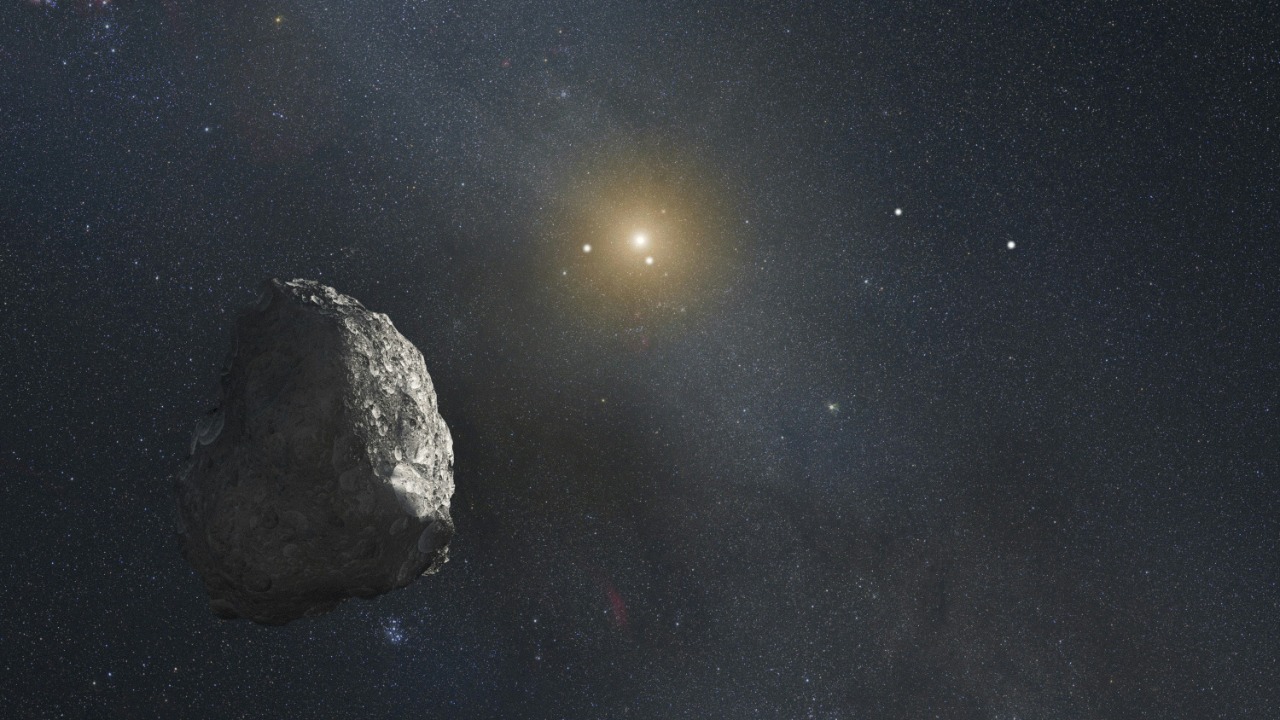

Far beyond Neptune, astronomers have finally confirmed a compact clump of icy worlds hiding inside the Kuiper Belt, a feature they are now calling an inner “kernel.” The tightly packed structure, sitting in a narrow band of orbits, is forcing a rethink of how the outer Solar System formed and how the giant planets moved in its early history. Instead of a smooth, featureless ring of debris, the Kuiper Belt now looks more like a layered archaeological site, with this newly resolved kernel acting as a buried foundation stone.
By tracing the orbits of faint, distant objects and comparing them with sophisticated computer models, researchers argue that this kernel is not a statistical fluke but a fossil imprint of the Solar System’s violent youth. I see this discovery as a rare moment when a subtle pattern in the data suddenly locks into place, turning a once-theoretical idea into a concrete structure that can be mapped, counted, and used to test competing stories of how the planets came to be where they are.
From hazy belt to structured frontier
For decades, the Kuiper Belt was treated as a broad, icy halo beyond Neptune, a place where small bodies simply filled space in a diffuse swarm. That picture began to sharpen as surveys cataloged thousands of Kuiper Belt Objects, revealing that their orbits cluster into distinct families rather than forming a uniform cloud. The latest work pushes that trend further, with a new orbital analysis showing that a surprisingly compact inner kernel of icy worlds sits embedded inside the broader belt, a structure that had been effectively invisible in earlier, noisier datasets.
Instead of a random spread of distances and inclinations, the orbits in this kernel occupy a narrow range that stands out against the surrounding population. Astronomers at Princeton University have used this pattern to argue that the Kuiper Belt was sculpted by the way Neptune moved billions of years ago, with the kernel marking a region that was left behind as the giant planet migrated outward. In that view, the Kuiper Belt is not just a debris field but a dynamically carved landscape, and the inner kernel is one of its sharpest ridges.
Pinpointing a hidden clump at 43 astronomical units
The inner kernel is not only compact in orbital shape, it is also localized in distance. A separate analysis of Kuiper Belt objects, described as a study of “Kyper belt objects,” highlights an overlooked structure at about 43 astronomical units from the Sun, a distance that places it roughly four billion miles out. That figure matches the range flagged in an Inner Kernel Discovery Astronomers video, which describes a hidden Kuiper cluster four billion miles away that had escaped notice because its members are so faint and slow moving.
Locating the kernel around 43 astronomical units matters because it lines up with a long-suspected break in the Kuiper Belt’s structure. Earlier models predicted that if Neptune’s orbit shifted outward in discrete steps, some objects would be stranded in a narrow band that no longer resonated with the planet’s gravity. The new orbital clustering at this specific distance gives that idea a concrete anchor, turning a theoretical “sweet spot” into a mapped region of space that telescopes can now target more aggressively.
How astronomers pulled a signal from the noise
Finding a compact structure in a region as vast and sparsely populated as the Kuiper Belt requires both patient sky surveys and careful statistics. The new kernel result builds on years of cataloging faint points of light and then feeding their orbits into large-scale analysis pipelines that can tease out subtle patterns. By comparing the observed distribution of orbital elements with synthetic populations generated under different migration scenarios, the researchers could test whether a kernel-like clump appears naturally or only under specific histories for Neptune.
That modeling work was not done in isolation. It sits on top of a broader push to map what is lurking in the Kuiper Belt using both ground-based telescopes and spacecraft data. The NASA New Horizons team, for example, has been using deep imaging campaigns to search for new Kuiper Belt Objects along the spacecraft’s path, while also measuring the background glow of dust and small bodies. Those efforts, combined with targeted surveys from observatories on Earth, provided the raw catalog that made it possible to see the kernel as more than a statistical mirage.
A mysterious new structure that “should not exist”
What makes the inner kernel so provocative is not just that it exists, but that its properties do not fit comfortably inside the simplest models of the outer Solar System. Reporting on a Mysterious New “Structure” that “Has Been Discovered” in “Our Solar System”’s Kuiper Belt emphasizes that this compact cluster of objects appears to be a relic of how the region was reshaped over billions of years, rather than a transient feature. Another account describes how Astronomers found an “unexpected cluster” of Kuiper Belt Objects at the edge of the Solar System that “should not exist,” suggesting that the kernel may represent a special population worth protecting in future exploration plans.
In more technical language, one summary of the research notes that “it is yet unclear whether the inner kernel is an extension of the kernel or a distinct structure,” underscoring how unsettled the interpretation still is. That line, highlighted in a Nov report, captures the tension: astronomers can now see the clump clearly enough to measure it, but they are still debating whether it is part of a larger, layered kernel or a separate, inner shell carved by a different phase of planetary migration. That ambiguity is exactly what makes the discovery scientifically rich, because each possible explanation points to a different story about how the outer Solar System evolved.
Neptune’s migration and the fossil record of orbits
The stakes of the kernel discovery become clearer when it is placed alongside long-standing theories of Neptune’s motion. In many models, the giant planet did not form where it is today but instead migrated outward, scattering and capturing small bodies along the way. A detailed discussion of the new structure notes that it could be particularly enlightening for learning about Neptune’s migration from the inner Solar System, because the orbits of kernel objects act like a fossil record of the gravitational environment they experienced.
If Neptune’s outward journey was smooth and gradual, the Kuiper Belt should show a relatively continuous distribution of orbital elements. The presence of a sharp kernel instead hints at more punctuated movement, perhaps involving jumps in Neptune’s orbit or interactions with other massive bodies that are no longer present. In that sense, the kernel is not just a curiosity at the edge of the Solar System, it is a constraint on the entire system’s history, one that any successful model of planetary formation will now have to reproduce.
New Horizons and the search for context
While ground-based surveys map the kernel’s orbits, spacecraft are providing crucial context about the environment those objects inhabit. The New Horizons mission, which flew past Pluto and the Kuiper Belt Object Arrokoth, has continued to probe the outer Solar System’s structure from the inside. A peer-reviewed Discovery of New Kuiper Belt Objects by the New Horizons Kuiper Belt search team has expanded the known population of distant bodies, while also raising fresh questions about what, exactly, is hiding in the dim reaches beyond Pluto.
At the same time, New Horizons scientists have used observatories like the Japanese Subaru Telescope to measure how far the Kuiper Belt’s dust and small-particle population extends. In one analysis, they ask “What is this?” when describing unexpected readings of how far Kuiper Belt dust levels go, hinting that the outer edge of the belt may be more complex than a simple cutoff. Those measurements do not directly image the inner kernel, but they frame it inside a larger, evolving picture of how material is distributed from Neptune’s orbit outward into interstellar space.
Social media, public fascination, and the “inner kernel” label
As the technical papers circulate among specialists, the idea of a hidden kernel has already spilled into public conversation. A clip labeled Inner Kernel Discovery describes how Astronomers logged a hidden Kuiper cluster four billion miles out, crediting a Princeton model with flagging the pattern before observations fully confirmed it. On Instagram, posts from accounts like thedebriefmedia note that Astronomers have uncovered something unexpected at the edge of our Solar system, tagging #OuterSolarSystem, #NASA, #Neptune, and #ColdClassicals to connect the kernel story with broader interest in distant, pristine objects.
Another Instagram post, labeled “December 1,” emphasizes that far beyond Neptune, in the Kuiper Belt, Astronomers have uncovered something unexpected at the edge of our Solar Syste, pushing the story into the #spaceinstagram and #fypage streams. I see this social-media amplification as more than hype. It reflects a genuine public appetite for detailed, structural stories about the Solar System, where the drama comes not from explosions or collisions but from the slow, precise work of mapping invisible patterns in the dark.
Why the kernel matters for future missions
For mission planners, the inner kernel is not just a curiosity, it is a potential target list. A report noting that Astronomers Stumble on a Hidden Solar System Structure That Shouldn’t Exist underscores how the newly identified group of icy bodies could guide the trajectories of future probes. If the kernel represents a special, relatively undisturbed population, then sending a spacecraft through that region would offer a chance to sample material that has changed little since the Solar System’s earliest days.
That prospect dovetails with broader discussions about what lies beyond Neptune and how to explore it. A feature titled “What Lies Beyond Neptune: Exploring the Kuiper Belt’s …” notes that Astronomers have uncovered something unexpected at the edge of our Solar system, reinforcing the idea that the outer frontier is still full of surprises. I expect that as the kernel’s membership list grows, it will increasingly shape proposals for extended missions, whether that means a New Horizons follow-on or a dedicated Kuiper Belt explorer designed to hop from one kernel object to another.
A new chapter in the story of the outer Solar System
Stepping back, the emergence of a clearly defined inner kernel inside the Kuiper Belt marks a turning point in how I think about the Solar System’s outskirts. Instead of a vague, icy hinterland, we now see a region with layered substructures, each encoding a different phase of planetary migration and dynamical reshaping. The kernel, sitting around 43 astronomical units and packed with small, cold worlds, is the latest and sharpest of those layers, a feature that both confirms and challenges existing models in equal measure.
Other work on what is Lurking in the Kuiper Belt and on the broader Structure of Our Solar System’s Kuiper Belt suggests that more such surprises are likely as surveys deepen and models improve. For now, the inner kernel stands as a reminder that even in a region we thought we knew, there are still hidden patterns waiting to be resolved, and that each new structure we uncover tightens the constraints on how our planetary neighborhood came to be.
More from MorningOverview