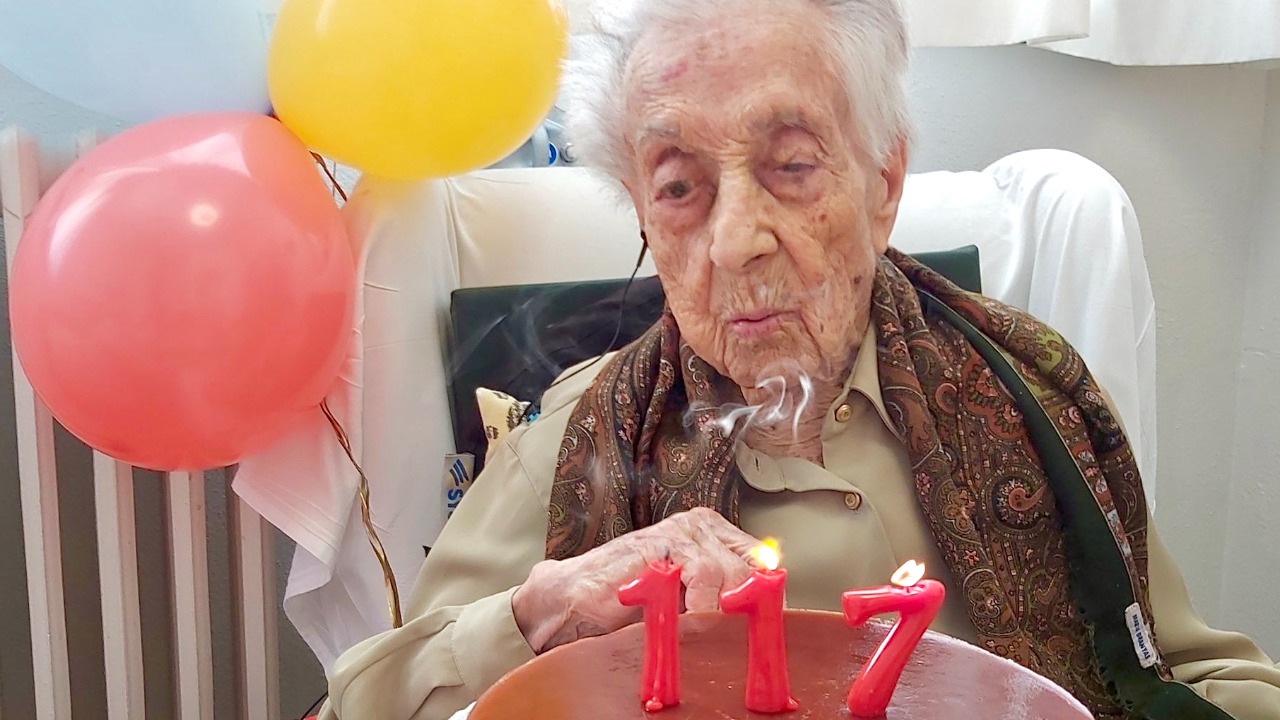

When scientists sequenced the DNA of a woman who lived to 117, they were not just cataloging the quirks of an extraordinary life. They were probing a question that touches every family: why do some bodies stay resilient decades longer than others. The genetic portrait that emerged from this 117-year-old’s cells is now reshaping how I think about aging, revealing a blend of rare variants, unusually “young” biology and everyday habits that together hint at how more of us might stretch our healthy years.
The woman at the center of this work is Maria Branyas Morera, who held the title of the world’s oldest person and died in 2024 at 117. Her DNA, and the way her body aged, are now a kind of roadmap, showing how protective genes, a calm immune system and even a daily yogurt can interact to keep a person not just alive but largely independent well past 100.
The 117-year-old who became a living longevity experiment
Maria Branyas Morera spent her final years in Catalonia, but her story now stretches into laboratories around the world. She reached 117, surviving a civil war, a pandemic and the ordinary hazards that cut most lives short decades earlier, yet remained cognitively intact and relatively self-sufficient until close to the end. Researchers saw in her not a curiosity but a rare chance to examine what extreme human longevity looks like from the inside, cell by cell and gene by gene.
Shortly before she died, Maria agreed to provide blood and other tissue samples so scientists could study how a 117-year-old body holds together. Those samples, collected as Shortly before her death, allowed a team working with Maria to run detailed sequencing and molecular tests that would be impossible to reconstruct after burial. The result is one of the most comprehensive portraits ever assembled of a single very old person’s biology, turning her into a kind of natural experiment in how long a human can stay healthy.
Inside her DNA: rare variants that favor a long, healthy life
When scientists combed through Maria’s genome, they found that her DNA was not just free of some high-risk mutations, it also carried uncommon variants that appear to tilt the odds toward a longer life. Some of these rare changes are linked to better cardiovascular function, more resilient brain cells and a more finely tuned immune response. In other words, her genetic deck was stacked with cards that made it easier to avoid the heart disease, dementia and chronic inflammation that so often define old age.
One analysis reported that Some of her rare variants were associated with longevity, immune function and a healthy heart and brain, suggesting that Dec findings from this single case could illuminate pathways relevant to millions. Another group described how the DNA of this 117-Year-Old woman pointed to “good genes” that might extend life by over 30 years compared with population averages, a reminder that while lifestyle matters, some people are born with unusually strong biological armor.
A body that aged more slowly than the calendar
Genes are only part of the story. What stunned researchers was that Maria’s cells looked significantly younger than her birth certificate suggested. Using DNA methylation tests, which estimate “biological age” by reading chemical tags on the genome, scientists found that although she had lived 117 years, her tissues behaved more like those of someone roughly two decades younger. That gap between chronological and biological age is one of the clearest signs that her body was aging more slowly than the calendar.
One summary noted that Maria Branyas Morera lived to 117, yet DNA methylation tests suggested her cells were about 23 years younger than expected, a striking example of decelerated aging. Another report explained that examining those cells told researchers that, at the time of her death, her biological age lagged behind her actual years, a point highlighted when Genetics expert Esteller described how Mor’s cellular profile did not match the stereotype of a frail supercentenarian.
How scientists dissected a 117-year-old’s biology
To understand why Maria stayed so robust, researchers did not rely on a single test. They combined whole-genome sequencing with epigenetic profiling, immune cell analysis and clinical records from her long life. This multi-layered approach allowed them to see not just which genes she carried, but how those genes were switched on or off, how her immune system behaved and how her organs had held up over time. It was less a snapshot than a full-length documentary of aging written into her cells.
One Study described a groundbreaking analysis of a 117-year-old that identified factors underpinning her health and how they might contribute to extreme human longevity. Another account emphasized how University of Barcelona and Josep Ca scientists examined her cellular structure and genetic material in depth, showing how academic teams can turn a single life into a detailed case study of aging mechanisms.
The quiet immune system and low inflammation that set her apart
One of the most intriguing findings from Maria’s samples was how calm her immune system appeared to be. Aging is often accompanied by “inflammaging,” a chronic, low-grade inflammation that erodes tissues and fuels diseases from atherosclerosis to Alzheimer’s. In Maria, markers of this simmering inflammation were surprisingly low, suggesting that her body had somehow avoided the slow burn that wears down most older adults.
Researchers who worked with her samples reported that Branyas, pictured with Esteller, showed immune features that reduced her levels of inflammation, a pattern that likely protected her organs late in life. A related account of the Study of this 117-year-old by CNN Newsource staff underscored how her immune profile, captured Shortly before her death, looked more like that of someone decades younger, reinforcing the idea that controlling inflammation is central to healthy aging.
Genetics is “a big part,” but lifestyle still mattered
It would be easy to look at Maria’s genome and conclude that longevity is simply a genetic lottery. The scientists closest to her case resist that narrative. They argue that while her rare variants and slow biological aging gave her a head start, her daily choices and environment likely helped her make the most of that advantage. In other words, genes loaded the dice, but lifestyle still decided how the game played out.
One researcher put it plainly, saying that “Genetics is certainly a big part” of how we age, and on that count Morera had clear advantages, but they also pointed to her habits and social context as important pieces of the puzzle, a point highlighted in coverage of How her genetics played a role. Another detailed Study explains how genetics and lifestyle combined to keep a 117-year-old healthy, identifying factors that together contributed to her extreme human longevity rather than crediting DNA alone.
The yogurt habit that captured global attention
Among Maria’s daily routines, one detail has captured outsized public fascination: her devotion to yogurt. For the last twenty-two years of her life, she reportedly ate Catalan yogurt every day, a habit that has now become part of her legend. Scientists are cautious about drawing direct cause and effect from a single food, but they are interested in how fermented dairy might have shaped her gut microbiome, which in turn can influence inflammation, metabolism and even brain health.
One analysis noted that in a Nutshell, Maria Branyas Morera lived to 117 while maintaining this yogurt routine, prompting speculation about how such foods might support a healthier gut ecosystem. Another report described how, for the last twenty-two years, For the last twenty-two years, Branyas had eaten yogurts from La Fageda, a dairy brand based in La Fageda d’en Jo, and that she had done so since the age of 92, turning La Fageda into a symbol of how small, consistent habits can become part of a broader longevity story.
What doctors see in her daily life: movement, routine and connection
Beyond yogurt, doctors who have studied Maria’s case point to a cluster of everyday behaviors that likely supported her long life. She reportedly maintained gentle physical activity, followed a relatively simple Mediterranean-style diet and preserved strong social ties with her children, grandchildren and great-grandchildren. These are not exotic biohacks, but they align closely with what geriatricians already recommend: move regularly, eat modestly and stay connected.
One physician, described simply as Doctor in coverage of her case, highlighted how protein supports longevity and healthy aging, noting that Branyas also had a large family network that may have been related to her long lifespan, a point illustrated in a photo of Mar, Branyas and Manel Esteller. Another segment on how Doctors look for the secrets to very long life from a woman who lived to be 117 emphasized that Morera was not an athlete or a strict dieter, but someone who combined modest movement, routine and emotional stability in ways that likely supported her biology.
The scientists behind the work and what they hope to learn next
The research into Maria’s DNA and biology has been led by a multidisciplinary team that includes geneticist Manel Esteller and collaborators in Spain. They see her case as a starting point, not an endpoint, for understanding extreme longevity. By comparing her genome and epigenome with those of other centenarians and average older adults, they hope to identify patterns that could eventually guide new therapies or personalized prevention strategies.
One report showed Esteller and the research team taking samples from Branyas’ blood and saliva, underscoring how hands-on and personal this work has been. Another account described how the research was carried out by a group of scientists including experts from the DNA of 117-year-old woman project, which focused on Morera’s cellular structure and genetic material, showing how international teams are now treating single long-lived individuals as rich datasets rather than outliers to be ignored.
From a single life to broader lessons on aging
For all the fascination with Maria’s unique biology, the scientists involved are careful about how far they extrapolate. One summary noted that, However promising the findings, they should be taken with caution, because one person’s genome cannot capture the full diversity of human aging. Yet even with that caveat, her case offers concrete clues: keep inflammation low, support the gut, maintain social bonds and, where possible, identify and protect the genetic pathways that keep cells young.
In addition to living a very long life, Maria raised three children and had 11 grandchildren and 13 great-grandchildren, a family tree that illustrates how extreme longevity can ripple across generations, a detail highlighted in coverage that noted However carefully the data are interpreted. As I weigh her story, I see less a prescription to copy every detail and more a set of guiding themes: nurture the systems that keep inflammation in check, respect the power of everyday routines and recognize that while we cannot choose our parents, we can choose habits that help whatever genes we have work in our favor.
Why this 117-year-old’s DNA matters for the rest of us
Maria’s case is not the only scientific breakthrough of recent years, but it stands alongside other advances as a sign of how quickly aging research is evolving. In parallel fields, for example, engineers have developed novel sensors for continuous endoleak monitoring after vascular surgery, showing how technology can help clinicians track subtle changes inside the body, a development described in a report on how Their findings were published in a leading journal. Together with genetic case studies like Maria’s, these advances suggest a future in which doctors can monitor aging and disease risk in real time and intervene earlier.
For now, the most practical lesson I draw from this 117-year-old’s DNA is that longevity is neither pure fate nor pure willpower. It is an intricate negotiation between the genes we inherit, the environments we move through and the daily choices we make about food, movement and relationships. Maria Branyas Morera’s life, and the data she left behind, do not promise that any of us can reach 117, but they do hint that by understanding and supporting the same pathways that kept her cells young, we might all have a better chance of adding not just years to life, but life to years.
More from MorningOverview