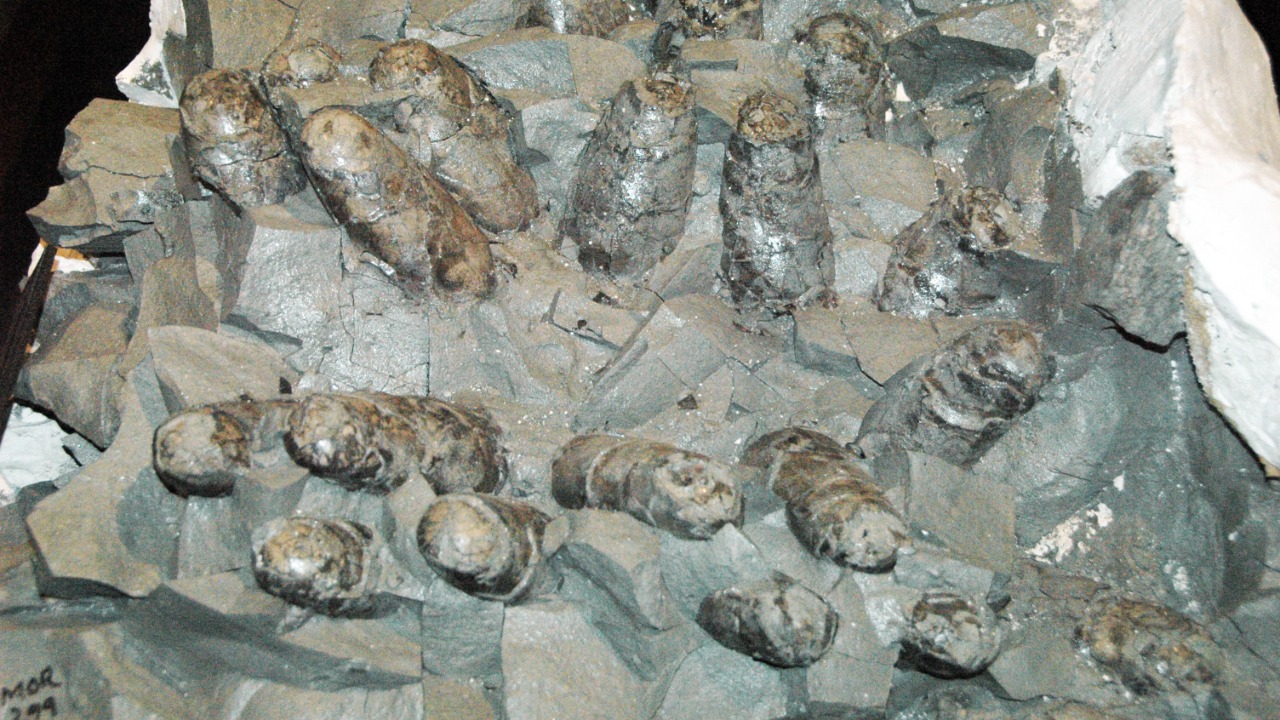

Dinosaur eggshells, once treated as background scenery in fossil digs, have turned out to be some of the most precise timekeepers in the deep past. By decoding the chemistry locked into these fragile fragments, researchers can now read when a nest was buried and how that moment fits into the broader story of dinosaur evolution. The result is a kind of geological ticking, a clock etched into calcium carbonate that lets me follow individual clutches of eggs through millions of years of Earth history.
Instead of relying only on volcanic ash layers or scattered mineral grains, scientists can now use the eggs themselves as chronometers, tying the lives of embryos and their parents to exact windows in deep time. That shift is already reshaping how I think about dinosaur ecosystems, extinction timelines, and the way fossils record the passing of time.
The hidden clock inside dinosaur eggshells
The central insight behind the new work is deceptively simple: dinosaur eggshells are not just protective shells, they are chemical archives that accumulate radioactive elements while the egg is still in the ground. As the eggshell forms and then sits buried in sediment, tiny amounts of uranium seep into its mineral lattice, where they slowly decay into lead at a known rate. By measuring the ratio of uranium to lead in these fossilized shells, Dec and other researchers have shown that each fragment carries a built in clock that can reveal when the egg was laid and buried, even after tens of millions of years have passed.
What makes this so powerful is that the eggshells are often found exactly where the dinosaurs lived and nested, rather than transported long distances like some bones and pebbles. According to Dec, the team demonstrated that fossilized dinosaur eggshells contain a natural clock that can reveal when dinosaurs lived, turning what used to be a secondary find into a primary dating tool for entire fossil sites. In their work, the Researchers also noted that this clock may not always be present, which means I have to think carefully about which shells are suitable for precise dating and which are not.
From “paleontologist’s dream” to practical dating tool
For decades, paleontologists have dreamed of a way to date dinosaur bearing rocks with the same precision that geologists bring to volcanic layers or zircon crystals. The new eggshell method has been described as a Paleontologist’s Dream because it finally brings that level of accuracy directly into the fossil beds themselves. Instead of waiting for a lucky ash fall or a rare mineral grain, scientists can now work with the abundant eggs that Many dinosaur species left behind, turning nesting grounds into natural laboratories for timekeeping.
The approach builds on uranium lead dating, a technique that has long been used on minerals, but had not been systematically applied to eggshells in this way. By adapting that method to the unique structure of dinosaur shells, the team behind The Breakthrough That Changes How We Date Dinosaurs showed that the same physics that governs the age of ancient zircons can be used to pin down the age of a clutch of embryos. In their description of this work, they emphasized how using uranium lead dating on eggshells transforms scattered nests into a coherent timeline, a shift that I see as central to why this is being called a Paleontologist‘s Dream for reconstructing dinosaur history.
How uranium–lead dating turns shells into timepieces
At the heart of this new clock is the uranium lead system, one of the most reliable chronometers in geology. When uranium atoms lodged in the eggshell decay, they produce lead at a rate that has been measured and cross checked in countless minerals. By sampling tiny portions of the shell and measuring how much uranium and lead they contain, scientists can calculate how long the decay has been running, which in turn tells me when the eggshell stopped exchanging elements with its surroundings and effectively locked in its age. Because the eggshell is made of calcium carbonate, it behaves differently from the silicate minerals that geologists usually date, but the underlying physics is the same.
What is striking in the new work is how carefully the teams have calibrated this process to the peculiarities of dinosaur eggs. They have to account for how uranium enters the shell, how it might move during burial, and whether later fluids could reset the clock. The Dec team showed that in many cases the uranium lead system in eggshells remains closed enough to give reliable ages, while also warning that the clock may not always be present or intact. By combining these measurements with detailed petrographic and chemical analyses, the scientists behind the Paleontologist’s Dream study and the Dec project have turned eggshells into robust timepieces rather than fragile curiosities, a shift that underpins the confidence I can place in their ages.
A global collaboration built around tiny fragments
One reason this discovery feels so transformative is the scale of the collaboration behind it. The Dec report describes a global team of geologists and paleontologists who pooled eggshell samples from fossil sites around the world, then applied a consistent analytical framework to all of them. That effort, supported by the National Science Foundation, turned what could have been a one off curiosity into a systematic test of how well eggshell clocks perform in different environments, from arid badlands to lush ancient floodplains. The result is a dataset that spans multiple dinosaur groups and geological settings, giving me confidence that the method is not limited to a single lucky locality.
In their summary of the work, the Dec team emphasized that this is a powerful tool for understanding dinosaur evolution, because it lets researchers tie specific nesting events to broader patterns of climate change, faunal turnover, and extinction. The study, which was published in Communications Earth & Environment, shows how eggshell clocks can be integrated with other lines of evidence to refine the timing of key evolutionary transitions. By treating the shells as both biological and geological objects, the Scientists behind this work have created a bridge between the life histories of individual dinosaurs and the deep time framework that surrounds them.
Inside Dr Tucker’s lab: building the eggshell timeline
Much of the technical development behind this method has come from the lab of Dr Tucker, who has focused on turning eggshell dating from a clever idea into a reproducible protocol. Dr Tucker’s team, consisting of MSc student Kira Venter and Prof Cristiano Lana from the Elemental and Isotope Analysi group, has been central to refining how the shells are sampled, how contamination is avoided, and how the resulting ages are interpreted. By combining isotope geochemistry with detailed microscopy, they can identify which parts of a shell have preserved the original uranium lead system and which have been altered, a distinction that is crucial if I want to trust the resulting dates.
The group has also emphasized the importance of context, tying each dated shell to its precise position in the rock column and to associated fossils. In their report on dinosaur eggshells unlocking a new way to tell time in the fossil record, they showed how carefully chosen shells can anchor the age of entire nesting horizons, not just individual clutches. That work, carried out at Stellenbosch University, demonstrates how a small team can leverage advanced analytical tools to reshape a global field. By showing that eggshells can reliably record when the eggs were buried, Dr Tucker and colleagues have given paleontologists a new way to stitch together the patchwork of dinosaur sites into a coherent timeline.
Testing the method on classic dinosaur sites
To prove that eggshell clocks work beyond a single lab or locality, the researchers have tested the method on dinosaur eggs from fossil sites around the globe. These tests involved collaborators from the North Carolina Museum of Natural Sciences, North Carolina State University, and other institutions that provided access to well studied collections. By applying the same uranium lead protocols to shells from different continents and geological formations, the teams could see how the ages lined up with existing estimates based on stratigraphy, volcanic layers, and other dating methods. In many cases, the eggshell ages matched or refined those earlier numbers, which is exactly what I would hope to see from a new chronometer.
The global testing also revealed where the method needs caution. In some sites, later fluids appear to have disturbed the uranium lead system, blurring the signal and making the ages less reliable. The teams have been transparent about these limitations, stressing that eggshell clocks are not a magic solution but a powerful addition to the dating toolkit when used carefully. The report that highlighted tests on dinosaur eggs from multiple fossil sites around the globe underscored how important it is to combine eggshell ages with independent checks, rather than relying on a single line of evidence. By working closely with partners at the North Carolina Museum of Natural Sciences and North Carolina State University, the researchers have shown how collaborative cross checking can turn a promising method into a trusted standard.
What eggshell clocks reveal about dinosaur evolution
Once the technical questions are addressed, the real excitement lies in what these clocks can tell us about dinosaur evolution itself. By pinning down the ages of nests with unprecedented precision, scientists can start to see patterns in how different groups of dinosaurs spread across ancient landscapes, how long particular species persisted, and how quickly they responded to environmental change. For example, if multiple nesting horizons of a single species can be dated within a narrow window, that might indicate a brief but intense period of reproductive activity tied to climate cycles or ecological opportunities. Conversely, a long span of dated nests could point to a stable, successful lineage that weathered multiple shifts in its surroundings.
The Dec and Paleontologist’s Dream studies both highlight how eggshell clocks can refine the timing of key evolutionary events, such as the rise of certain herbivorous groups or the decline of others near the end of the Cretaceous. By integrating eggshell ages with data from bones, teeth, and plant fossils, researchers can build more detailed narratives about how dinosaur communities changed through time. The Dec team explicitly framed their work as a powerful tool for understanding dinosaur evolution, and I see that potential most clearly in the way eggshell clocks can tie local nesting behavior to global patterns of diversification and extinction. Instead of treating each nest as an isolated snapshot, the new method lets us place it on a precise timeline, revealing how individual reproductive decisions played out against the backdrop of deep time.
Rewriting the fossil record’s sense of time
Beyond dinosaurs, the eggshell clock forces a broader rethink of how the fossil record keeps time. Traditionally, paleontologists have relied on a mix of relative dating, such as which layers lie above or below others, and absolute dating from rare volcanic horizons or datable minerals. That patchwork has always left gaps and uncertainties, especially in sedimentary basins where volcanic material is scarce. By turning eggshells into chronometers, researchers have effectively inserted a new class of datable material directly into the fossil bearing rocks, which could tighten age estimates for many other vertebrate groups that laid hard shelled eggs.
In practical terms, this means that future field seasons might treat eggshell fragments with the same reverence currently reserved for ash layers or zircon bearing tuffs. Collecting and cataloging shells with precise stratigraphic information could become standard practice, knowing that each fragment might later yield a uranium lead age. That shift would not only improve the resolution of dinosaur timelines, it could also spill over into studies of early birds, crocodilians, and other egg laying animals whose shells share similar chemistry. As I see it, the eggshell clock is less about a single breakthrough and more about a quiet recalibration of how we read time in the rocks, one tiny fragment at a time.
More from MorningOverview